My last shrine! On our last day in Kyoto, we decided to split up and let everyone do their own thing. My oldest wanted to go thrifting and souvenir shopping. My youngest wanted to go out exploring on his own. My husband mostly wanted to rest. I headed out to the Kyoto Handicraft Center on a mission to find a handmade kokeshi doll. (And I was successful! The Kyoto Handicraft Center is amazing!!!) Then I went to the nearby Heian Jingu Shrine and its beautiful gardens. I headed back to the hotel from there to check in with my oldest and grab a quick bite. I still had a few hours to kill before we headed back to Tokyo so I decided to visit the nearby Yasaka Shrine for my final Japanese adventure.
Located in the Gion District of Kyoto, we had walked past the entrance to this shrine a few times in our Kyoto wanderings. It is one of Kyoto’s most popular shrines to visit, benefitting from its location in between Gion and Higashiyama. Its main gate sits atop a set of stairs, towering over the end of the busy Shijo-dori Street in Gion.
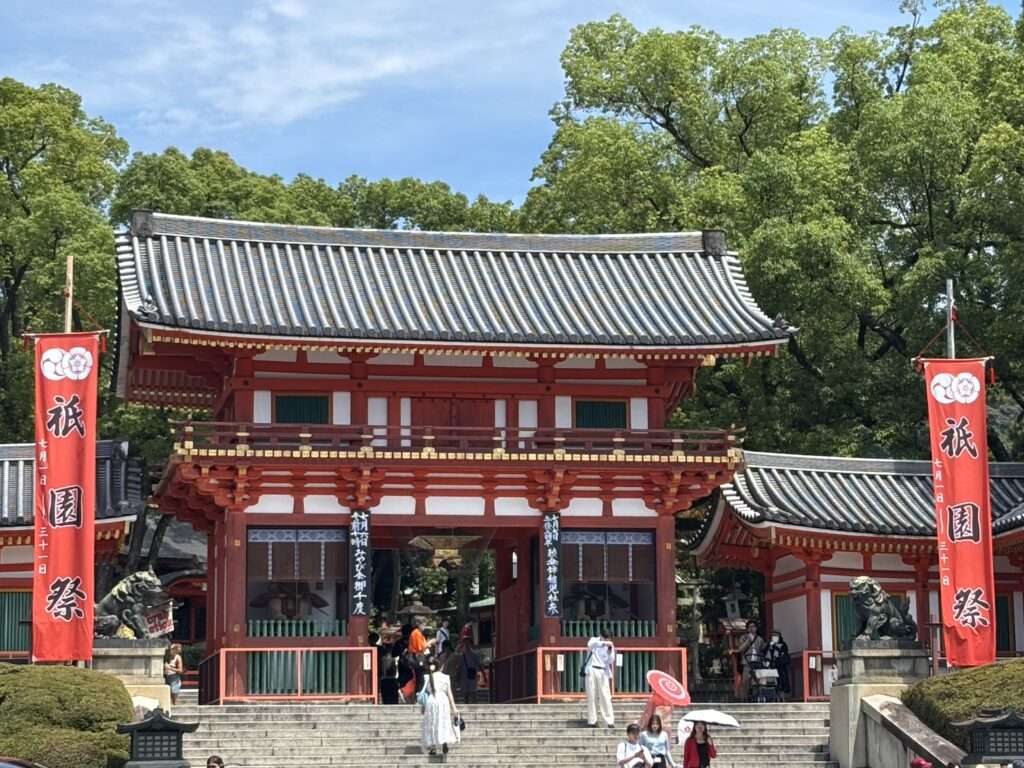
The shrine is most famous for hosting Gion Matsuri, a festival held each July. First held in 869 to appease the gods during an epidemic, the festival has grown into the country’s largest. Every year a local boy is chosen to be the sacred messenger to the gods (called a chigo). Beginning on July 13, his feet cannot touch the ground until after the first parade is held on July 17, during which he rides on the lead float (Naginata-boko). The 3 nights leading up to the parade are essentially street parties, with music, food and drinks bringing locals and tourists alike out to celebrate. The parade features 23 elaborately decorated yama and hoko, two different types of floats collectively known as Yamaboko. The hoko are the larger of the two, standing up to 25 meters tall and weighing up to 12 tons. A smaller parade is held on July 24 and other festival activities continue until the end of the month.
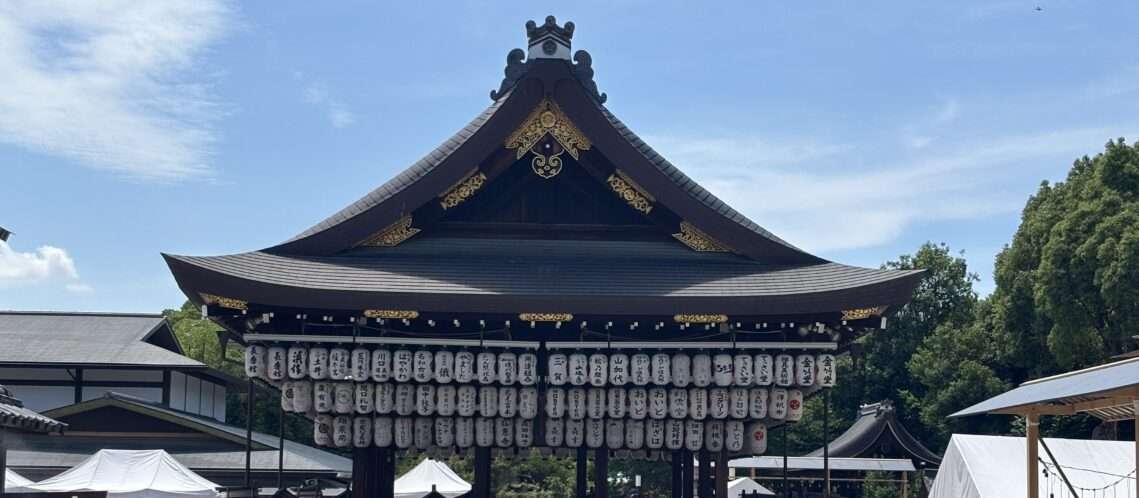
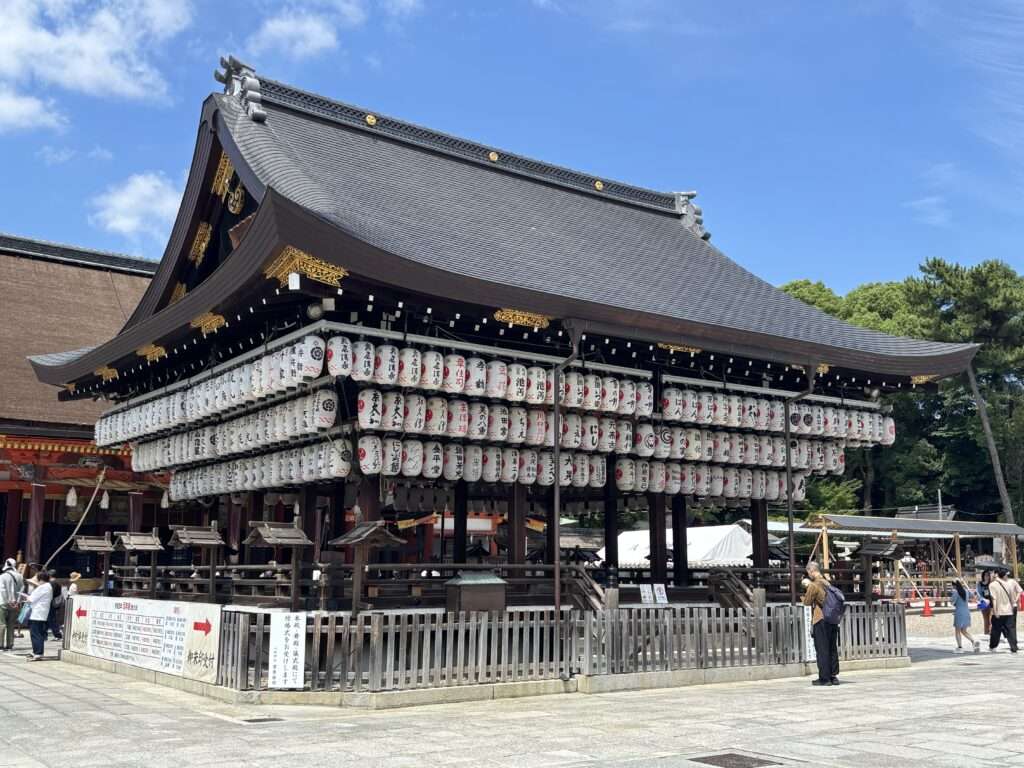
One of the shrine’s highlights is its dance stage, an open-air pavilion featuring hundreds of paper lanterns hanging from the roof eaves. The white paper lanterns display the names of the businesses that donated them. In the evenings they are all lit, creating a glow over the grounds and nearby buildings. I was sorry that we hadn’t thought to stop by here during the evening because I’m sure it was beautiful.
I may have been suffering from shrine overload at this point because I basically just wandered somewhat aimlessly around the grounds for about half an hour. There are a number of subsidiary and auxiliary shrines that I explored and I loved the red-posted lanterns that lined the walkway along the outer edge of the shrine.
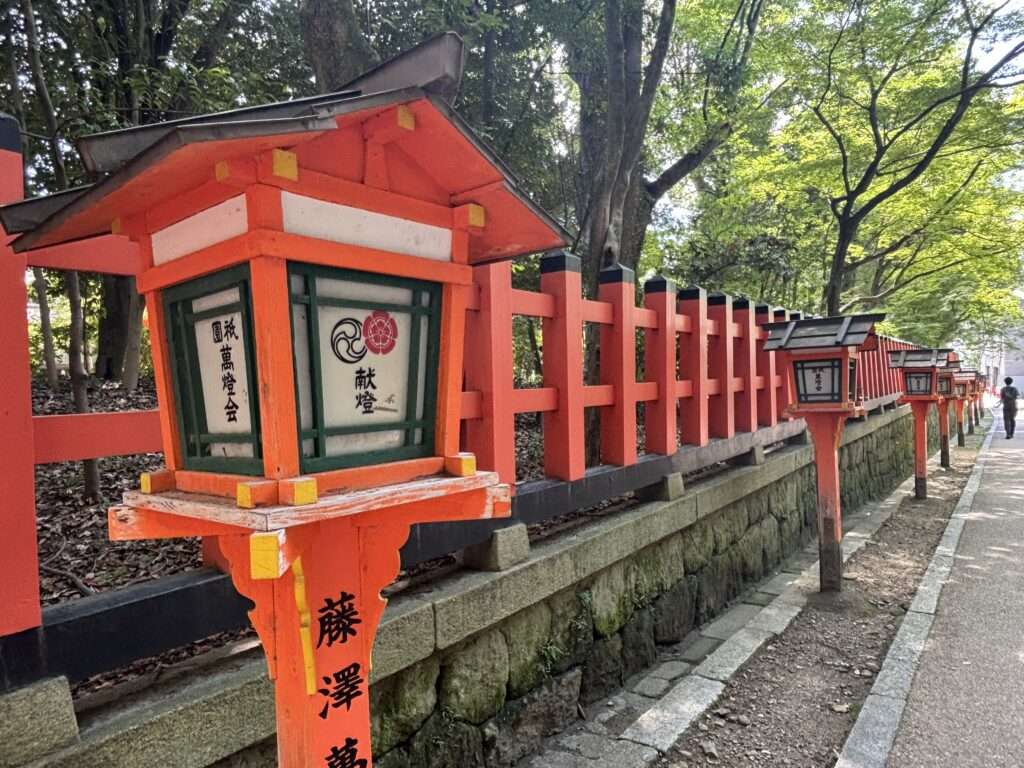
After having walked by it so many times, I was glad that I finally went in to Yasaka Shrine. I would recommend visiting in the evening though, as part of its magic is seeing the lanterns hanging from the dance stage and lining the path all lit up at night.
