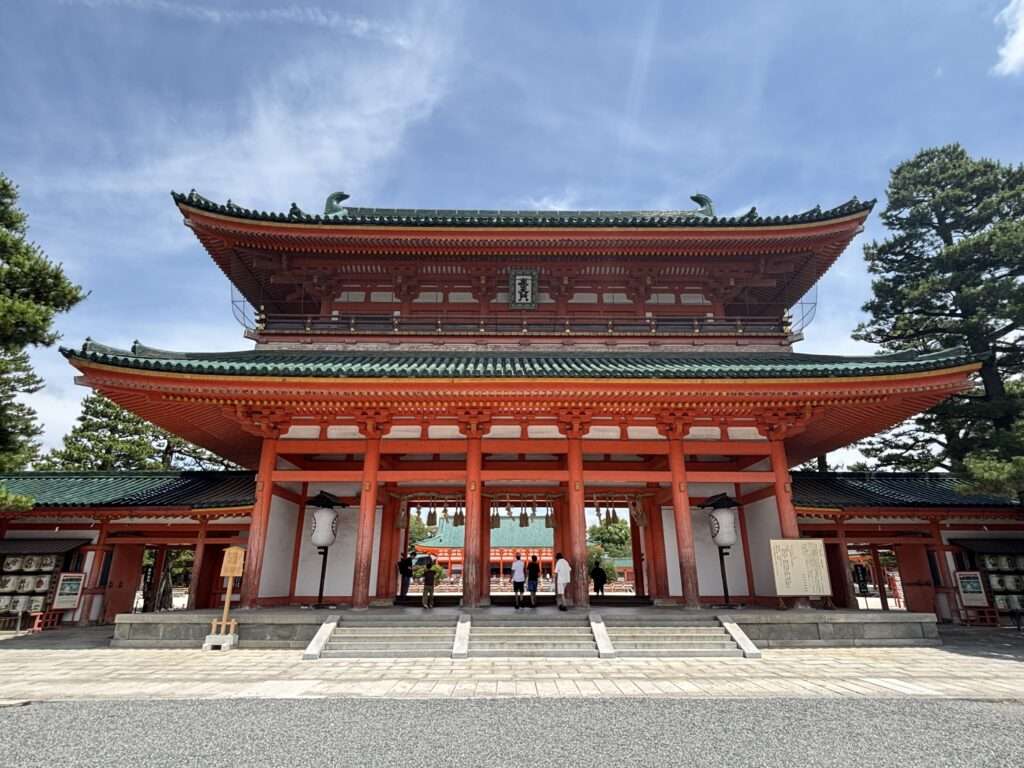
Built in 1895, Heian Jingu is a relatively new shrine by Japanese standards. It was built for the 1,100th anniversary of the founding of the city of Heiankyo (modern day Kyoto), Japan’s imperial capital from 794 to 1868. It enshrined the first and last emperors of the Heian period, Emperor Kanmu and Emperor Komei respectively.
The shrine is a 5:8 scale replica of the State Hall of the original Imperial Palace. Walking through the impressive Otenmon gate, I was struck by how few buildings there were and how large the gravel courtyard was. On the right side of the courtyard is the Kagura-den (Wedding Ceremony Hall) and on the left is Gaku-den (Hall of Votive Tablets). At the far end of the courtyard across from the Otenmon gate is Daigoku-den (Great Hall of State), with Soryu-ro (Blue Dragon Tower) and Byakko-ro (White Tiger Tower) on either side. But it is mostly just open space.
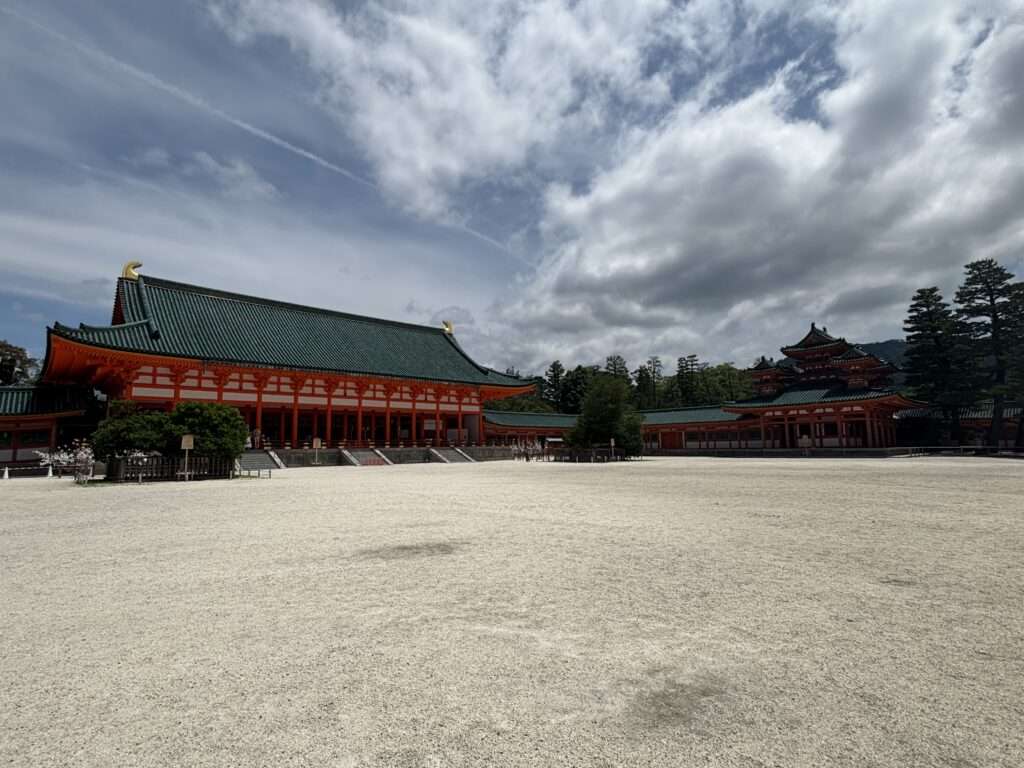
To the left of the Great Hall is the entrance to the gardens. There is a ¥600 fee to tour the Shin-en Garden (Garden of the Gods) but it is well worth it. The garden covers 33,000 square meters of land and is broken up into 4 distinct sections of the garden: Minami (South), Nishi (West), Naka (Middle), and Higashi (East).
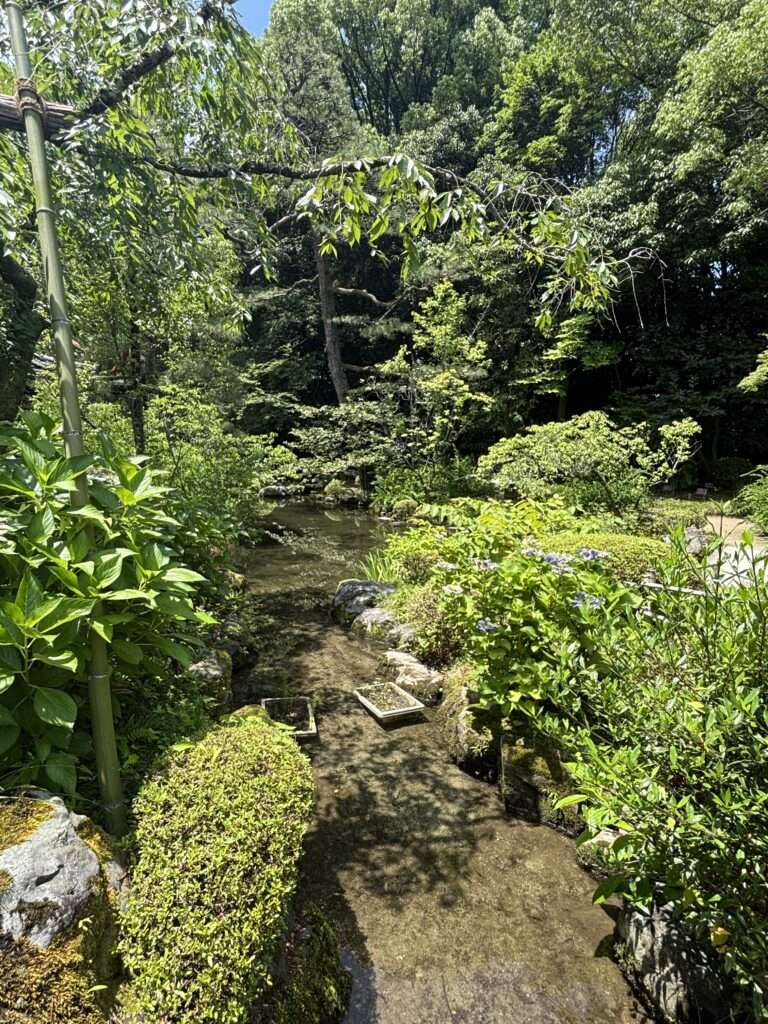
Entering the gardens is like entering another world. The vast openness of the shrine courtyard stands in sharp contrast to the lush beauty of the land beyond the garden gate. I immediately felt a sense of peace wash over me and slowed my pace to fully take in my surroundings.
There is a route to follow, although there are a few offshoot paths that offer alternate ways to go. You start in the South Garden (Minami Shin-en), which features dozens of cherry trees (which unfortunately were not blooming) and a small stream flowing through it.
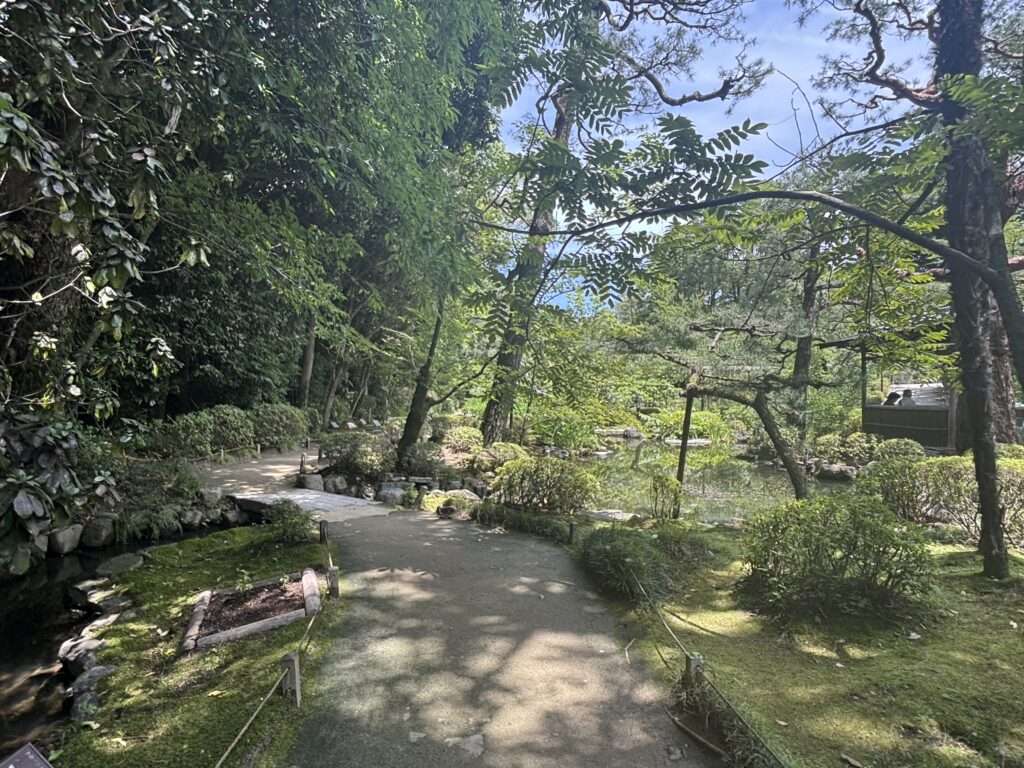
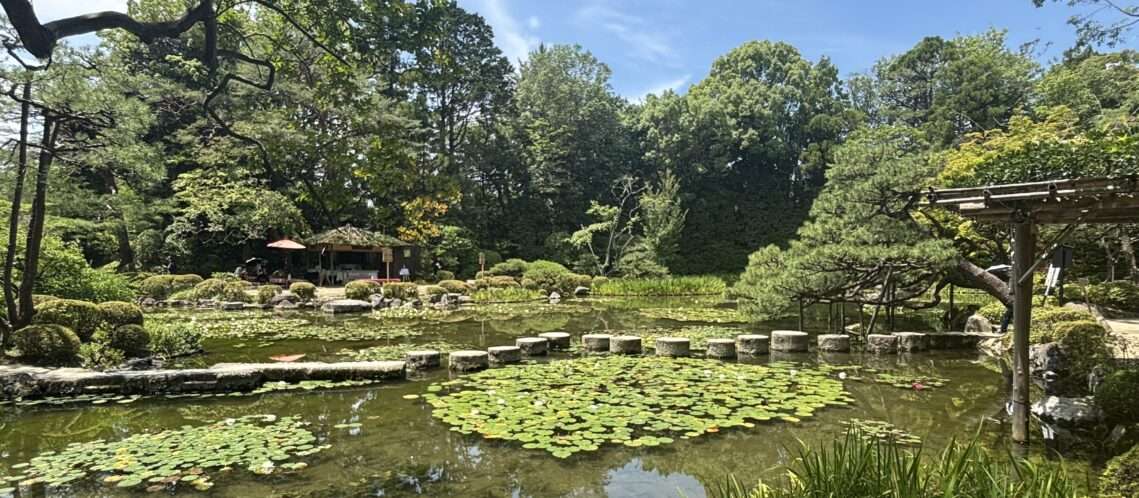
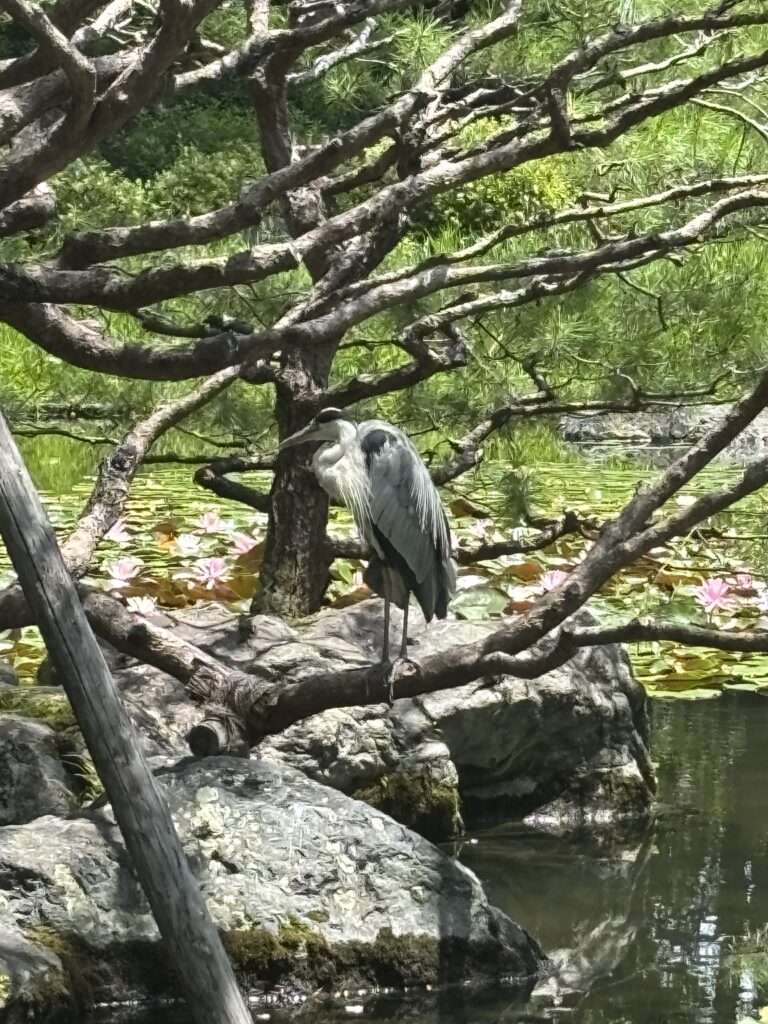
The next section is the West Garden (Nishi Shin-en). There is a small tea shop called Choshin-tei here, but it is closed to the public except during special events. The main feature of this section of the garden is the beautiful pond Byakko-ike (White Tiger Pond). We were a few weeks too late to see the irises in bloom but there were plenty of East Asian yellow water lilies in bloom. And there was a beautiful grey heron perched on a tree on an island in the middle of the pond.
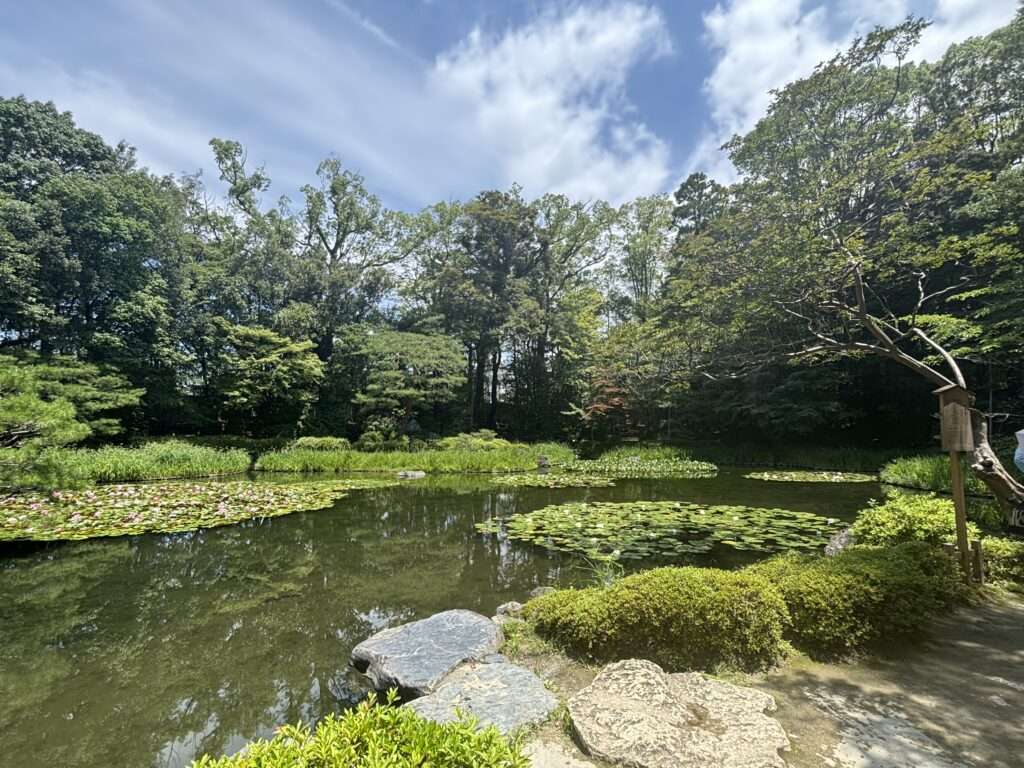
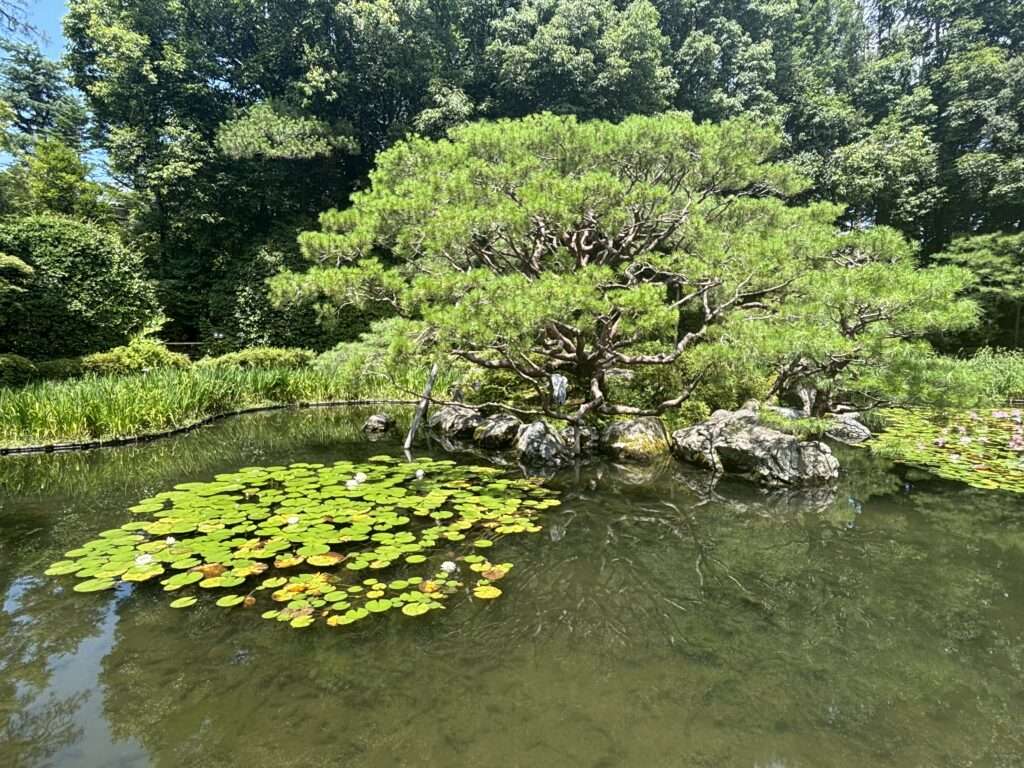
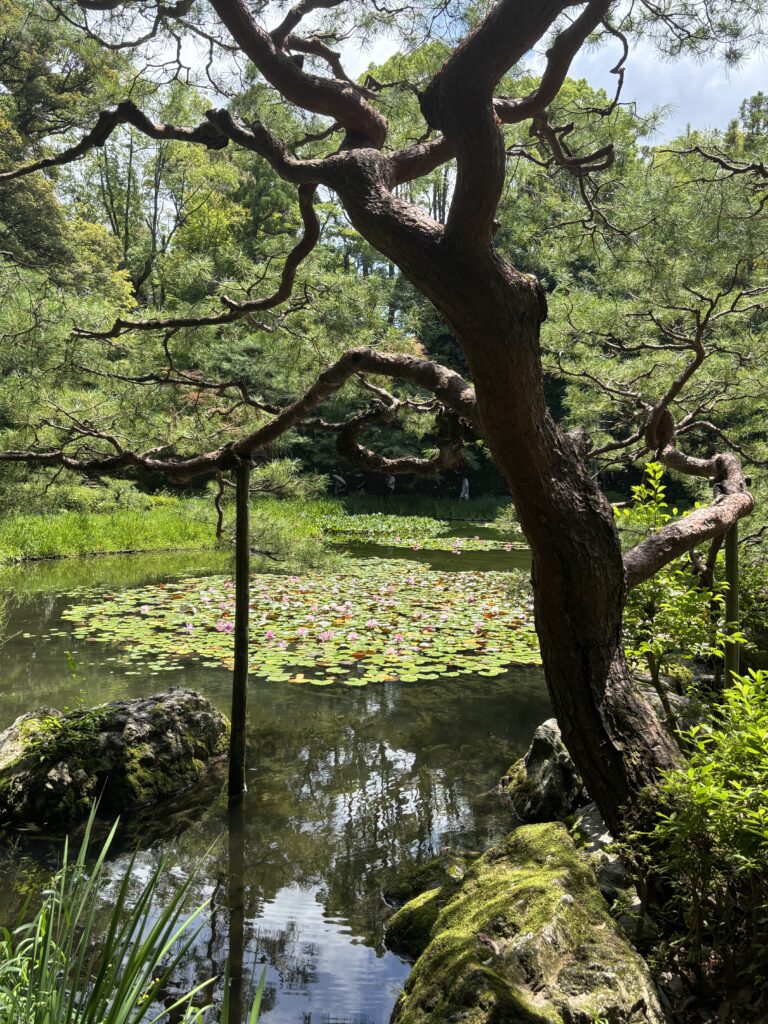
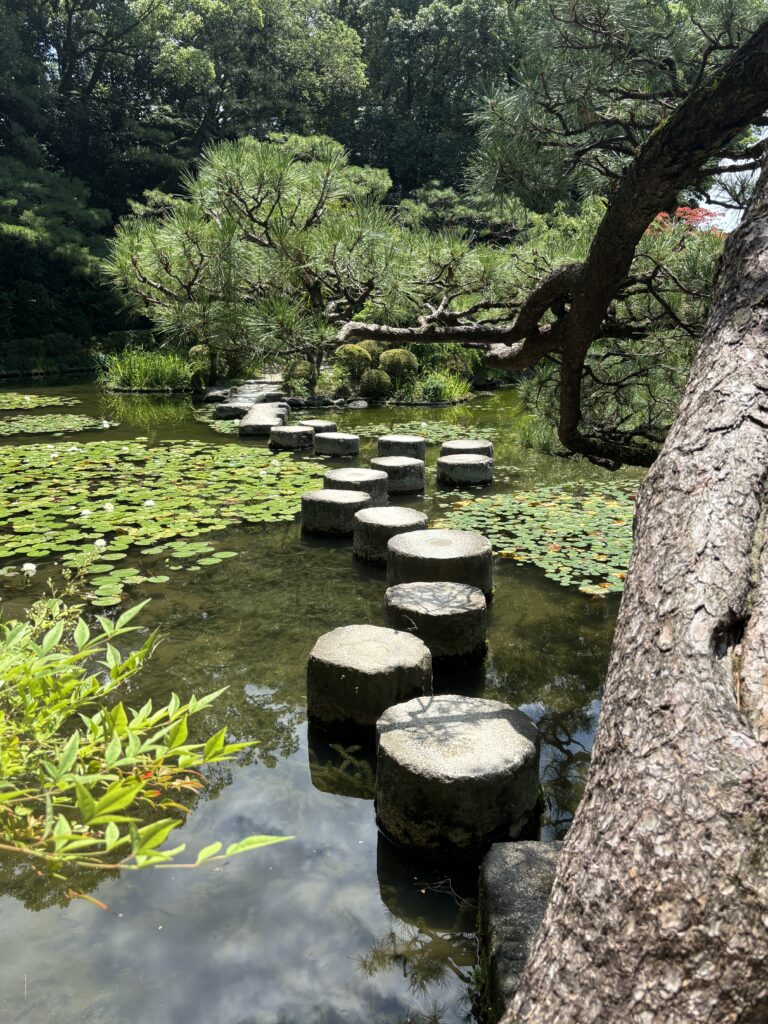
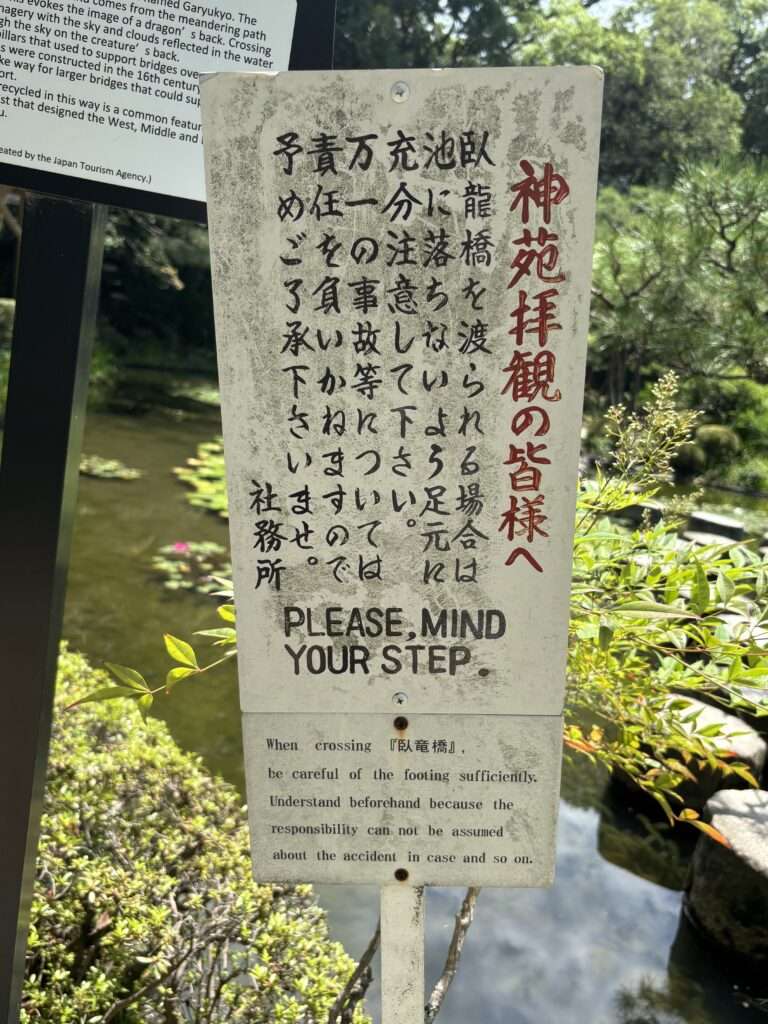
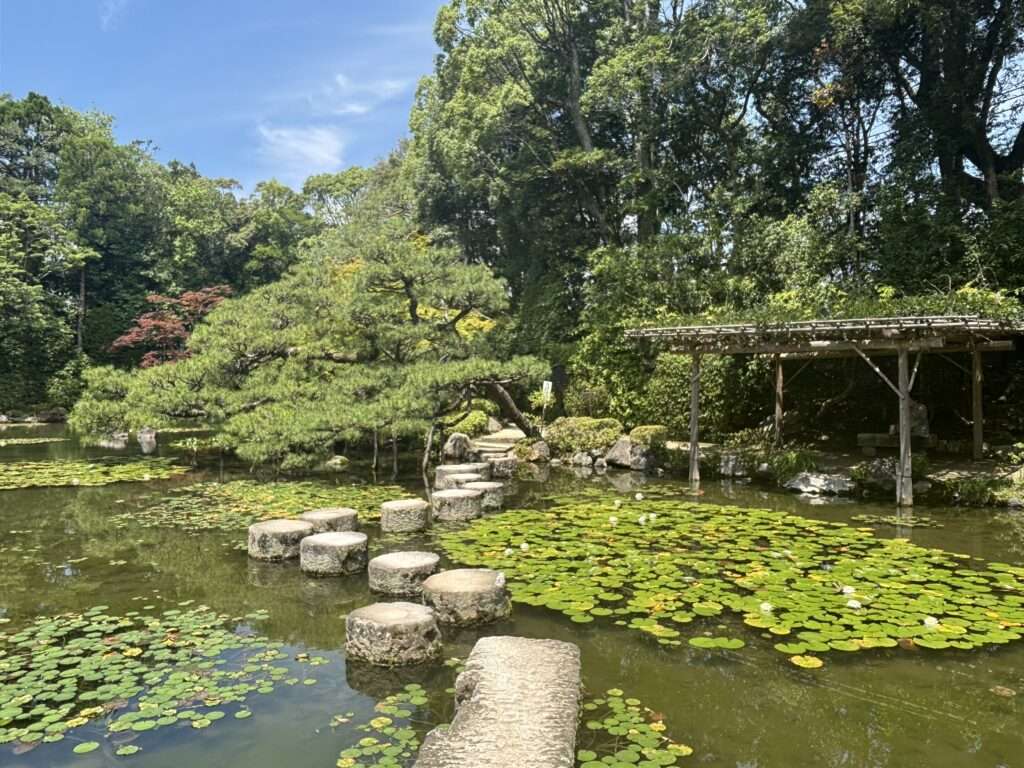
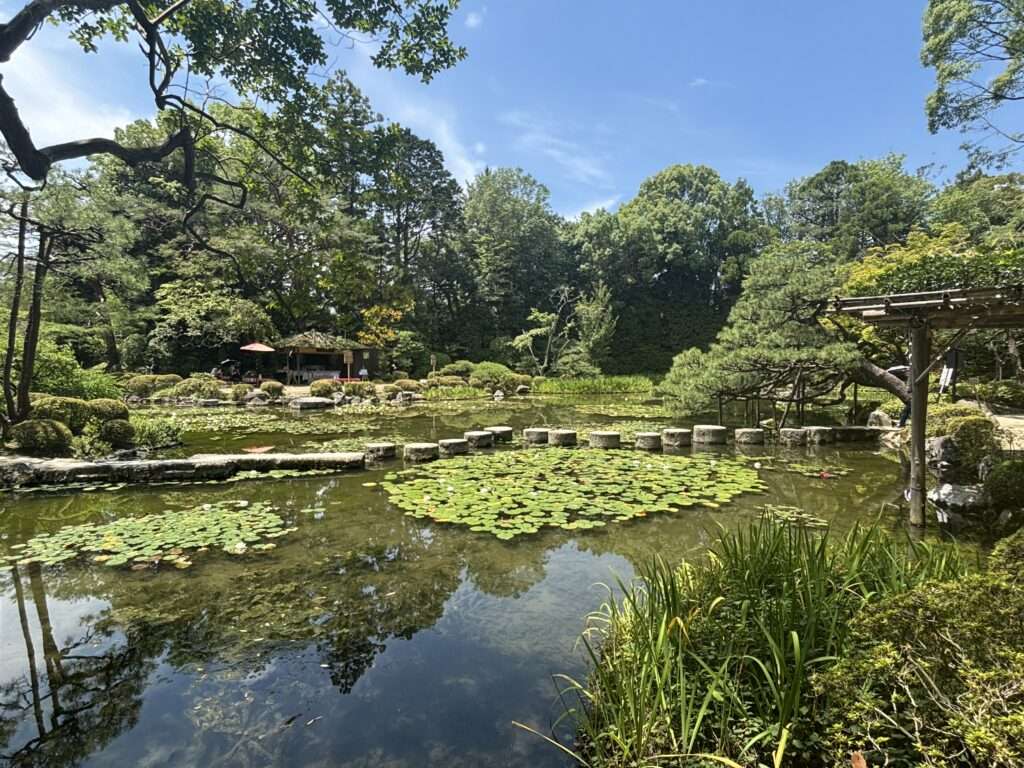
Continuing around the path the Middle Garden (Naka Shin-en) is next. There is another beautiful pond here, Soryu-ike (Blue Dragon Pond). (The two ponds share the same names as the two building flanking the Great Hall in the shrine’s courtyard.) This pond somehow seemed even more lush, with more water lilies floating in it and beautiful plants surrounding it. But the feature that stands out the most is the Garyūkyō, a line of flat circular stepping stones that zig zags across the water. Garyūkyō means “Hidden Dragon Bridge” and is named that way because the meandering path of stones looks like a dragon’s back. Dragons are considered lucky and successfully walking across the stones (the dragon’s back) is said to bring strength and good fortune. (Fun fact: the stepping stone path was featured in the movie Lost in Translation.)
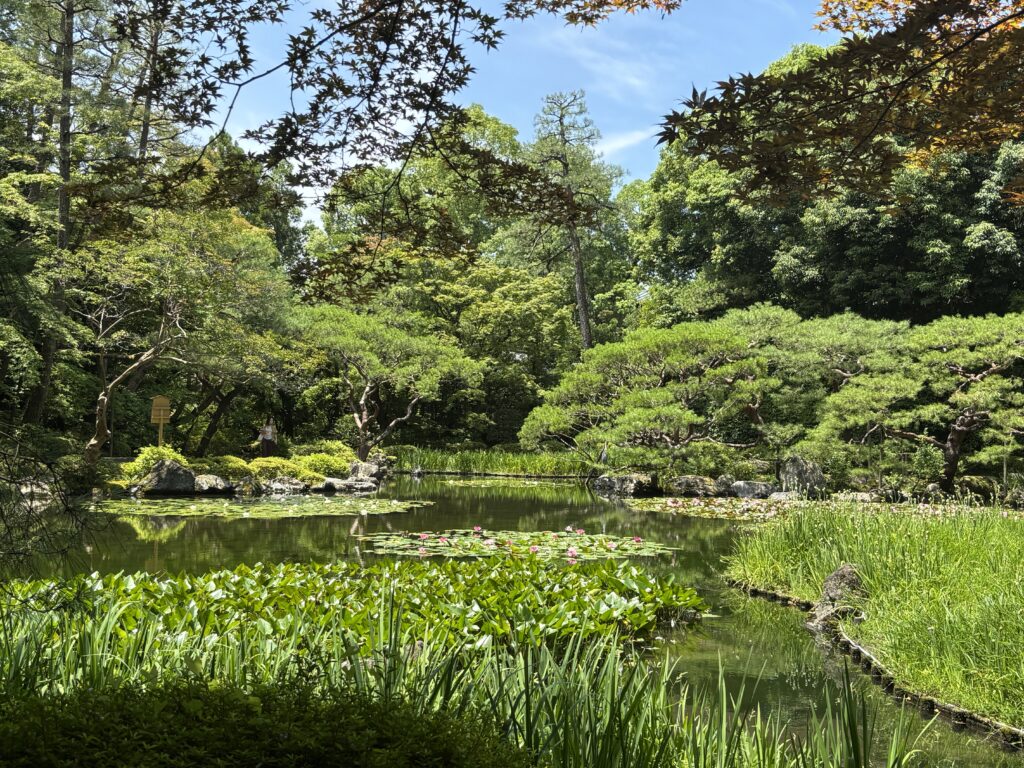
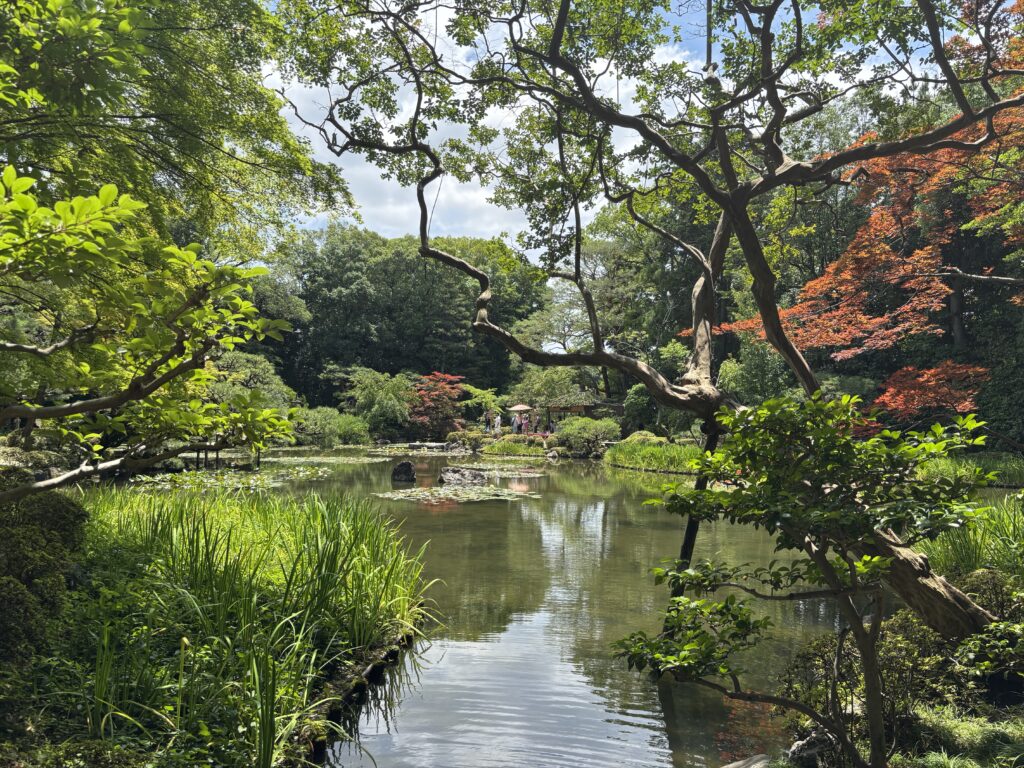
The last and largest section of the garden is the East Garden (Higashi Shin-en). This section features the largest pond, Seiho-ike (Phoenix Roost Pond). Although the pond is surrounded by lush greenery, the highlight of this area of the garden is the Taihei-kaku bridge. The beautiful covered wooden bridge was a gift from the Japanese Imperial family and was relocated from the Imperial Palace to the gardens in 1916.
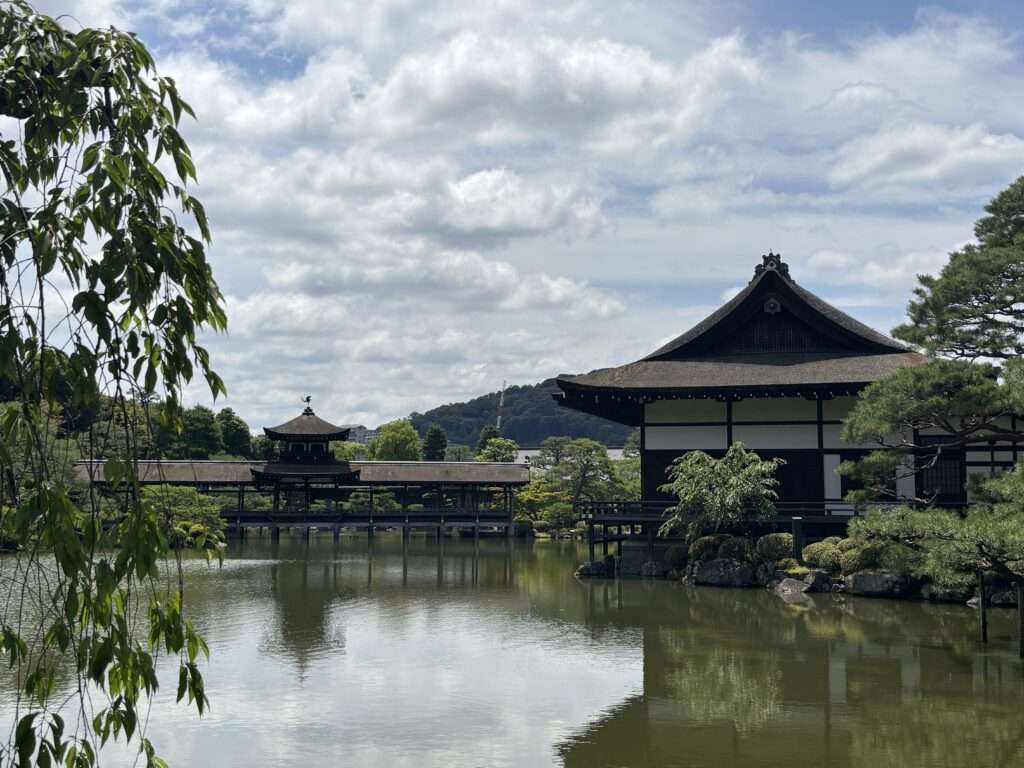
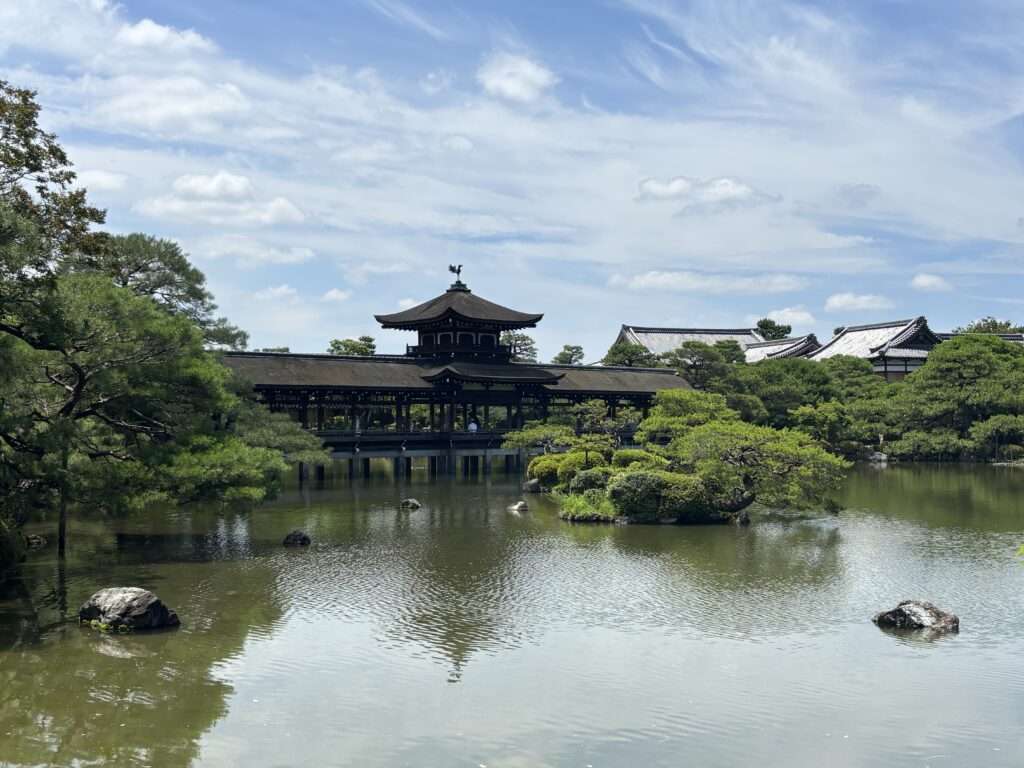
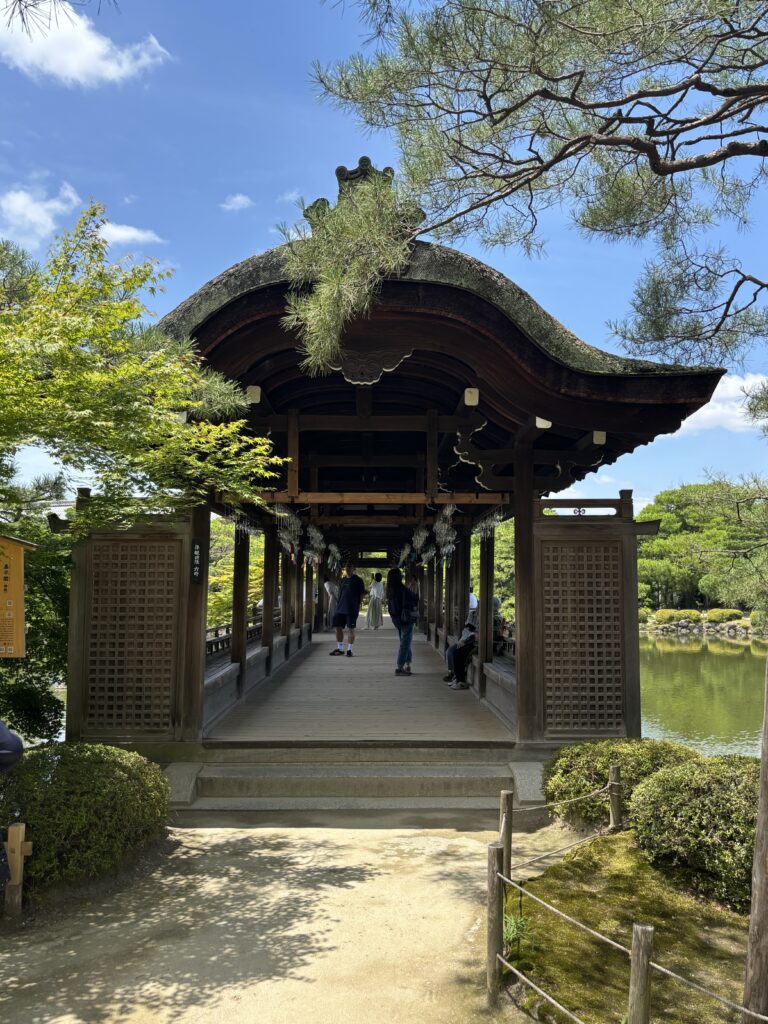
Shin-en Garden was truly stunning. As impressed as I was with our visit to Sogen Pond Garden in Tenryu-ji Shrine the day before, Shin-en Garden simply blew that away. The gardens are large, lush, and diverse. It was so peaceful walking through its meandering paths, enjoying the shade of the trees, the flowering plants, and the quiet wildlife. It’s amazing to me that this gorgeous spot is hidden behind the large, open, nondescript gravel courtyard of Heian Jingu Shrine, which is itself in the middle of the city. What a hidden treasure!
