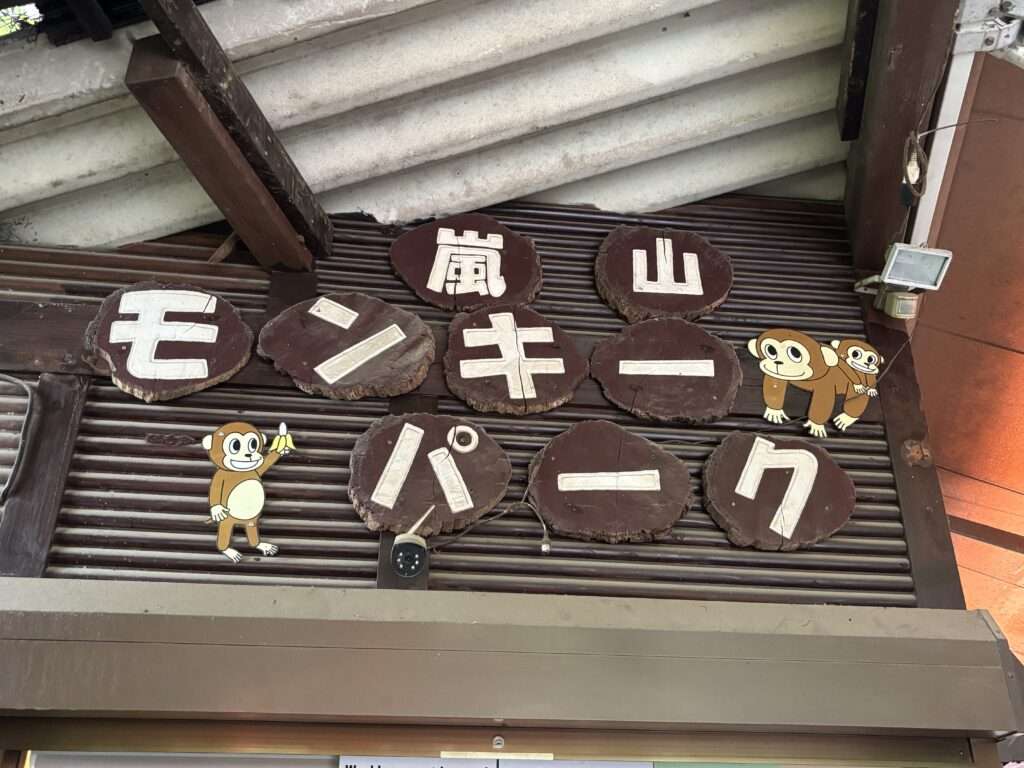
After exploring the Bamboo Grove and Sogenchi Teien, we were ready to see some monkeys! We grabbed a quick bite to eat and then crossed Togetsu-kyo Bridge over the Oi River to get to the entrance to the Arashiyama Monkey Park.
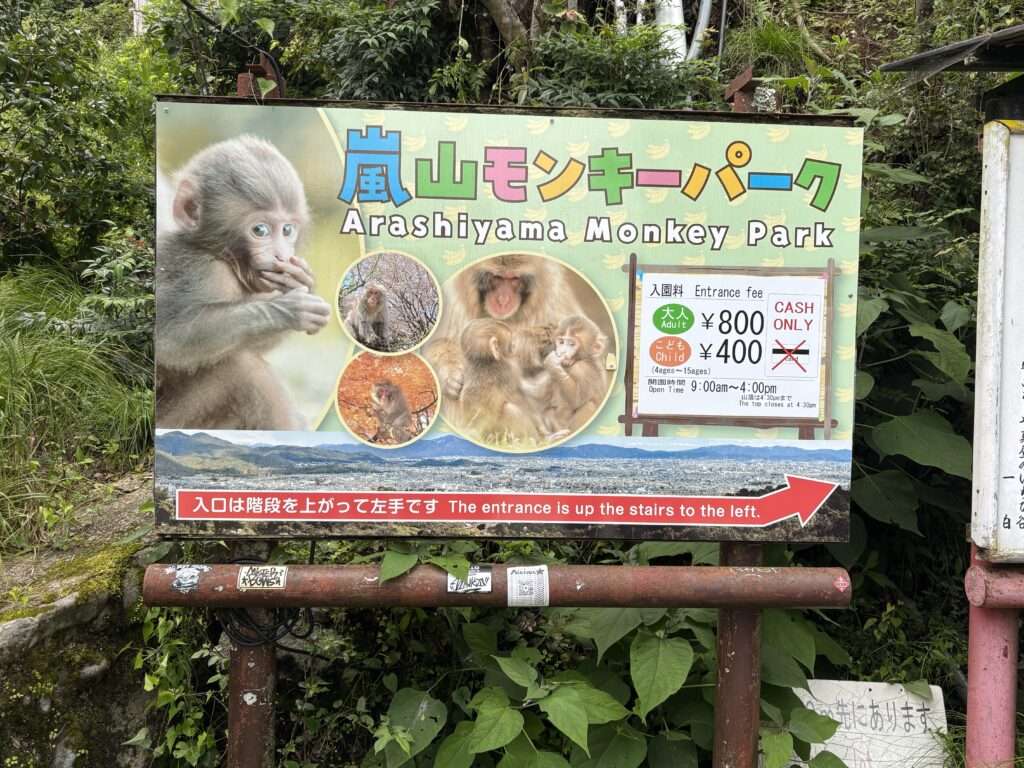
The monkey park costs ¥800 for adults and ¥400 for children ages 4-15, payable in cash only. We paid the fee, grabbed some of the maps that doubled as a fan (it was hot!), and started the walk up.
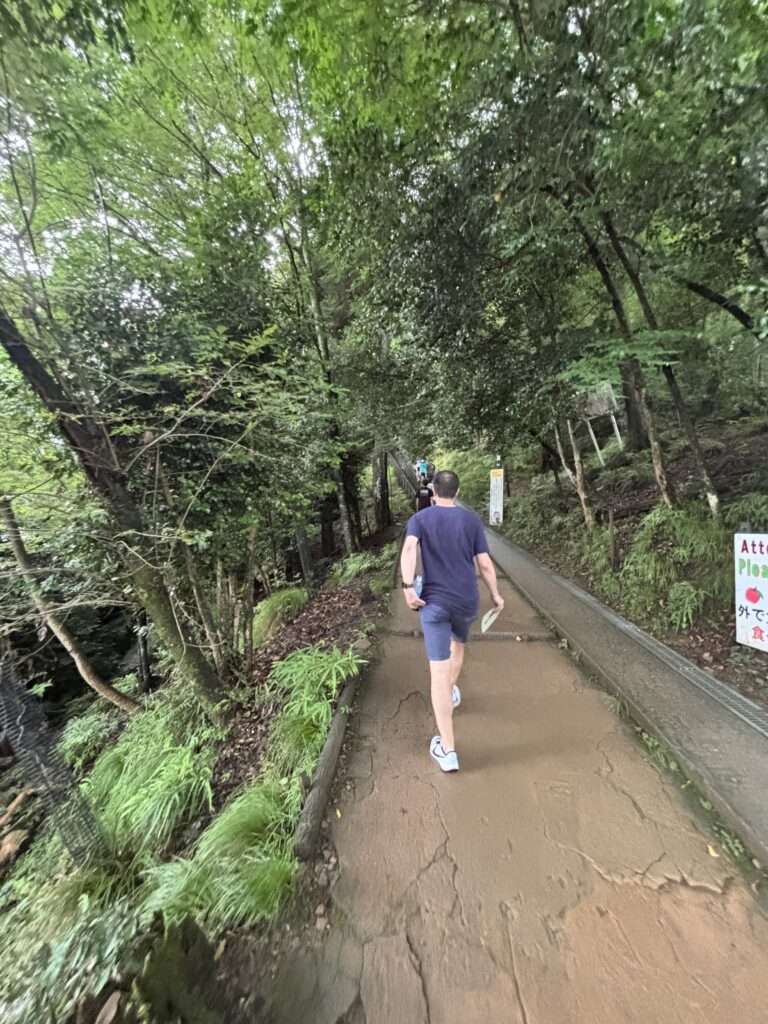
The hike is steep with a combination of steps and paved trail used on the switchbacks all the way up the mountain. It was raining when we came back down and the path was a little slippery so use caution when it is wet. It took us about 20 minutes to get up, including a quick stop at the little playground and rest area near the top.
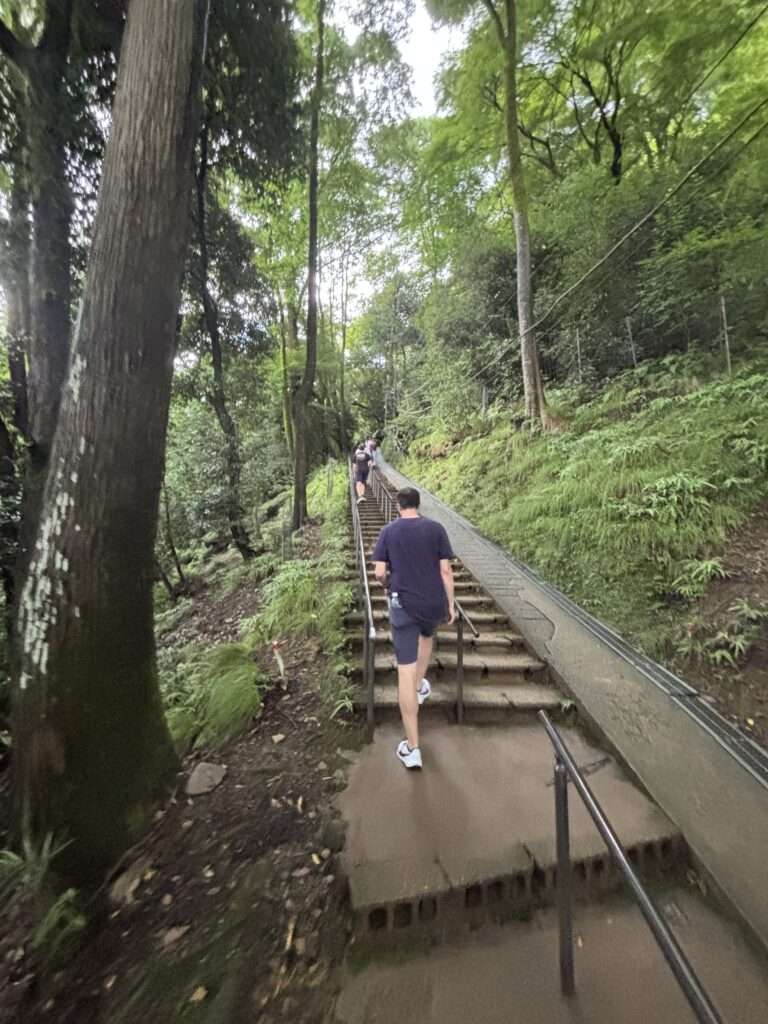
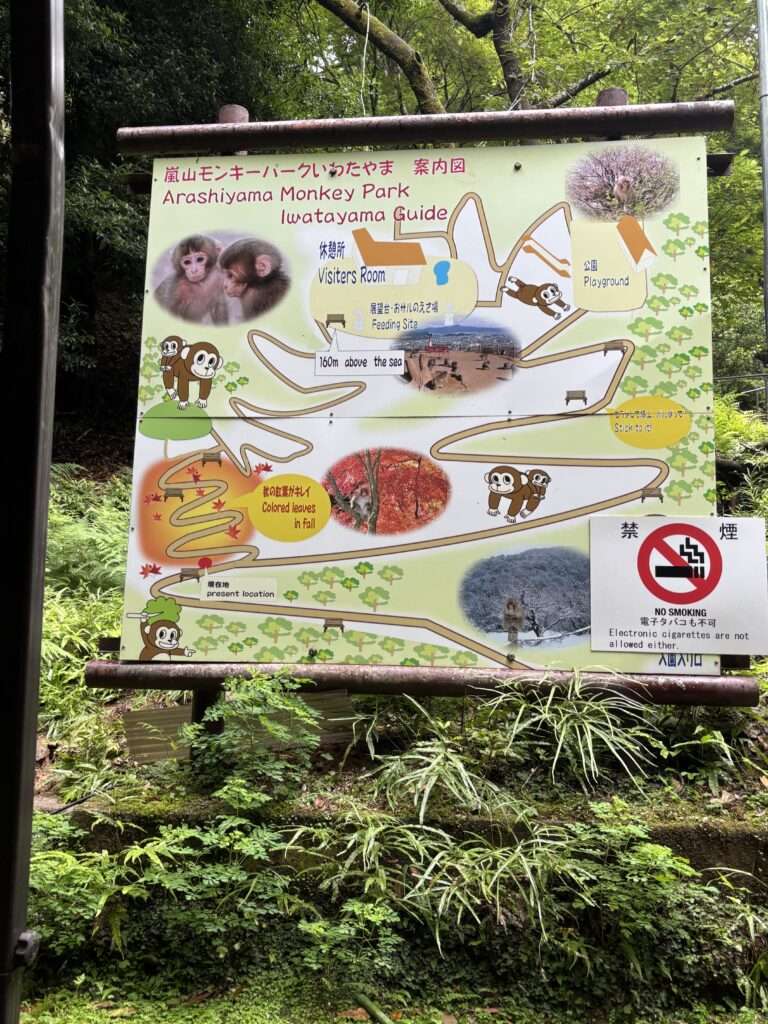
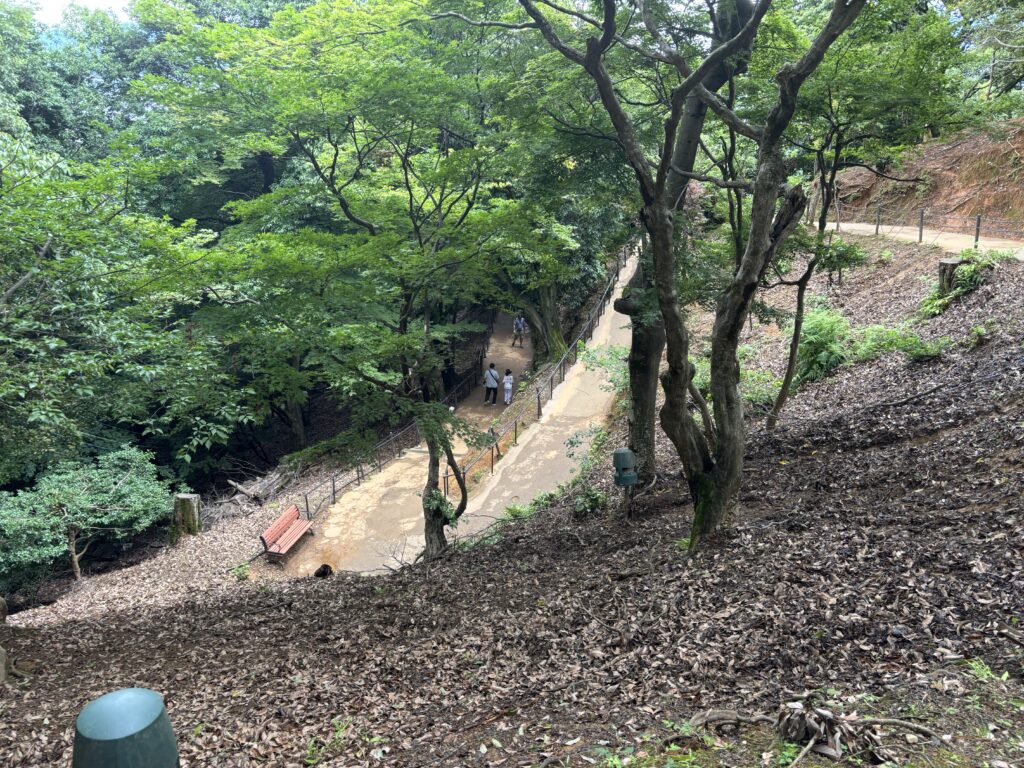
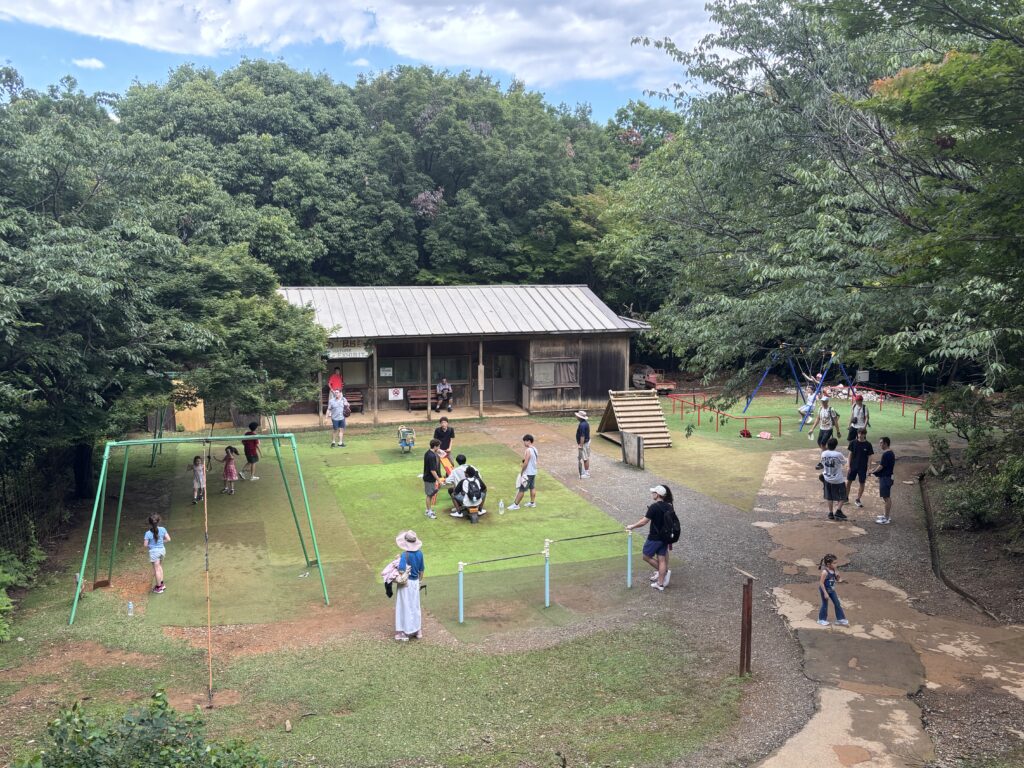
The top of the mountain is the main observation area and feeding site for the monkeys. There is a large open space with benches for people to sit on and enjoy the view and observe the monkeys, and there is a feeding hut where you can buy food (peanuts and apple pieces) to feed the monkeys through the cage wire.
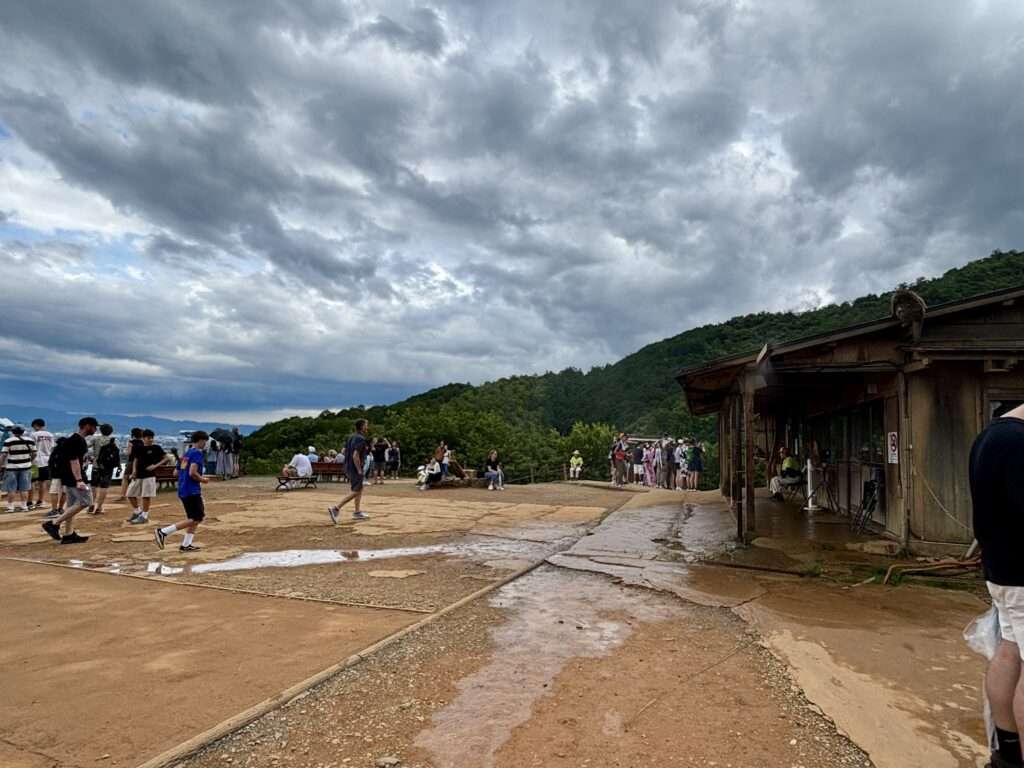
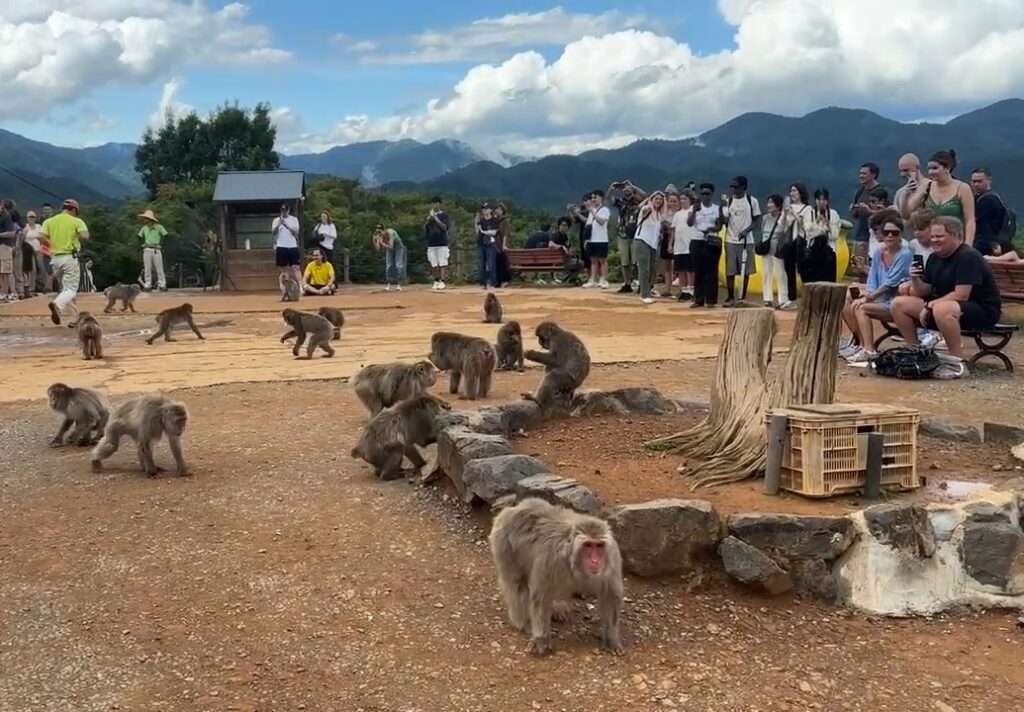
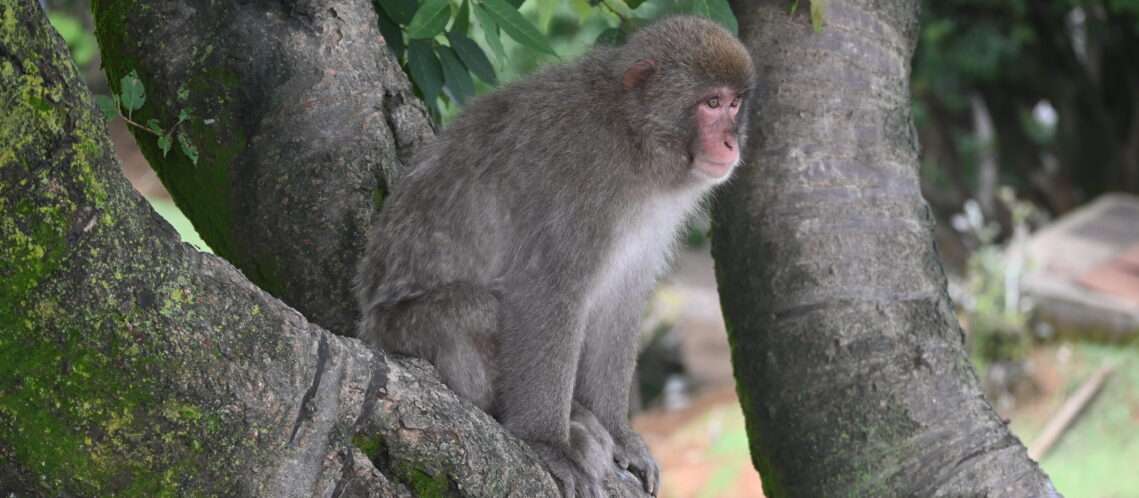
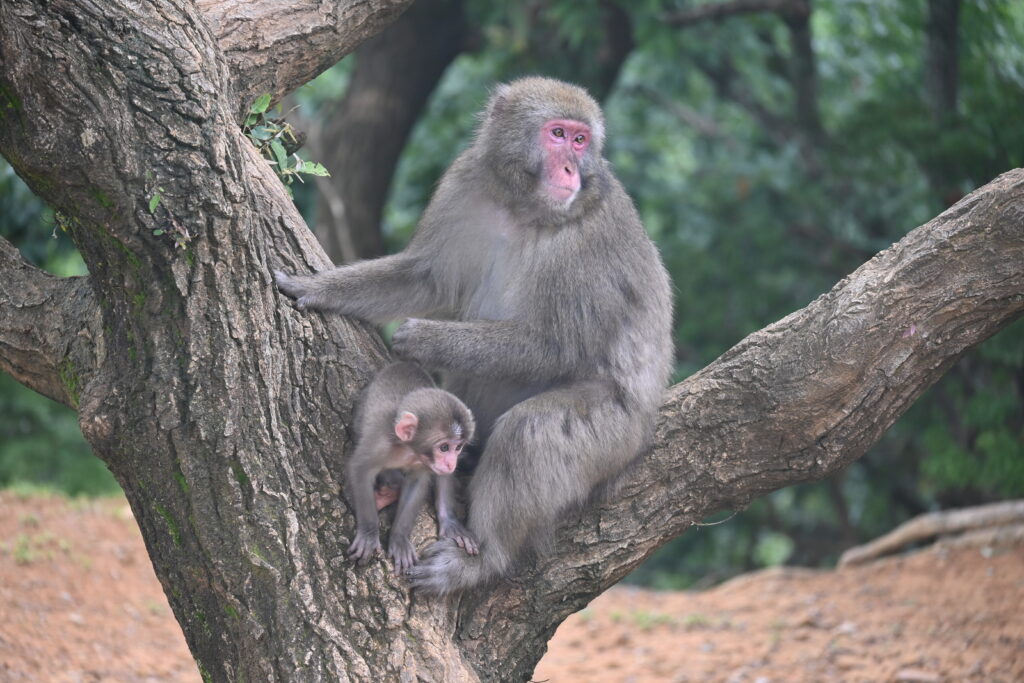
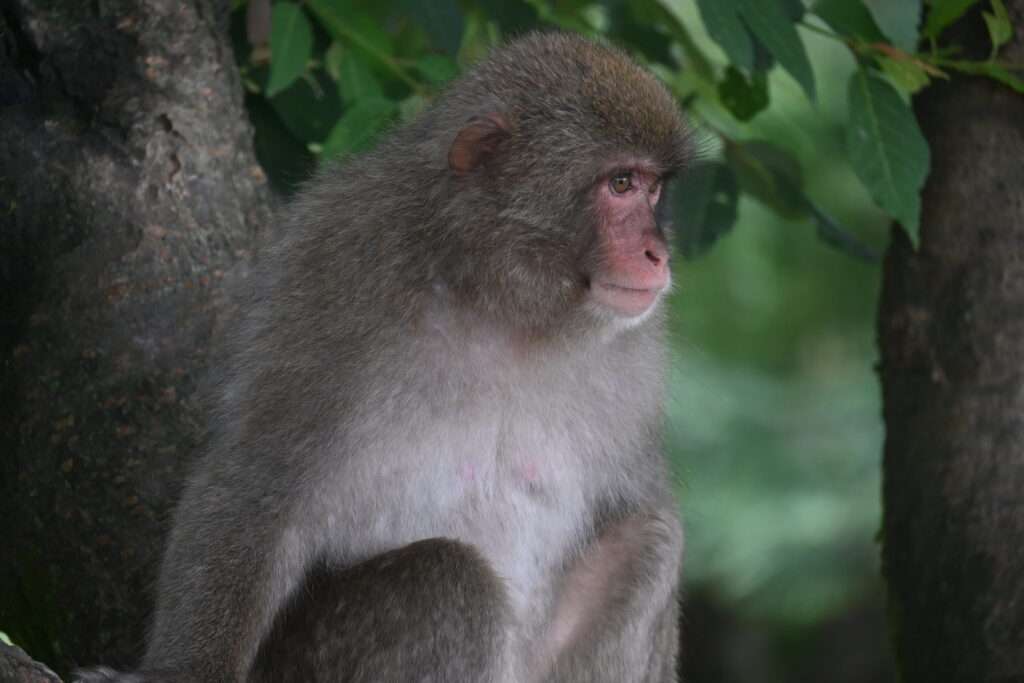
There are approximately 120 wild Japanese macaques that live on the mountain here. Although they appear tame, they are technically wild as they are not in an enclosed area and are free to leave the mountain at any time. But they have a pretty good life here – regular feedings from staff and on-demand treats from visitors. There is little incentive for them to leave and try to survive on their own. In exchange for the regular feedings, the park staff get to observe and study the monkeys.
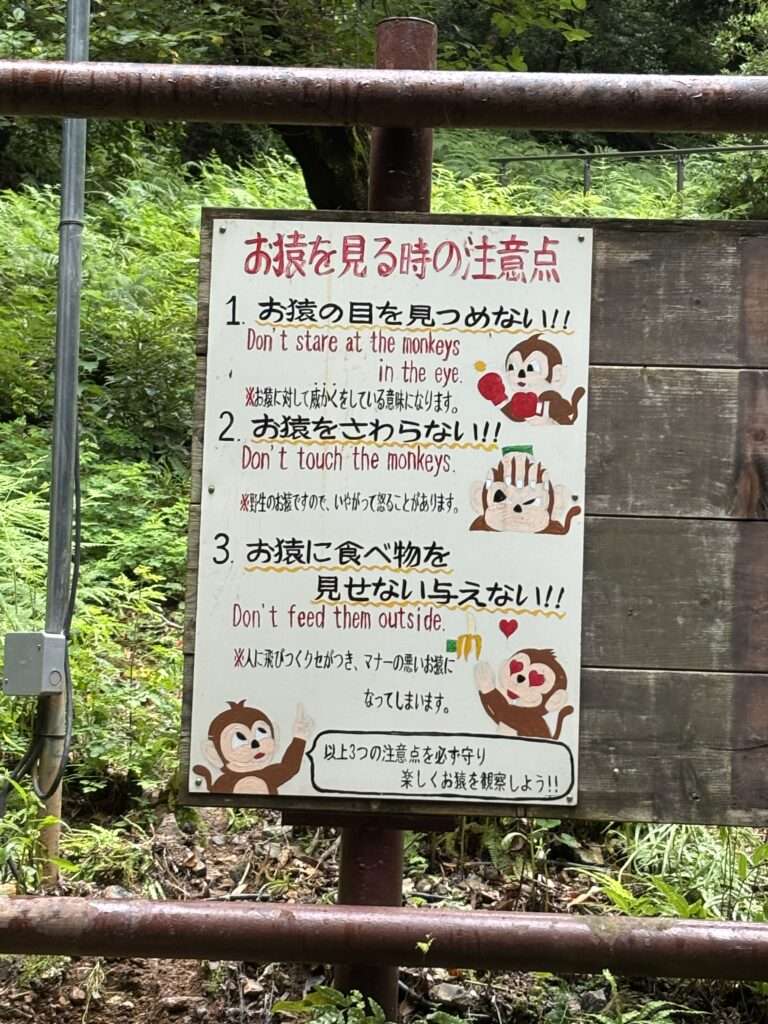
Since the monkeys are wild, the park posts three rules:
- Don’t look the monkeys in the eye
- Don’t touch the monkeys
- Don’t feed the monkeys outside of the feeding hut
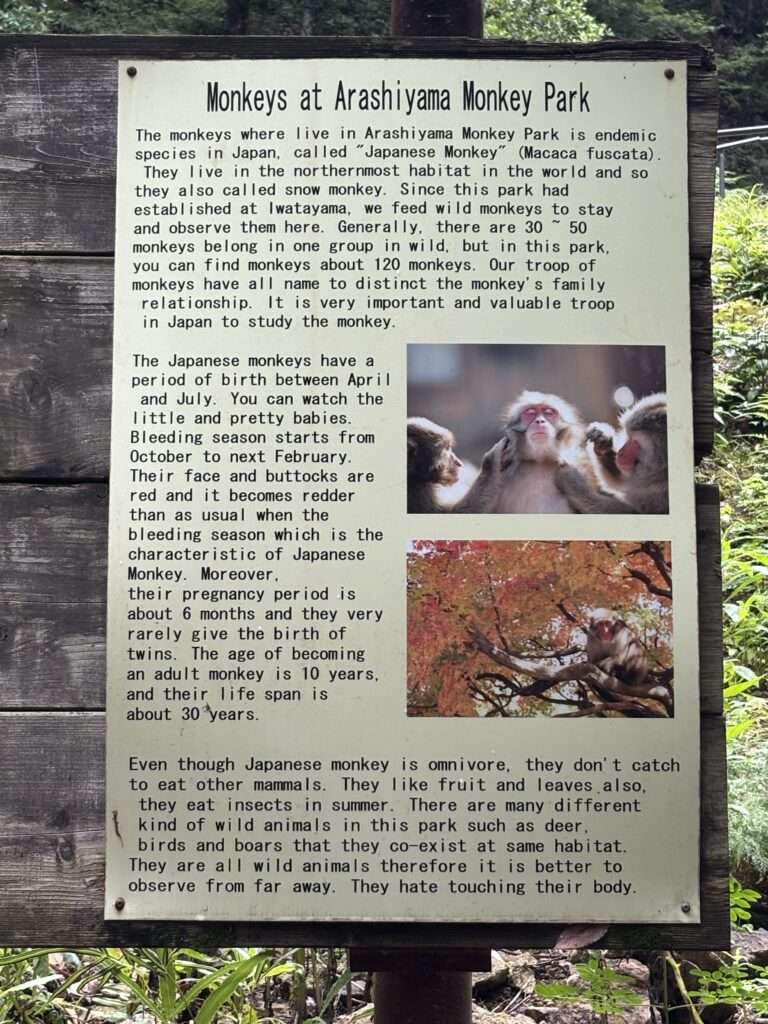
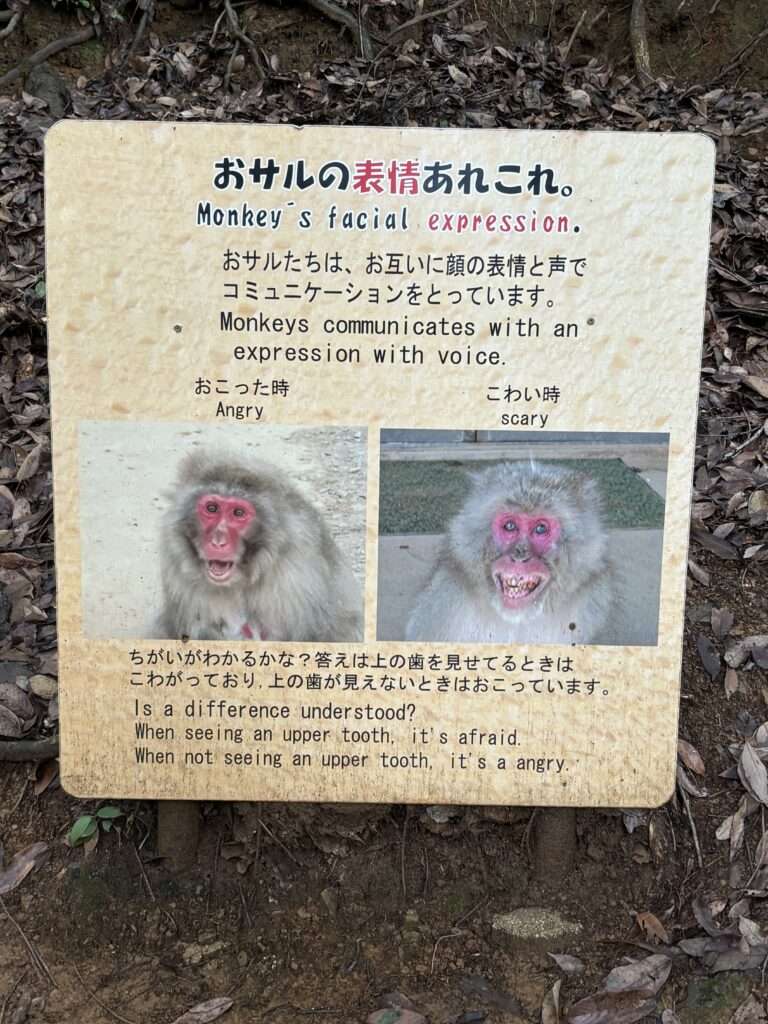
You are also asked to keep your distance. Photos are encouraged but you are asked to stay 6-7 feet back. The monkeys themselves didn’t always follow this rule but we did what we could to respect the spacing.
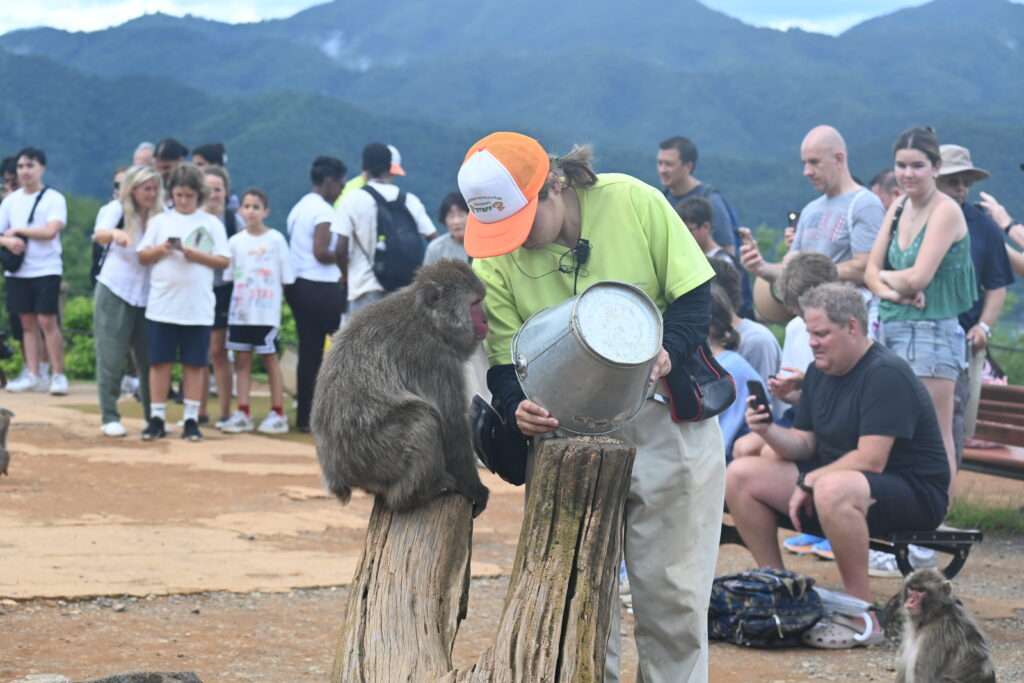
Shortly after we arrived a staff member came out to the main observation area to feed them. She spread food from a bucket all over the ground and on the tree stumps, and dozens of monkeys came scrounging for the food.
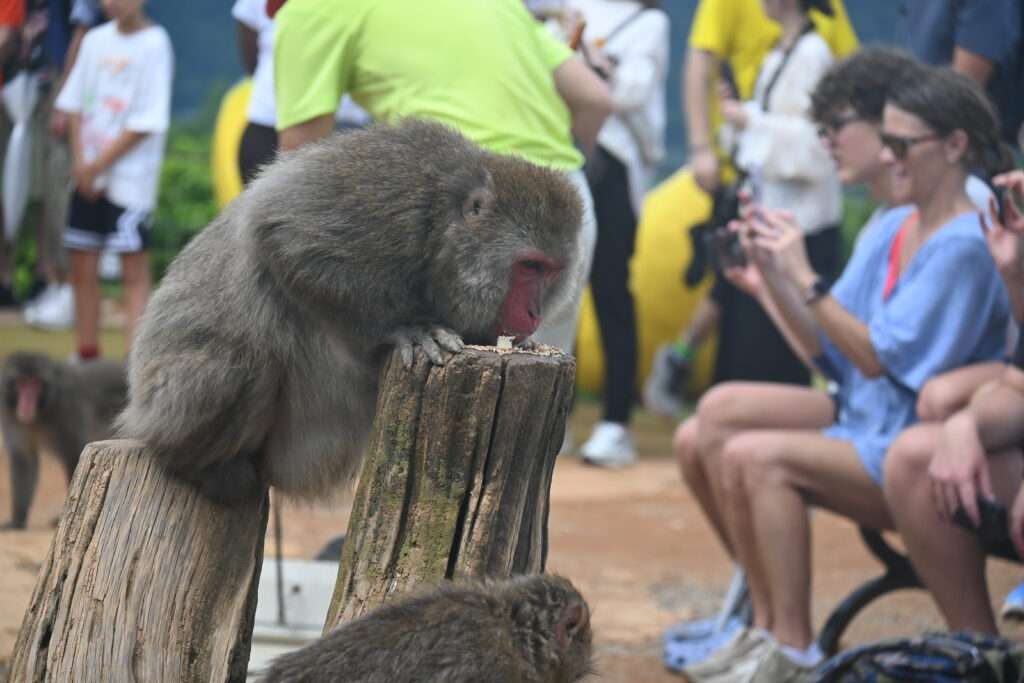
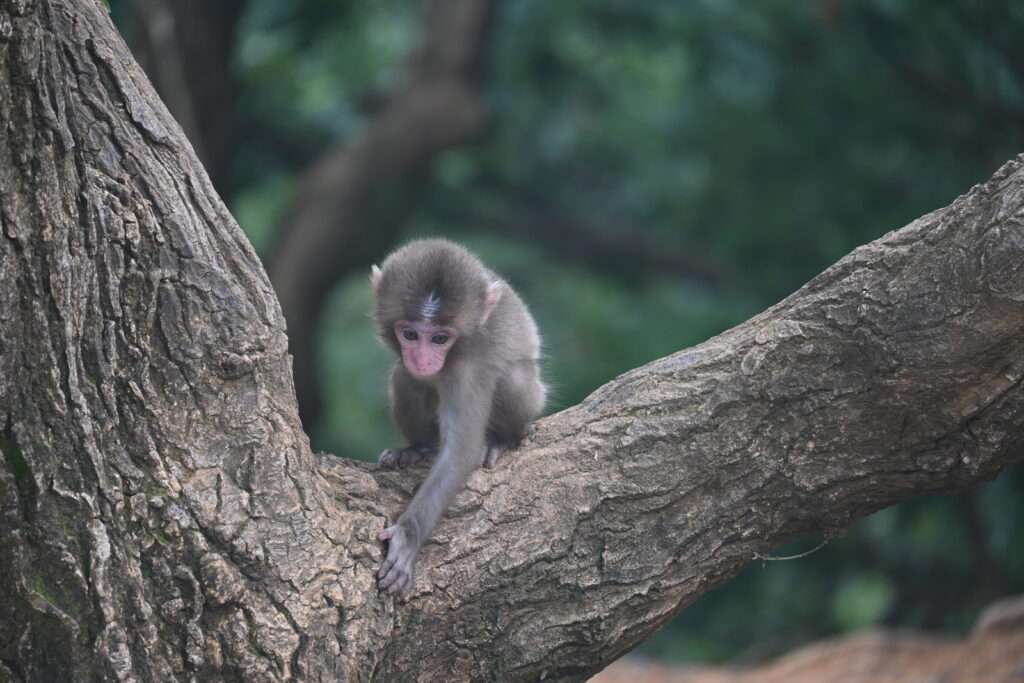
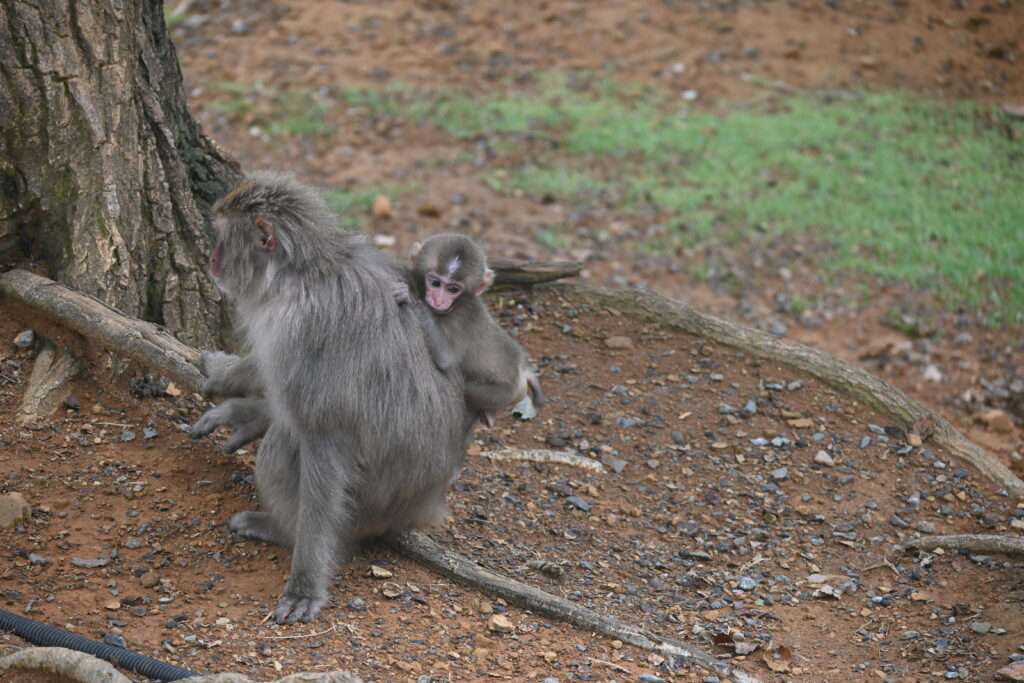
While it was neat to see so many of the monkeys congregated in one space, I much preferred to watch them in the more natural habitats surrounding the observation area. Monkeys relaxed in trees, lounged in the grass, and groomed each other in the surrounding areas. We were especially lucky to be there after the birth period (April through July) so we got to see lots of babies. It was adorable to see the babies clinging to their mothers as they walked around.
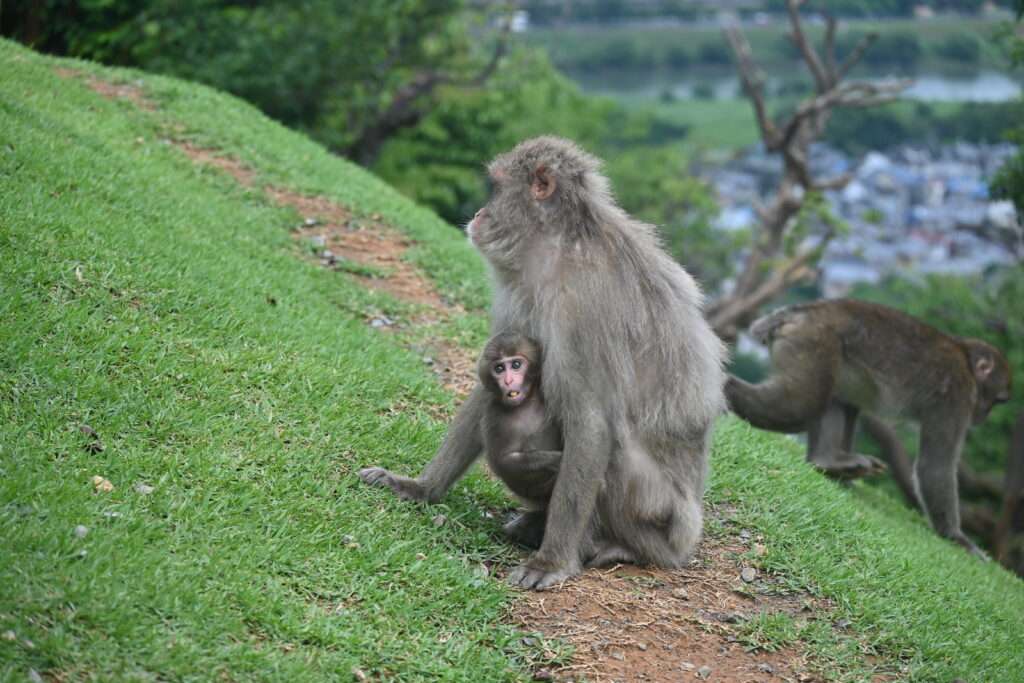
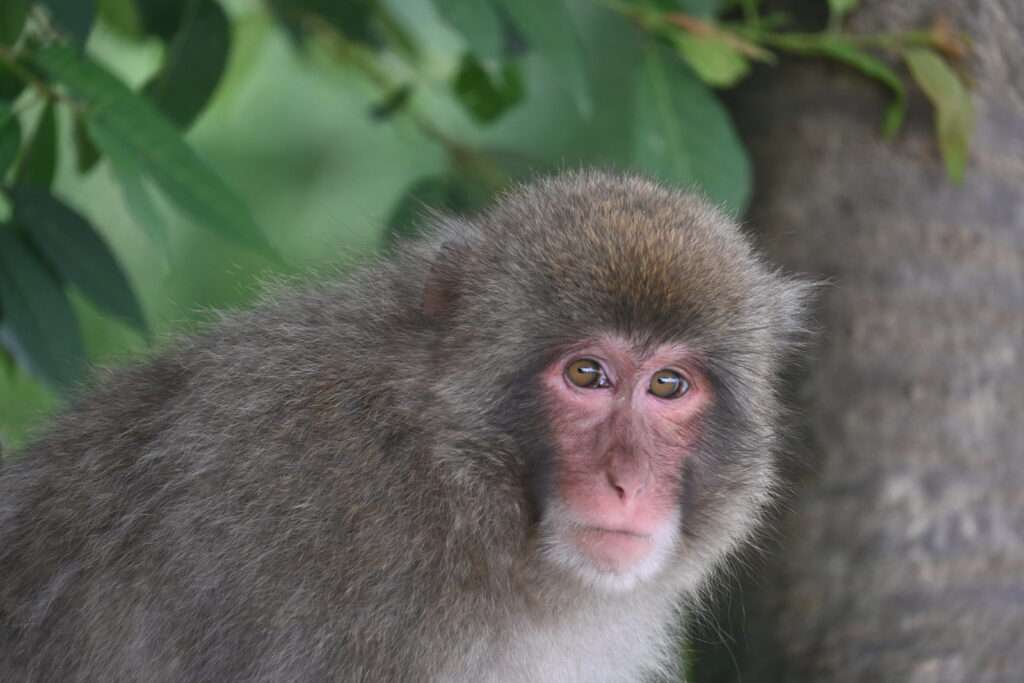
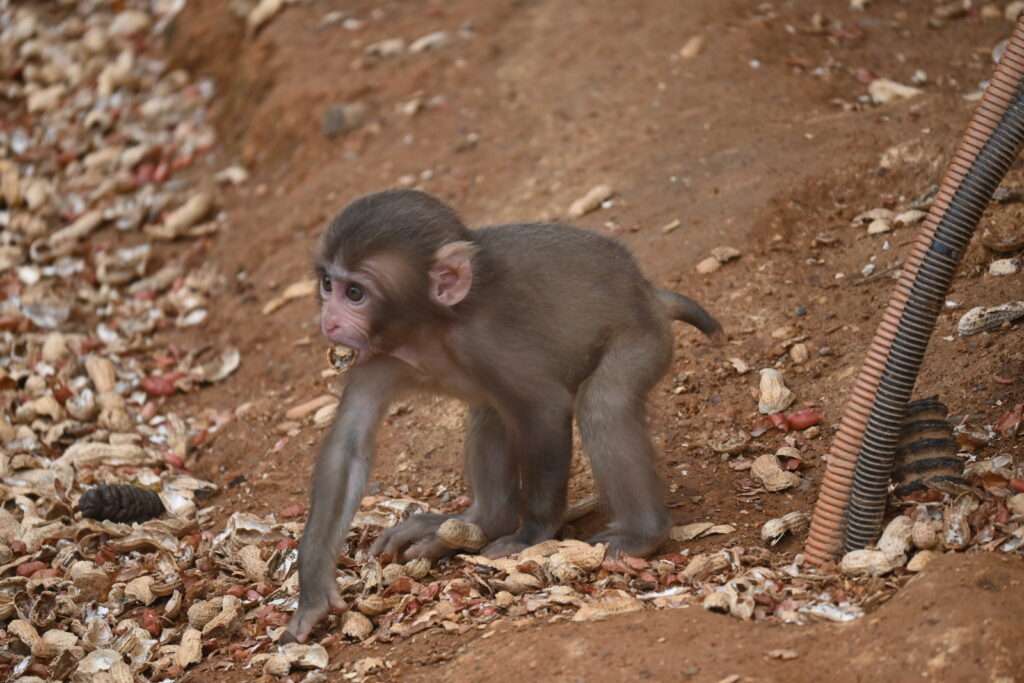
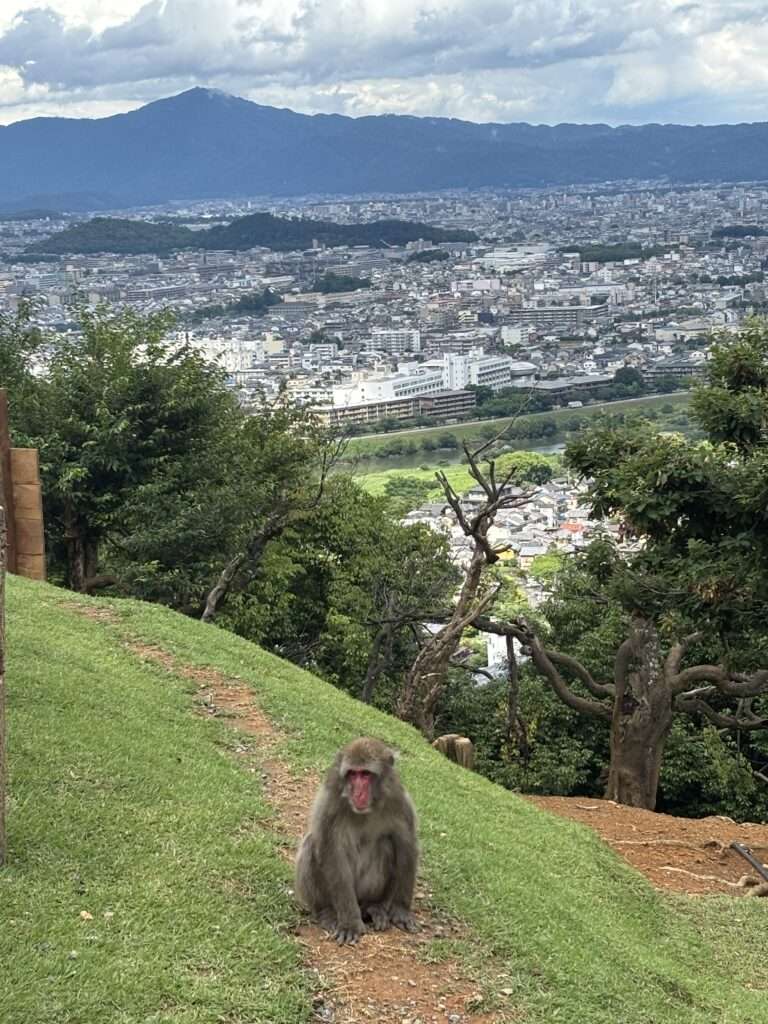
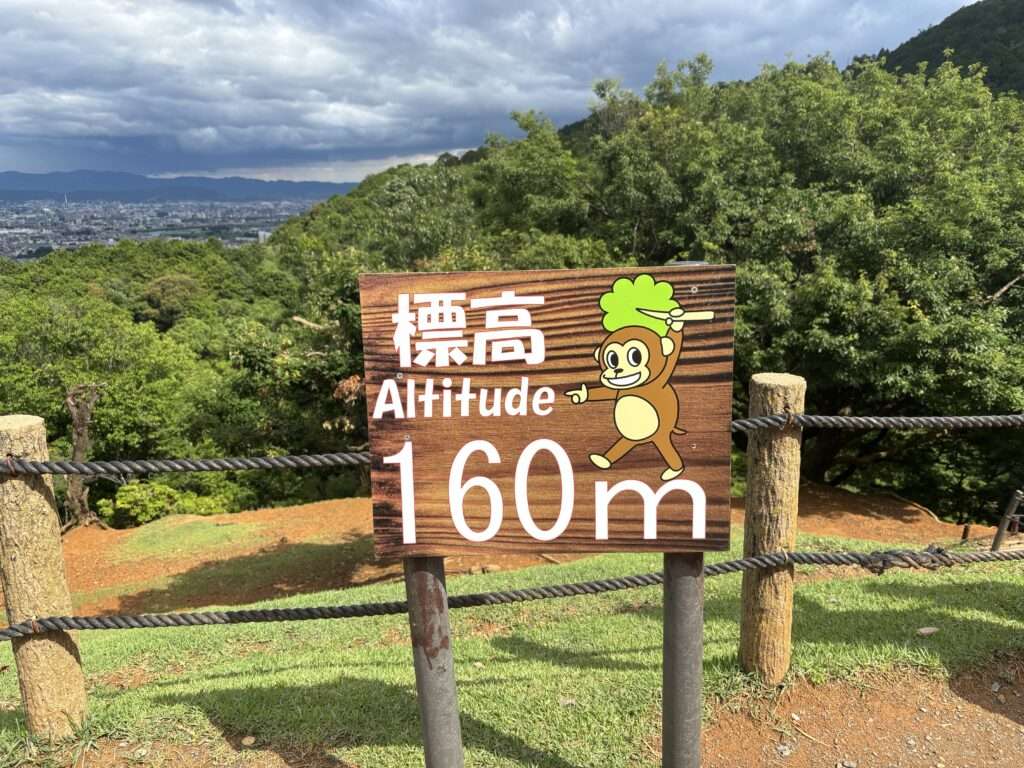
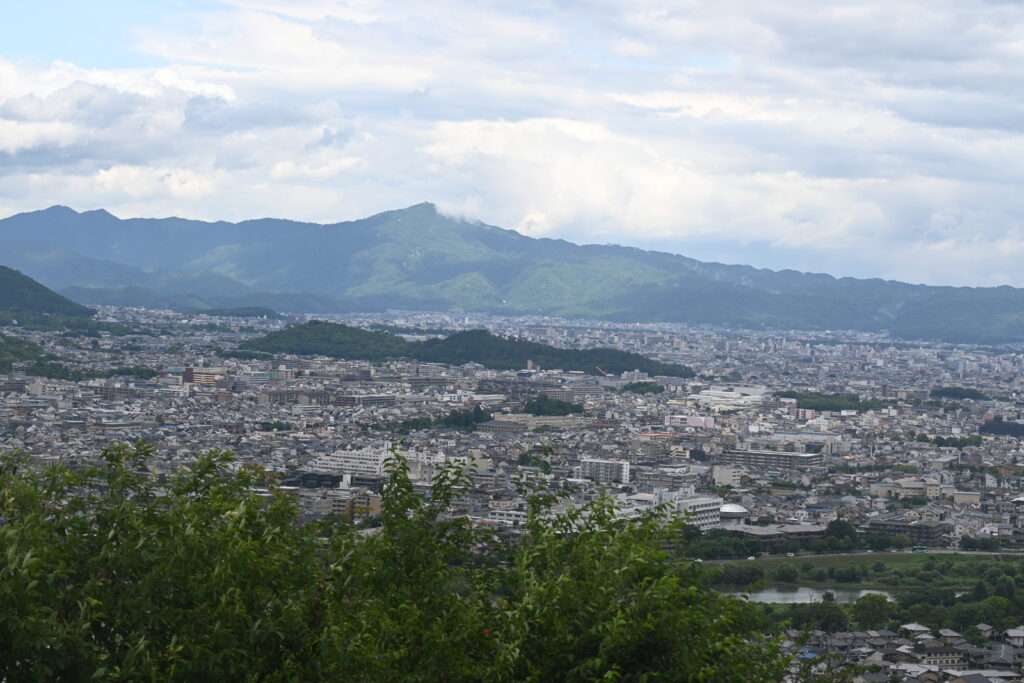
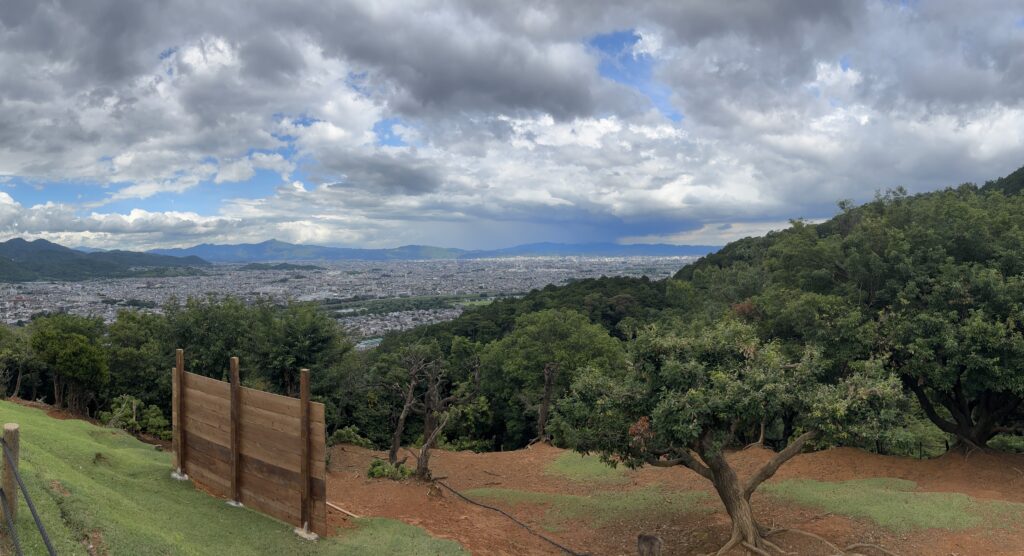
The monkeys were incredible to see, but the view might have been even more incredible. The top of the mountain is 160 meters high and offers a stunning view over all of Kyoto. This was my third chance at a city view and the first two (Fushimi Inari and Funaokayama Park) were completely clouded in. This time there were clouds but they were high enough and far enough off in the distance to not obstruct the view of the city. It was fantastic. I can see why the monkeys would want to live here!
Overall we really enjoyed the monkey park. It was such a unique experience to get to see wild Japanese macaques up close. At the same time, it did feel somewhat staged. They were not captive but they certainly weren’t truly wild either. They were so accustomed to humans that it did feel a bit more like a zoo than like a natural habitat. As long as you manage your expectations, I think you will find it to be a worthwhile experience.
