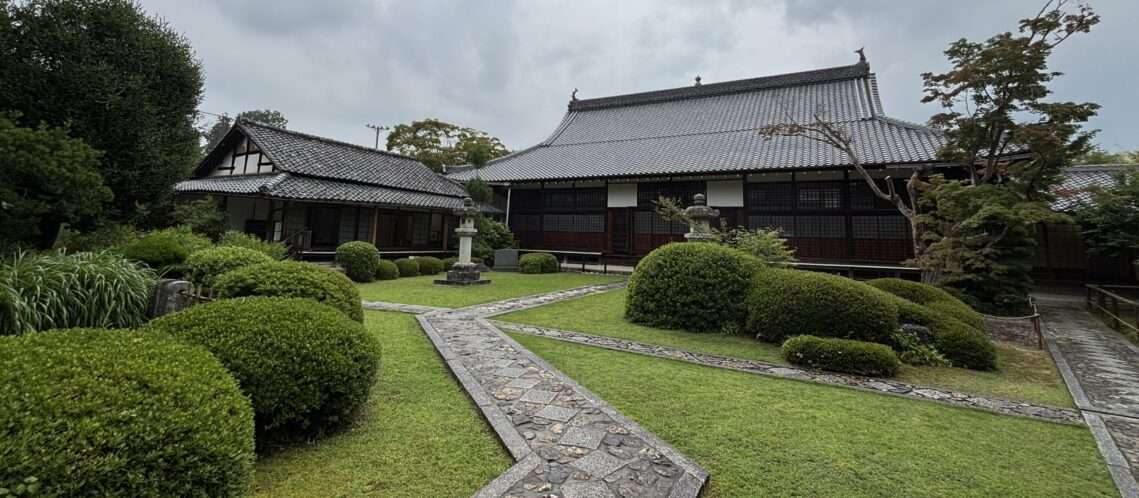
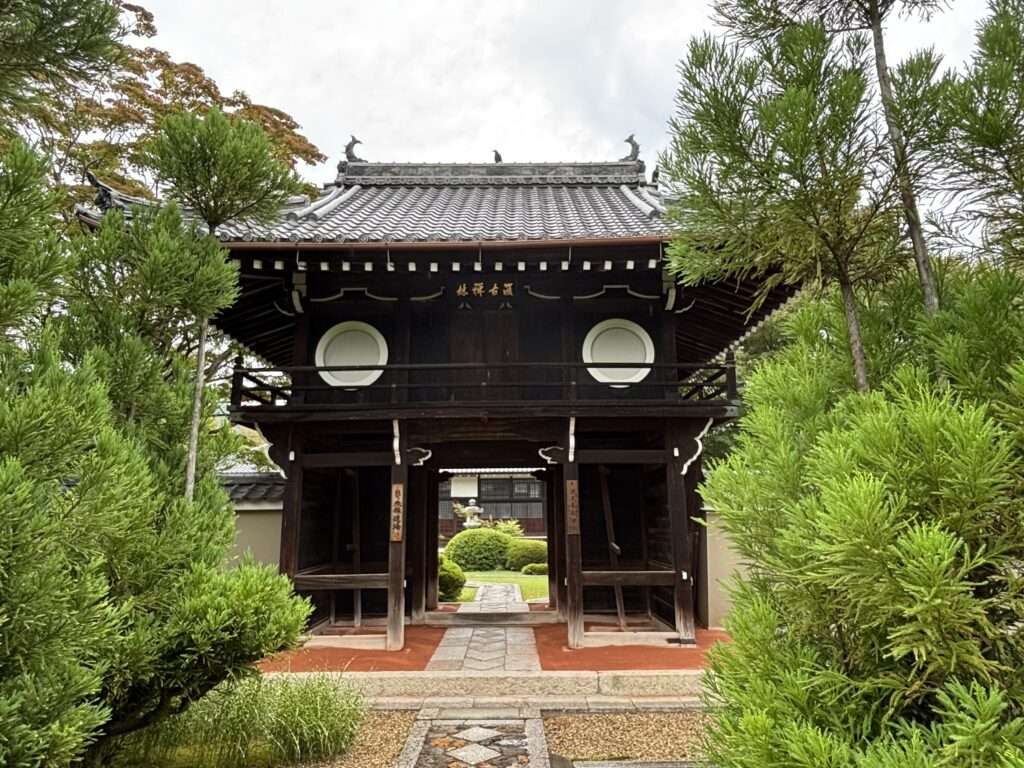
Leaving Kinkaku-ji, a temple destroyed by arson, we headed to a temple with a bloody history, Genko-an Temple. Genko-an is a Soto Zen Buddhist Temple famous for both its windows and its ceiling.
This small temple has a peaceful ambiance that belies its dark history. After walking through the gate to the quiet garden entrance, we went into the temple.
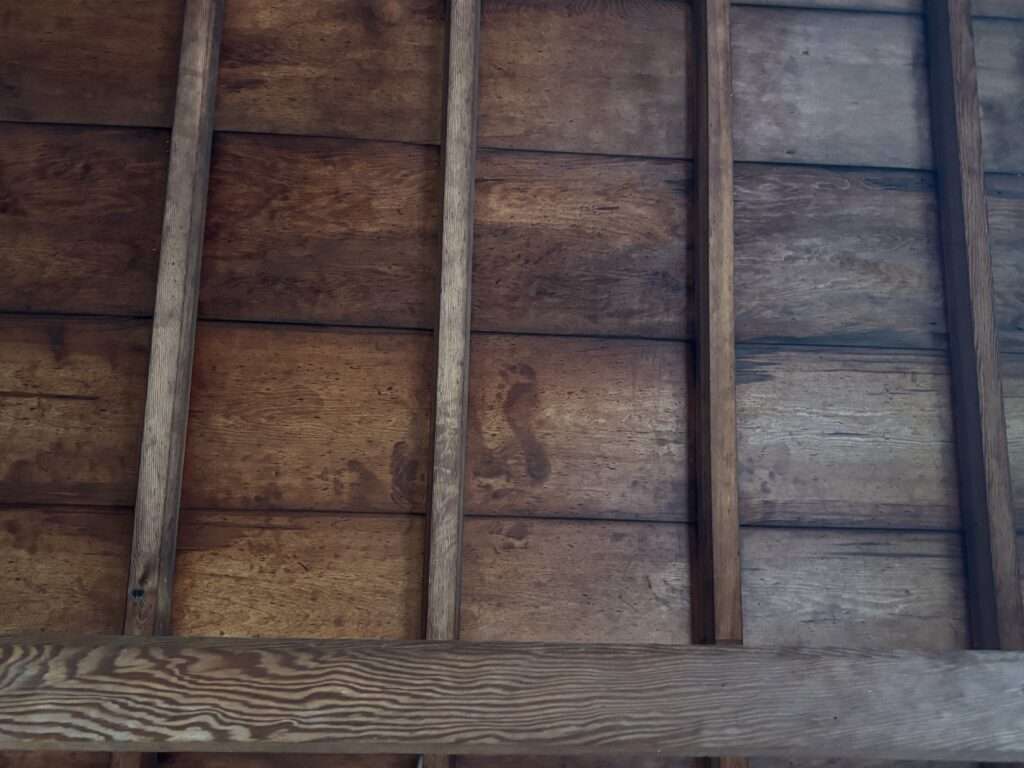
Once inside, Sean told us the story of the Siege of Fushimi Castle in 1600. This legendary battle saw a group of 2,000 Eastern Army soldiers led by Torii Mototada hold off a force of 40,000 men led by Ishida Mitsunari of the Western Army. Despite being vastly outnumbered, Mototada and his troops held off the attackers for 11 days. When the castle was finally breached, the overrun Mototada and his remaining troops performed ritual suicide (seppuku). Although Mototada and his men lost the castle, their valiant fight bought time for the Eastern Army to prepare for and ultimately win the larger Battle of Sekigahara.
To honor the troops who sacrificed their lives, the blood soaked floorboards from the castle were distributed to five temples in Kyoto where they were installed in the ceiling. Sean pointed above us and there, clear as a day, was a bloody footprint on the ceiling. Putting it on the ceiling of the temple ensured that the footprint would last over time and the brave men would always be remembered and prayed for.
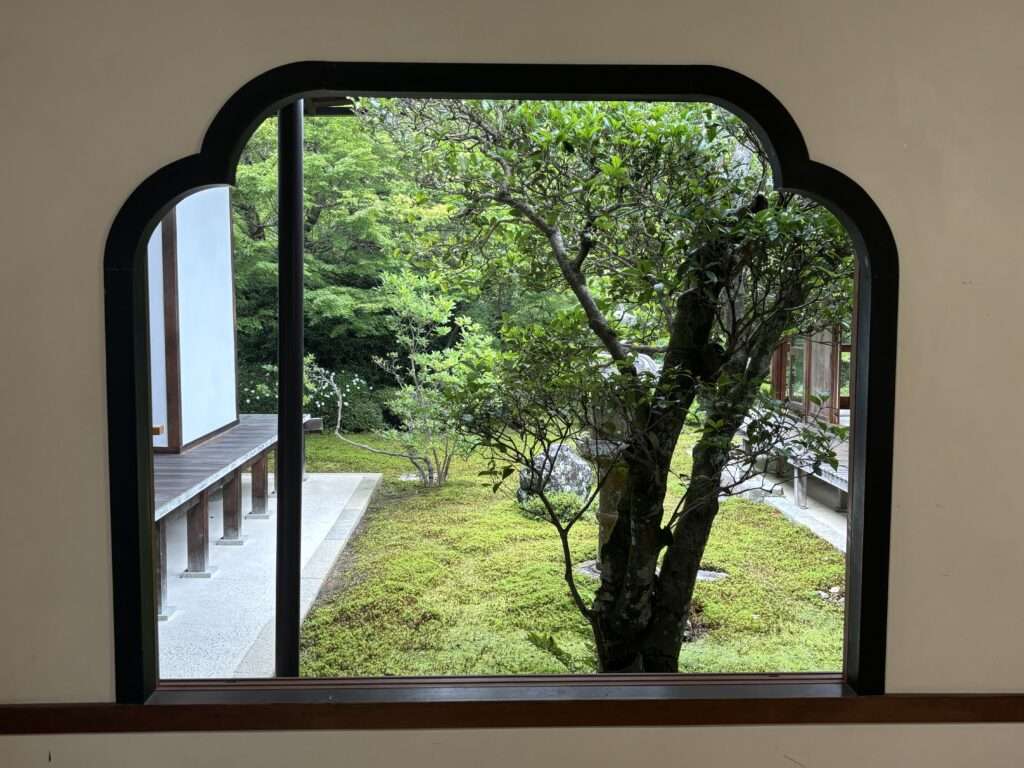
In addition to the ceiling, the other interesting feature of Genko-an Temple is its two famous windows. Known as the Satori no Mado (Window of Enlightenment) and Mayoi no Mado (Window of Confusion), the two neighboring windows are striking in their contrasting appearance. The round “Window of Enlightenment” represents the universe and the final zen state of enlightenment. The four corners of the rectangular “Window of Confusion” represent the stages of suffering of humans: birth, old age, disease, and death.
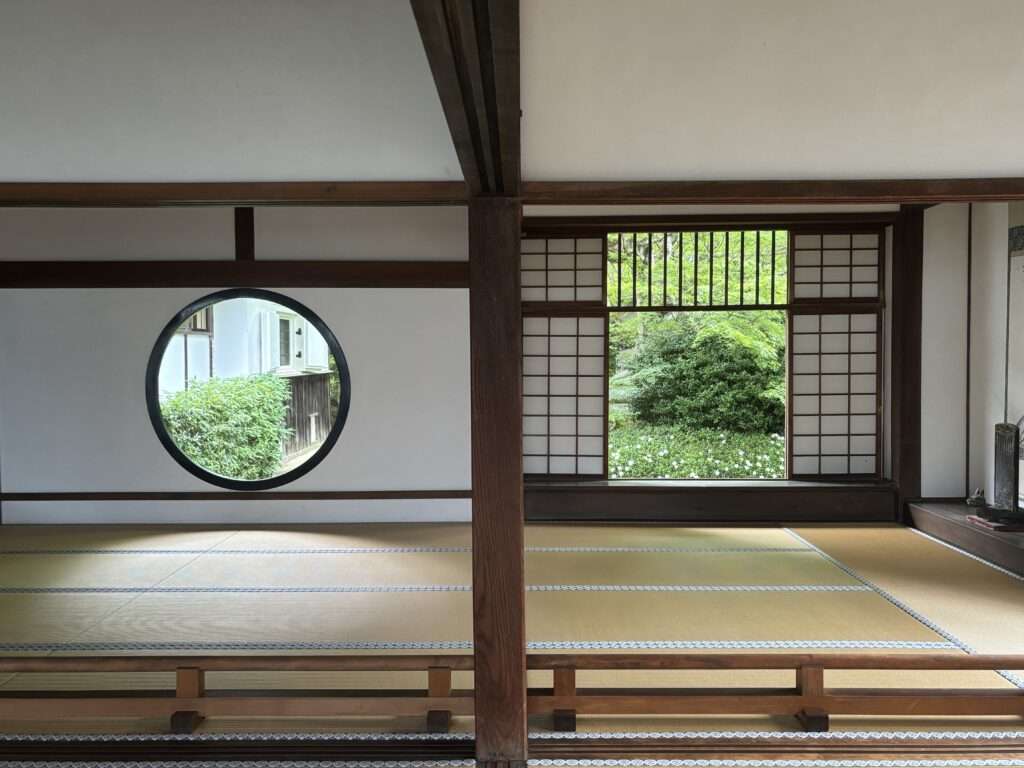
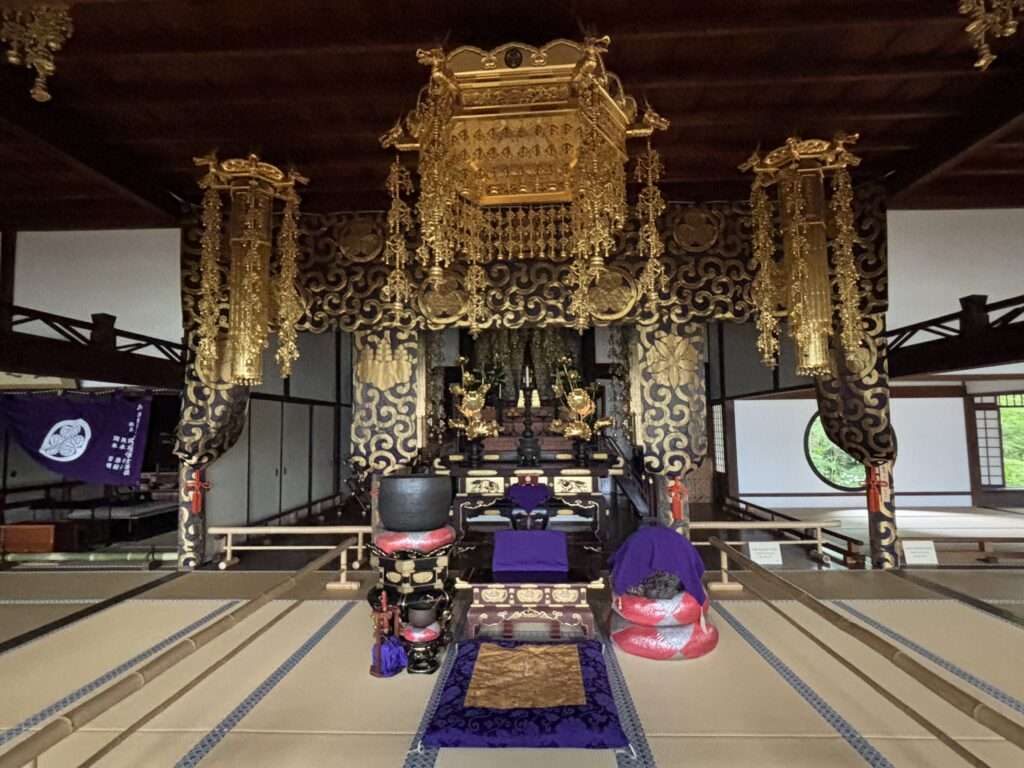
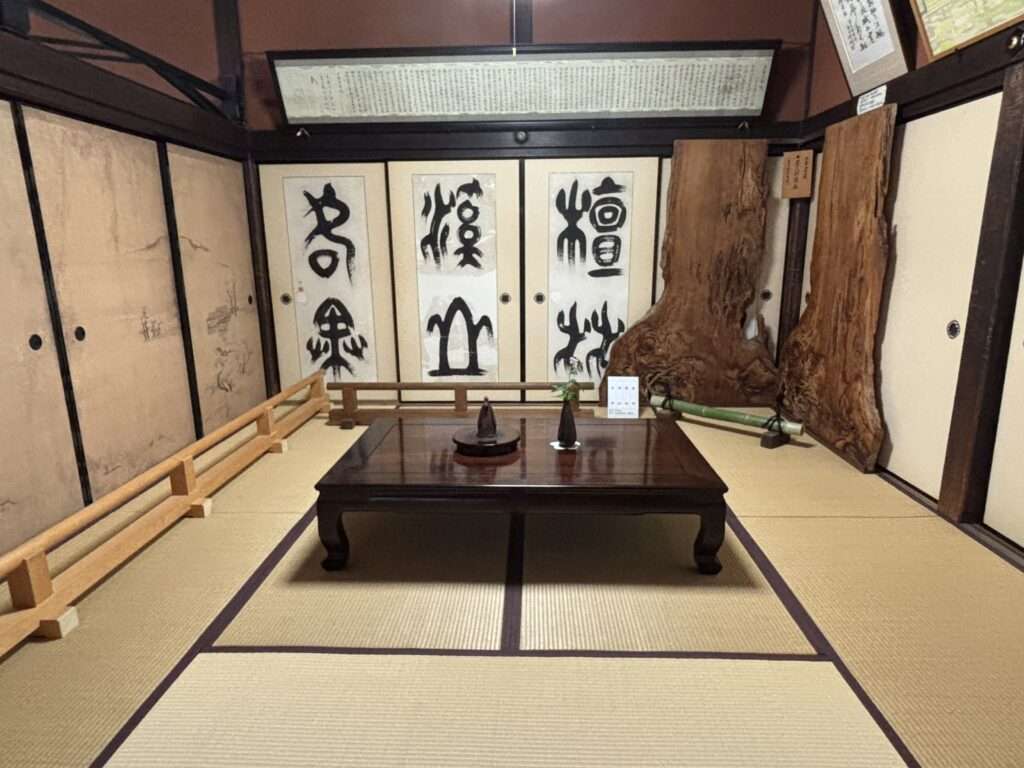
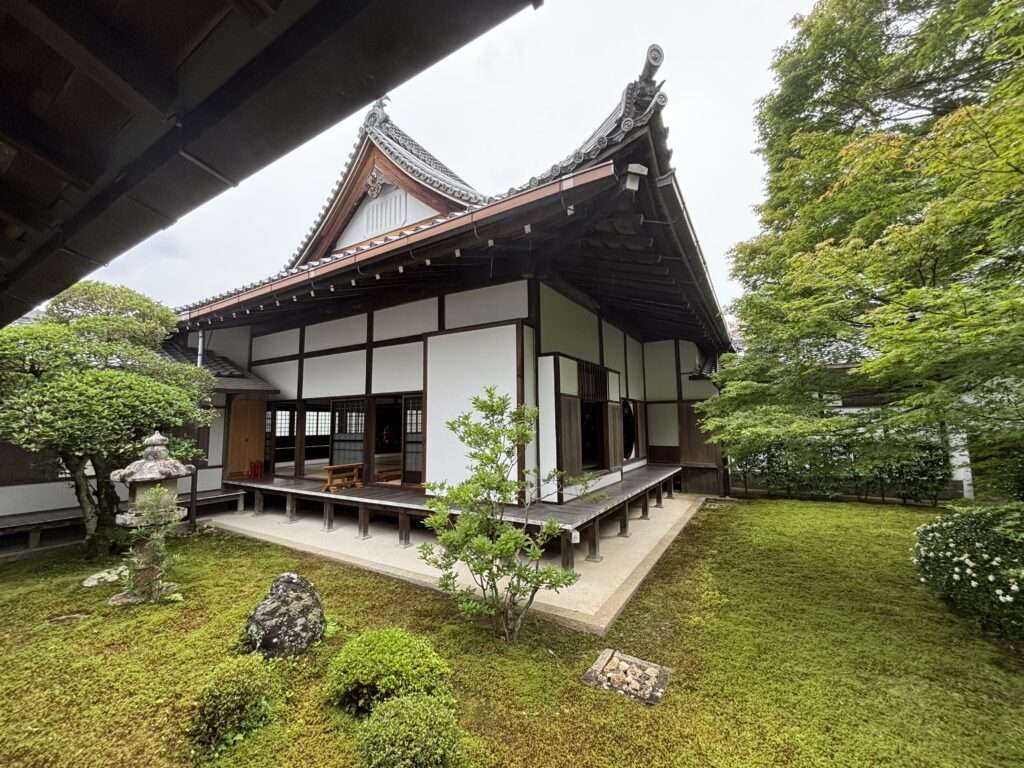
Aside from the bloody history and interesting architectural features, this temple was different from others we had visited in its simplicity. With the exception of the gilded altar in the main hall, the overall building had an austere aesthetic. Covered by tatami mats and sparse furnishings, its minimalism created a serene and calming space.
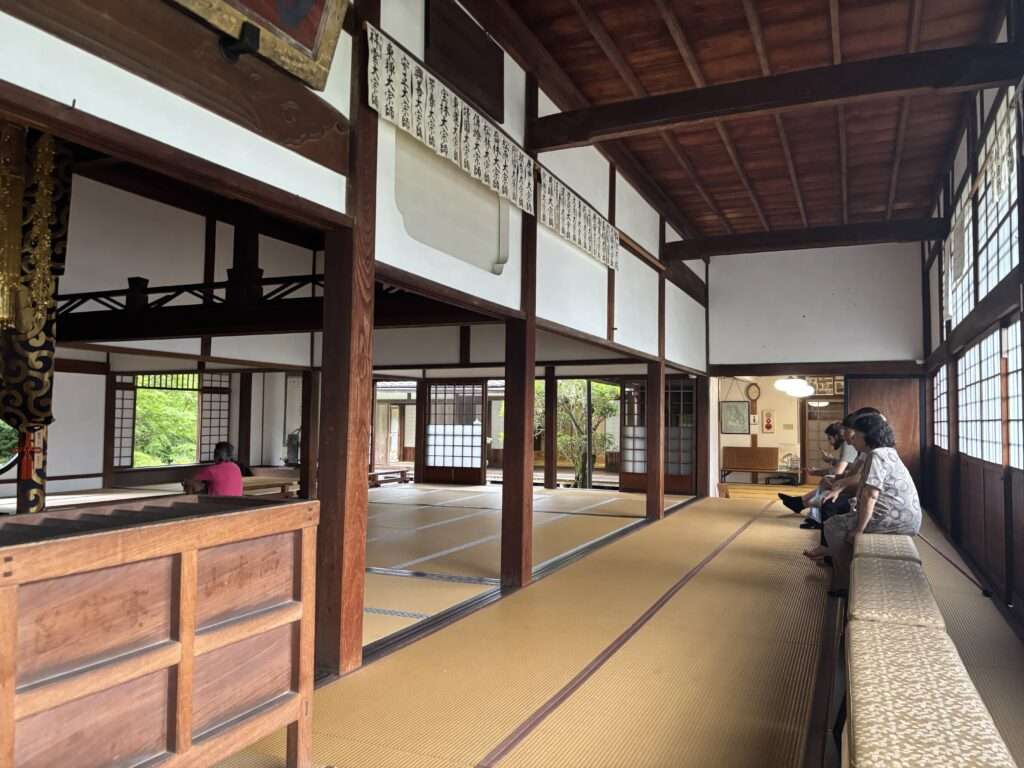
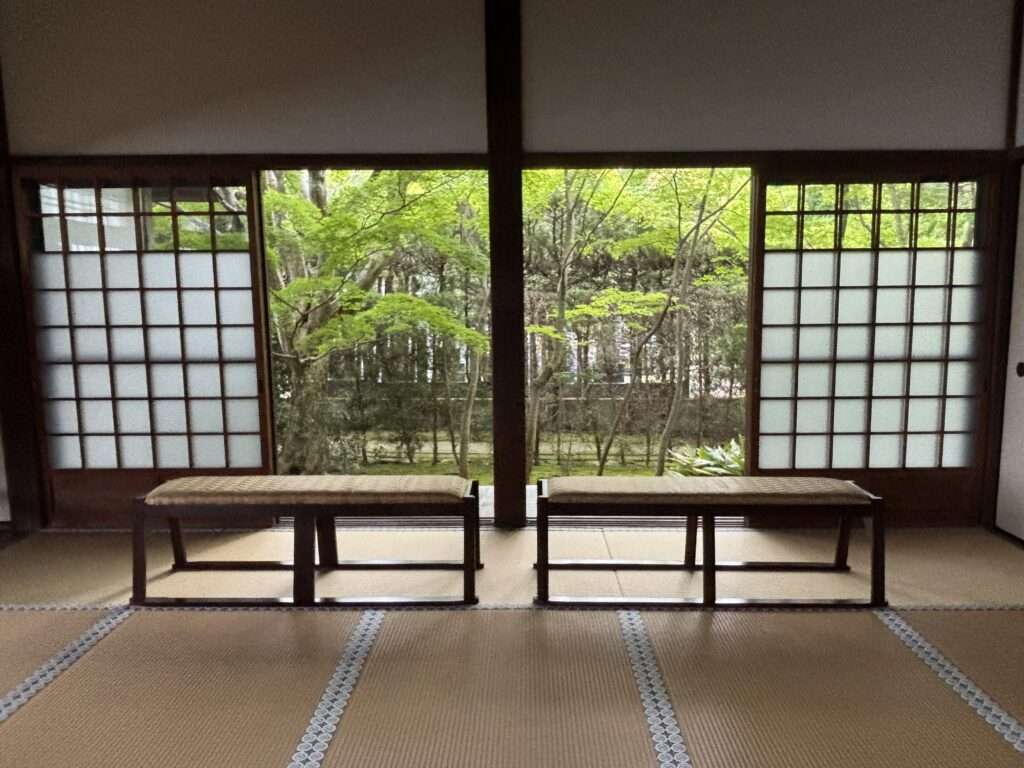
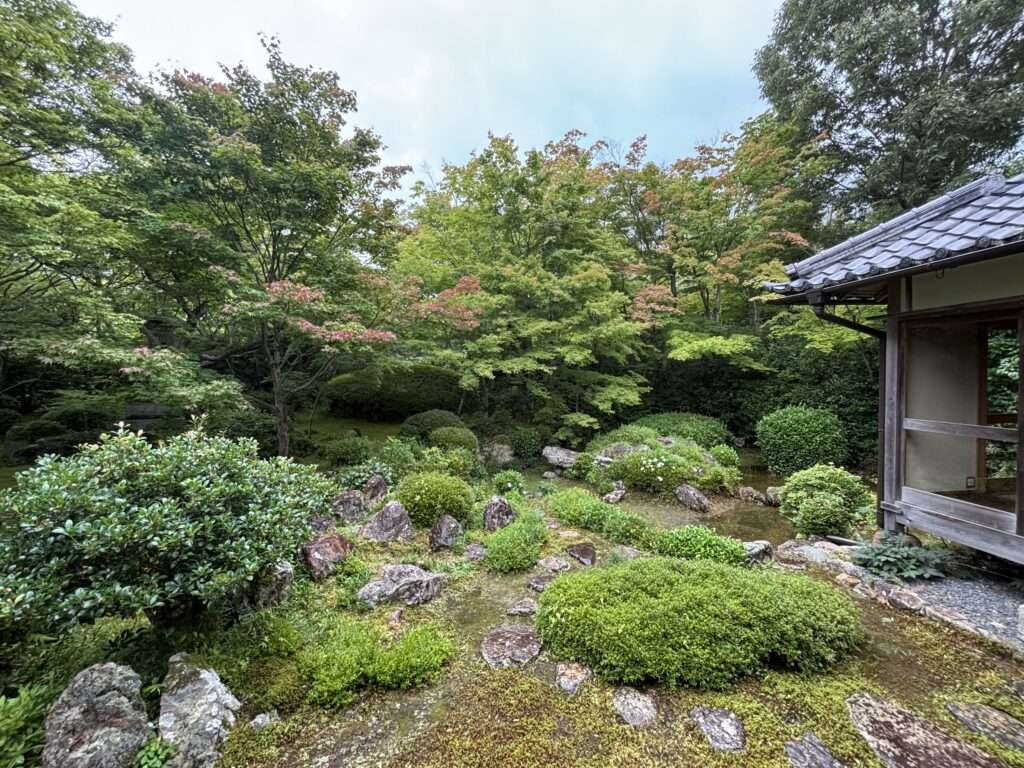
The large open windows and doors also highlighted the tranquility of the gardens and brought the outdoors in. The gentle rain outside made it seem especially peaceful on our visit.
Genko-an Temple was a really interesting place to visit and one that definitely would not have been on our radar if not for the Hidden Kyoto e-Bike Tour. I highly recommend it for something off the beaten path with a unique story and historical connection.
