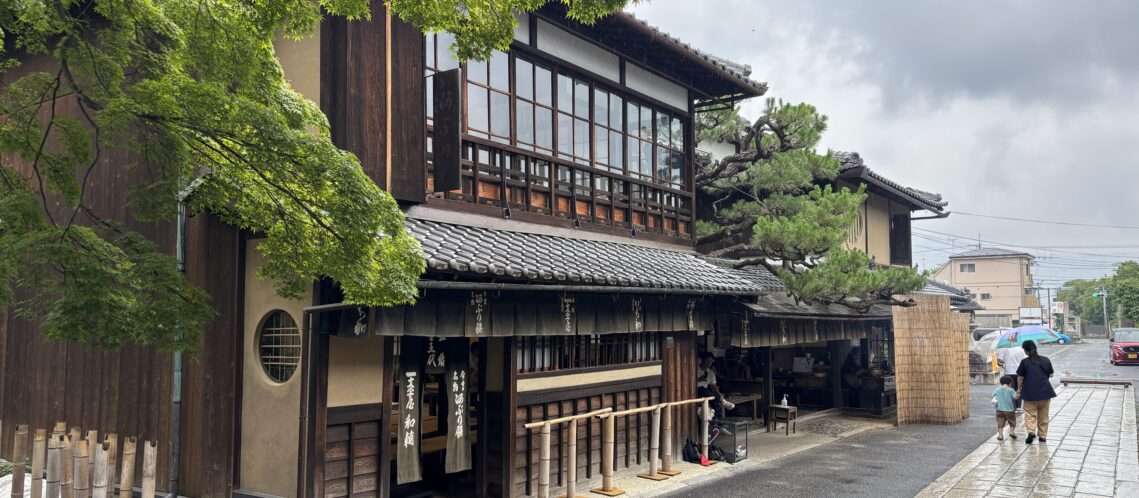
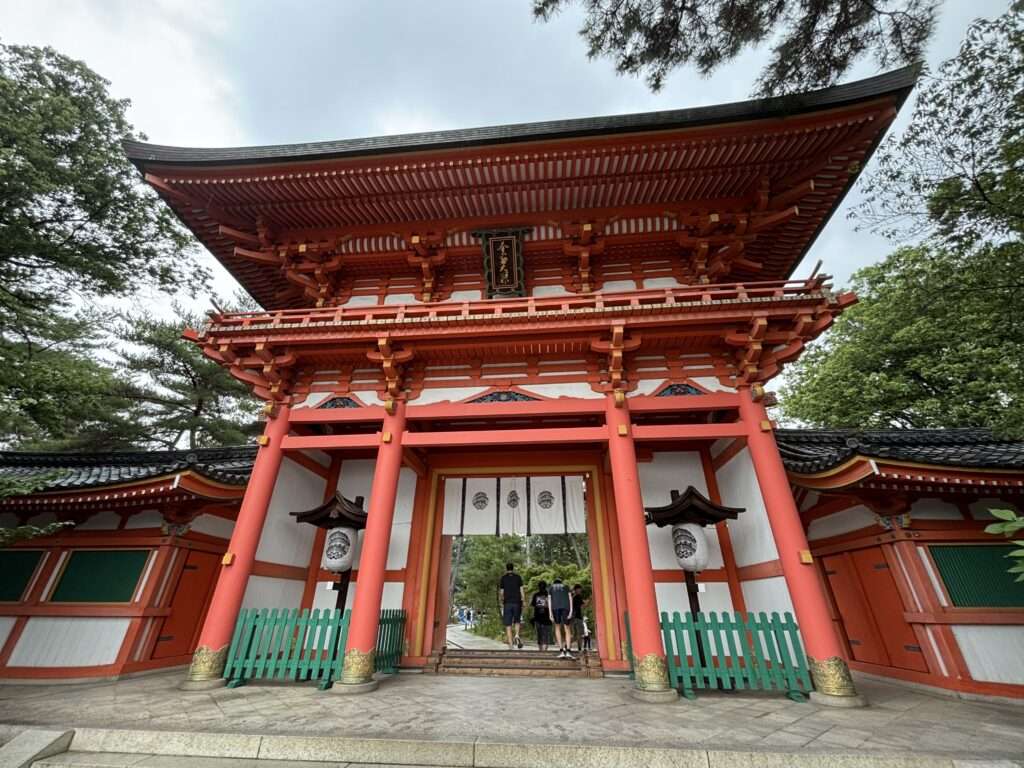
Our last shrine on the Hidden Kyoto E-Bike Tour was actually just a pass-through. Quite literally, we walked through Imamiya Shrine simply to come out on the other side. Because that’s where the real treasure awaited, at Ichimonjiya Wasuke (or “Ichiwa”).
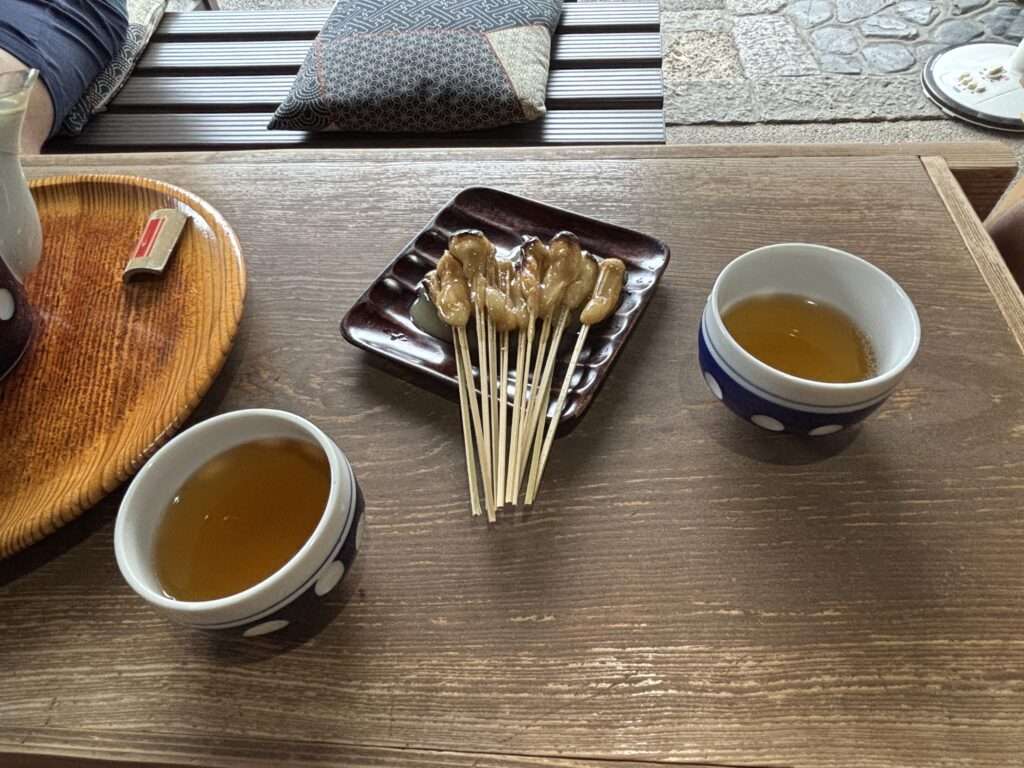
Ichiwa is the oldest continuously operating confectionary shop in Japan. It opened in the year 1000 and has been run by 25 generations of the same family ever since. Their specialty (and in fact the only item they sell) is aburi-mochi (mochi for short), a traditional Japanese rice cake. Mochi is made from mochigome, a short-grain glutinous rice. The rice is steamed, pounded into a paste, and then shaped, skewered, and rolled in kinako (roasted soybean flour). Finally, they are grilled over a charcoal fire and topped with a sweet white miso glaze.
The history of Ichiwa is tightly connected to the neighboring Imamiya Shrine. Founded in 994 and moved to its current location in 1001, the shrine’s original purpose was to establish a place to pray for safety after an epidemic outbreak that gripped the city. Ichiwa’s location outside the gates of the shrine led to the belief that eating the mochi at the shop would provide immunity from the disease. Today, mochi is still associated with good health.
We sat down at a table outside on the covered patio. We were served green tea and two plates of mochi (11 skewers per plate). It was hard for me to imagine from the description what they would taste like but they were absolutely delicious! Both sweet and savory, charred on the outside and soft and chewy on the inside, they were unlike anything I had eaten before.
Interestingly, there is a rival mochi shop directly across the road from Ichiwa. The competing shop, Kazariya, is considered “new” though at just under 400 years old! We only ate at Ichiwa so can’t compare but the mochi at Kazariya is said to be milder, sweeter, and chewier.
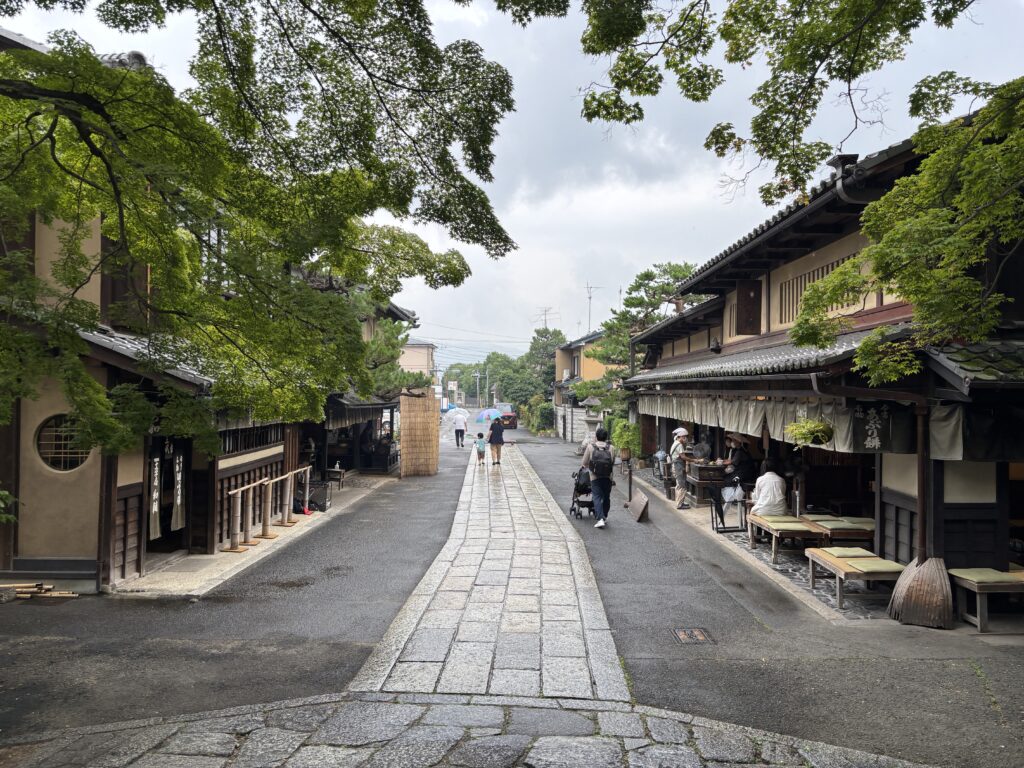
This was such a neat stop on our Hidden Kyoto E-Bike Tour. I loved sampling a sweet treat unique to Kyoto, dining in such an historic location, and learning the history of the shrine, the shop, and its sweets. How amazing to be able to say we ate at a 1000+ year old shop that has only made one thing in its entire history. And we can confirm that it makes it incredibly well!
