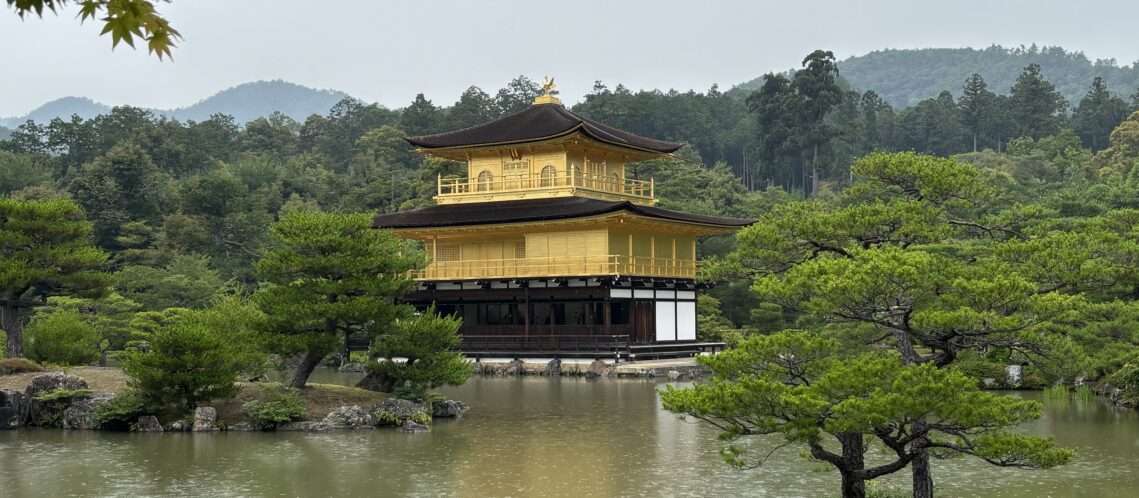
Our second stop on the Hidden Kyoto e-Bike Tour was the one that was not so hidden. Kinkaku-ji is a UNESCO World Heritage site and one of the most popular places to visit in Kyoto. Sean gave us the option of stopping here since it was near their bike shop and along the route of the other shrines and temples we were visiting. Since I knew we wouldn’t be back in this part of town again, we definitely wanted to see it while we were there.
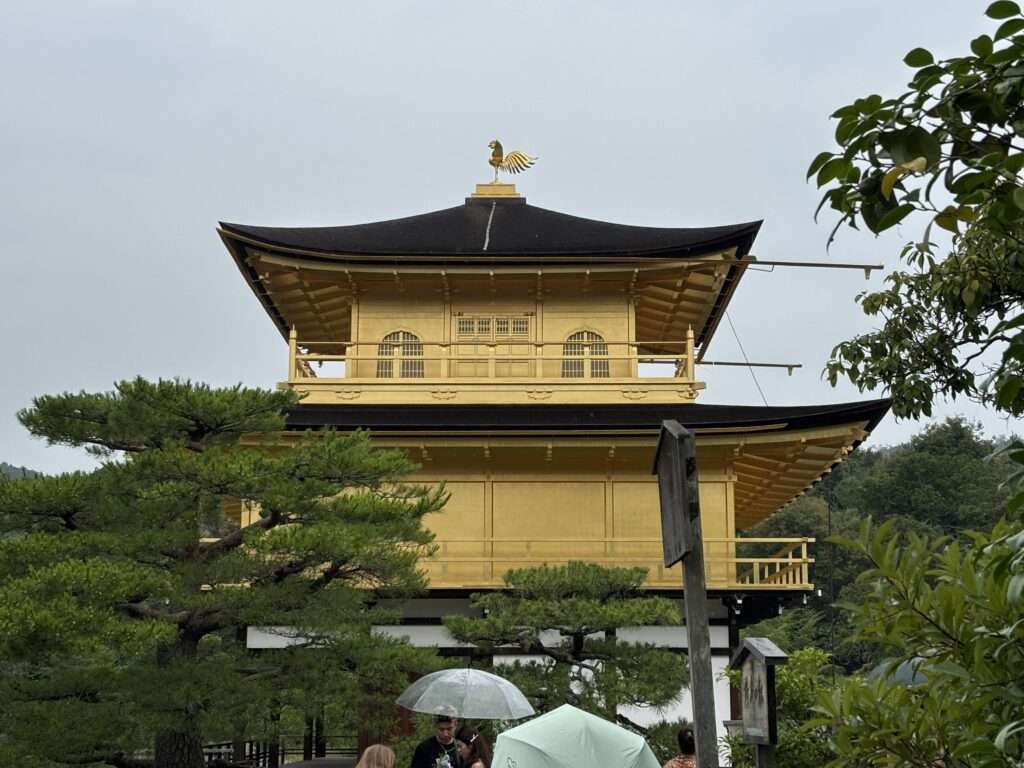
Known as The Temple of the Golden Pavilion, the building was originally the retirement villa of the shogun Ashikaga Yoshimitsu. Per his wishes, it was converted to a Zen temple upon his death in 1408. Each of the building’s three floors represents a different architectural style. The first floor features the natural wood and white plaster of the Shinden style favored by the aristocracy in Heian period. The second floor is designed in the Bukke style used for samurai residences of the Kamakura period. The third floor is modeled after a traditional Chinese Zen Hall and topped with a bronze golden phoenix on the roof. The top two floors of the building are covered with approximately 44 pounds of real gold leaf. None of the building is open to the public.
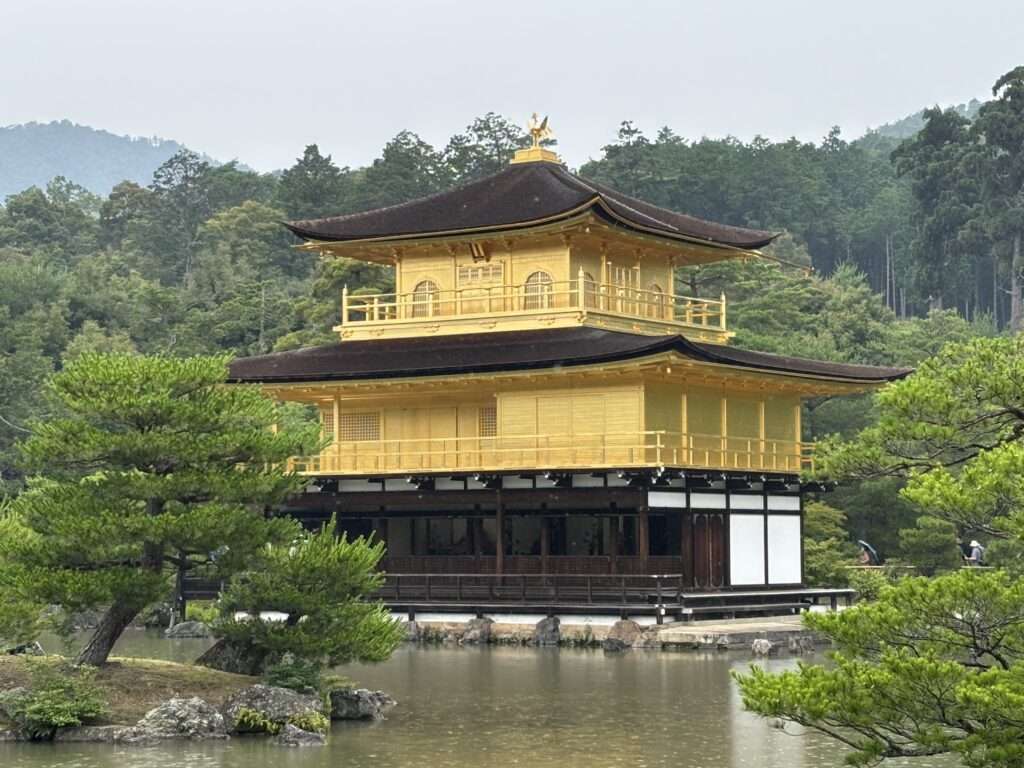
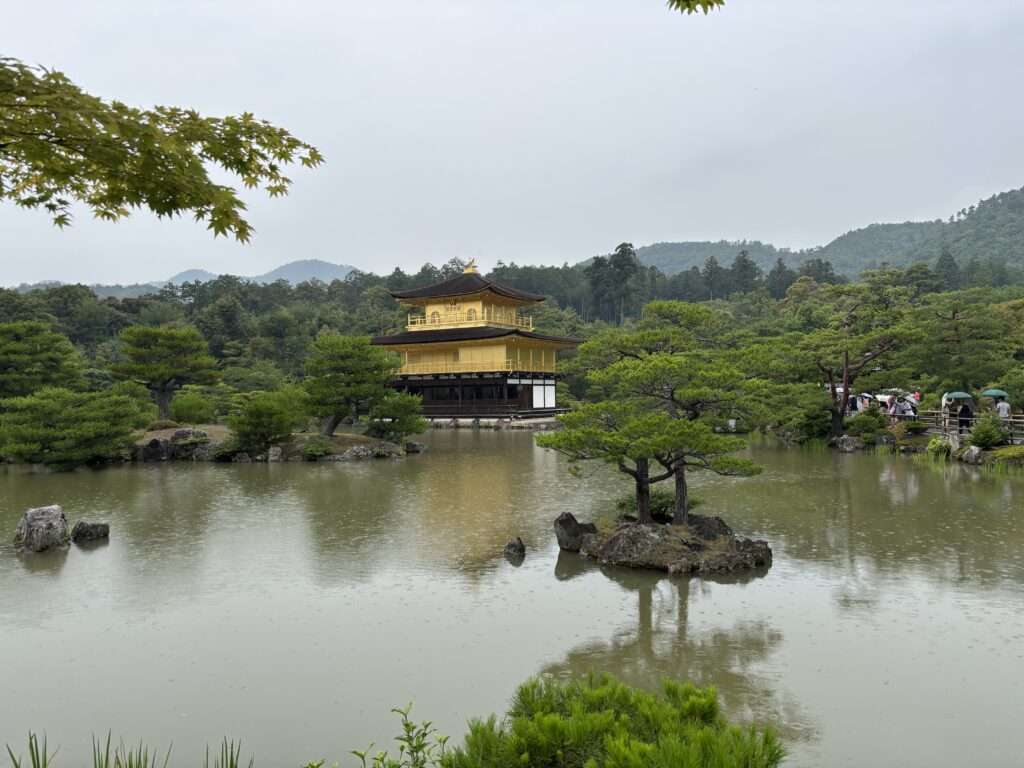
The first view of the temple is the most iconic one. Set across the Kyoko-chi Pond (Mirror Pond), the golden pavilion reflects in the water (though not as clearly on the rainy day we were there). The pond features 10 small islands that are designed to represent famous landscapes from Japanese and Chinese literature.
Like many historic Japanese shrines and temples, the Golden Pavilion that we saw is a reconstruction. Originally built in 1397, it burned down twice in the 15th century during the Onin War. More recently it was burned down as a result of arson in 1950. A mentally ill novice monk named Hayashi Shoken burned down the temple and attempted to commit suicide, stating that he wanted to destroy the building because of his “hatred of all beauty”.
The pavilion was completely destroyed and several Buddhist statues and other historic artifacts were lost in the fire. Fortunately, at the time of the fire the gold plated phoenix on the top of the roof had been removed for repairs so it was spared. Five years after the fire the pavilion was rebuilt using the original architectural blueprints. And then following years of weathering, the pavilion was re-gilded in 1986 at a thickness that has allowed it to maintain its brilliance decades later.
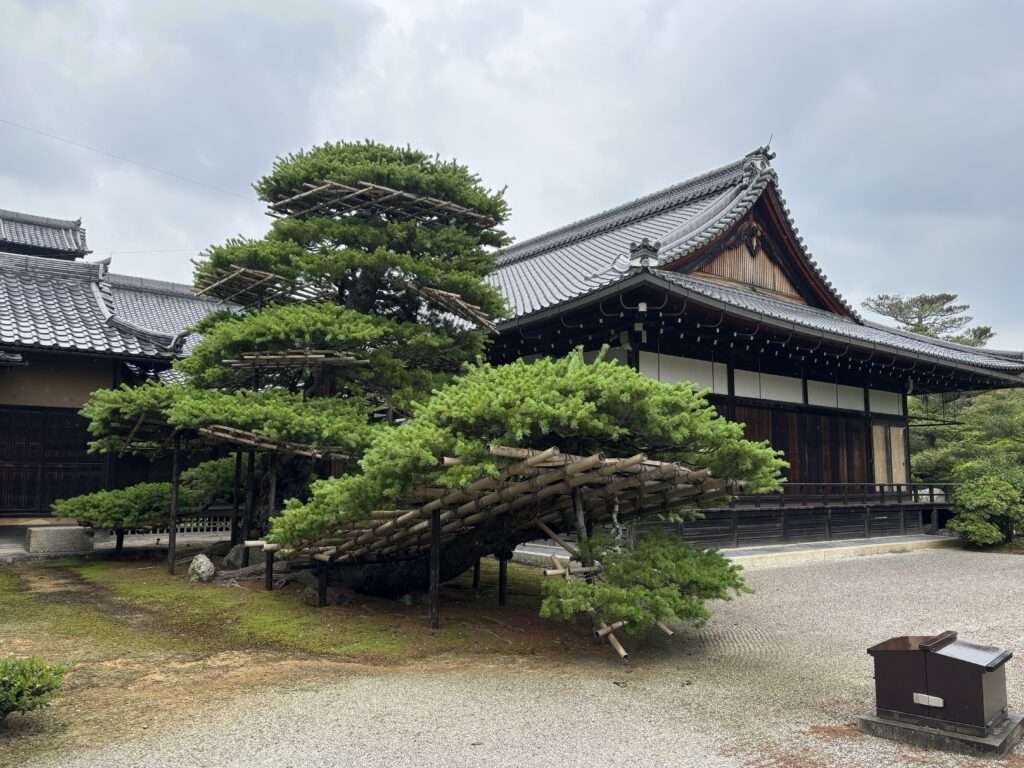
Continuing around the pond, we came to the famous Rikushu-no-Matsu bonsai tree. Planted 600 years ago by Ashikaga Yoshimitsu, the “Land Boat Pine” is pruned in the shape of a sailboat headed west toward Buddhist Paradise. Due to the tree’s weight and age, it is supported by bamboo framing today but still maintains it boat-like appearance.
Although the rainy day dulled the reflection in the pond, the Golden Pavilion was still a stunning site. We enjoyed the views of the buildings, pond, and gardens and were glad we made the stop at this famous landmark.
