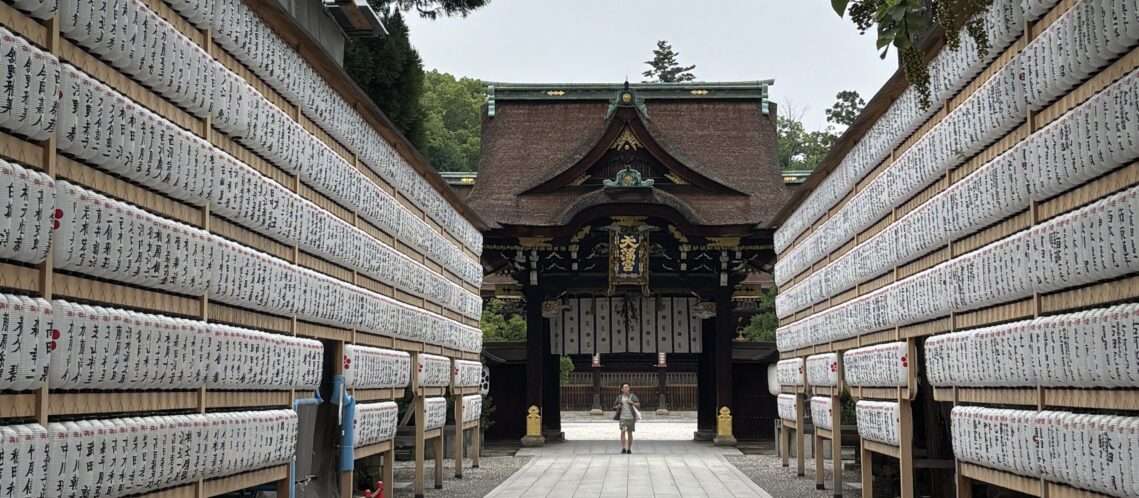
The first stop on our Hidden Kyoto E-Biking Tour was Kitano Tenmangu Shrine. Dedicated to Sugawara Michizane, a scholar and politician who is associated with Tenjin, the Shinto god of education, this seemed like the perfect stop for us on our son’s high school graduation trip! What better spot to visit before we send him off to college than a shrine where local students come to pray for success in their studies?
Sugawara Michizane was born in 845 AD. He was a successful poet and scholar before turning his attention to politics. After a rapid rise in political positions and power, his rivals plotted to get rid of him. They falsely accused of trying to overthrow the emperor and as a result he was exiled to Dazaifu, where he died in misery in 903.
After his death, Kyoto was struck with a series of plagues and natural disasters. The two main rivals who had him banished died suddenly, one struck by lightning and the other the victim of an inexplicable illness. Kyoto’s troubles and his enemies’ deaths continued over the next few decades, and people began to blame Michizane’s ghost. He became known as one of the Three Great Vengeful Spirits of Japan
In order to appease his vengeful spirit, Michizane was deified as the kami Tenjin. The Kitano Tenmangu Shrine was built in 947 to house his spirit. Known as the god of learning and academics, there are now over 12,000 Tenmangu Shrines dedicated to Michizane.
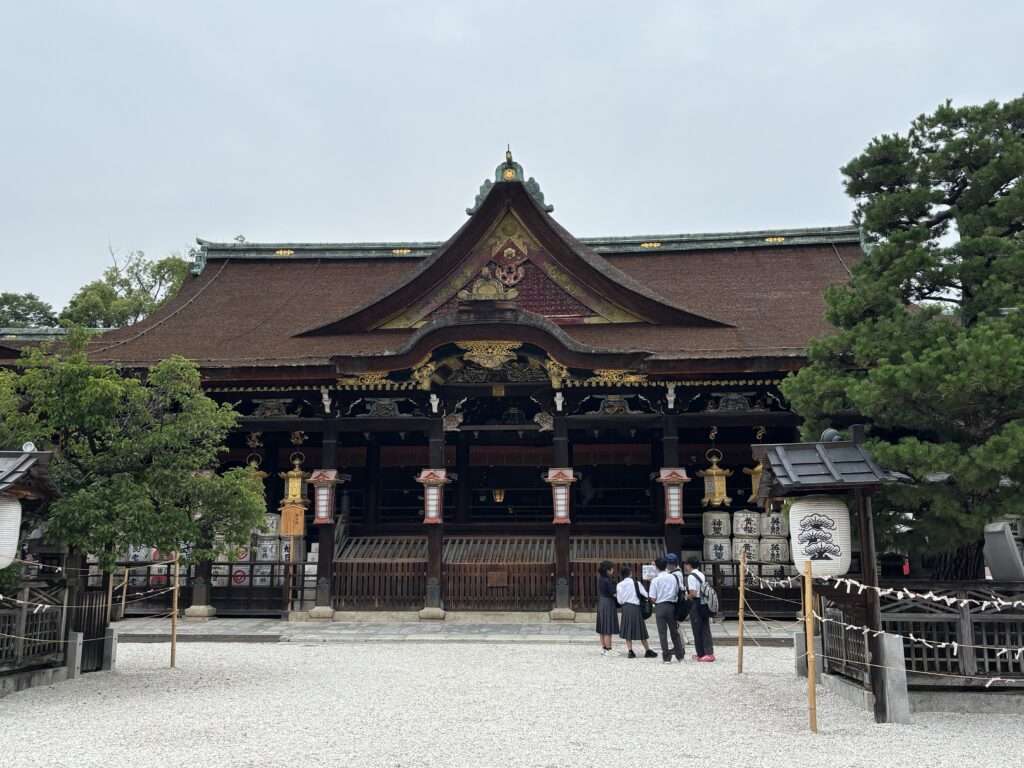
Our guide Sean taught our boys the proper way to make a Shinto offering and prayer. First they tossed a coin into the wooden offering box. Then they made two deep bows, followed by two claps. They then brought their hands together in prayer before making one final deep bow. Hopefully the kami listen and they both have great school years!
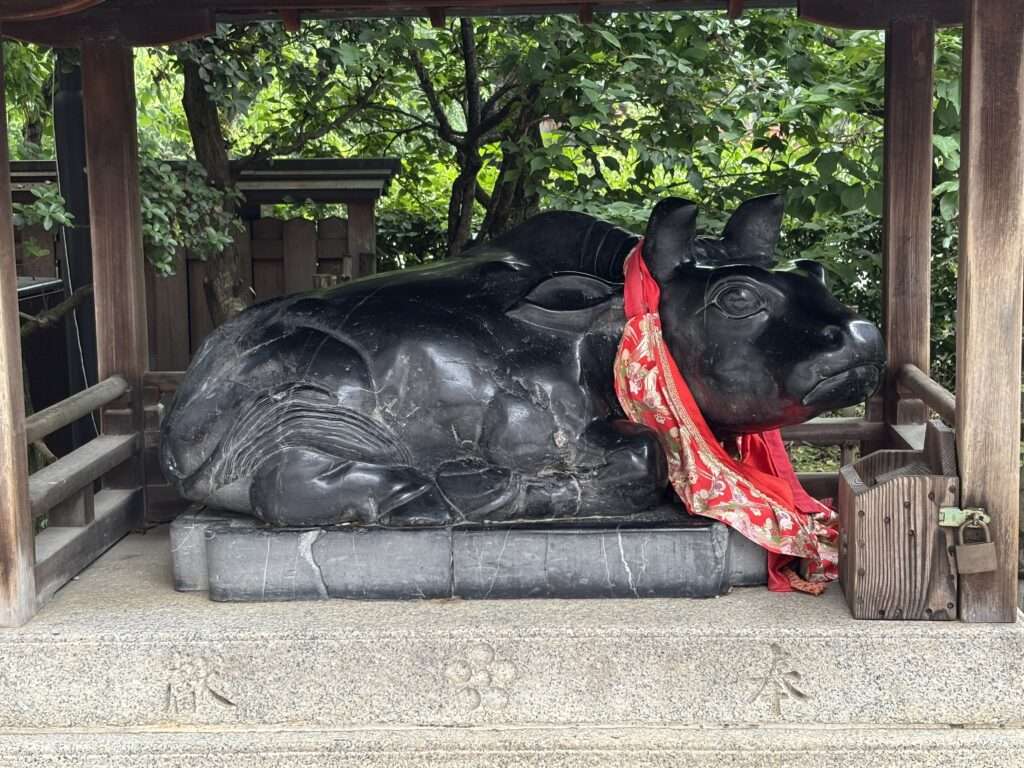
Much like the white foxes at Fushimi Inari, oxen are the sacred messengers at Kitano Tenmangu. During the burial procession for Michizane, the ox transporting his remains kneeled down and refused to continue. This was taken as a sign that Michizane wanted to be buried at that spot, which is how Dazaifu Tenmangu Shrine was established. The statues there and at Kitano Tenmangu (as well as all the other Tenmagu shrines) are all depicted kneeling. Students rub the ox statues on the head in prayer for academic success.
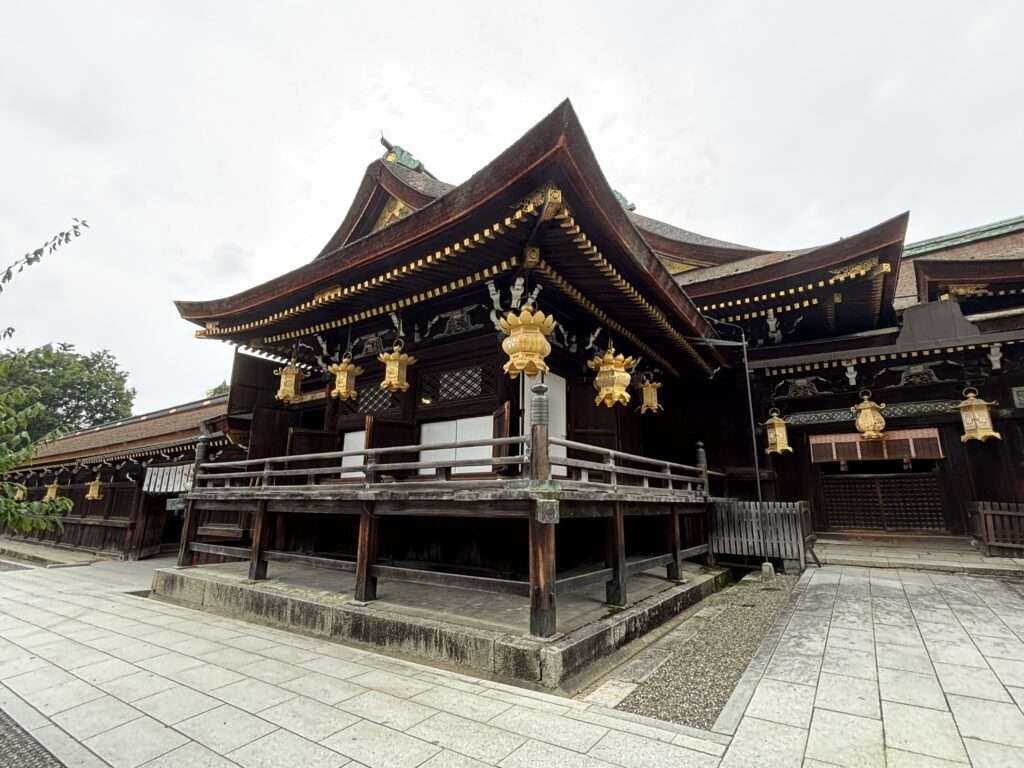
One of the unique features of Ktano Tenmangu Shrine is its use of yatsumune-zukuri (multi-building construction). The roofs of the main shrine, the worship hall, and the stone paved passage Ishi-no-Ma are all interconnected. The structures themselves are distinct but they are all housed under a large, continuous roof.
Kitano Tenmangu Shrine was a great first stop on our e-bike tour. It wasn’t crowded and we learned a lot from our guide about not only the history of the shrine itself but of Shinto traditions as well. And we felt like visiting the shrine of the Shinto god of learning was timely as our boys head into freshman year of college and junior year of high school.
