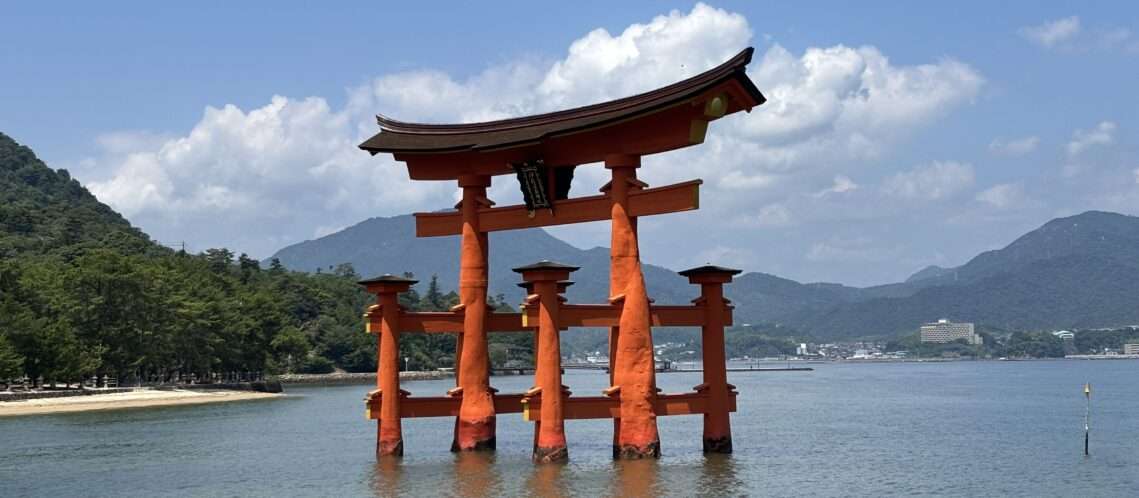
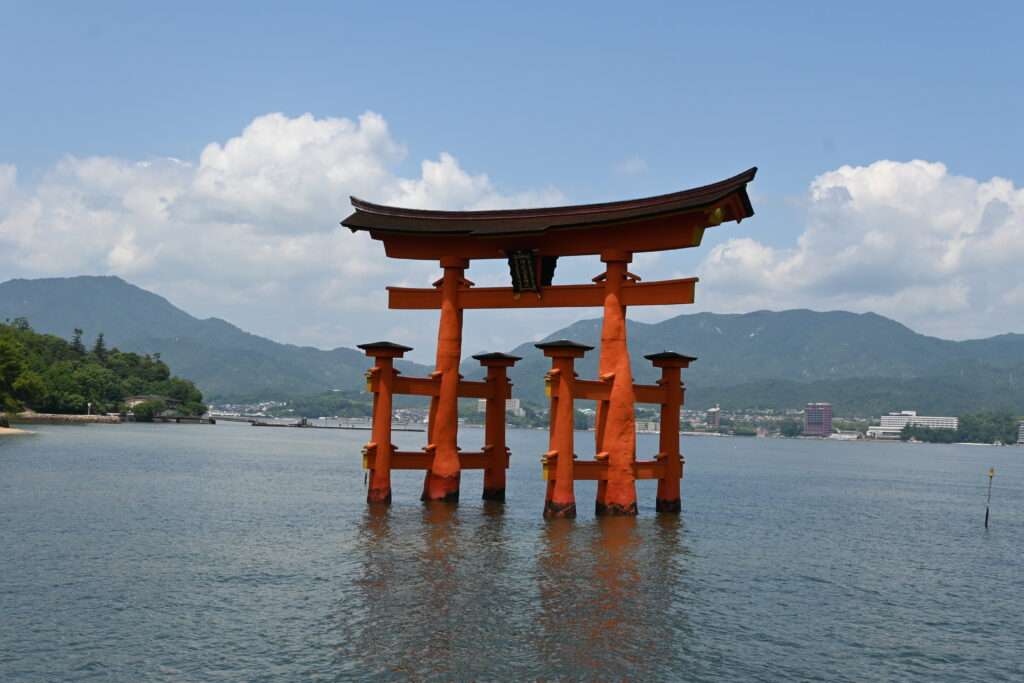
Fresh off our half-hearted attempt to summit Mount Misen, we got some drinks and snacks and then headed to the very sea-level Itsukushima Shrine. Its floating torii gate is one of the most recognizable landmarks in Japan. At high tide, the vermillion gate seems to float in the middle of the water, a stunning site with the mountains in the background.
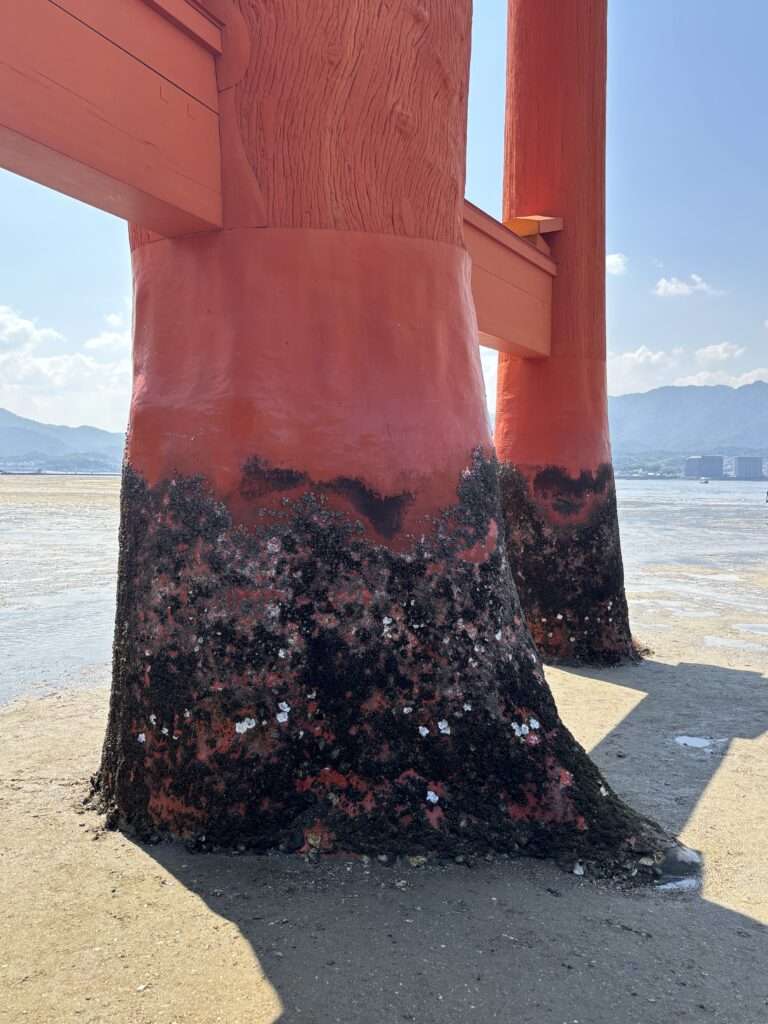
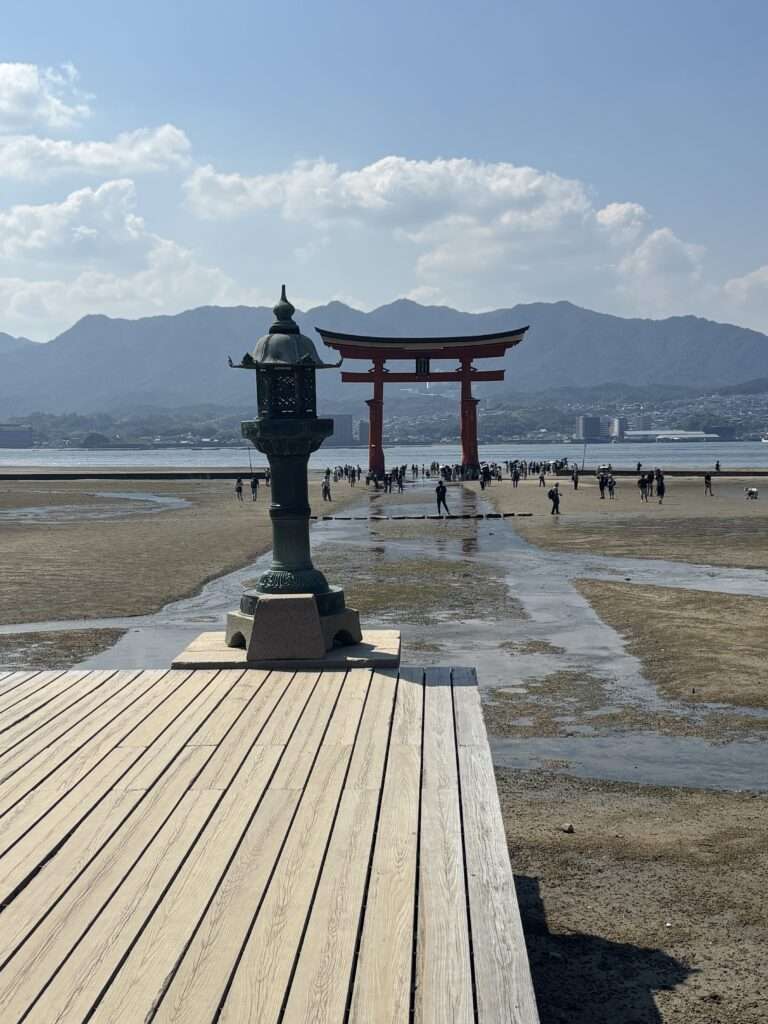
When we arrived on the island, it was close to high tide and we experienced the gate in its “floating” state. When we returned from our visit to Daisho-in Temple, it was low tide and the gate was standing tall on the beach. It was an amazing experience to be able to walk out onto the sand and stand directly underneath it. The pillars that had been probably 6 feet underwater a few hours ago were now completely uncovered, exposing barnacles and evidence of weathering from the sea. Fascinatingly, the pillars are not buried in the sand. The structure is completely free-standing, relying on its own weight (60 tons!) to hold it in place.
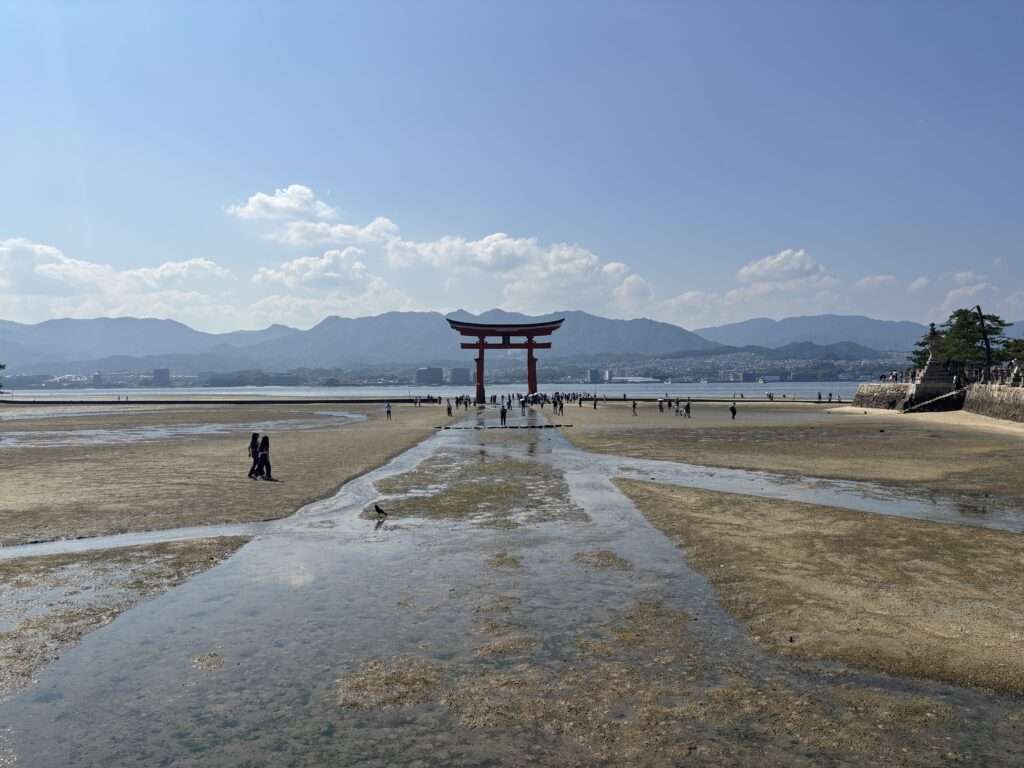
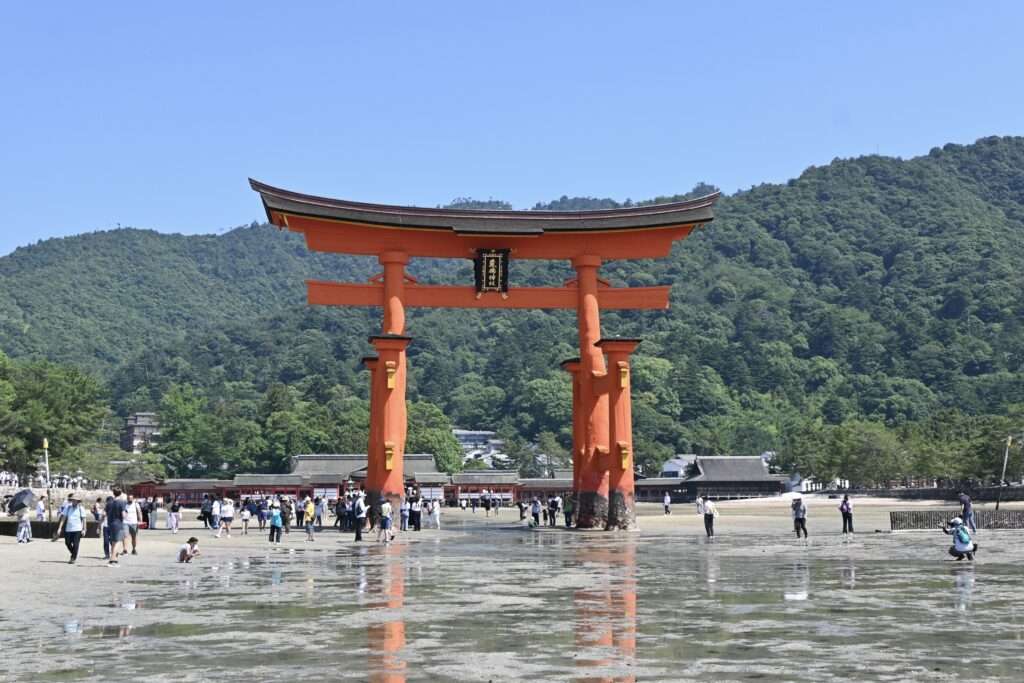
The floating torii gate stands 200 meters from the main hall of Itsukushima Shrine. I didn’t realize until we got there that the shrine’s main buildings are all built up on wooden pillars and also”float” at high tide. The current shrine was built in 1168 over the tidal waters instead of on land because the island itself was considered too sacred to walk on. The name Itsukushima translates to “island consecrated to the gods” or “island of worship”. Although the buildings are raised, the tide swell does need to be quite high for the water to reach all the way beneath them. When we were there in the morning, the gate was floating but the water only reached the pier with the Hitasaki Lantern. The buildings beyond stood above a mucky mixture of sand and mud. In the afternoon, the only water was puddles and a narrow tidal pool that snaked between the buildings.
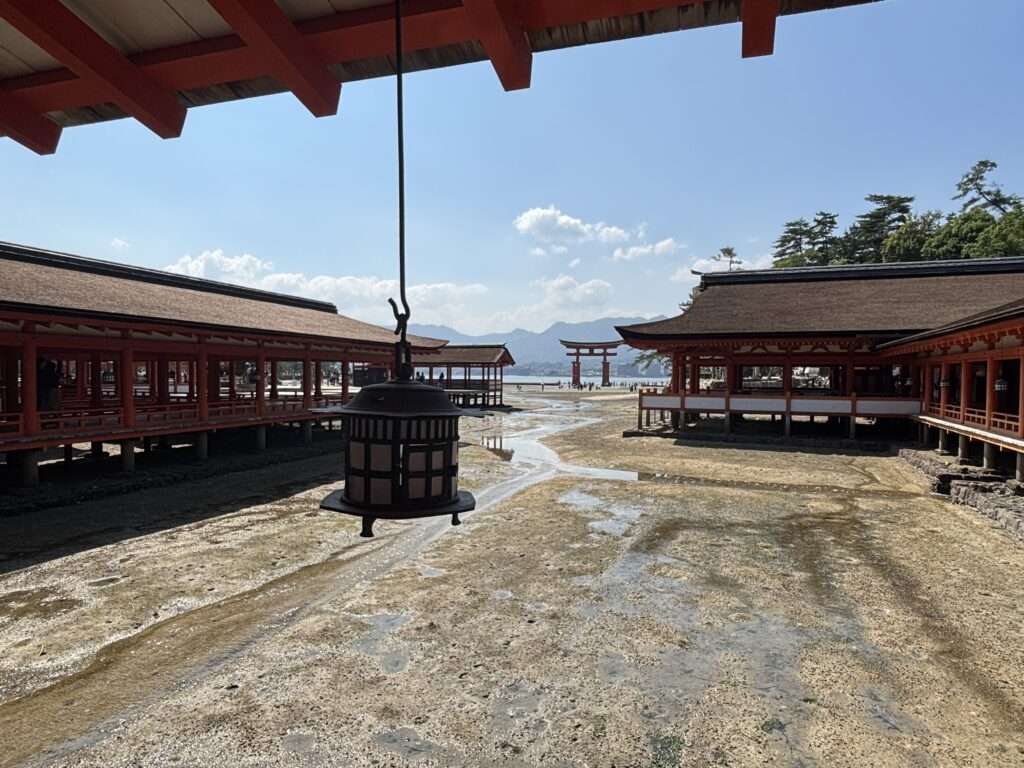
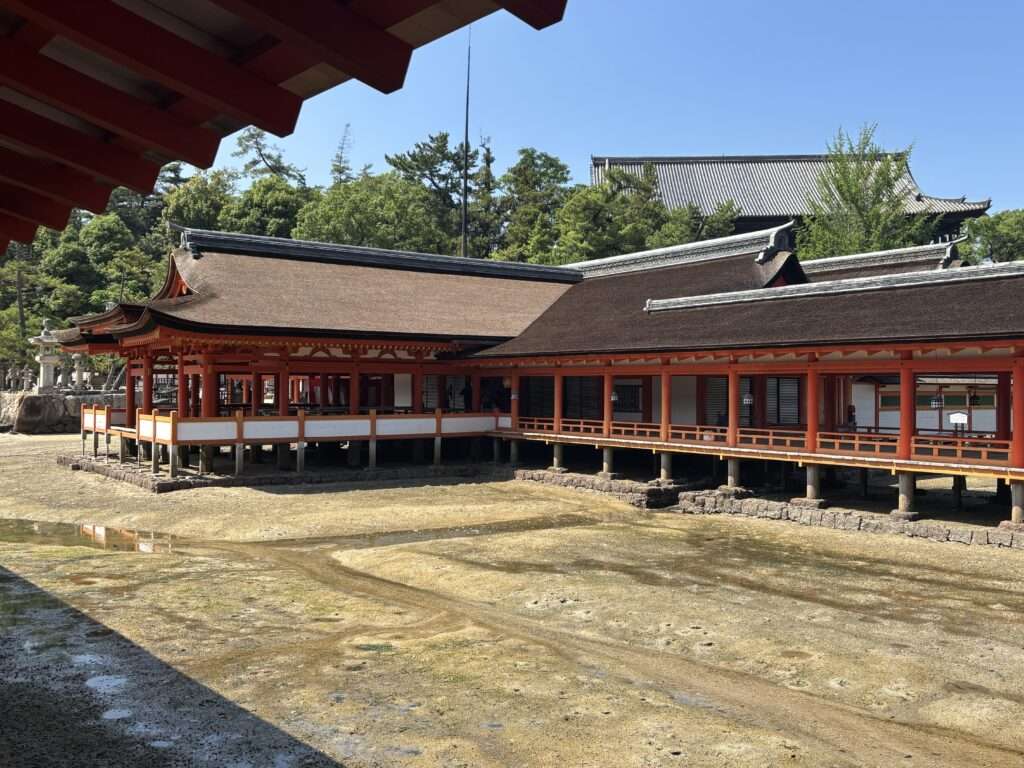
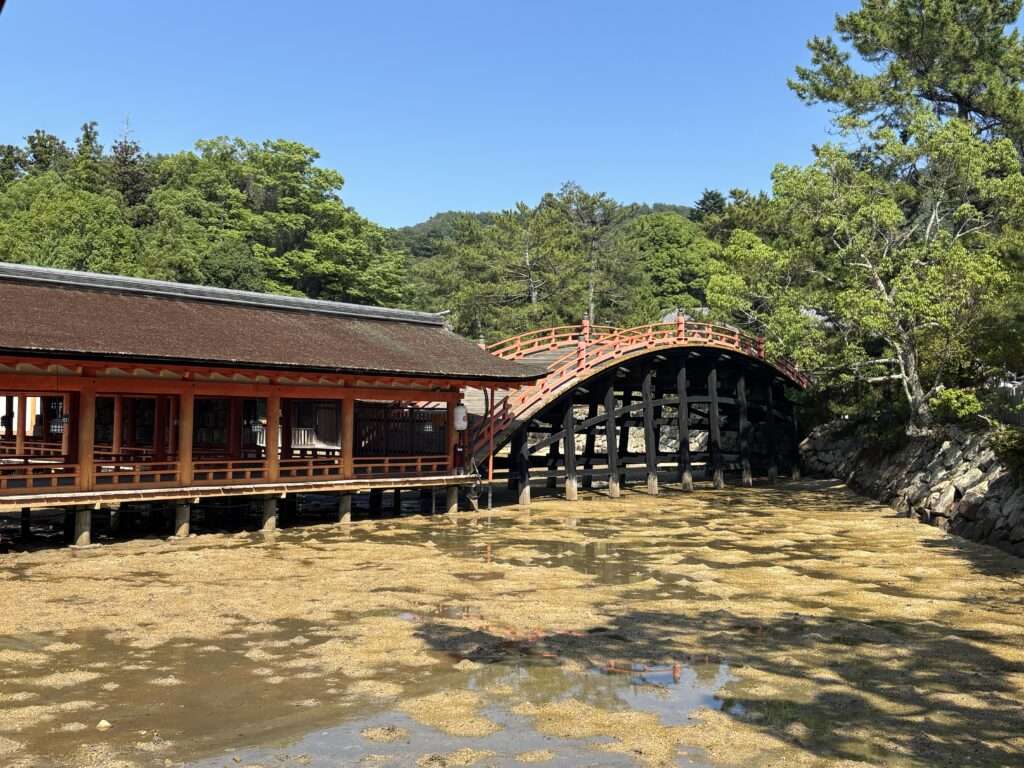
The shrine is relatively small and consists of two main complexes – the Main Shrine (Honsha) and the Marodo Shrine (Marodo-jinja). The Marodo Shrine is the shrine honoring the 5 male guest deities, whereas the main shrine is dedicated to the 3 female Munakata goddesses of the sea, storm, and navigation. The various halls and other structures are all connected by covered walkways elevated above the water.
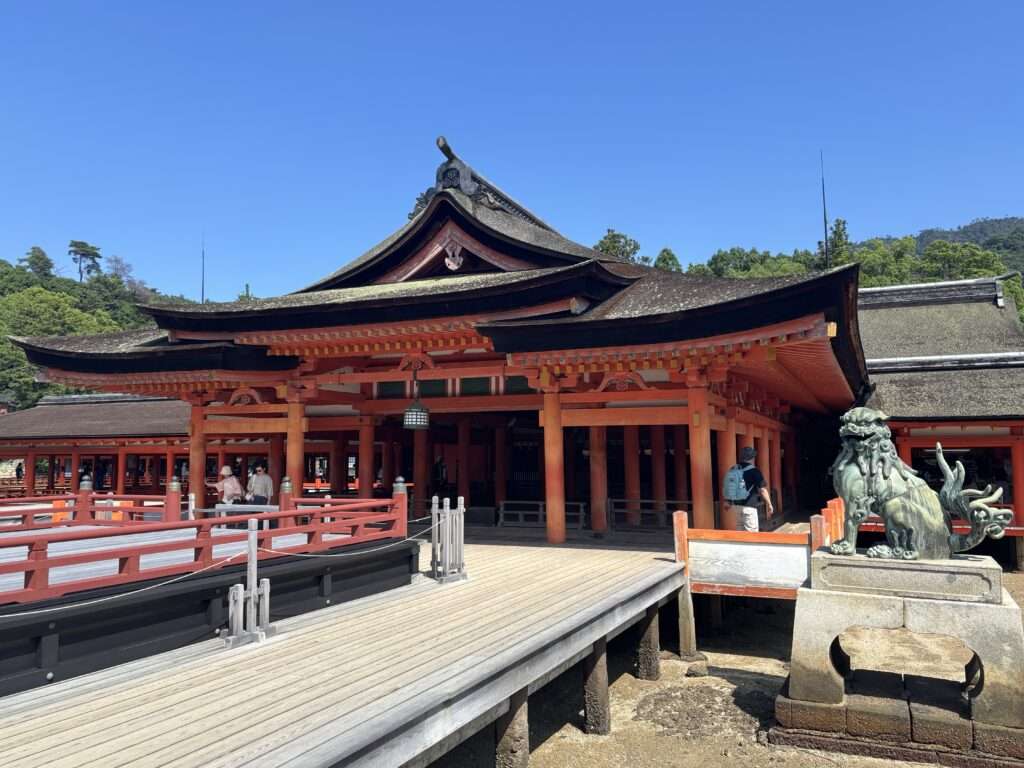
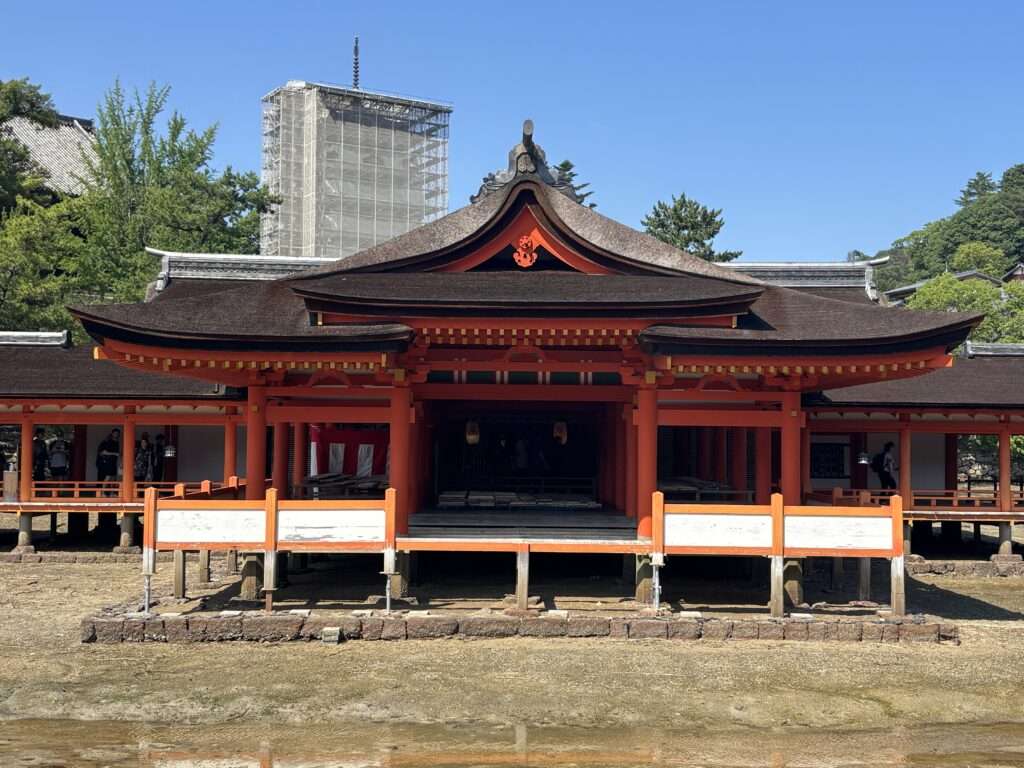
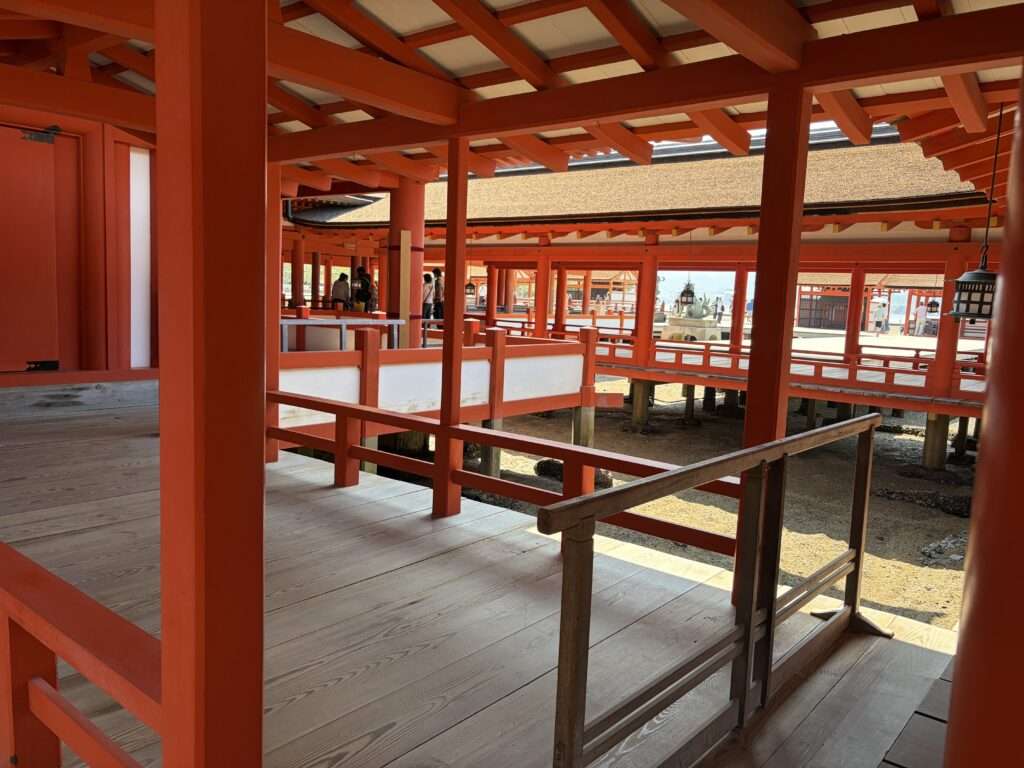
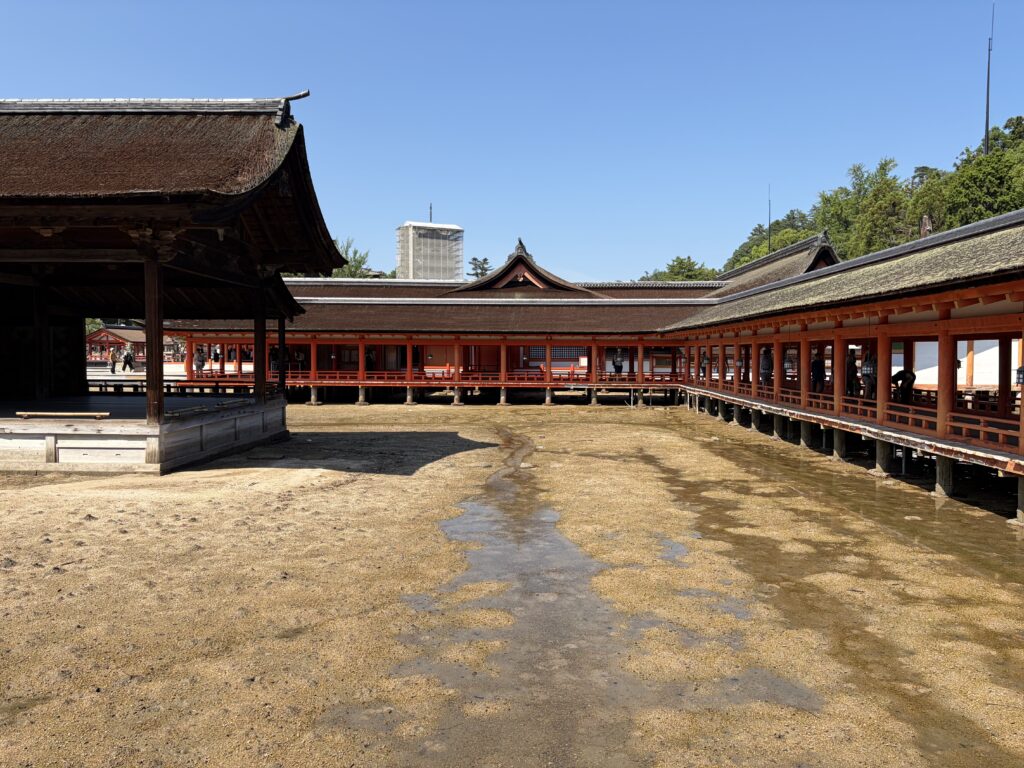
Other interesting features of Itsukushima Shrine include the Takabutai (elevated stage), the Hitasaki Lantern, and the Sori-bashi (arched bridge). The Takabutai is located directly in front of the Main Shrine and is used for Bugaku (ancient court dance) performances.
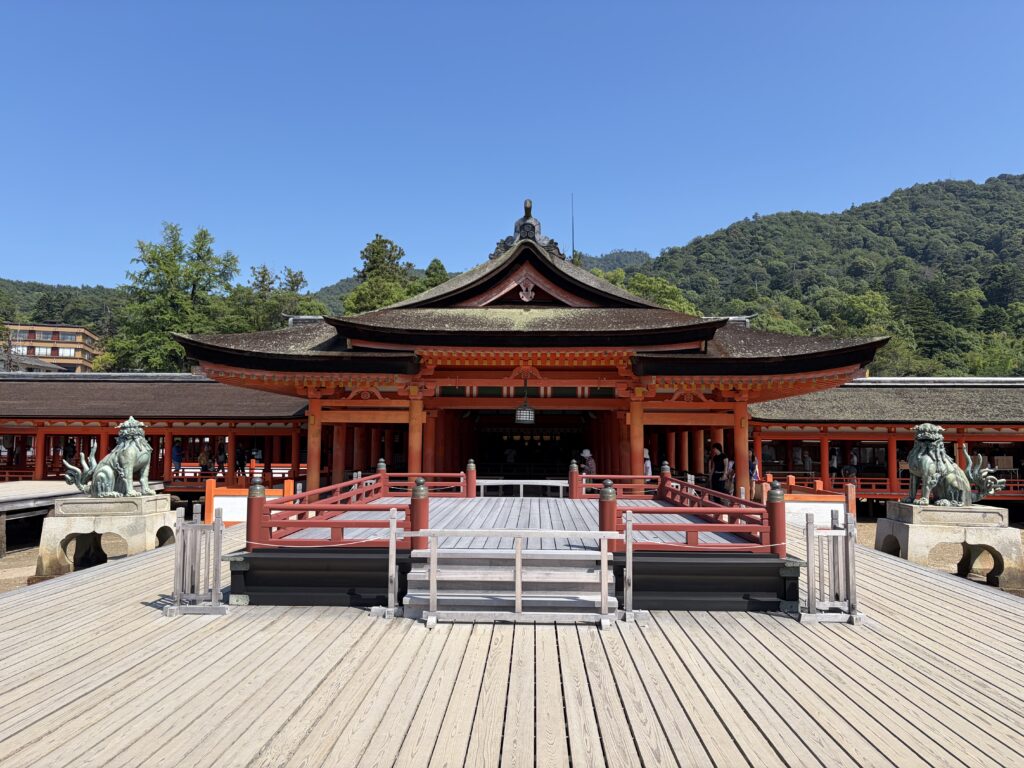
The Hitasaki Lantern sits at the end of the long pier and was historically used to guide incoming boats. It is the closet point in the shrine complex to the floating torii gate and perfectly aligns with it, making it a popular photo spot.
The Sori-bashi was used by imperial messengers. Because the bridge was steep and slippery, temporary steps had to be placed over the floorboards to allow the messengers to safely pass over.
While the torii gate is the main attraction of Itsukushima and the shrine’s open air design makes the rest of it appear somewhat understated, it is a truly unique and architecturally important complex. In all, the Itsukushima Shrine hold 17 National Treasure designations, 14 Important Cultural Properties titles, and is registered as a UNESCO World Heritage Site. It is well worth the time to wander through its covered walkways.
