When we learned that the Miyajima Ropeway was closed for repairs, we knew that if we wanted to see the views from the top of Mount Misen, we would have to get there the old fashioned way… on our own two feet. We decided that we would take the Daisho-in Course up and then most likely the Omoto Course back down.
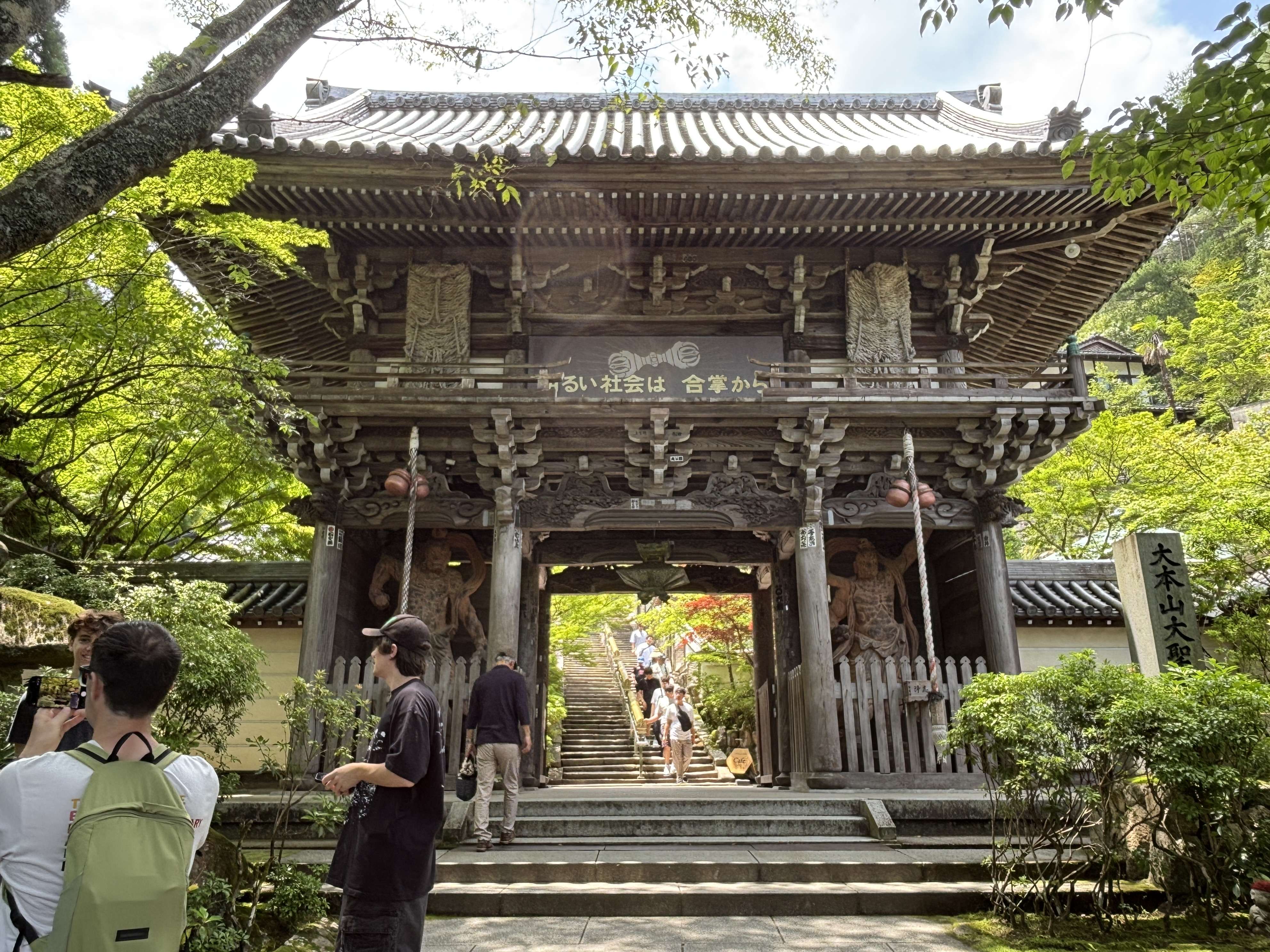
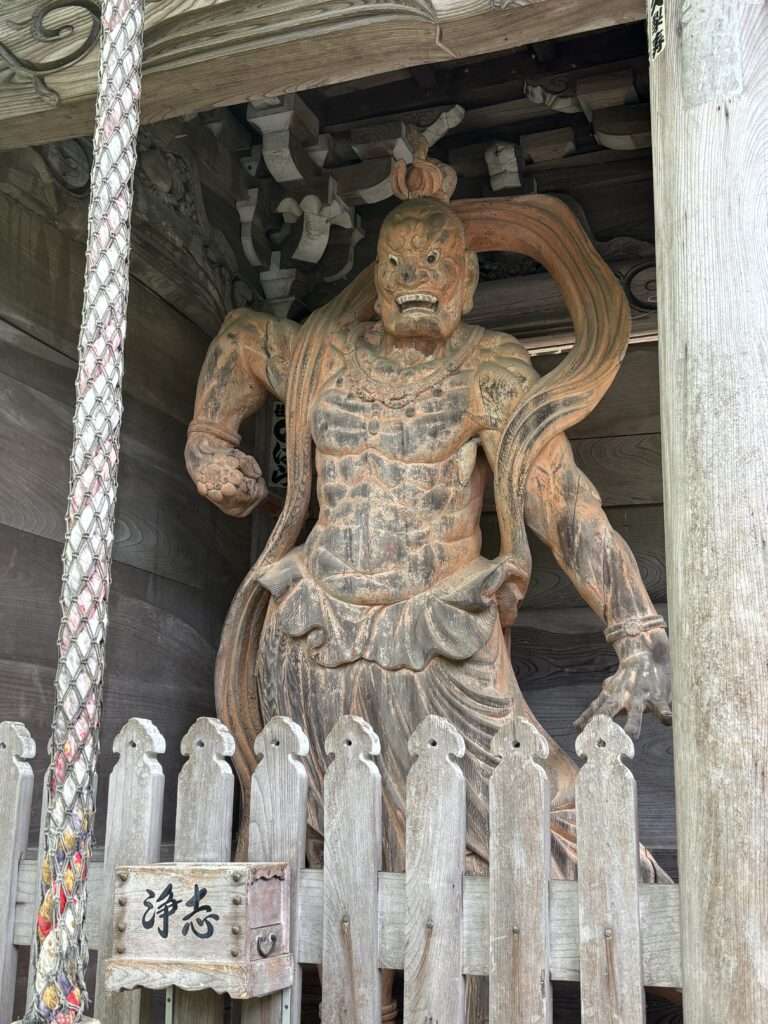
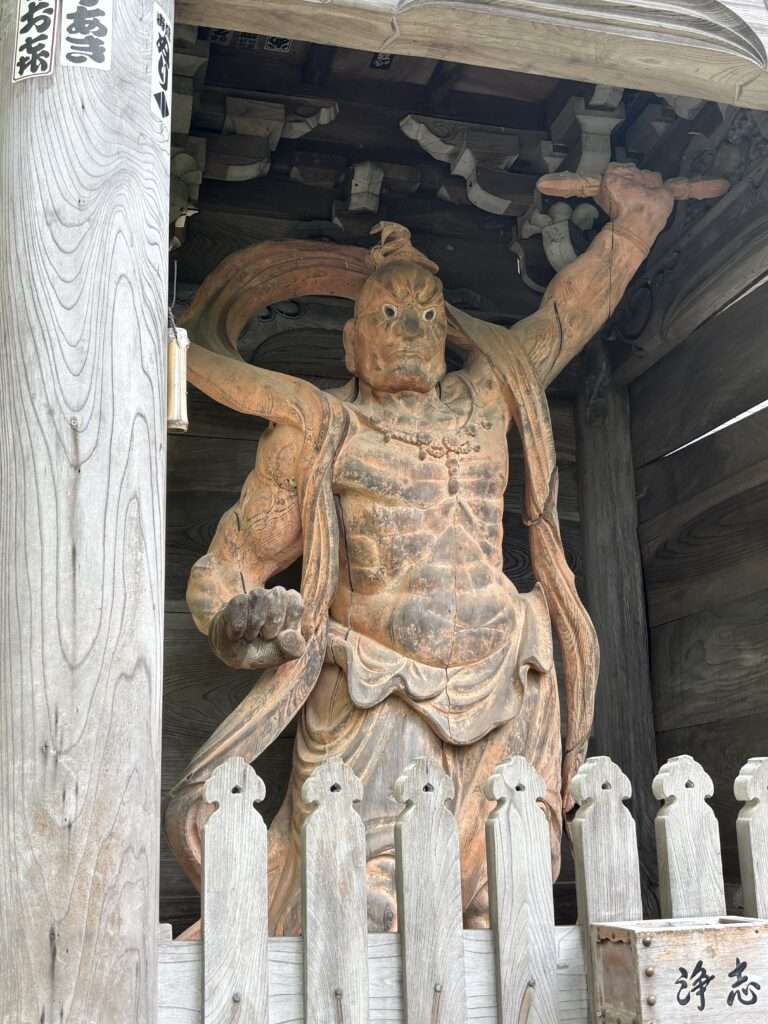
So we headed to the start of the Daisho-in trail, which just happens to be at the Daisho-in Temple. We soon reached the ornately carved wooden Niomon Gate, with its two Nio guardians (Agyo and Ungyo). As seen in other temples, one statue has an open mouth (making an “a” sound) and the other has a closed mouth (making the “un” sound) and together they ward off evil spirits.
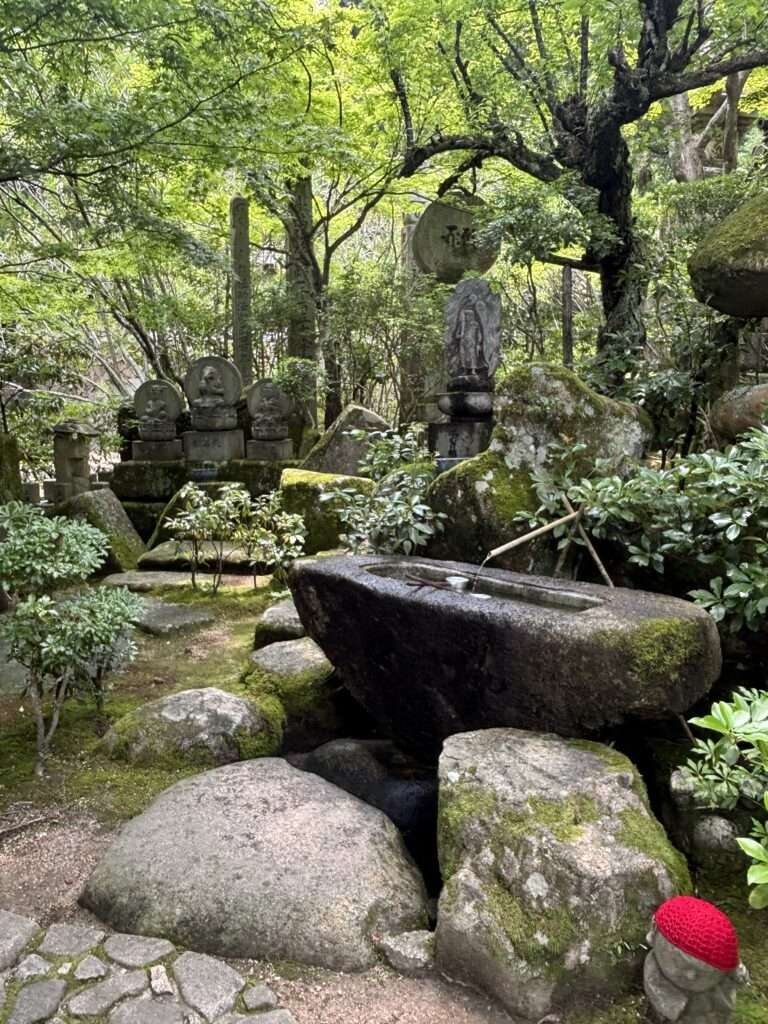
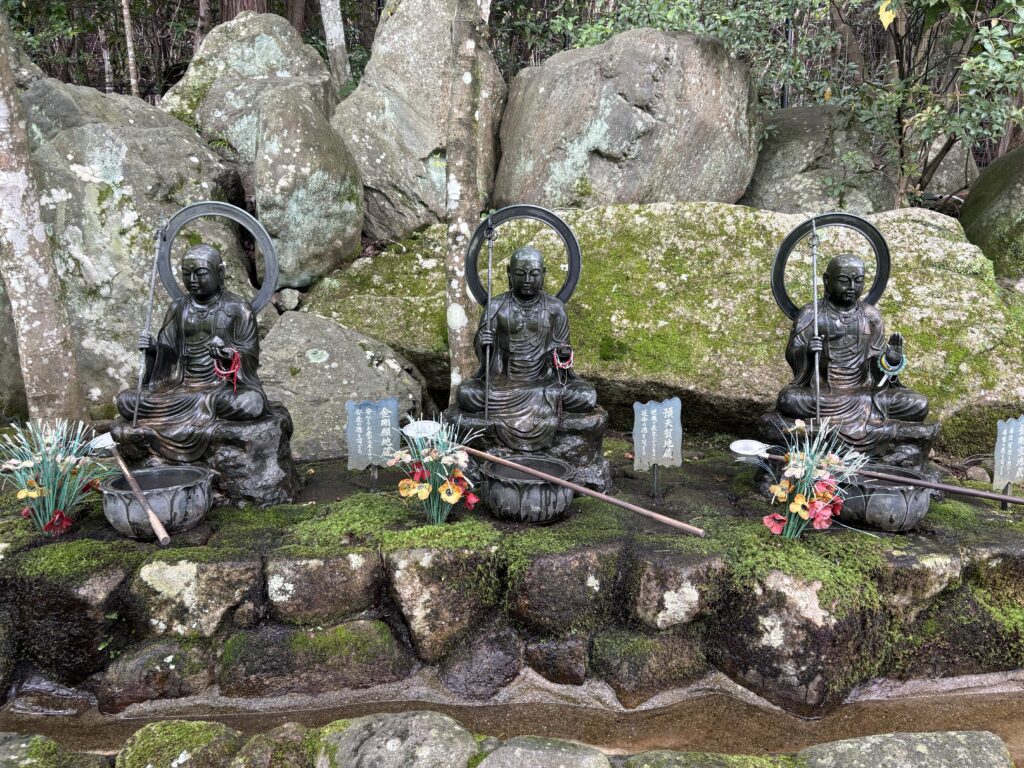
After passing through the gate, to the left was a moss covered garden area with a hand washing station (temizuya). This is where we spotted our first Jizo statue. These adorable stone statues represent Jizo Bosatsu, a beloved bodhisattva (spiritual guide) in Japanese Buddhism. He is the protector of children and guardian of travelers. And he had on a red knit cap! These adorable accessories are actually devotional offerings meant to ward off evil. Were it not for this pop of color, the gray stone statue would have blended in with the moss and other stone statues in the garden. We were so excited to see him!
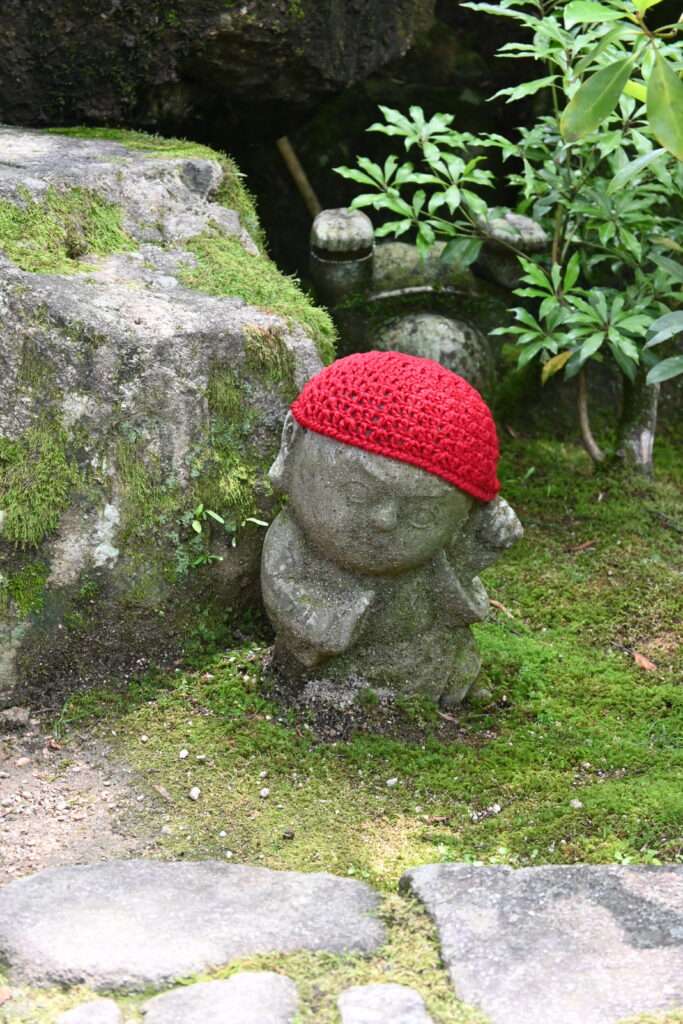
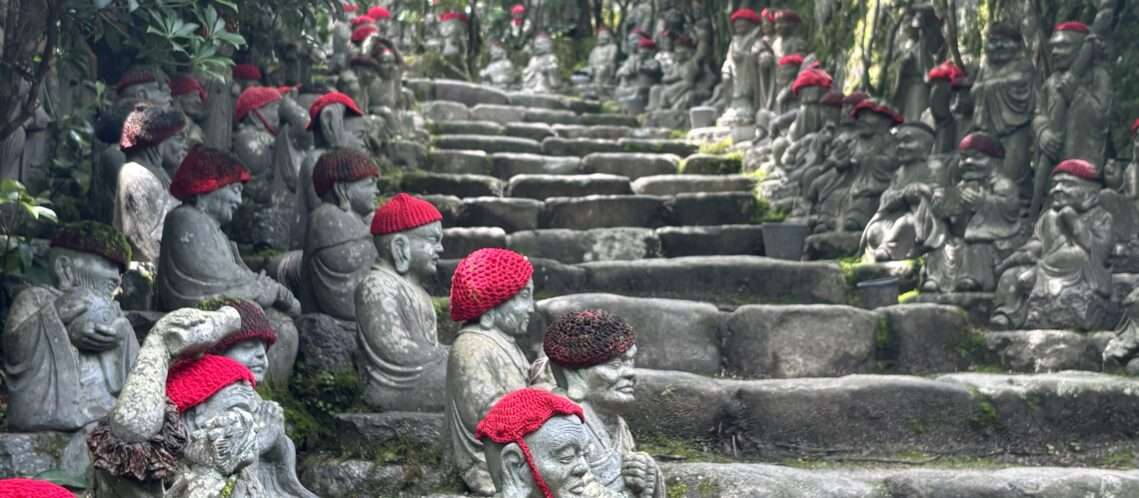
And then we spotted another. And another. And another. Each with their own unique expression and red hat. We were thrilled to have discovered these adorable statues interspersed throughout the woods. And then we rounded a corner and came upon a path lined with hundreds of red-capped statues.
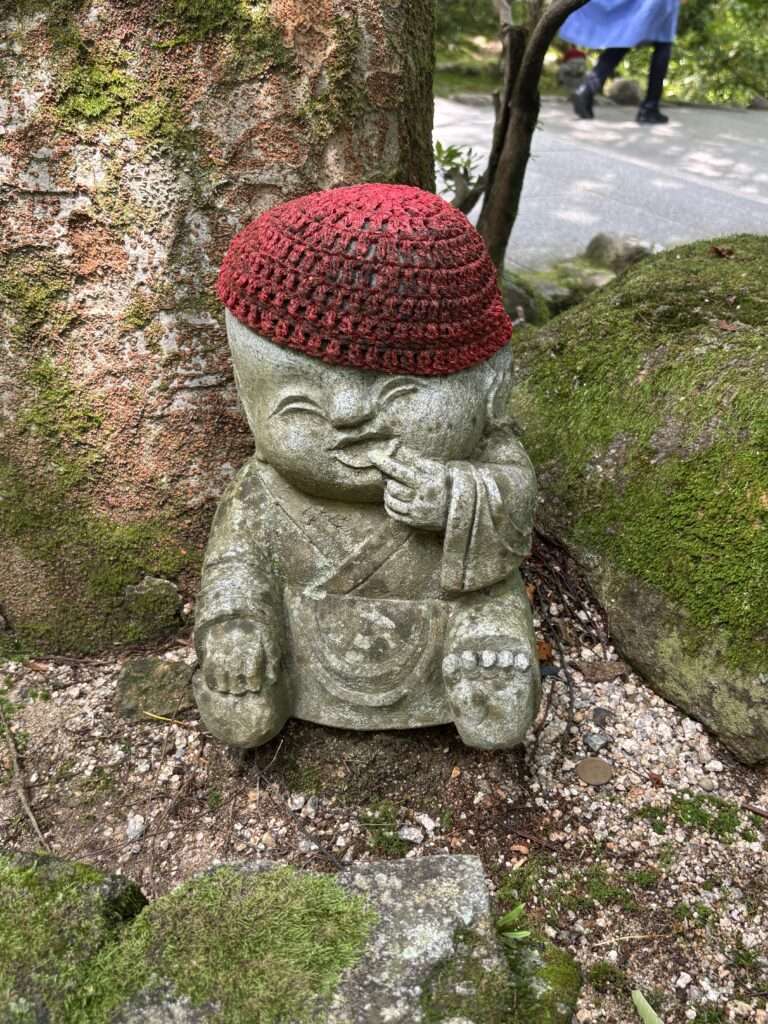
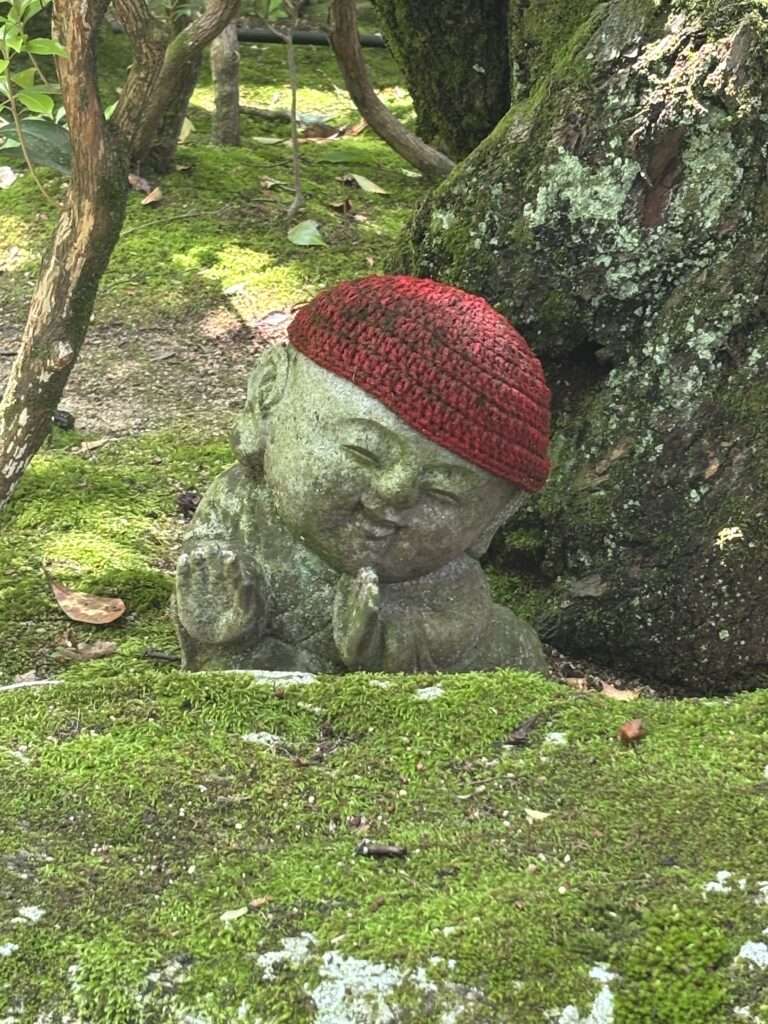
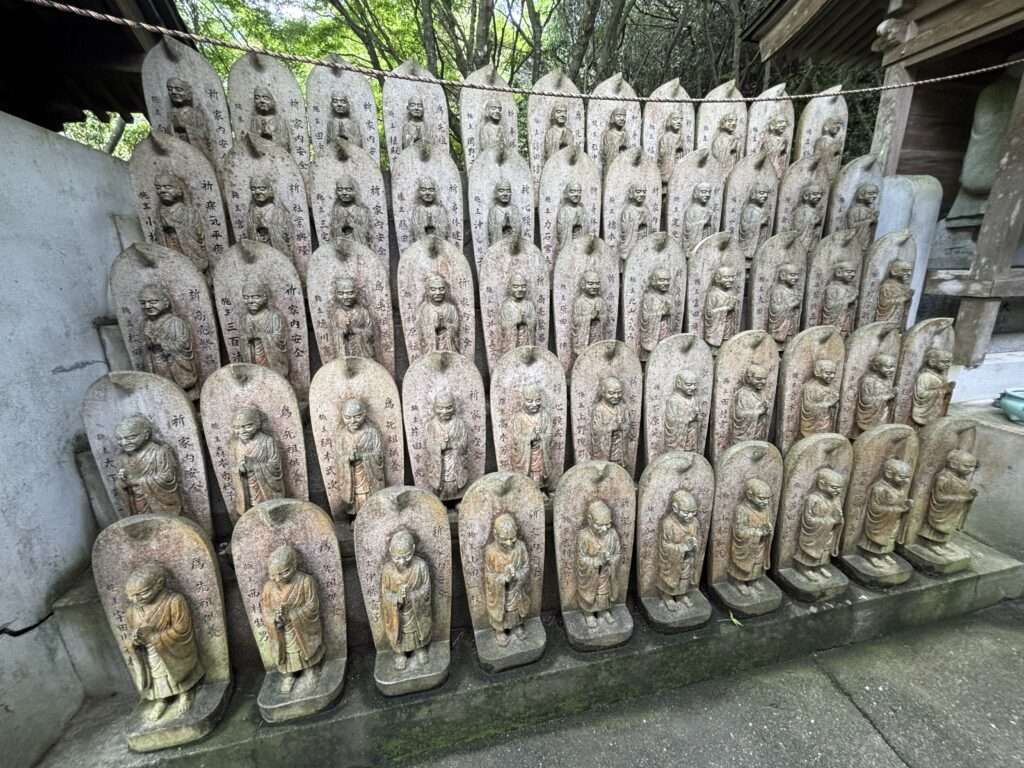
These statues were different from their playful predecessors. Known as Rakan, they represent the enlightened disciples of Buddha. These statues were slightly larger and more realistic looking than the short, round Jizo statues. There are 500 Rakan statues in Daisho-in, each unique in its appearance and personality. And each wearing a red hat. It was an incredible sight to see them all lining the path and one of my favorite memories from Japan.
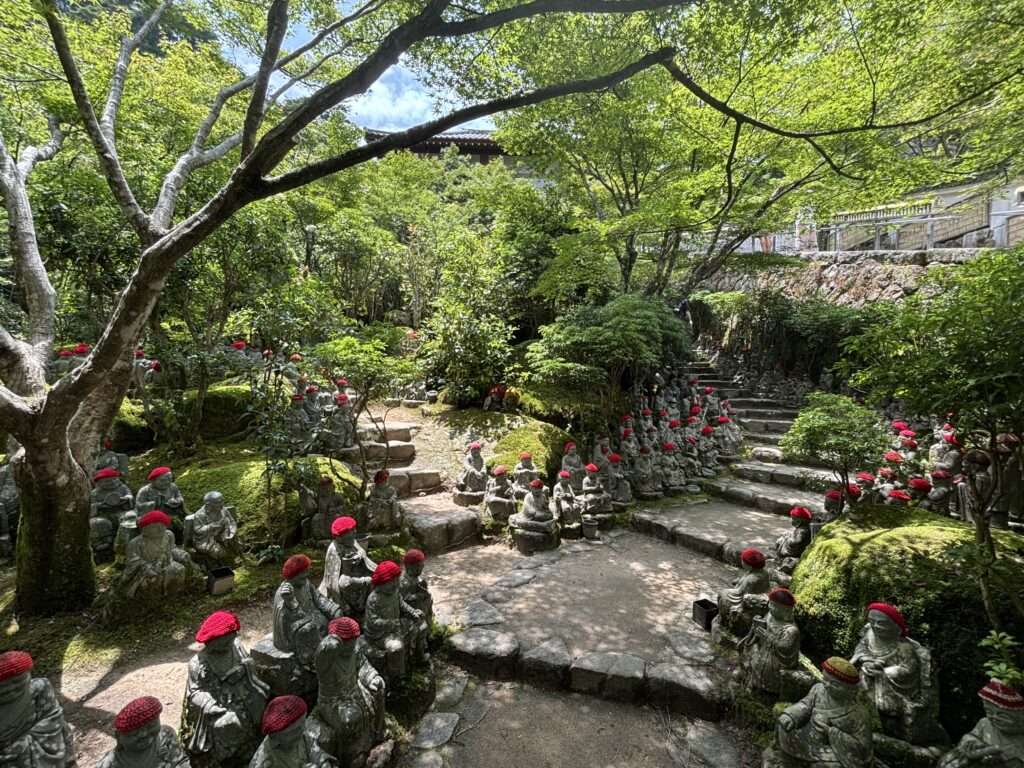
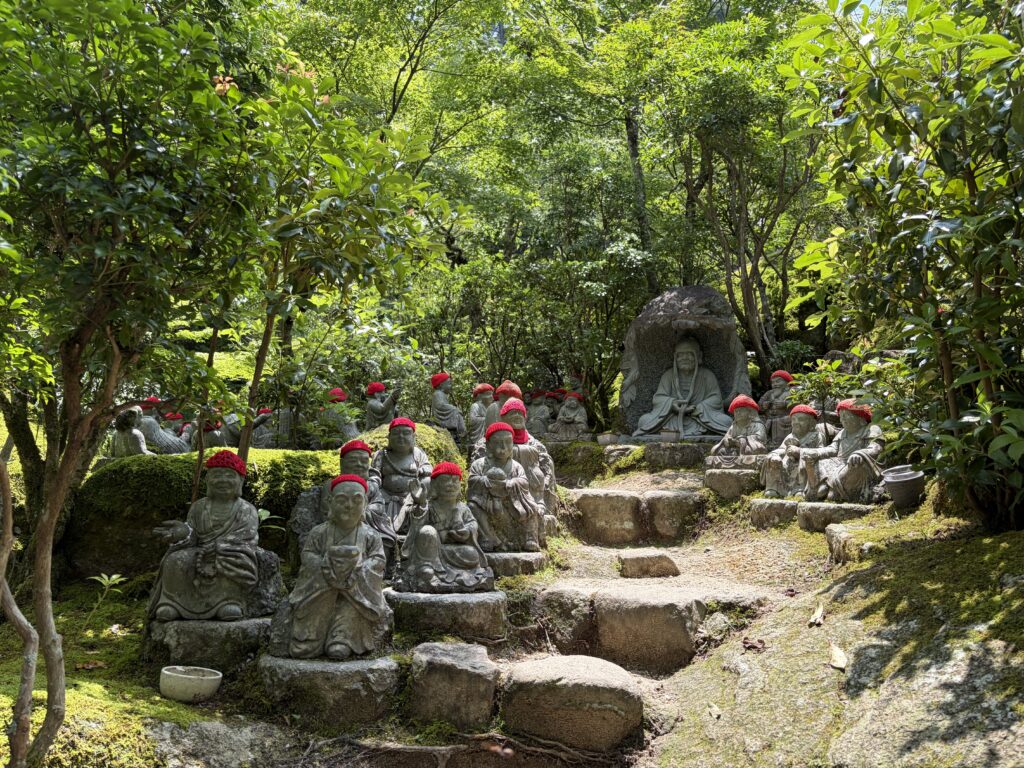
All this and we had barely entered the temple grounds! We spent plenty of time admiring both sets of statues, enjoying all the different poses and expressions. Honestly, I could have spent hours just in that spot but I knew there was so much more to see. We headed back to the Niomon Gate and up the Sutra Staircase. The 200 steps feature a gold rail in the middle of the steps that is not only meant to assist you in your climb but can bestow blessings on you as well. Beneath the top solid section of the rail is a series of spinning metal cylinders, each inscribed with scripture. All 600 volumes of the Dai-hannyakyo Scripture are inscribed on the wheels and it is said that spinning them all from the bottom to the top bestows the same blessings upon you as reading them all, which is good news for all the non-Japanese reading visitors!
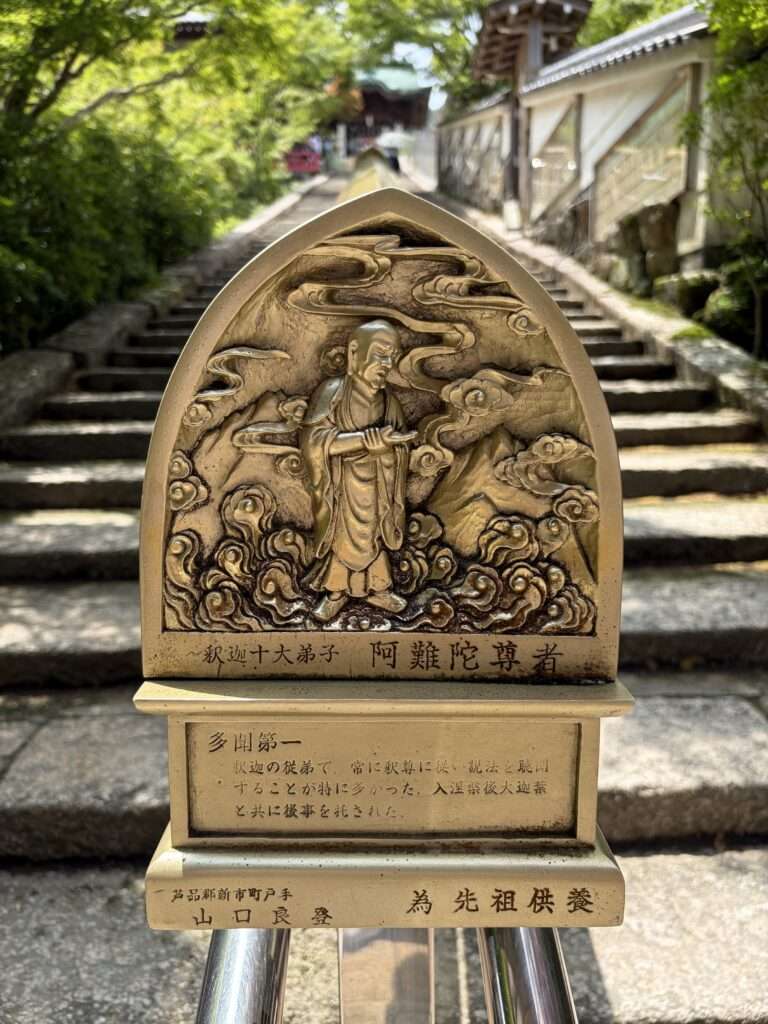
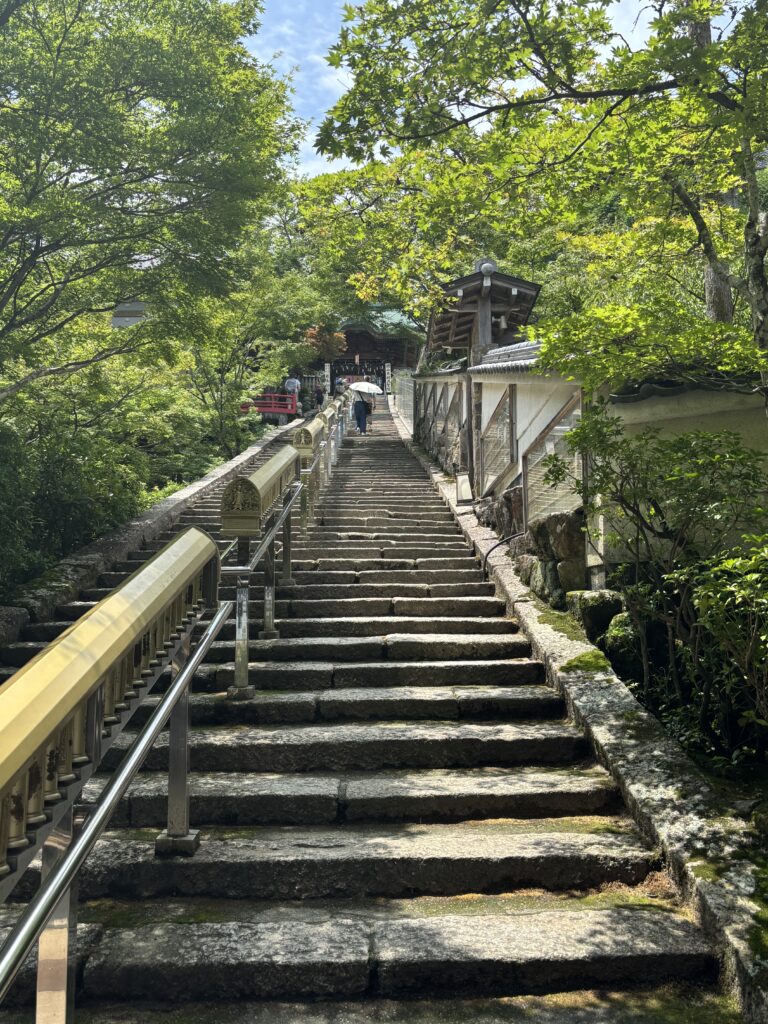
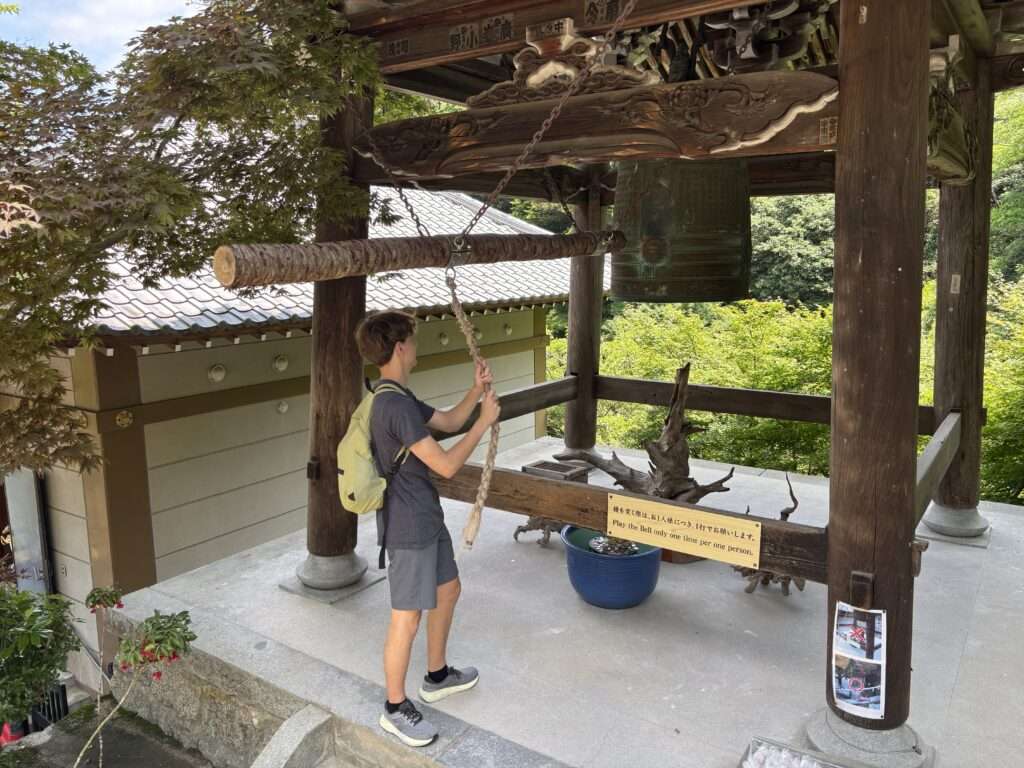
Near the top of the main staircase is the Century Bell. The bell is around 500 years old and was the original timekeeper of the island, ringing out to signify morning, noon, and night. Today visitors can ring the bell by swinging the hanging log into the side of the bell, being careful to strike the bell only once.
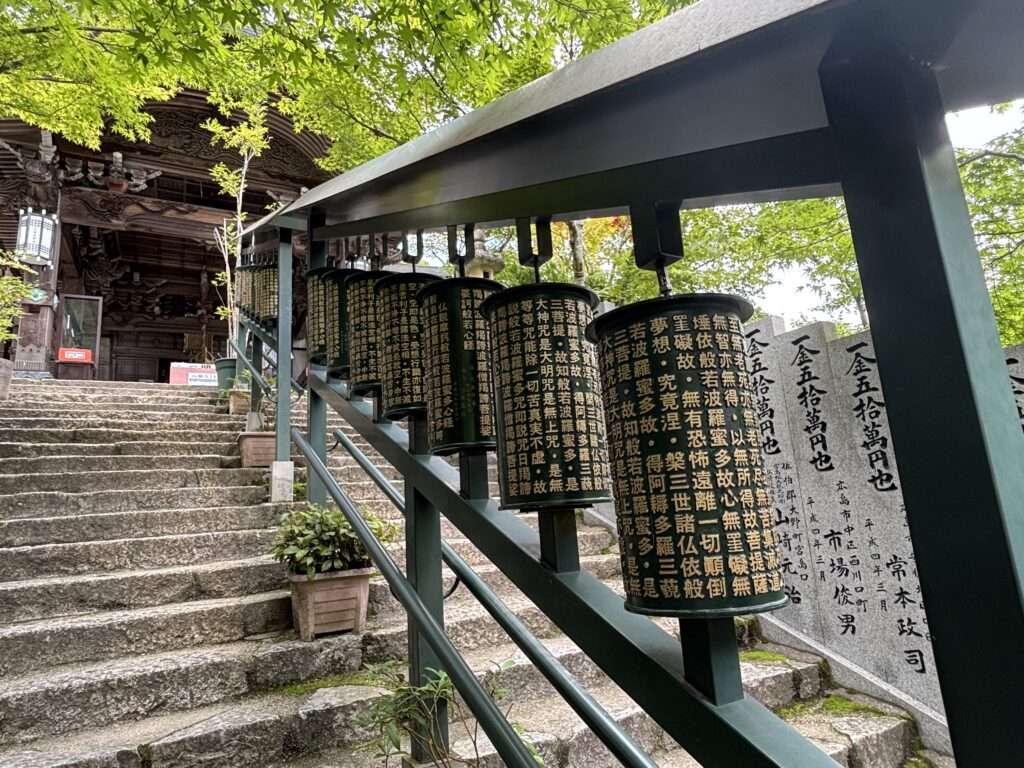
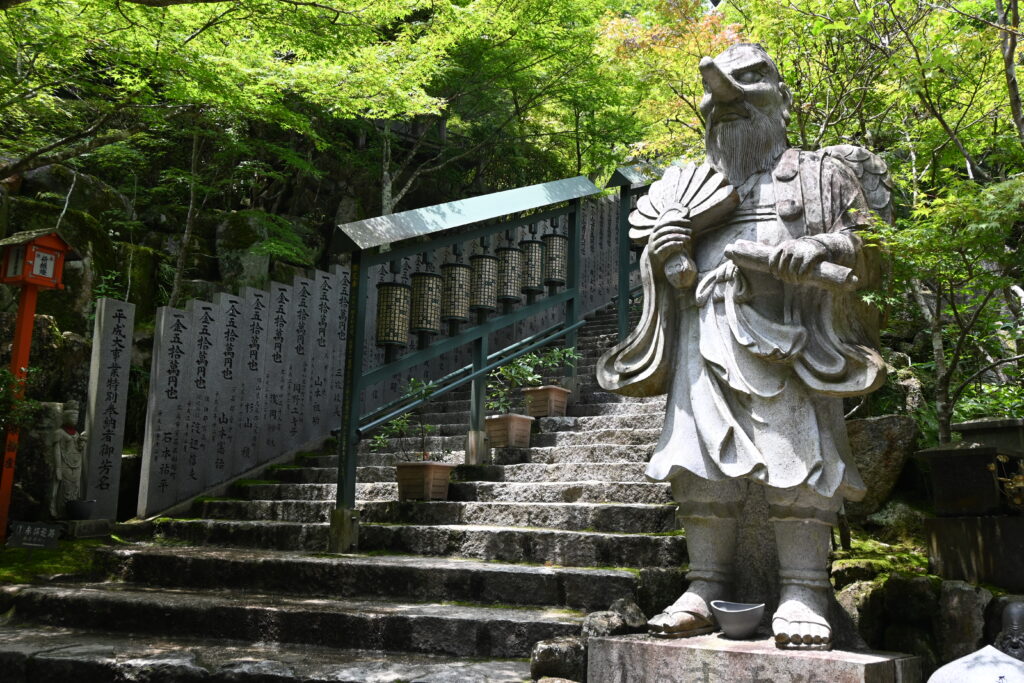
There is another set of stairs further up the hill that features Mani prayer wheels. These large wheels are green with Hannya Shingyo (the Heart Sutra) inscribed in gold lettering. Again, spinning the wheels bestows blessings and the same spiritual merit as reading the text. A Tengu Statue stands at the base of the stairs. Mount Misen is said to be inhabited by a tengu, a mythical half-man, half-bird creatures that feature a long nose and wings. Legend has it that the “mountain goblin” lives inside Mount Misen and beats together wooden clappers in the middle of the night. Residents know not to go outdoors when they hear the clappers’ clinking noise or they risk being cursed.
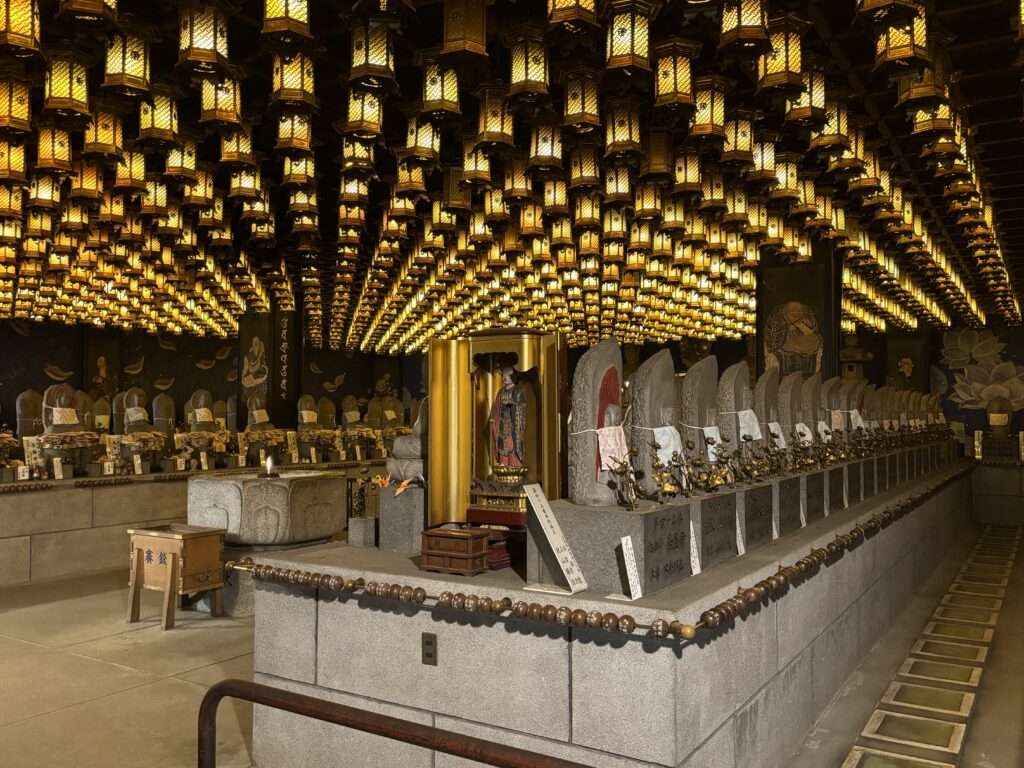
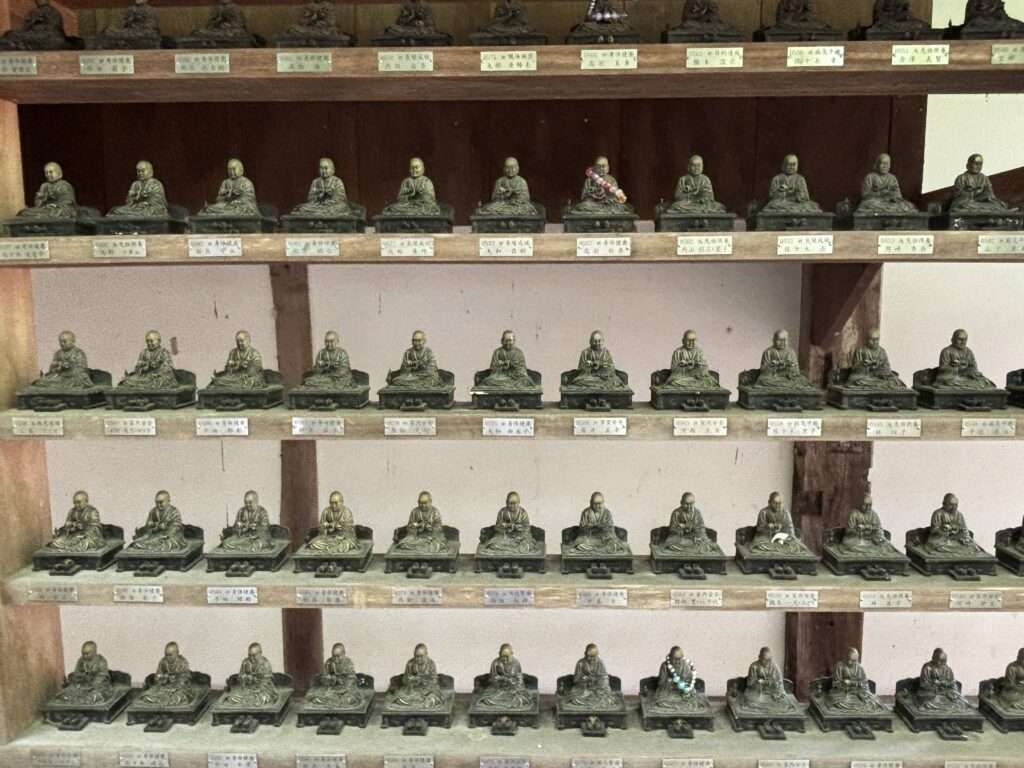
There is so much to explore at Daisho-in Temple. Literally everywhere you turn is another group of statues or a hall filled with hundreds of candles and religious objects. There is no set path through the temple and you could spend hours wandering here and still not see everything. And everything occurs in multiples. With the exception of the large statues like the Tengu, everything is grouped together with dozens of similar objects. Why have one stone carving of a Buddhist monk when you can have 50?
We spent about an hour and a half here and could easily have spent much longer. It truly is a one of a kind temple full of history, religion, and whimsical surprises.
If you keep traveling up through the temple, you will eventually find the trail that leads up the mountain. We said good-bye to the red-capped Jizo statues and started up. It soon became clear that this was not a “trail” per se but a very long, continuous set of stone steps. My 7-times-operated-on knee quickly began to protest, as did my oldest son. After about 20 minutes, he and I decided to turn back. We headed back into town to rehydrate and cool off. My husband and younger son soldiered on for a while but they also turned around before reaching the summit.
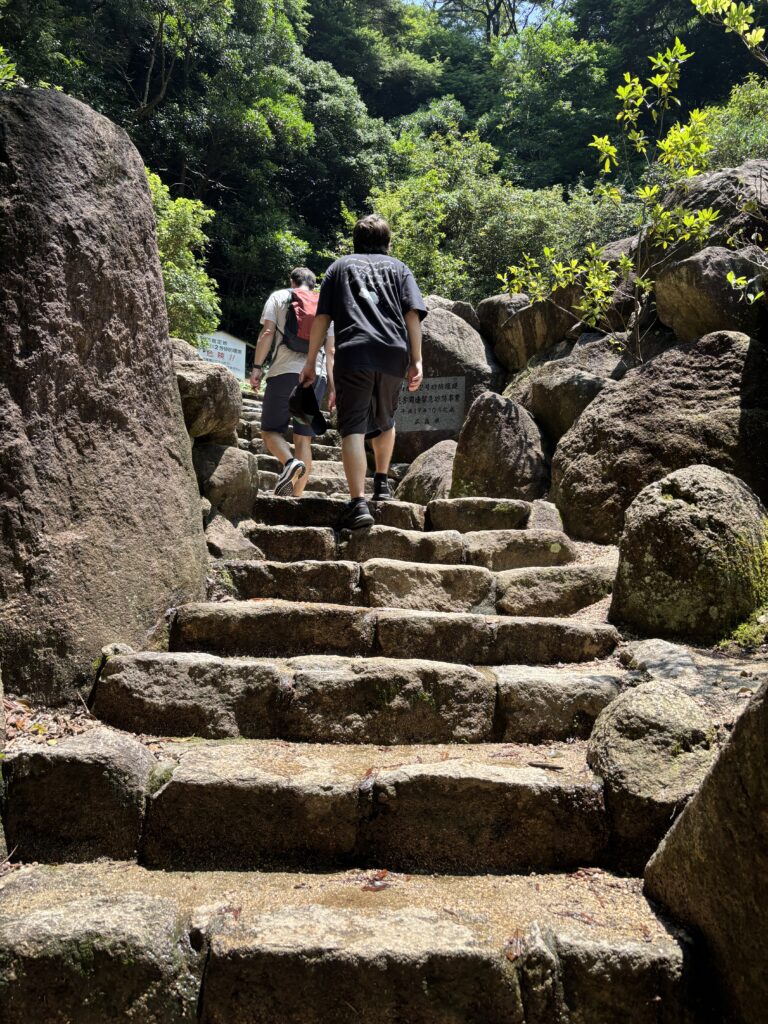
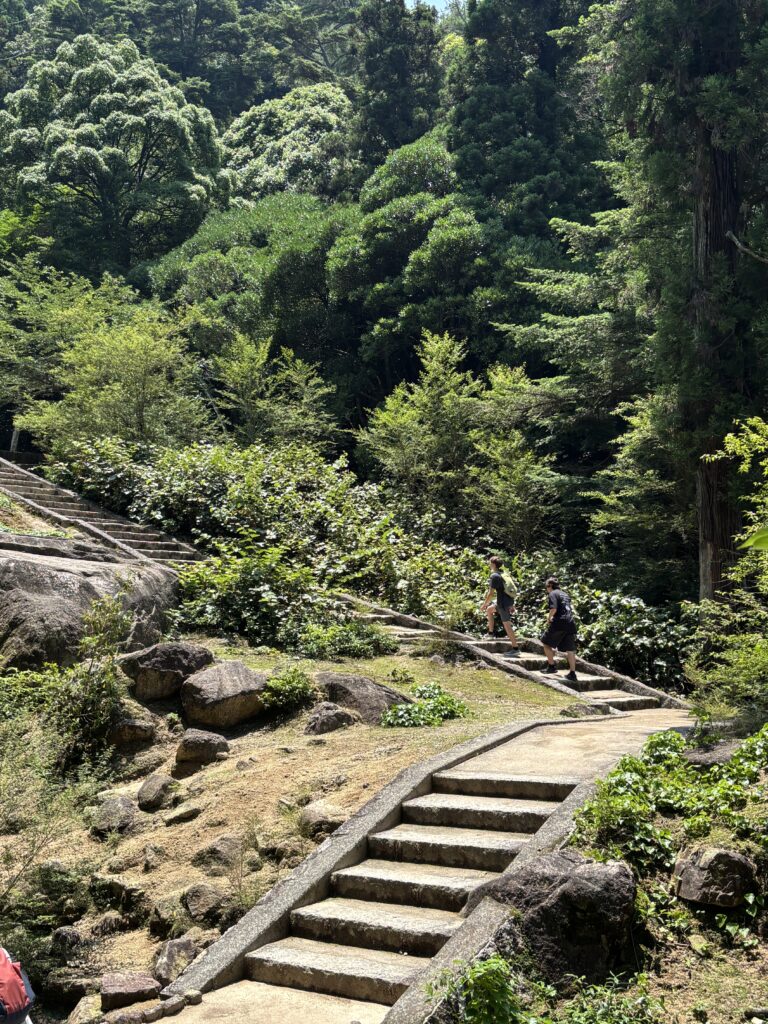
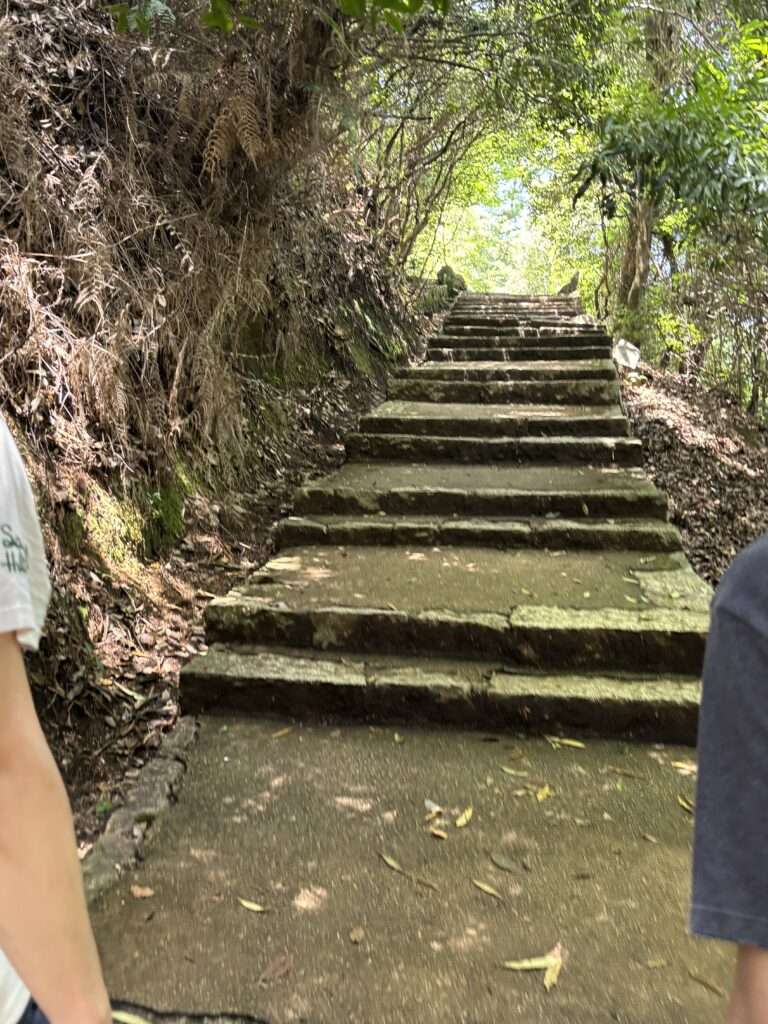
While we were disappointed that the ropeway was closed and that we didn’t have the time or energy to make it to the top of Mount Misen ourselves, nothing else about our time exploring Daisho-in was disappointing. That is a trade-off I wouldn’t hesitate to make again. Daisho-in Temple was probably my favorite place that we visited in all of Japan.
