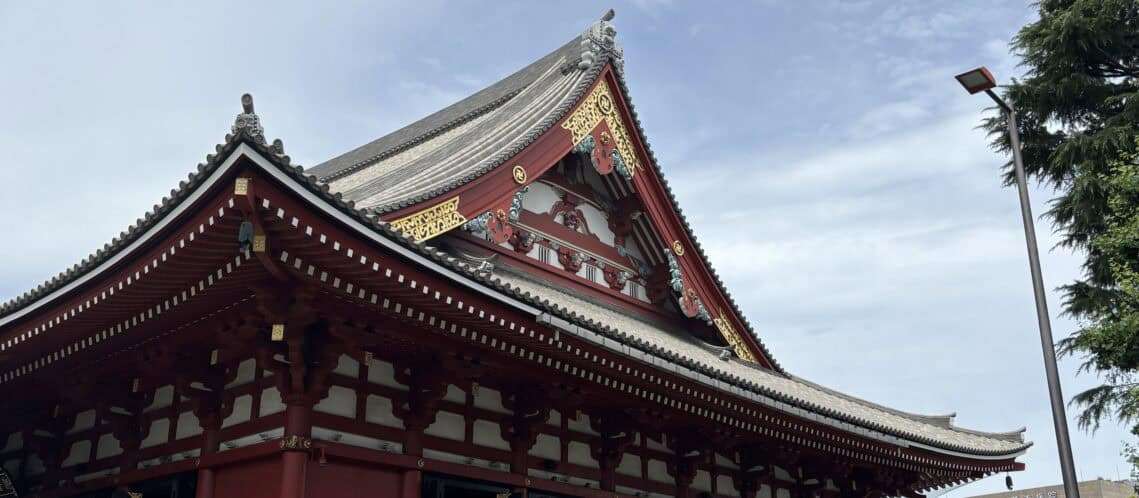
On our first day in Tokyo, we were introduced to Shinto traditions through our visit to Meiji Jingu. On our second day, we visited our first Buddhist temple, Sensō-ji (or Asakusa Kannon Temple). Completed in 645, it is Tokyo’s oldest temple and is dedicated to Kannon, Bodhisattva of Mercy. Like many Japanese templates and shrines, the original buildings were destroyed by bombings during WWII and rebuilt in 1958.
Legend states that the temple was created after 2 fisherman caught a gold statue in their net. They attempted to return it to the water several times, but kept catching it again in their net. Finally they brought it to shore and their local chief identified it as Kannon the goddess of mercy. The three men then built a small shrine to house the statue, and several years later a Buddhist priest built the temple and promptly hid the statue inside away from public view.
Much like our visit to Meiji Jingu, we did not approach Sensō-ji from the main entrance. We entered through Niten-mon Gate located to the right of the main hall. This was unintentional but again, it was nice to not enter through the most crowded gate. Niten-mon means “the gate of the two Ten”, which references the two protective Buddhist deities (known as Ten) on either side of the gate.
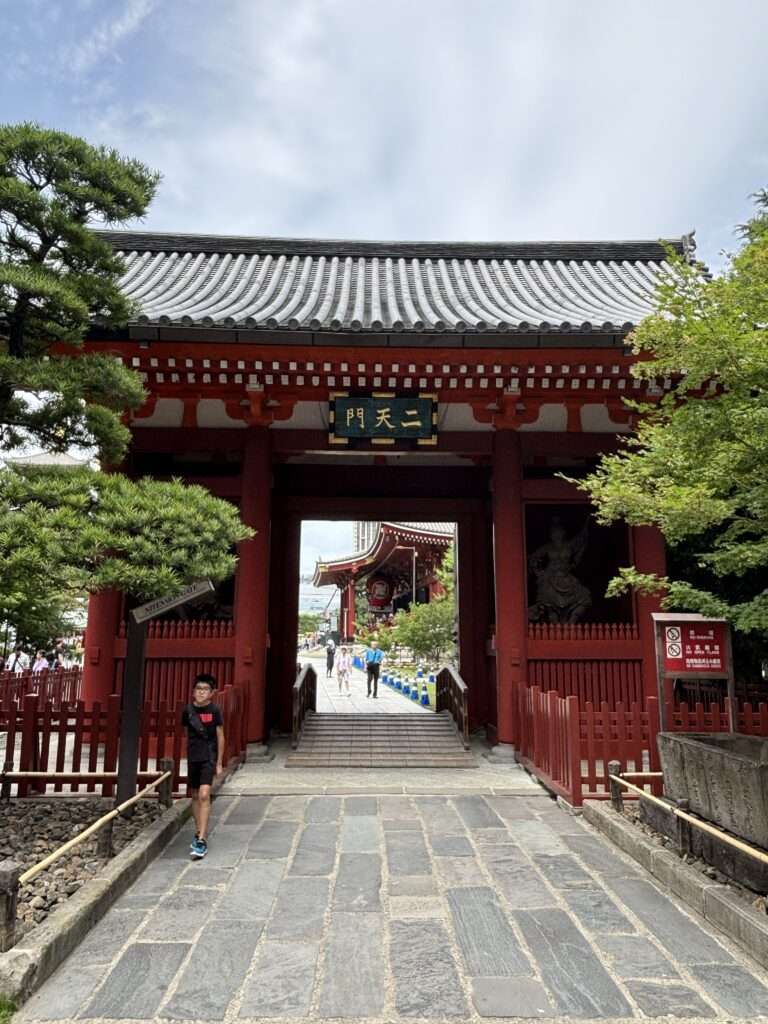
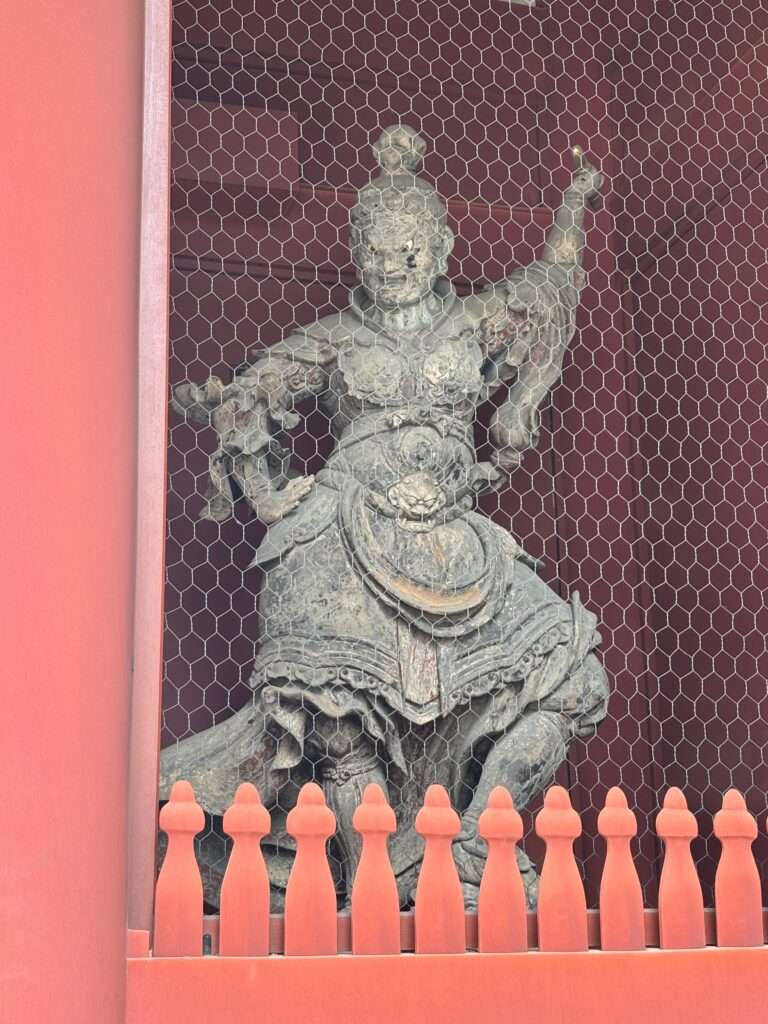
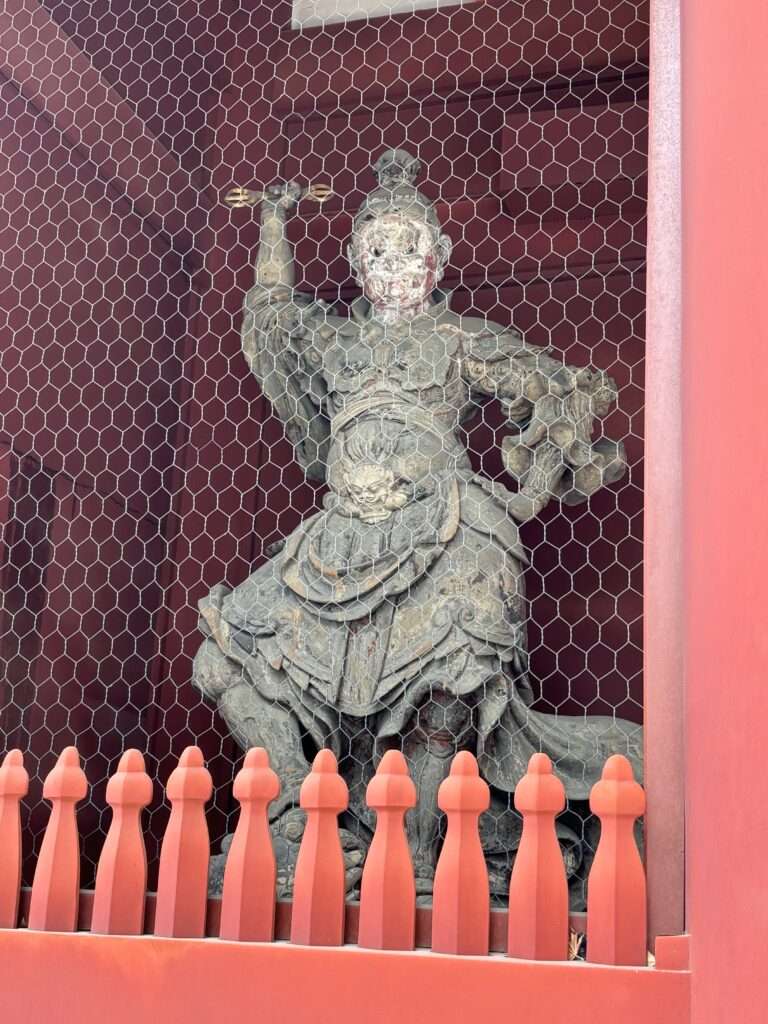
We walked in and were immediately overwhelmed by the crowds. While Meiji Jingu felt crowded, it is a larger space so the people were spread out and the large natural area surrounding the shrine made it feel less claustrophobic. Sensō-ji is not as isolated from the city so it does not benefit from any extra space. We quickly made a plan of where to meet if we got separated (we did) and then started exploring.
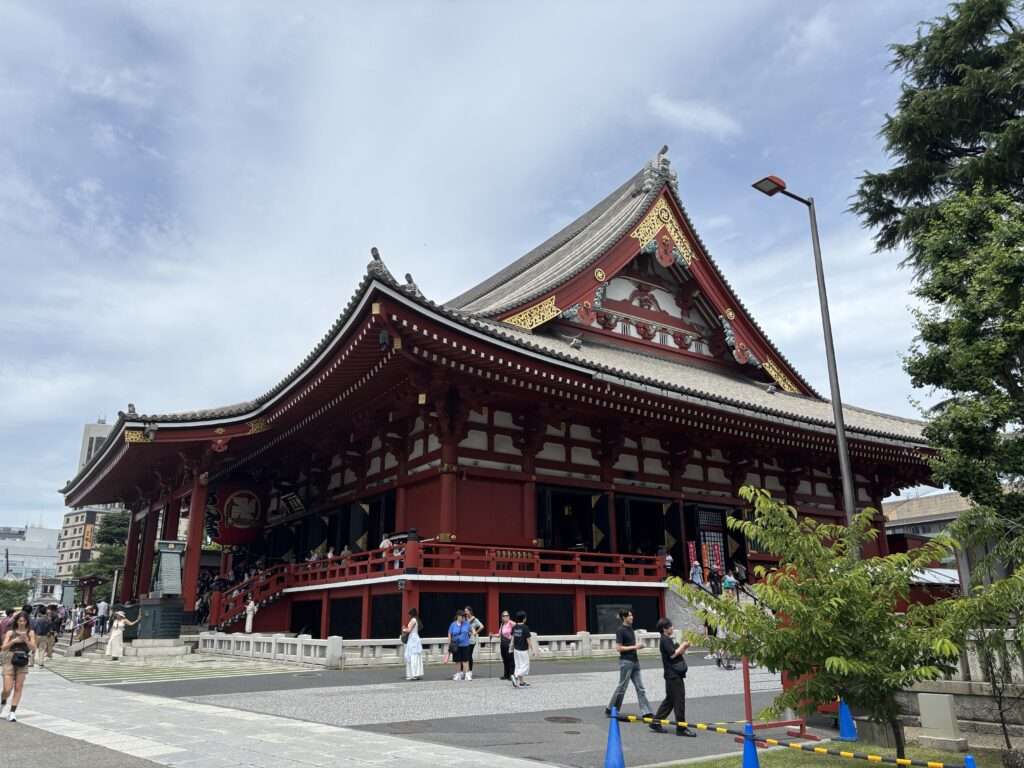
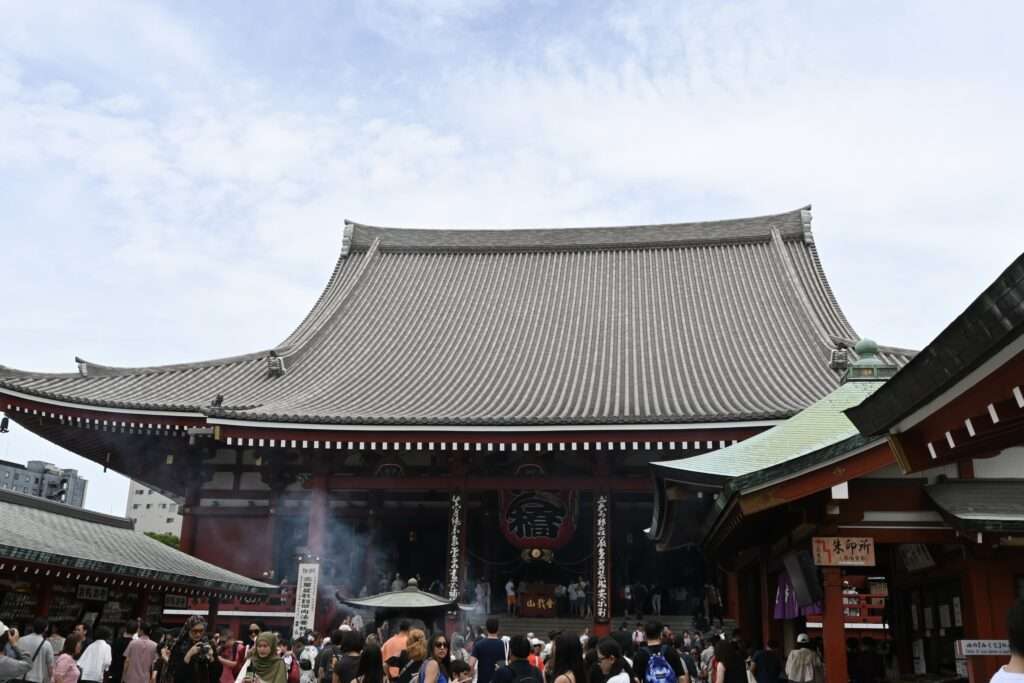
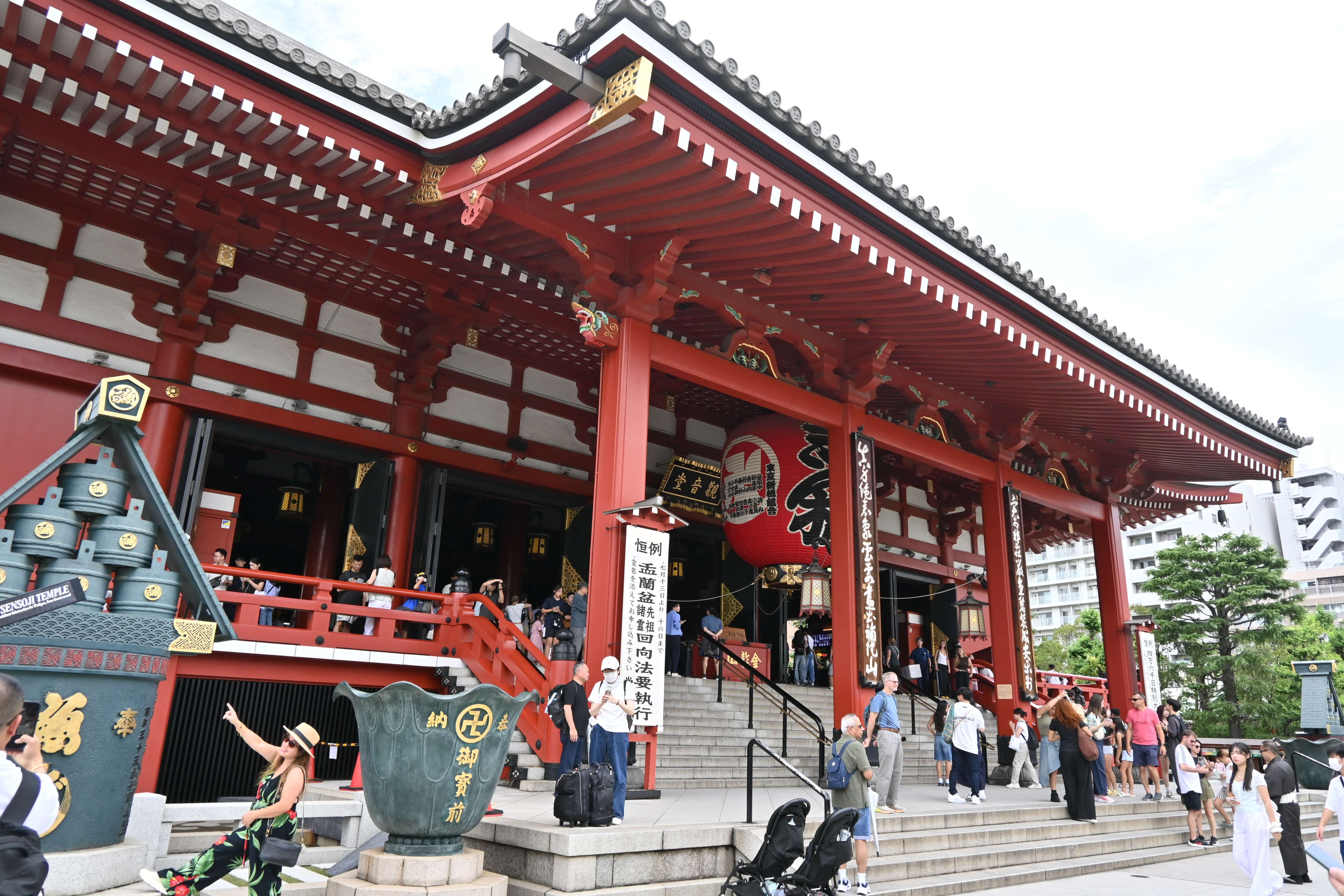
We entered next to the main hall, Kannondo Hall. The hall’s most prominent feature is its steeply sloped roof, and its most inconspicuous feature is the Kannon statue that remains hidden inside some 1300+ years later. Even the backup statue created in 857 is rarely seen, displayed just once a year on December 13th at precisely 2pm. The enshrined statues are in the naijin (inner sanctum), which is not open to the public.
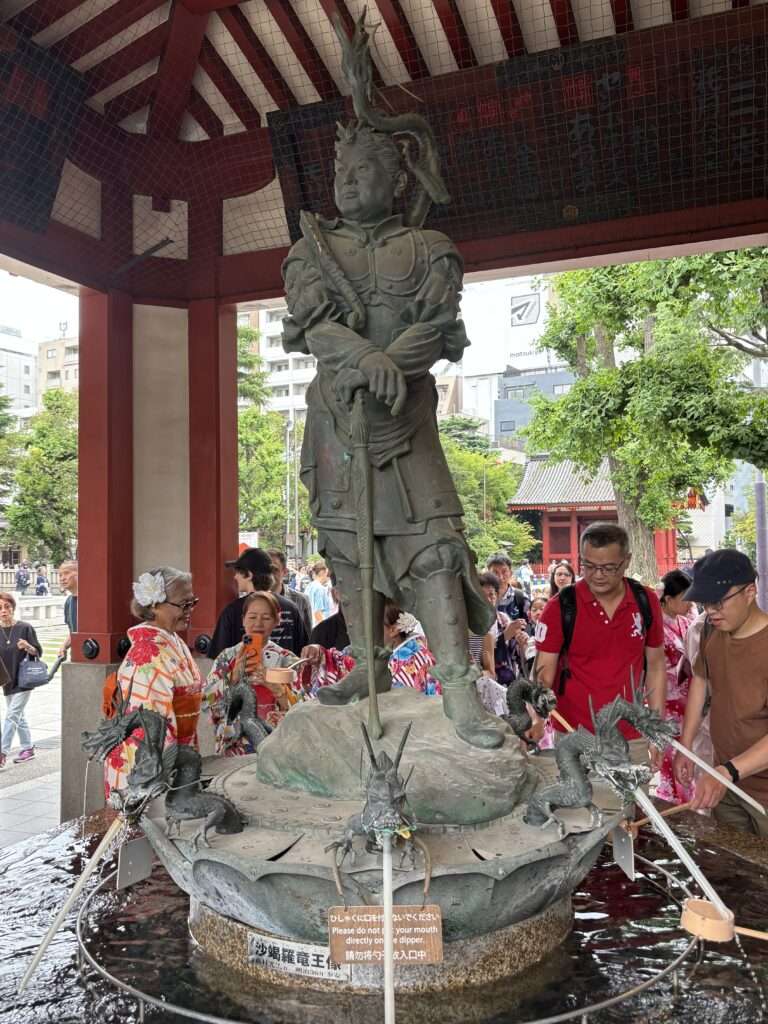
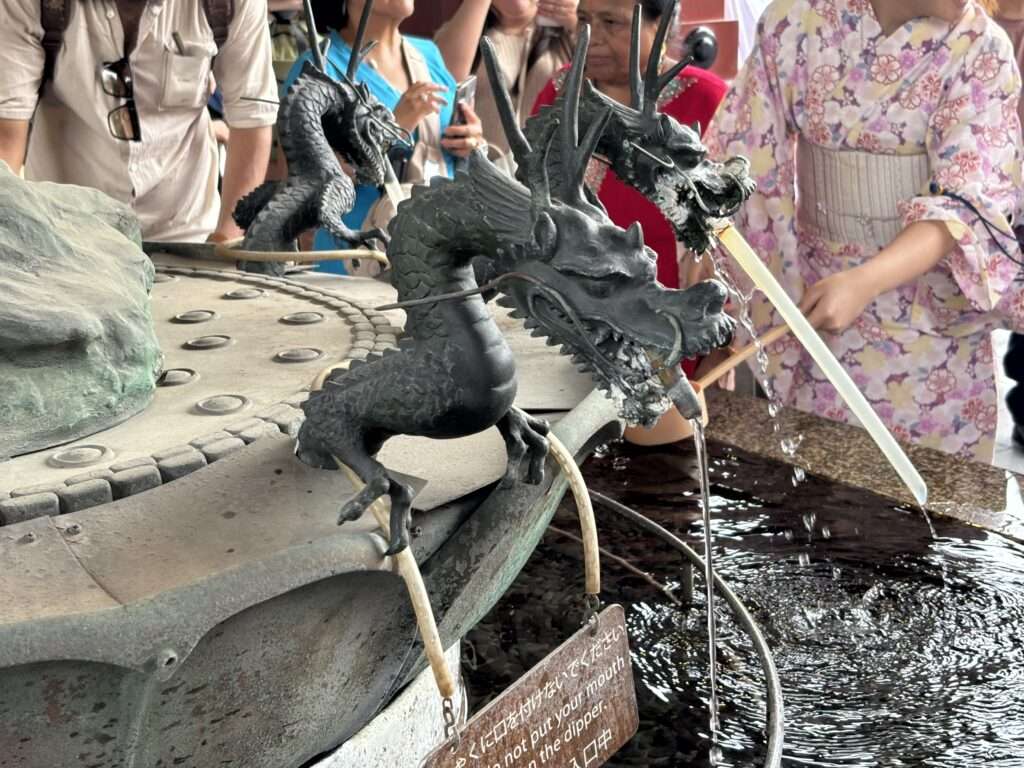
Before entering the hall, it is customary to wash your hands at the chozuya (purification fountain). The fountain at Sensō-ji features a large statue of Ryūjin (the dragon god) standing above a circle of dragons spouting water from their mouths. The traditional temizu cleansing ritual involves using the ladle to wash your hands (pour water from the ladle over your left hand first and then your right). Then rinse your mouth by pouring water into your cupped left hand and bringing it to your mouth. Finally, clean the ladle by holding it upright and letting the water drip down the handle.
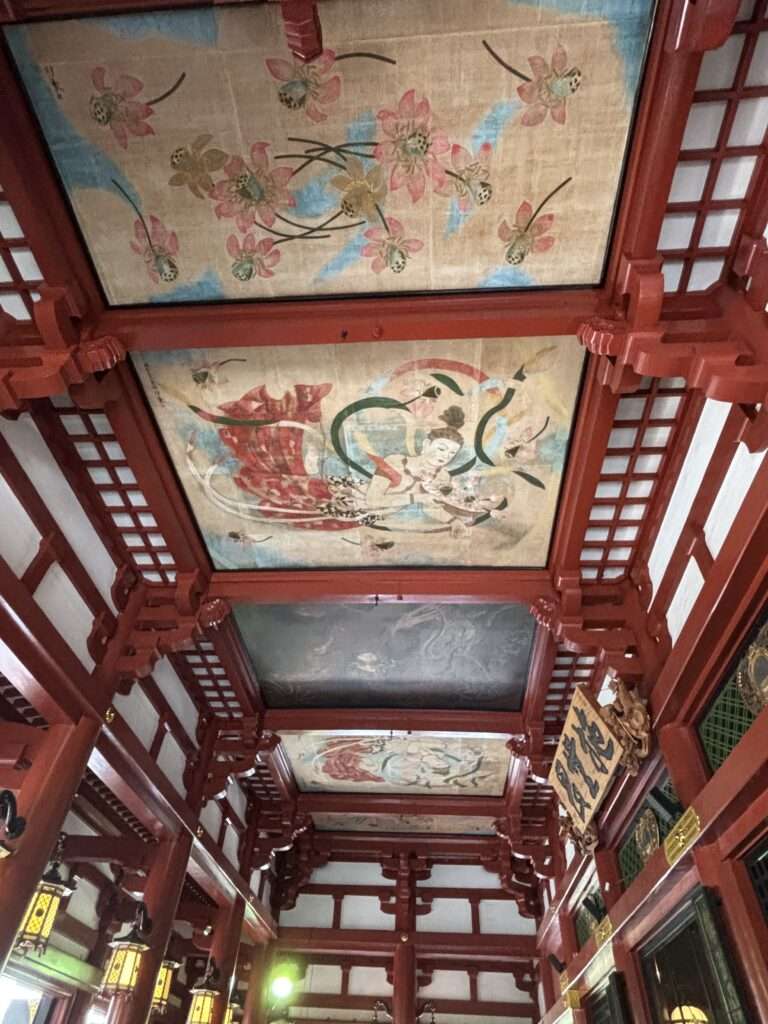
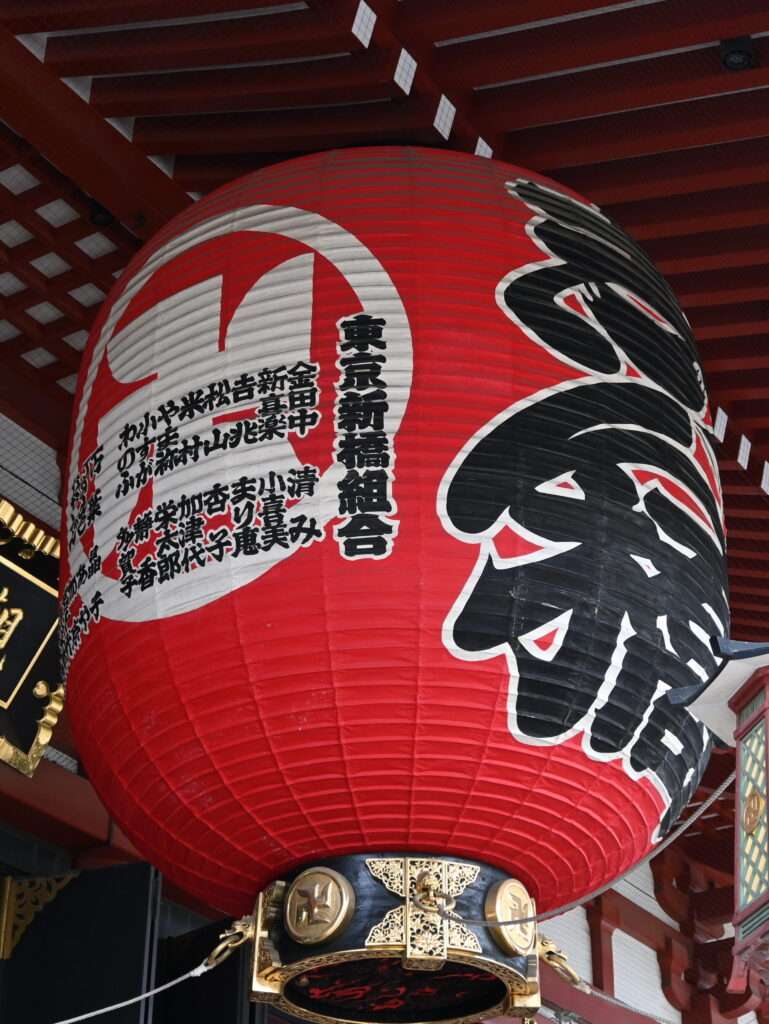
The gejin (outer sanctum) is open to the public and has many notable features. Incense burns from a large jokoro (cauldron) in front of the main hall and visitors waft the smoke over themselves as a purification ritual. The massive wrap around porch features a giant red lantern hanging from the roof, and an offering box (Saisen-bako) is available. Offerings at Buddhist temples are made by bowing your head slightly, silently bringing your hands together to say a prayer, and then bowing deeply. Once inside, be sure to look up. The ceiling features stunning murals depicting nymphs with lotus flowers, as well as a black and white dragon.
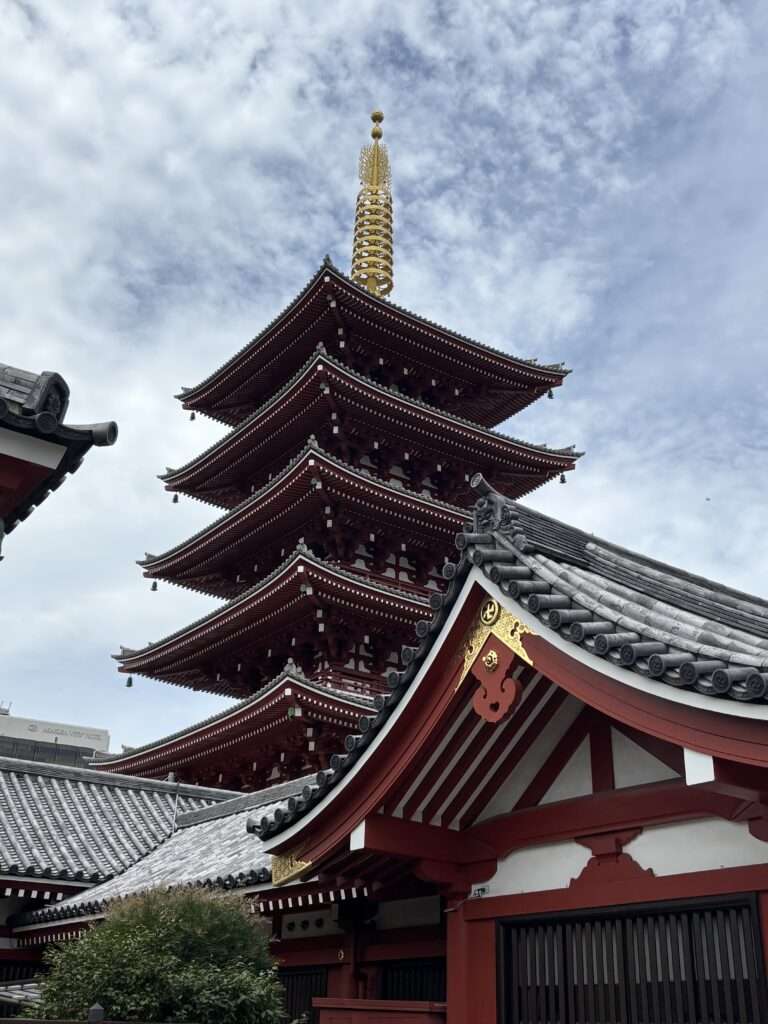
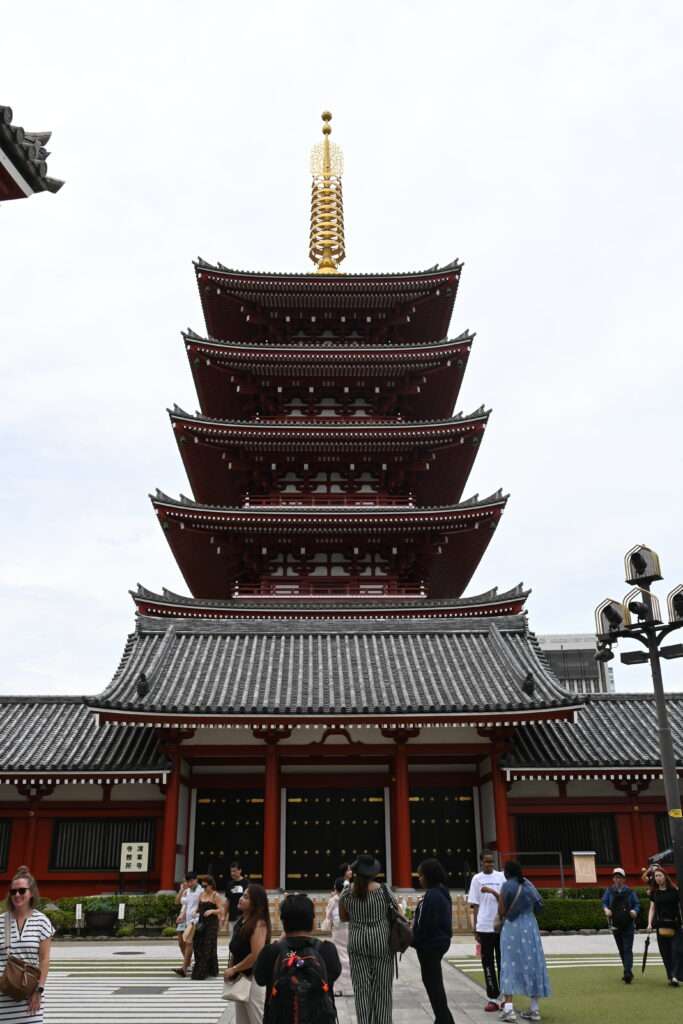
There are many other areas on the temple grounds that are worth exploring, including the three other halls – Bentendo Hall, Awashimado Hall, and Yogodo Hall. But the other main attraction in terms of buildings is the Five Storied Pagoda. Roughly the size of an 18 story building, the pagoda is the second tallest in Japan and is visible from inside and outside the temple grounds. The 5 levels represent the 5 Buddhist elements – Earth (Chi), Water (Sui), Fire (Ka), Wind (Fū) and Void (Kū). You cannot go inside the pagoda but it is a striking building to admire from the outside.
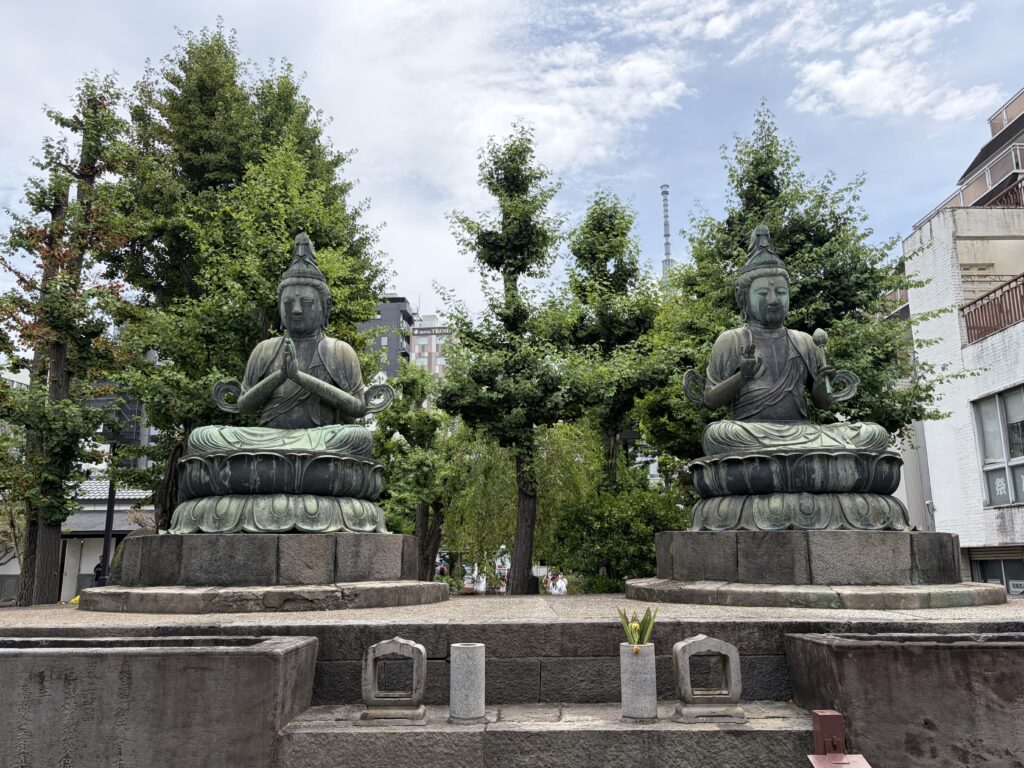
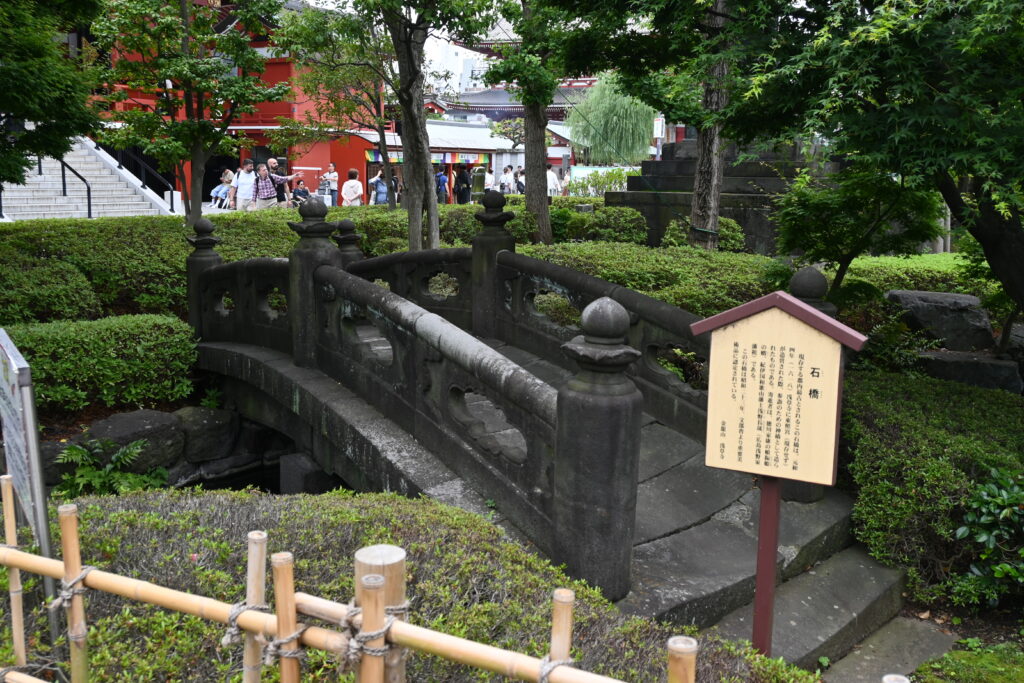
We also enjoyed the many Buddhist statues and the gardens on the temple grounds. They lent an air of peace and calm to an otherwise overwhelmingly busy grounds.
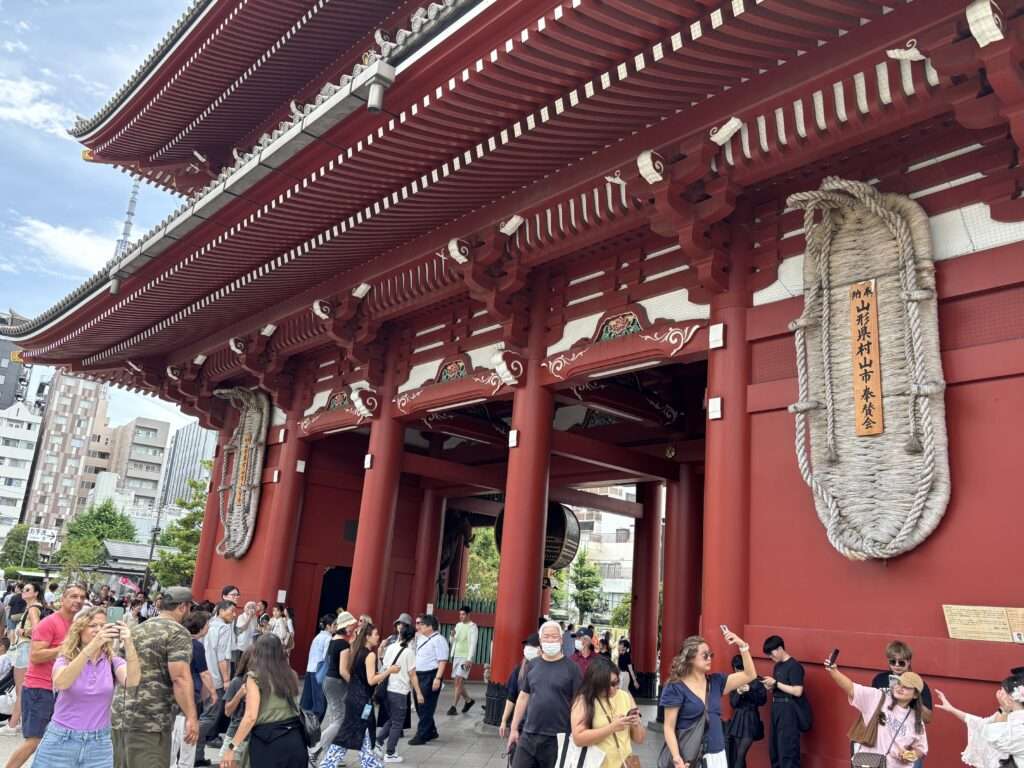
The temple has 3 main gates – Kaminari-mon (Thunder Gate), Hozo-mon (Treasure House Gate), and Niten-mon Gate (the small east gate that we entered through). The Treasure House Gate has two giant lanterns (which are black and gold instead of the traditional red) and also features two huge owaraji (straw sandals), which are meant to ward off evil spirits.
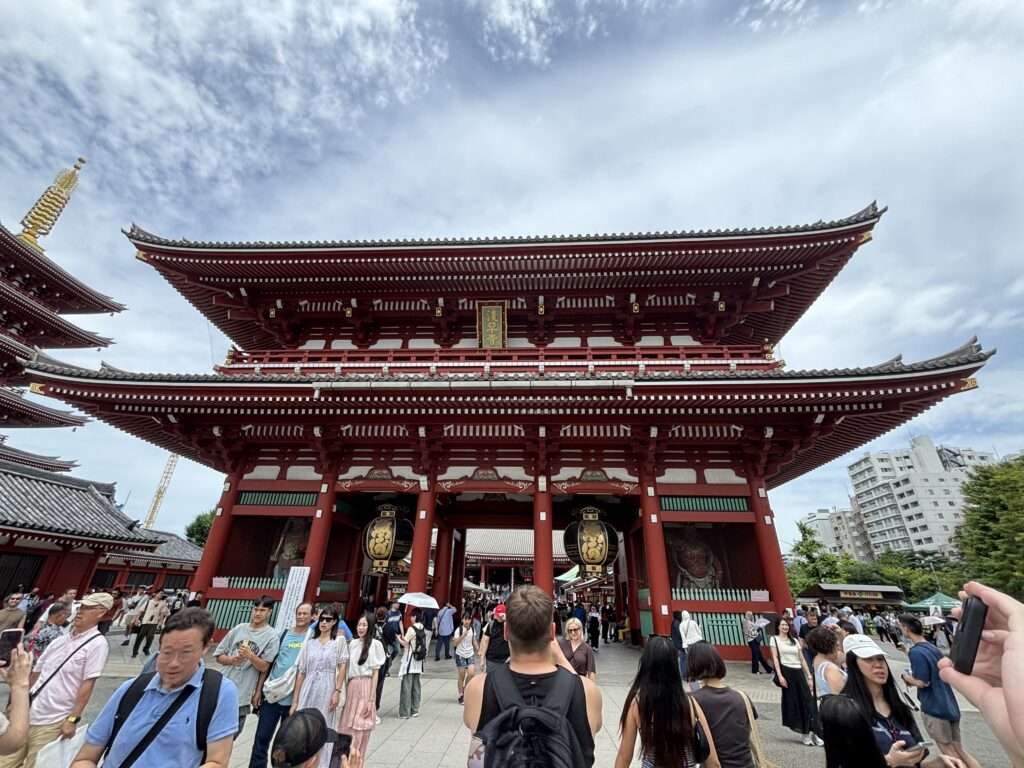
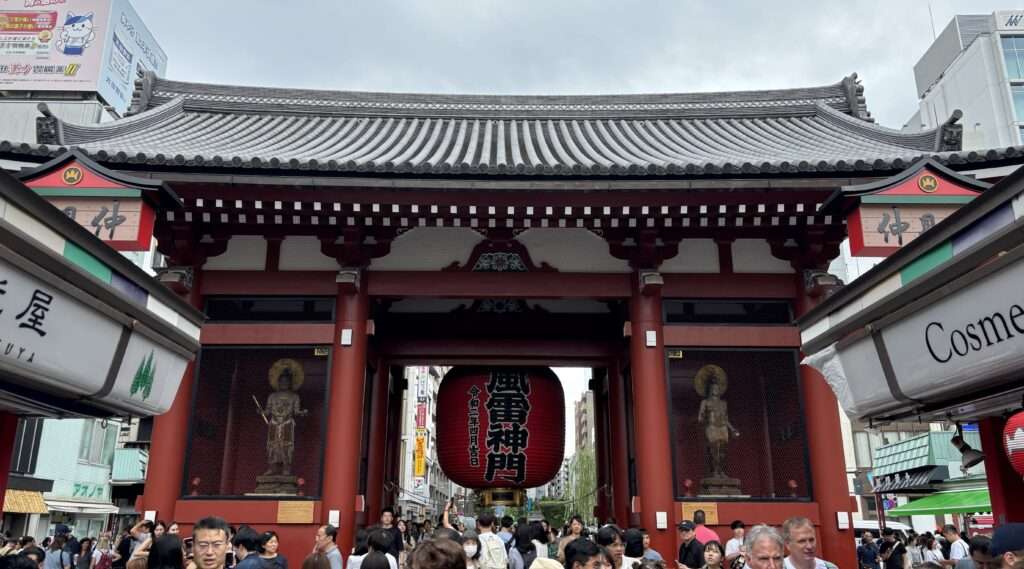
The outer main entrance gate is Kaminari-mon, which means “the gate of the wind god and thunder god”. The gate is flanked by statues of Fujin (the god of wind) and Raijin (the god of thunder) who are meant to guard the temple against natural disasters. The interior side of the gate holds statues of the Buddhist gods Tenryu and Kinryu. A massive, 700 kg red lantern hangs in the entryway.
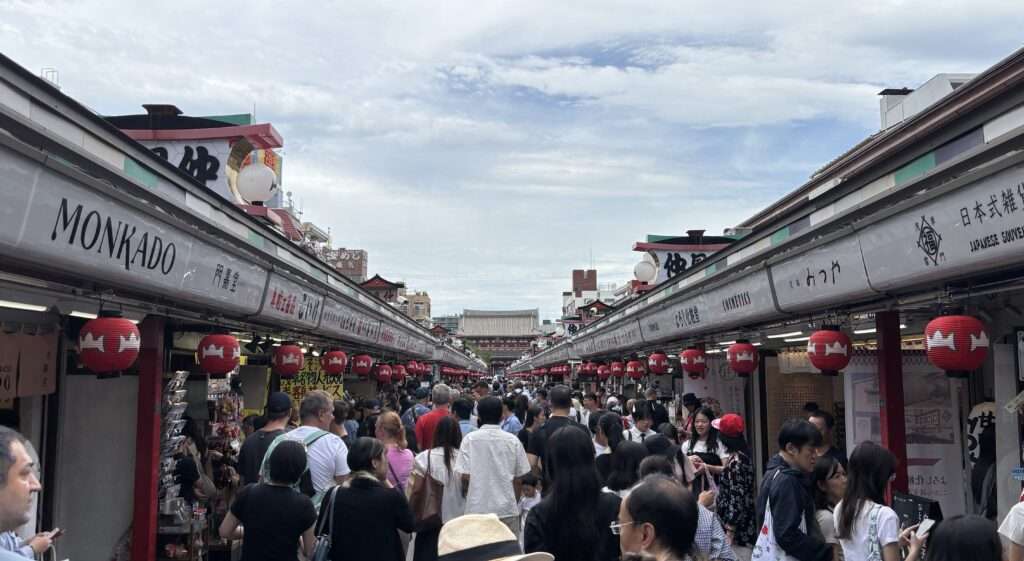
Outside of the Thunder Gate is the Nakamise shopping street, a bustling 250 meter lane lined with stalls selling souvenirs and street snacks. Since we entered the temple through the side gate, we only walked down Nakamise Street as we were leaving. It was ridiculously packed so we quickly ducked down a side street for a calmer exit.
Much like Meiji Jingu was an amazing introduction to Shintoism, Sensō-ji was a fantastic introduction to Buddhism. They were two very different cultural experiences, both in the obvious sense (different religions) and the more subtle sense (contrasting vibes and atmosphere). Our first shrine and temple visits laid the groundwork for greater exploration and appreciation of the sites we went to later in our trip.
