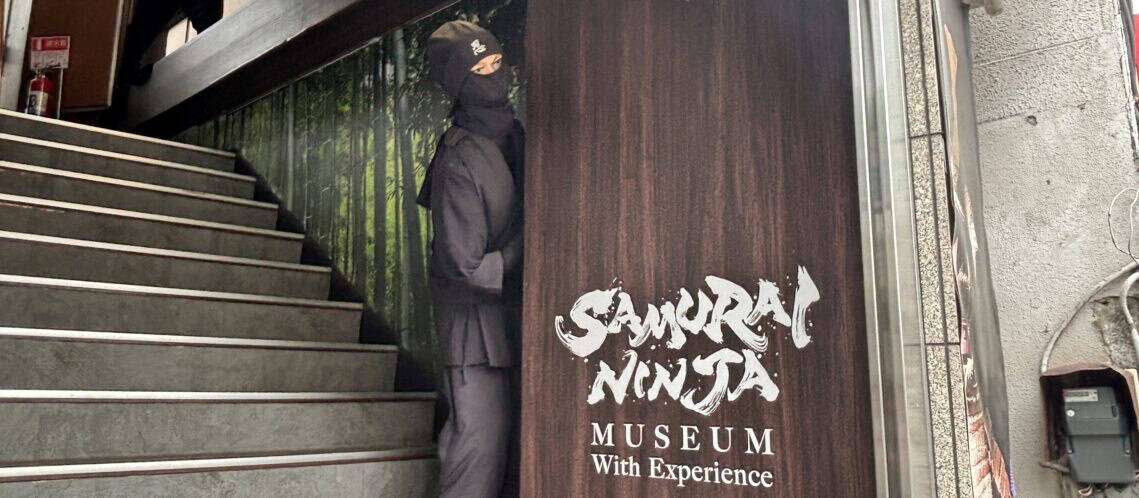
My oldest son was really interested in learning more about samurai and requested to go to a samurai museum. There are 6 museums in Tokyo that either solely focus on samurai or offer significant samurai exhibits as part of a larger museum. The Samurai Ninja Museum in Asakusa fit into our day 2 itinerary perfectly.
After finishing our visit to Sensō-ji, we made the short walk to the samurai museum, officially called the “Samurai and Ninja Museum with Experience”. The “experience” is an important distinction – this is not a historical museum that you can walk through at your leisure. Tickets are for a specific time and you take part in both a guided tour through the museum and several activities. Tours last approximately 30 minutes and start every 15 minutes. Once we discovered that this was a timed entry, we bought tickets for about an hour later and went to have lunch first.
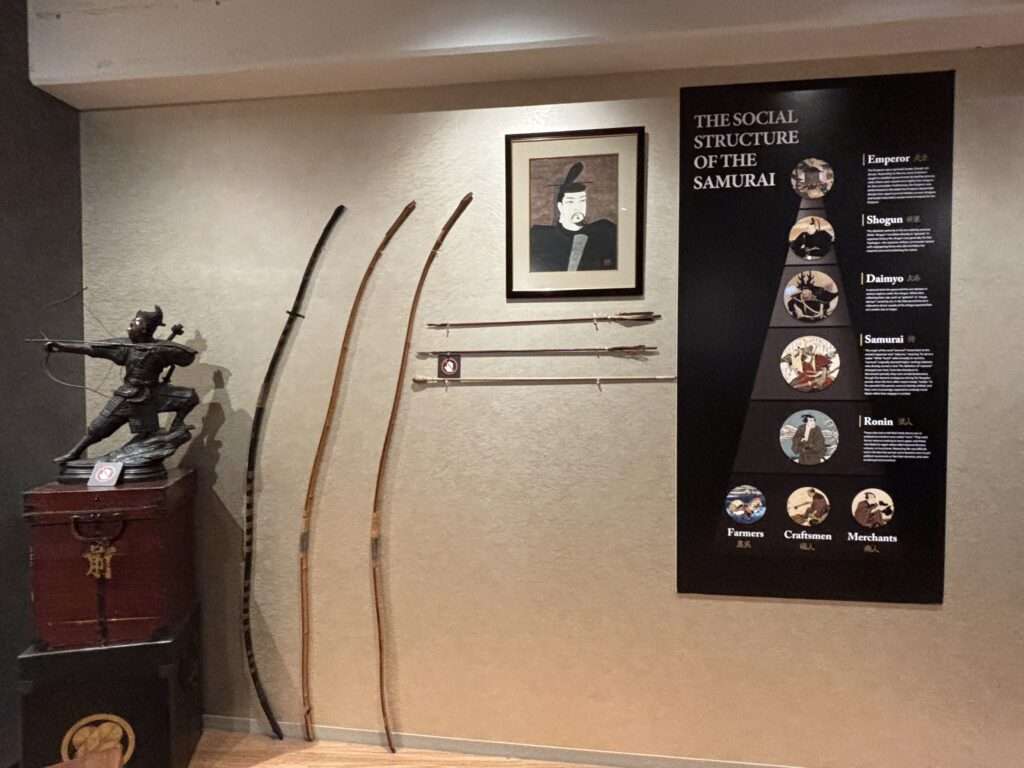
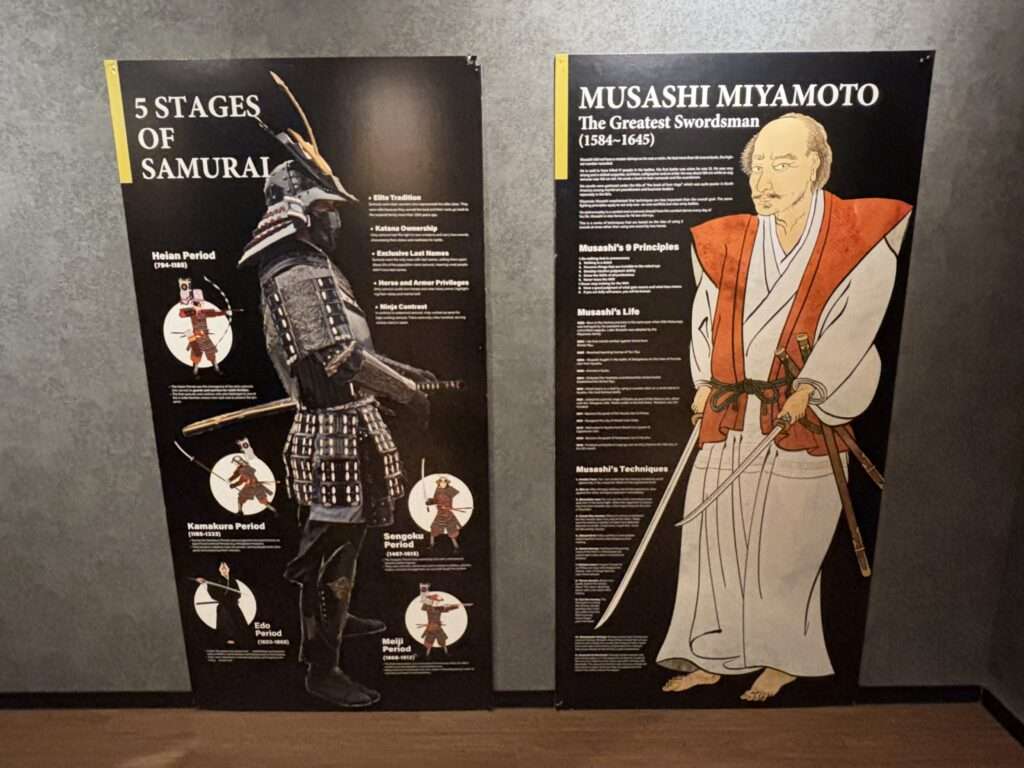
When we returned, we walked up the stairs to the first room where our guide started the tour with a history of samurai during the Edo period (1603-1868). He explained the samurai social hierarchy, from Ronin at the bottom to Emperor at the top. Interestingly, the Emperor sat at the top of the hierarchy but held little actual power. The Shogun, who occupied the level below Emperor, was the actual ruler.
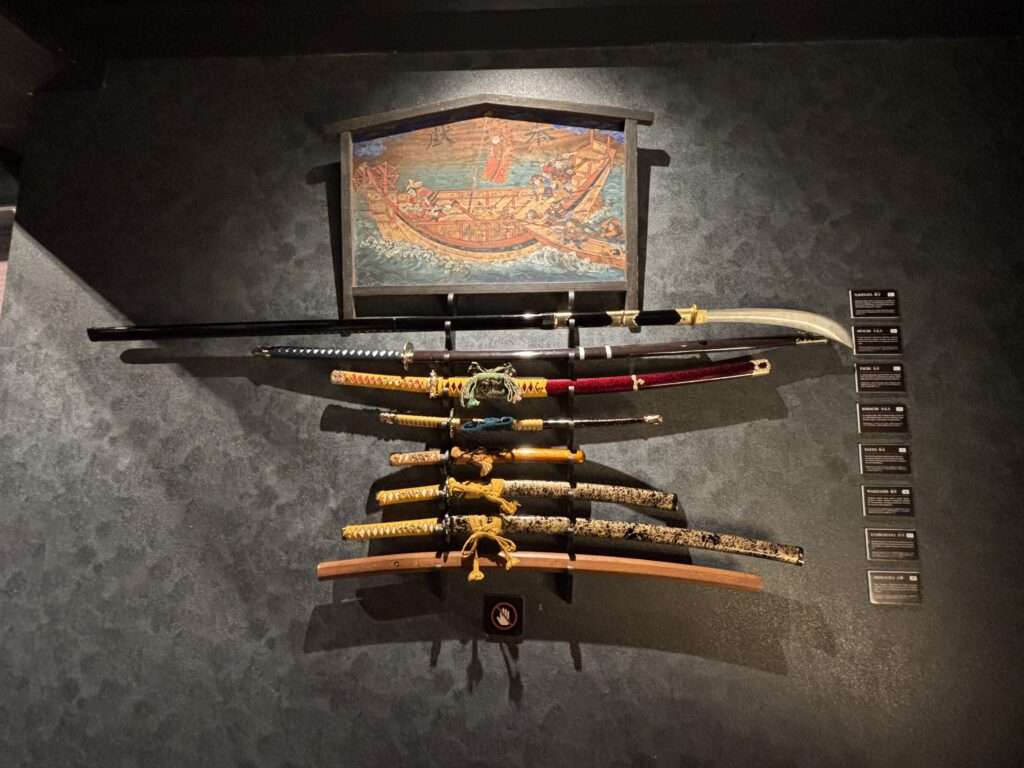
After about 10 minutes of background information on samurai, we moved on to the sword room. This room had both real and replica swords on display. Our guide taught us the difference between several types of swords, including katana, wakizashi, tachi, and tanto. He also passed around a katana so that we all had a chance to hold it.
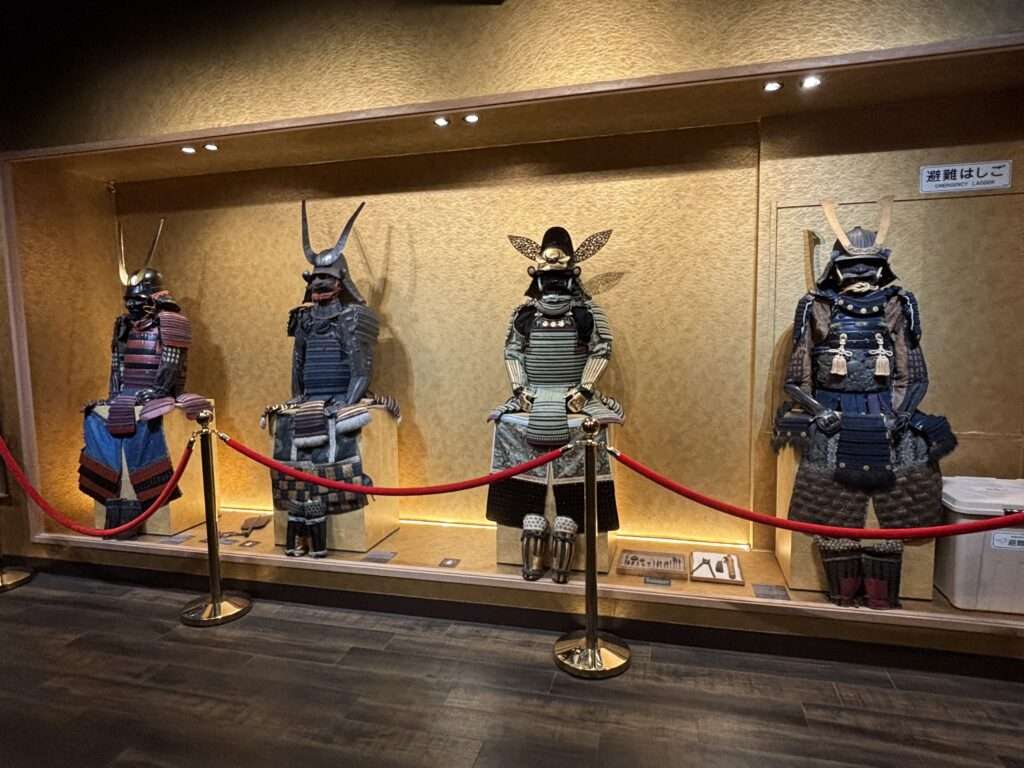
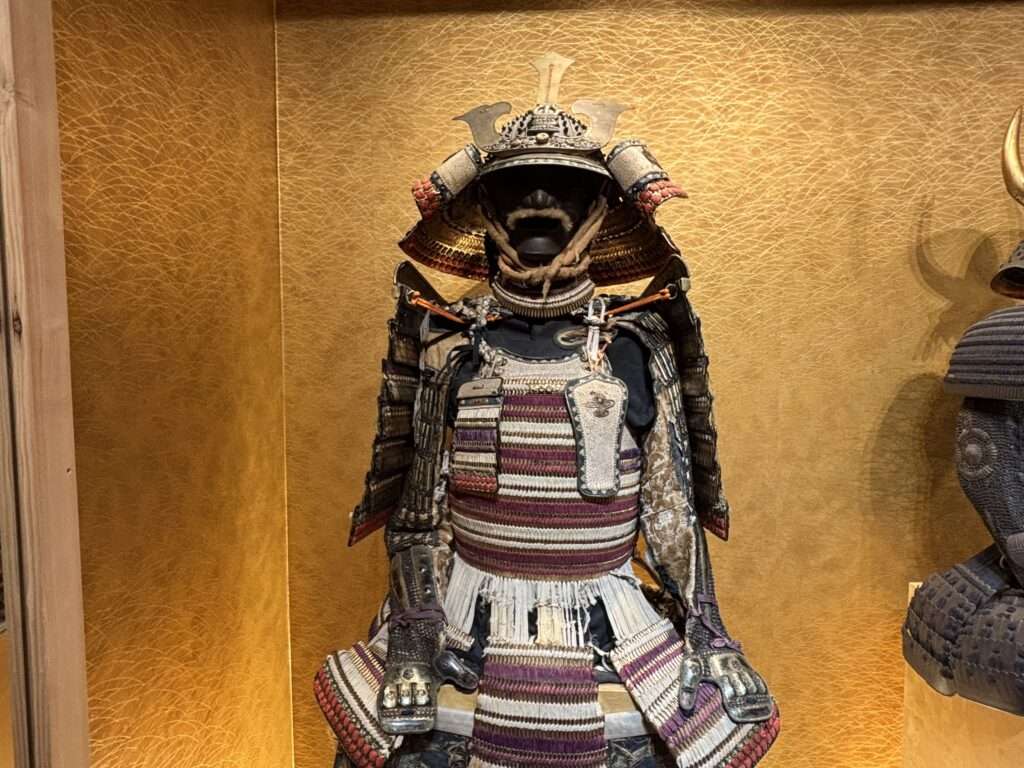
The next room featured an impressive display of armor. Samurai armor includes several pieces: the helmet (kabuto), chest armor (dō), hanging skirt plate (kusazuri), and shoulder guards (sode). The pieces were intricately designed and looked incredibly heavy. In addition to the main armor components, samurai also wore masks, which served the dual purpose of protection and instilling fear in enemies. One interesting addition to many of the masks (called menpō) was a mustache made of horse, boar or yak hair. Their purpose was to intimidate their enemies by portraying the samurai as masculine and in many cases to also make young samurai appear older and more experienced.
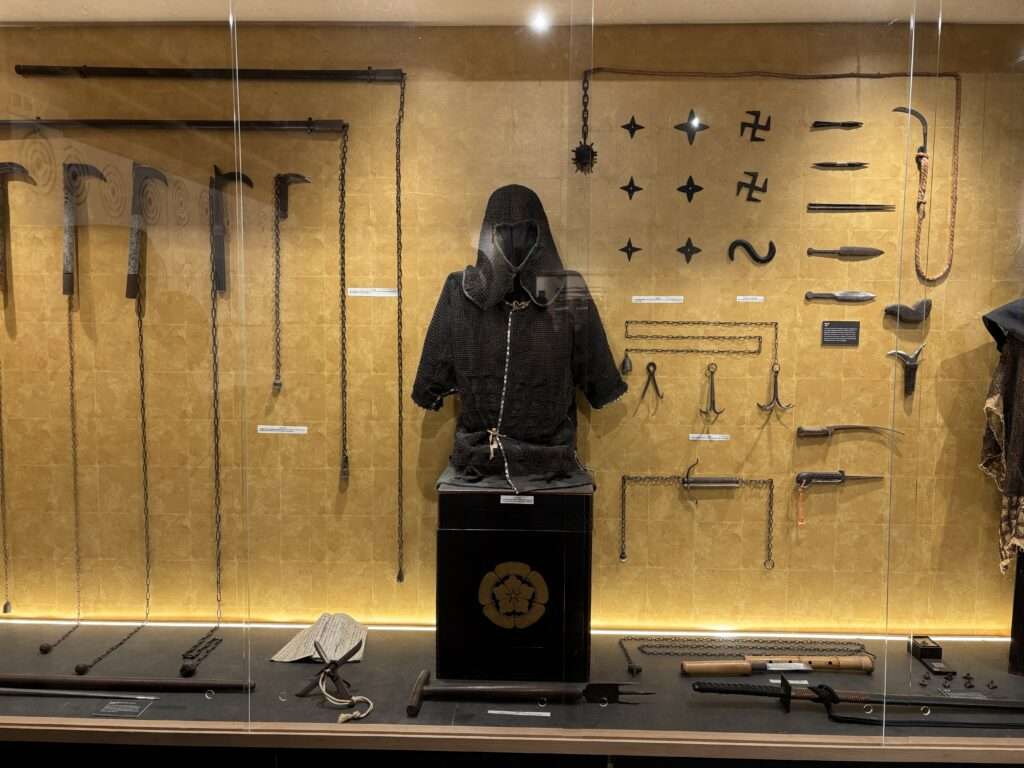
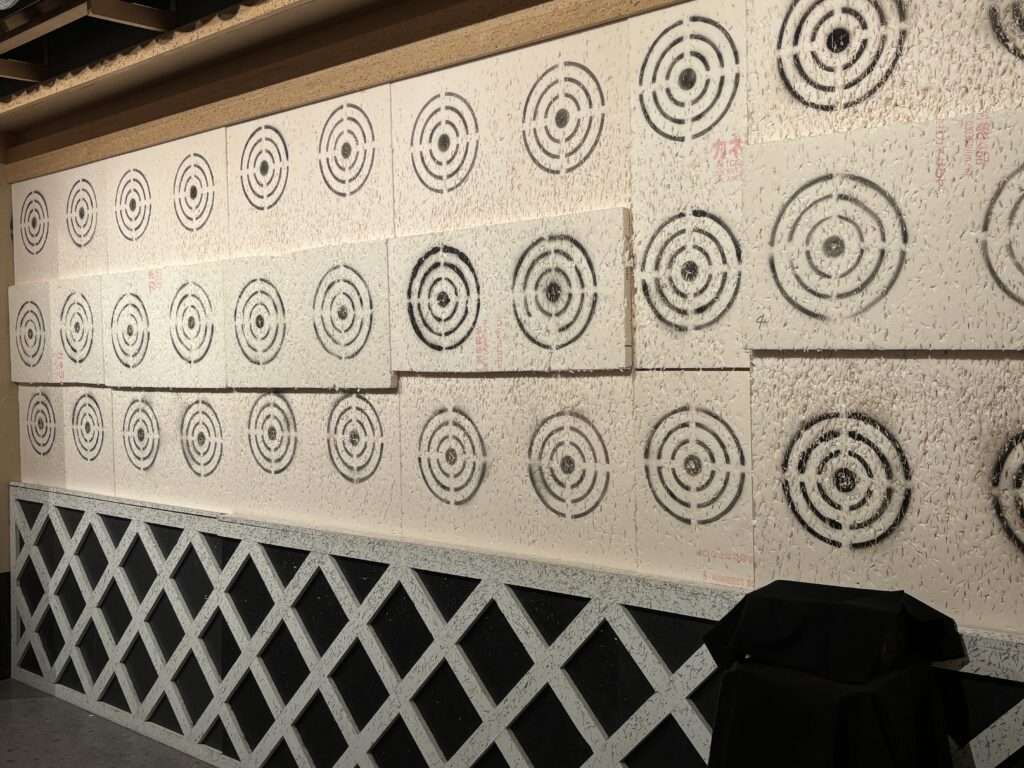
The final room on our tour was a ninja room. This room was light on displays but heavy on fun. We got to throw shuriken (ninja stars)! We were taught the proper throwing technique and then allowed to throw the plastic stars at the foam targets on the walls. After a few warmups, we had a friendly competition. The three guests who got their stars closest to the target made it to the final round to determine who was the best ninja. My husband had a strong showing to make it to the final three but came up short in the finals. This was a fun activity and great way to wrap up the tour.
We bought the basic ticket that included the museum tour and ninja star throwing experience. There were other activities that could be added on, such as samurai armor and sword experience or a ninja experience that included dressing up like a ninja and blowing darts (fukiya). Those activities looked like they were geared more towards younger kids. I’m sure my boys would have loved them about 10 years ago.
Overall this was a fun experience but not a must-do. It was expensive (about $40 per person) for a short experience and limited exhibits. We did learn a lot and my oldest really loved seeing the swords and armor up close, but overall it was nothing to write home about.
