Visiting the Hiroshima Peace Memorial Museum was a moving and upsetting experience. It is so important to see the horrors caused by nuclear weapons but it is understandably difficult to do so. While the museum mainly functions as a historic record of the horrific event and serves as a caution against future events, the Peace Memorial Park is primarily there to honor the memory of the victims of the nuclear attack.
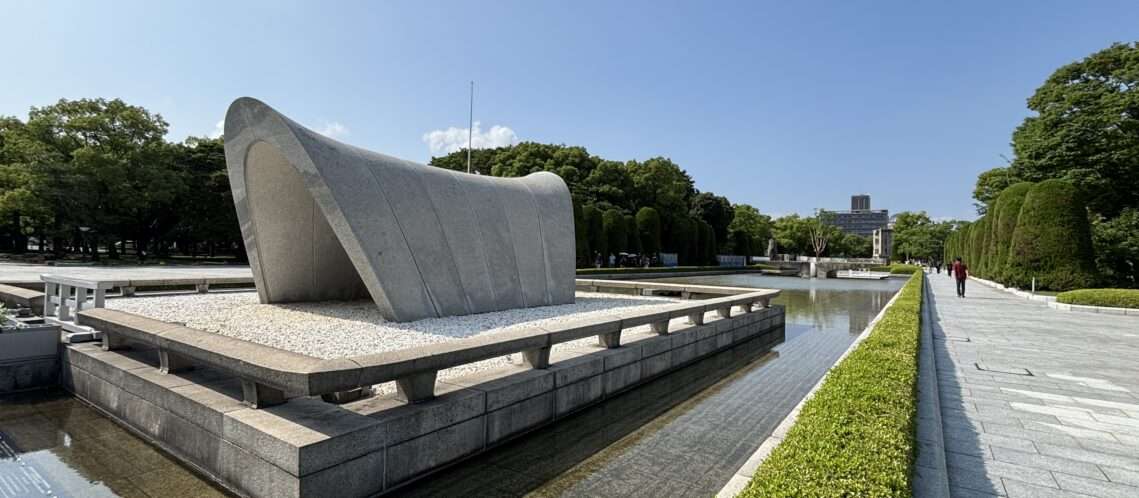
The museum is obviously the cornerstone of the park but there are several important memorial sites spread throughout the park. Immediately behind the museum is the Cenotaph for the A-bomb Victims. The monument, designed in 1952 following the end of the US occupation, is shaped like an ancient Japanese clay house. The arched roof is designed to protect the stone chest that lies beneath it, which holds the official registry of the names of the over 350,000 people who died from the bombing and its aftermath. The registry spans more than 130 handwritten volumes and includes one book left blank to honor the unknown victims. The chest is inscribed with the words (translated to) “Let all the souls here rest in peace, for we shall not repeat the evil.”
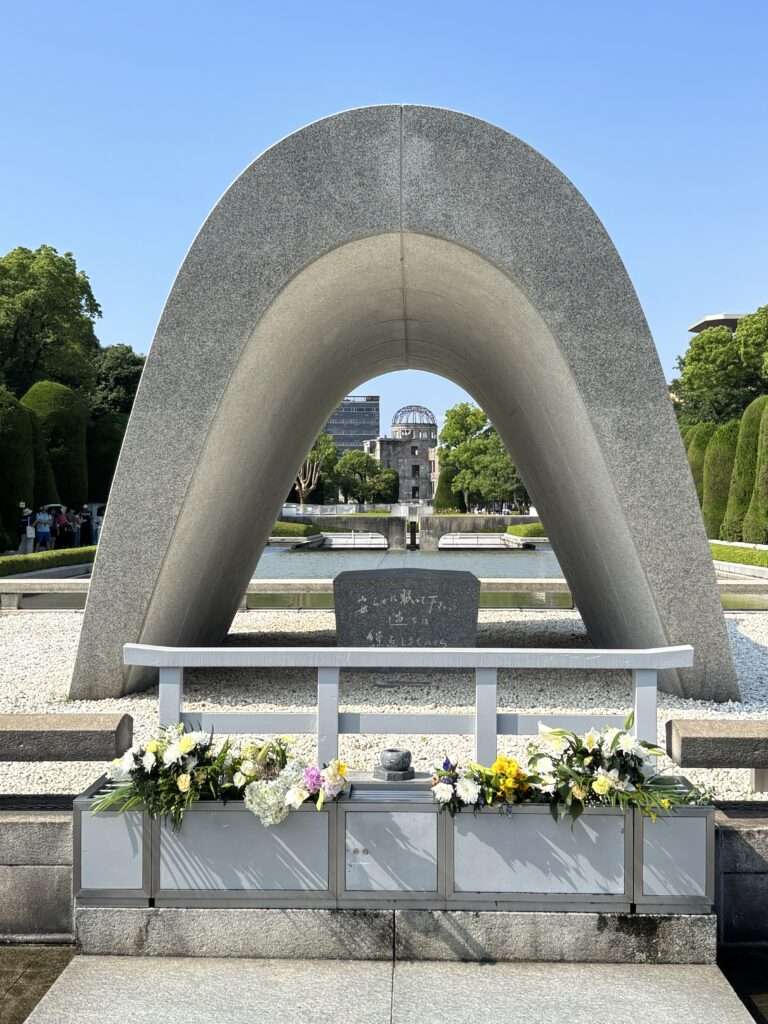
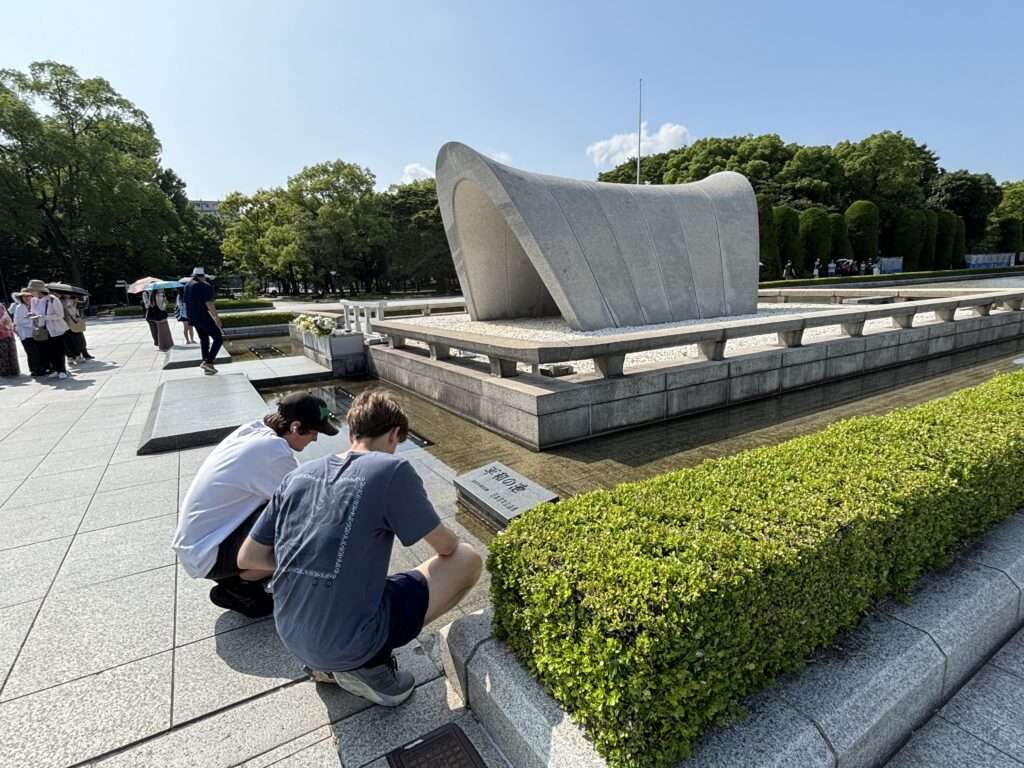
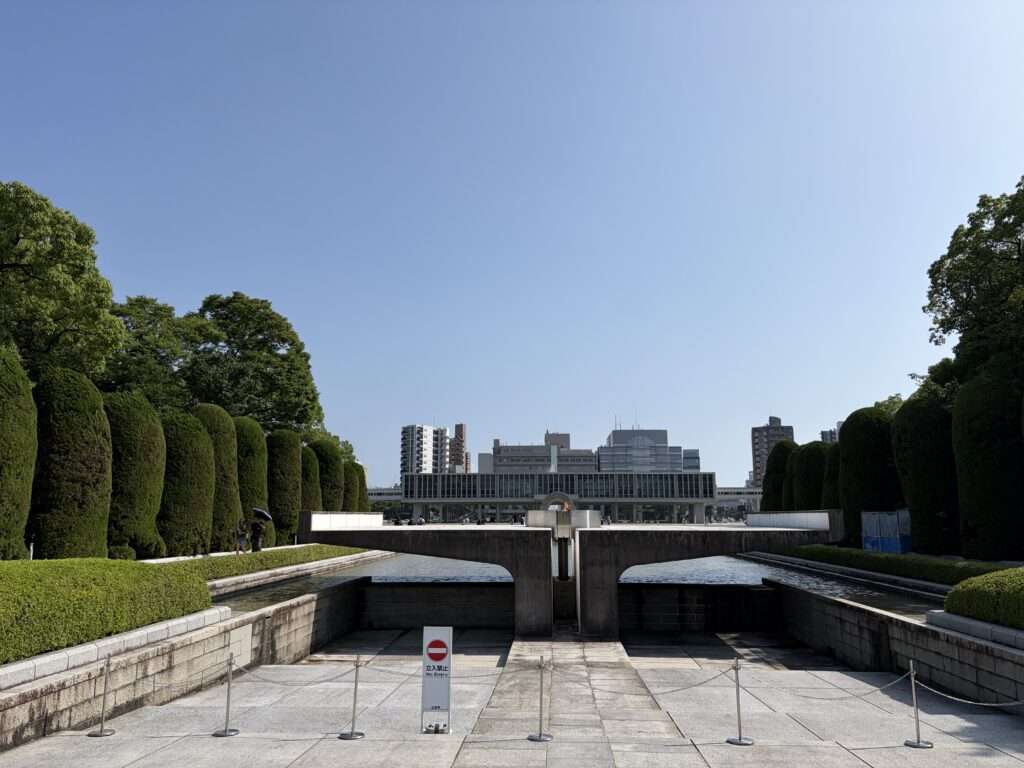
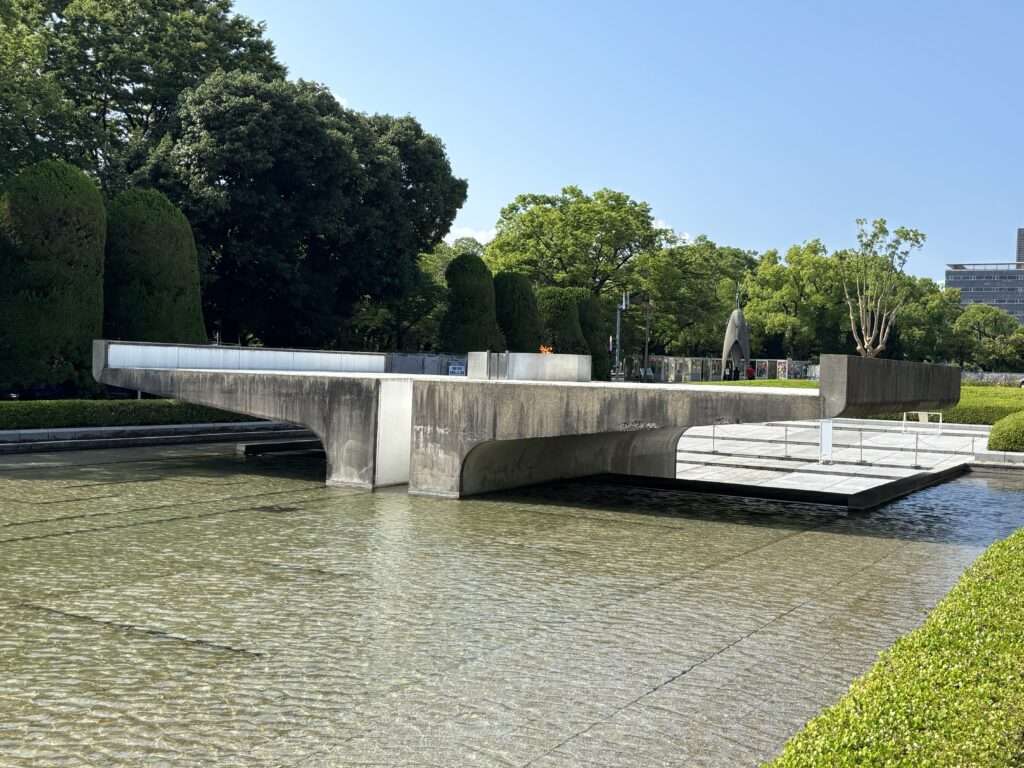
The arch of the cenotaph was built to perfectly align with the Flame of Peace and the Atomic Bomb Dome behind the monument. The Flame of Peace sculpture’s base depicts two hands pressed together with palms facing upwards, a symbol meant to comfort the souls of the victims who died desperate for water following the bombing. The flame has burned continuously since August 1, 1964 and will continue to do so until all nuclear weapons have been destroyed.
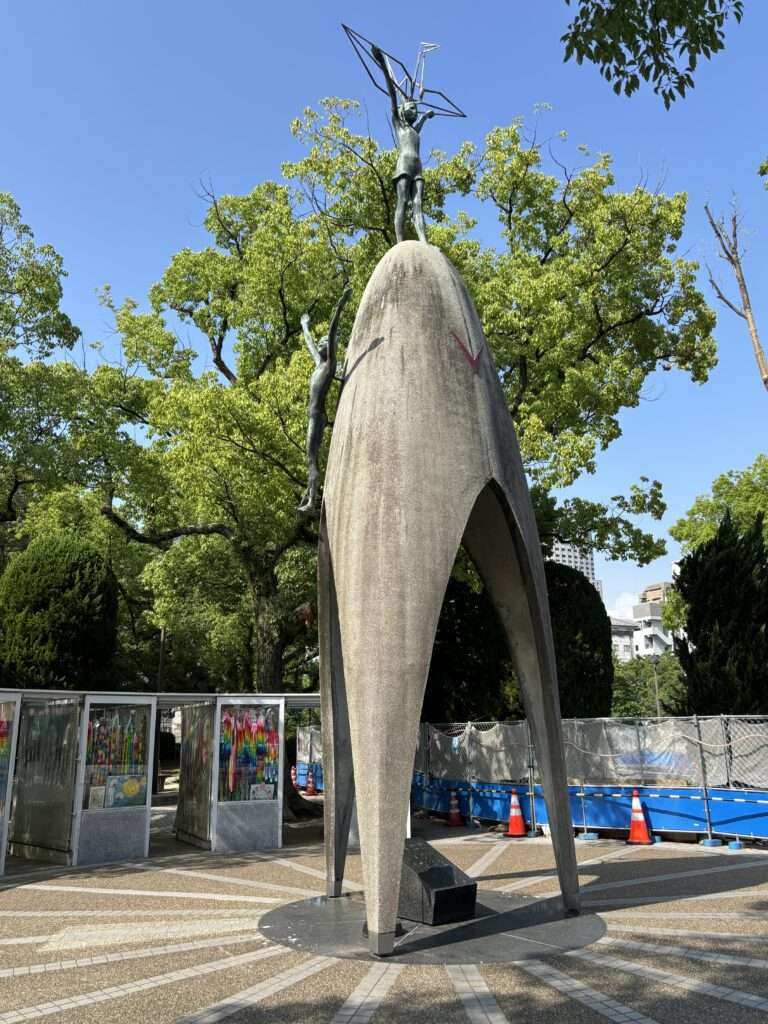
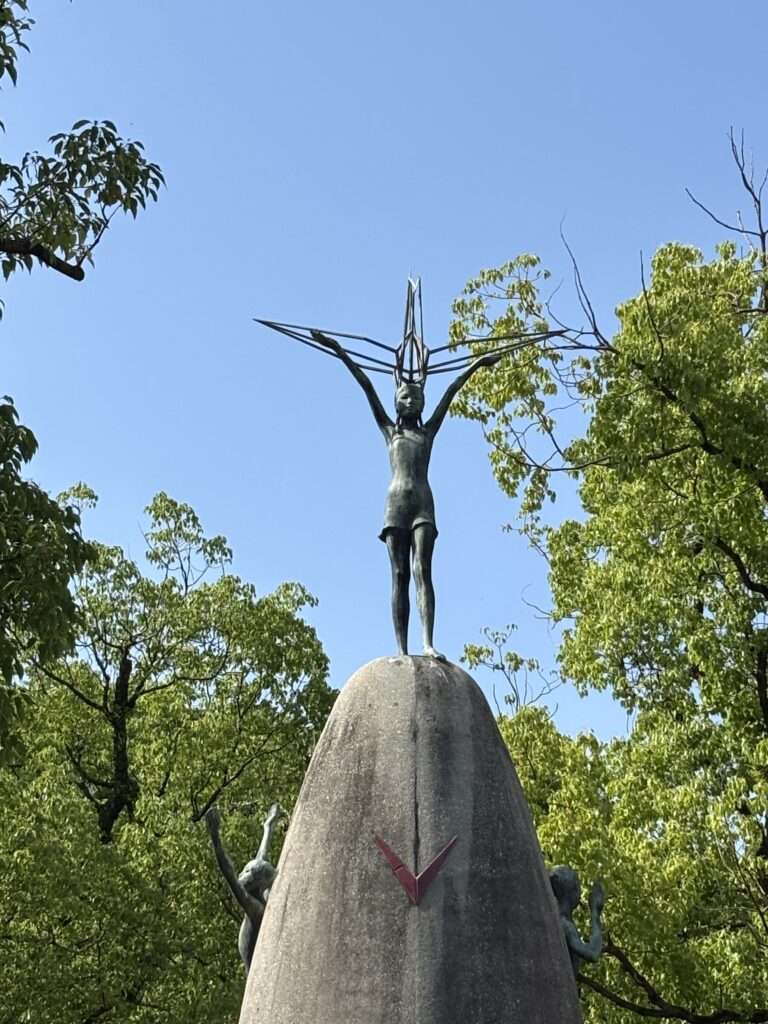
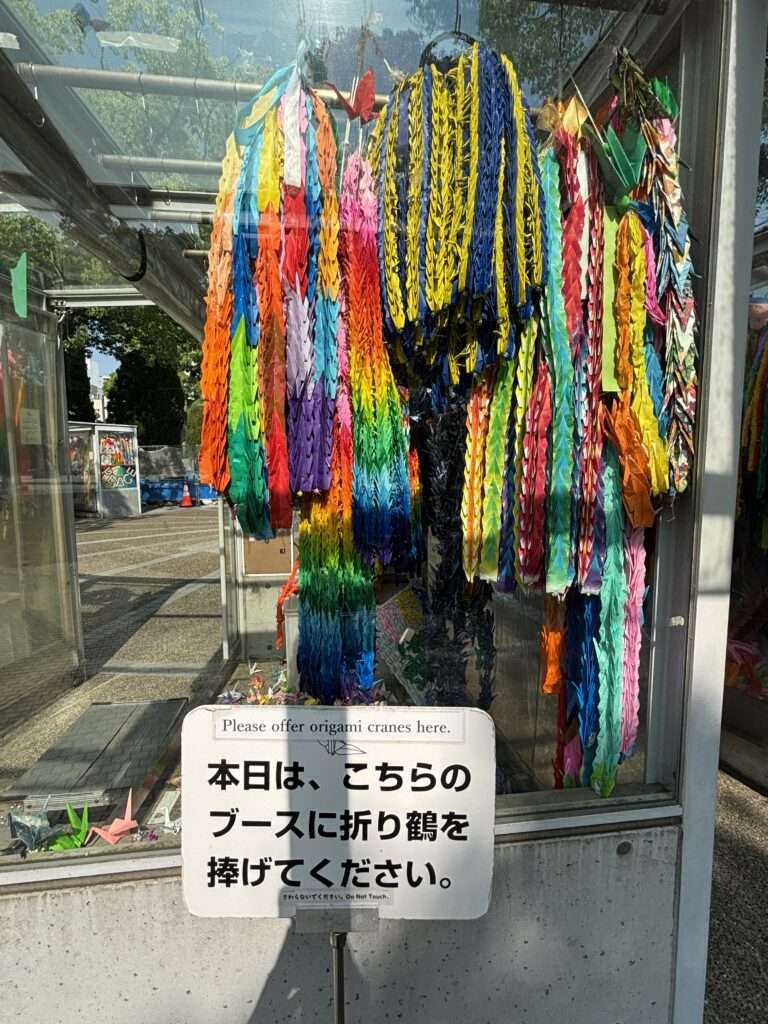
The Children’s Peace Monument is another important memorial in the park. The monument, a bronze statue of a girl holding a crane, commemorates the lives of the children lost both during the bombing itself and from illnesses resulting from the attack. The statue is of Sadako Sasaki, a young girl who died from leukemia 10 years after the bombing. The girl in the statue is holding a crane, a symbol of hope and peace in Japan, where it is believed that folding 1,000 paper cranes will lead to your wish being granted. Sadako spent her last days folding 1,000 cranes and thousands more are displayed in cases surrounding the statue. Inspired by her classmates, the monument represents the younger generation’s hope for peace and an end to nuclear war. The memorial has the inscription “This is our cry, this is our prayer, for building peace in this world.”
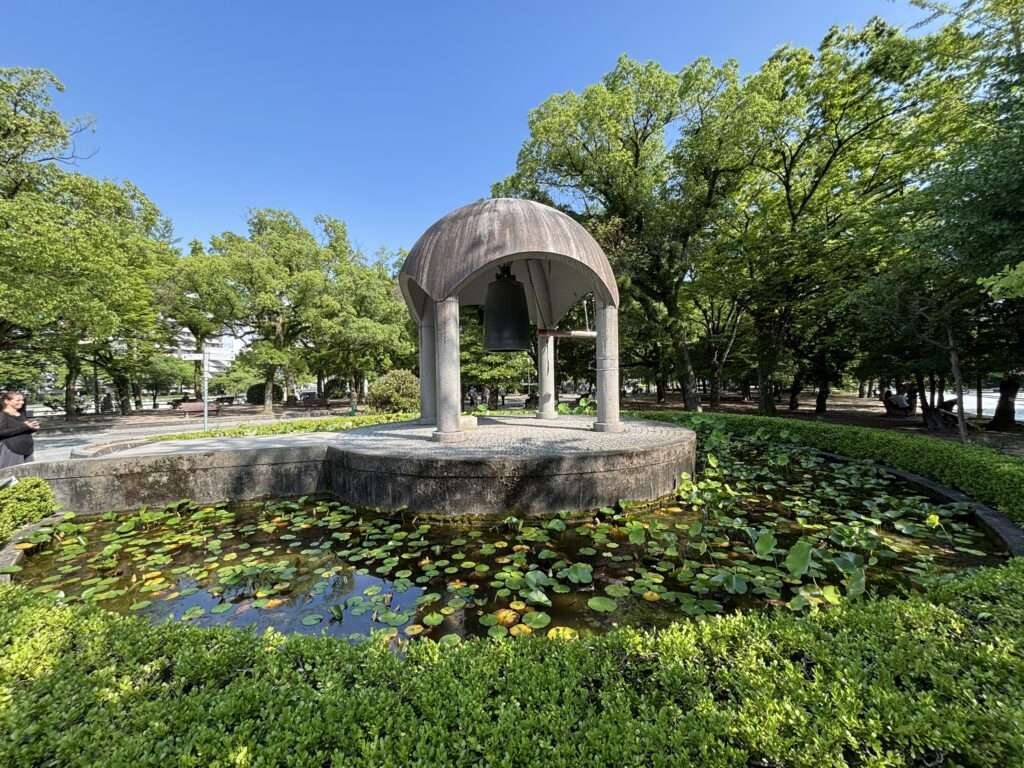
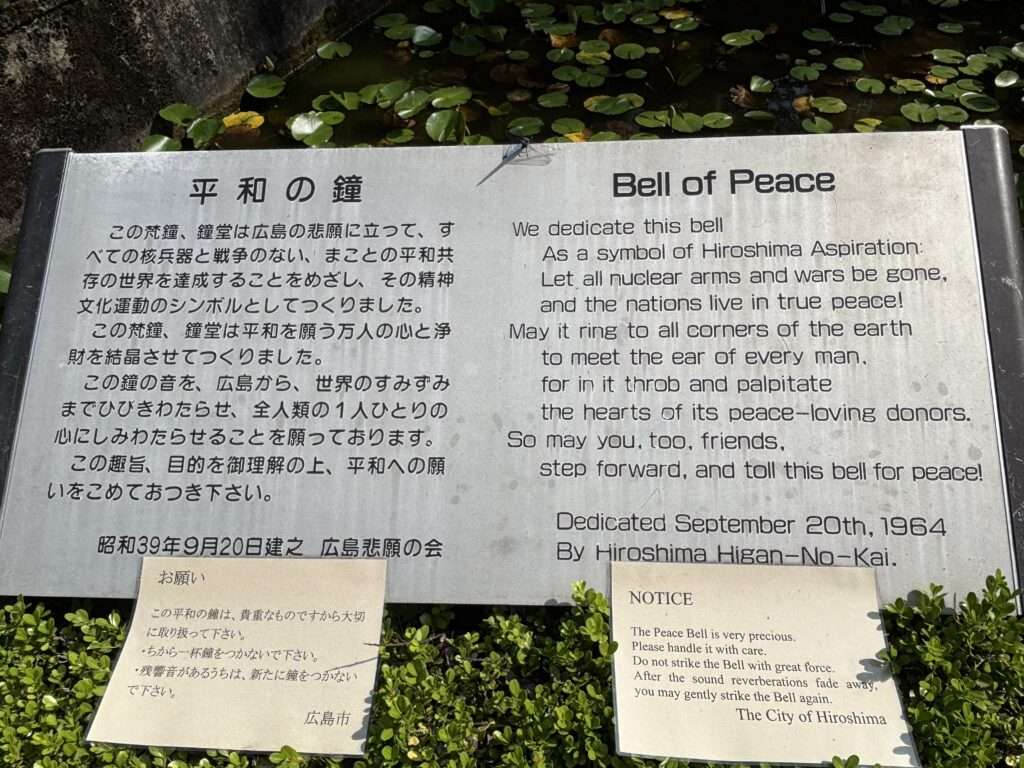
The Peace Bell offers yet another call for peace and a world without nuclear weapons. The bell itself features a world map with no national borders shown, symbolizing the hope for a world united as one in peace. The bell can be rung by striking a hanging log against it. The place where the log hits the bell is an inscription of the atomic energy symbol so that you can metaphorically “strike out” nuclear weapons when you ring the bell. The bell is located in the center of a small pond that is covered in lotus plants, which were used to treat the wounds and burns of bombing victims.
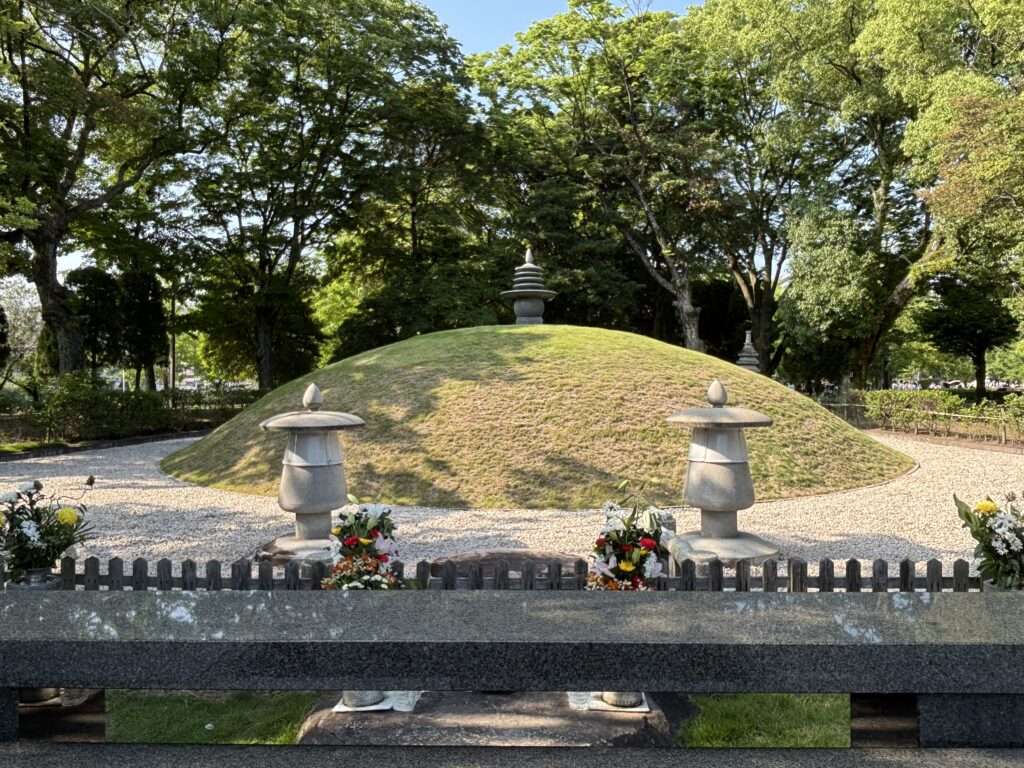
Another somber reminder of the lives lost in Hiroshima, the Atomic Bomb Memorial Mound contains the unclaimed ashes of 70,000 people in an ikotsu-dō (vault) underground. The vault holds roughly 800 white canisters engraved with victims’ names on them, each containing the ashes of bodies that were identified but unclaimed. A handful are reunited with distant family each year but most will never be claimed because their entire family perished together in the bombing. In addition to the identified remains, there are dozens of stacked boxes holding the combined remains of some 70,000 people whose ashes were inextricably mixed together when entire buildings or neighborhoods were incinerated in an instant. It is a sobering realization that the unassuming mound provides the final resting place for tens of thousands of people.
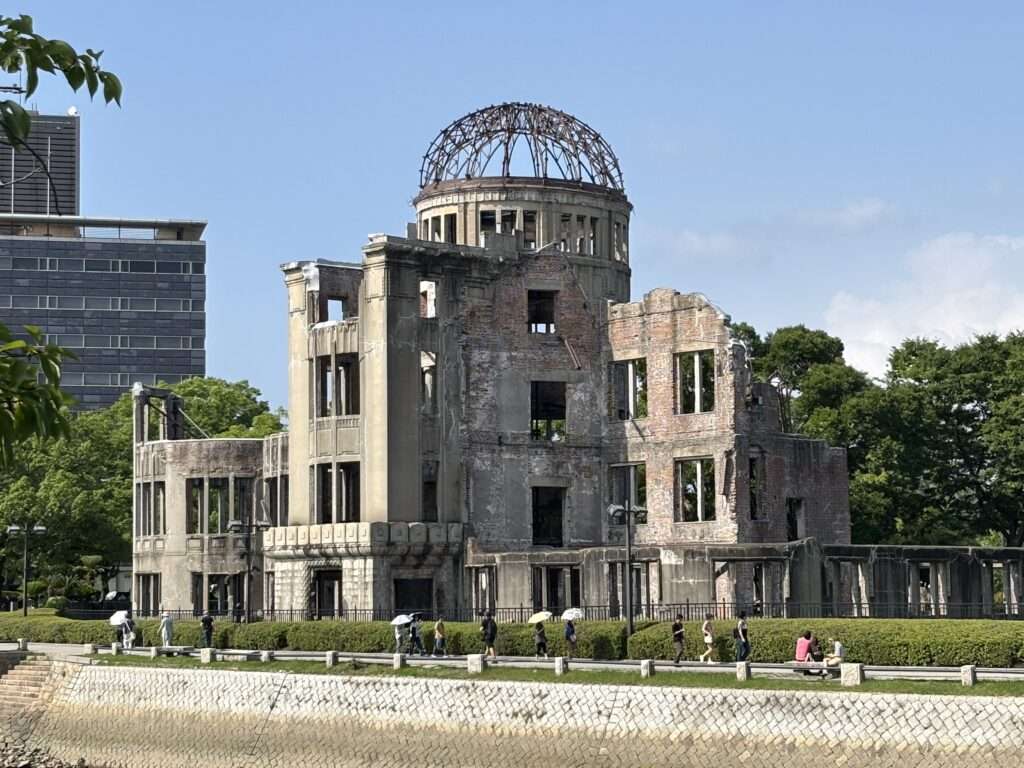
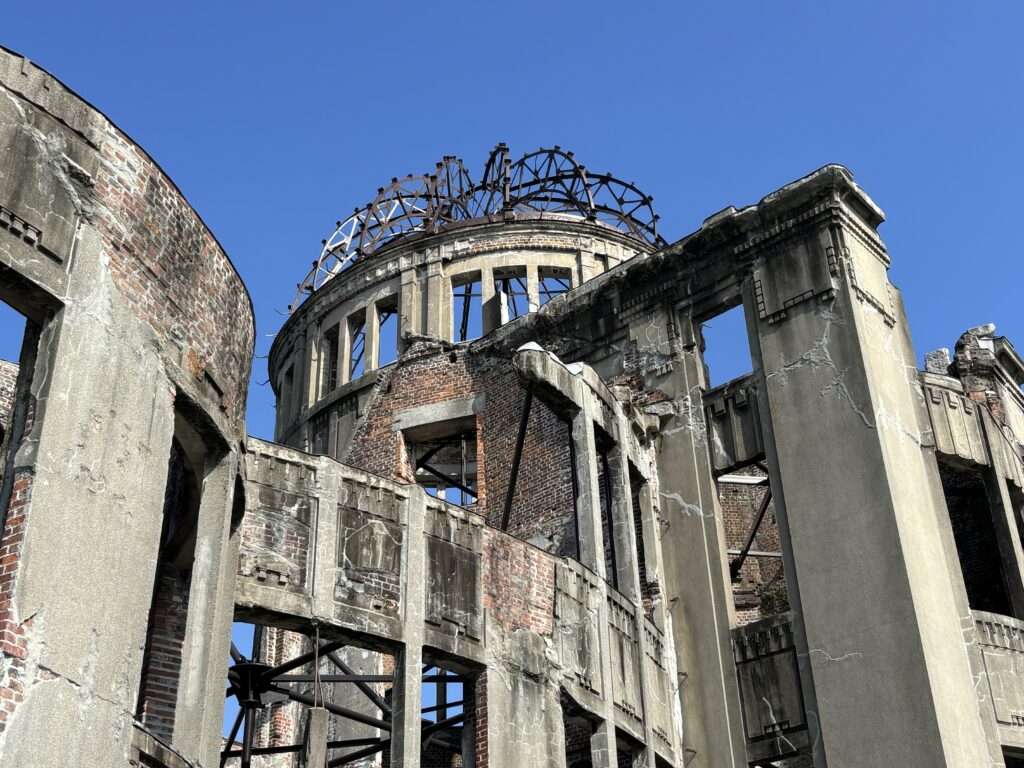
And of course the most recognizable site in the Peace Park is the Atomic Bomb Dome. Located across the Motoyasu River, the Genbaku (Atomic Bomb) Dome is the bombed out remains of the Hiroshima Prefectural Industrial Promotion Hall. While most other buildings of the time were made of wood, the hall was constructed primarily of steel and stone, which allowed the structure to survive. After much debate it was decided not to demolish or to rebuild the building but to preserve it exactly as it was. It is a powerful visual of both how destructive the bomb was and how resilient the people of Hiroshima were and continue to be.
While the Peace Memorial Park commemorates a horrific event in the history of mankind, it leaves its visitors with an overwhelming feeling of hope. Every memorial and historic site within the park acknowledges the tragedy and honors the lives lost but also gives hope for a better, more peaceful future. It is impossible to visit the Peace Park and not be inspired to try to make the world a better place. As the inscription on the Cenotaph states, “we shall not repeat the evil”.
