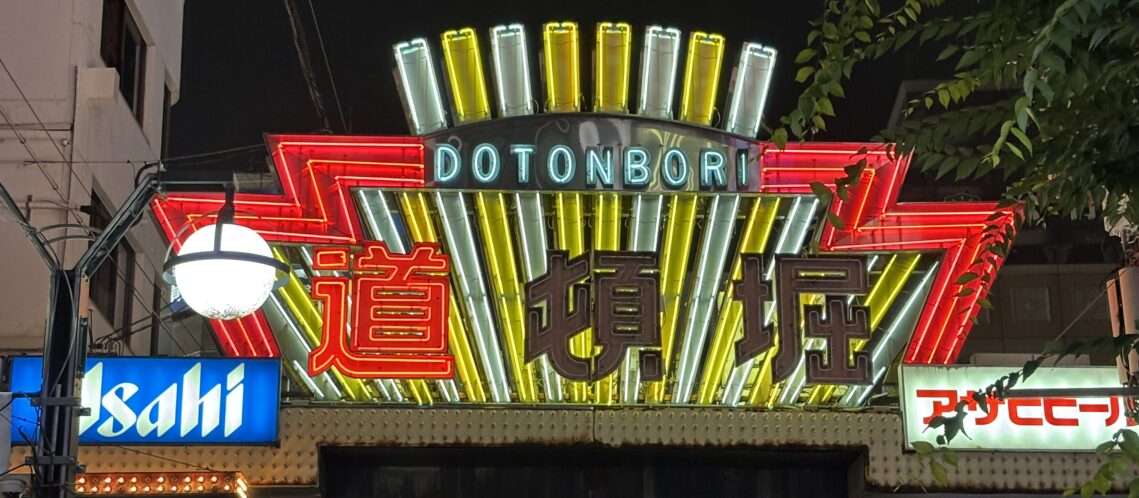
Perhaps the best known destination in Osaka, Dotonbori is a hub of dining and entertainment activity. Dotonobori has two main areas to explore – the waterfront promenade that runs on both sides of the Dotonbori River and Dotonbori-dori, the pedestrian street that runs parallel to the canal a block off its northern bank. Both feature restaurants, shops, street food, mechanical storefront signs, and a ridiculous number of neon billboards.
Similar to Times Square in New York, Dotonbori is bright, busy, and can be overwhelming. On the surface it appears to be a love it or hate it situation, but I would argue that there is a middle ground – love it but only want to experience it once. That’s where I fell, although my boys were squarely in the love it category and wished we had another night in the city to go back.
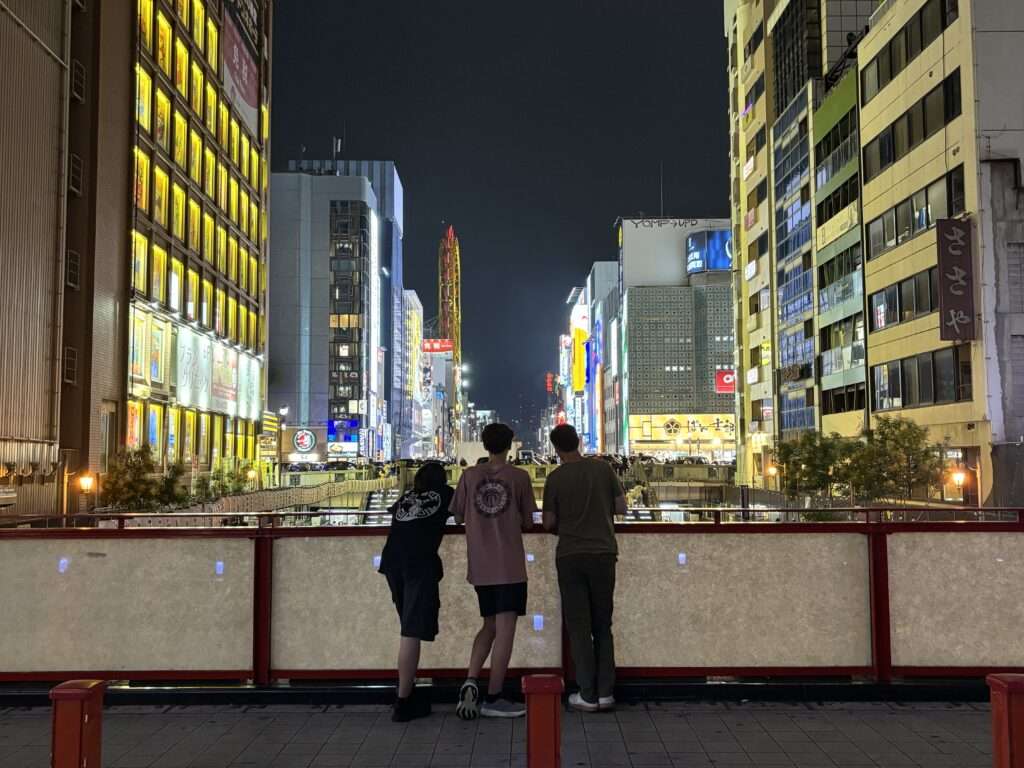
We walked to Dotonbori from our hotel and got our first glimpse of the scene from Shin-Ebisubashi Bridge. Sitting just west of the much larger and more crowded main Dotonbori Bridge, it was the perfect place to take it all in for the first time. From there, we walked down the stairs to get to the river bank level and made our way to the nearest river cruise ticket booth. The river cruise was an amazing way to see the bright lights and experience the energy of the area. (Read about the full experience here.)
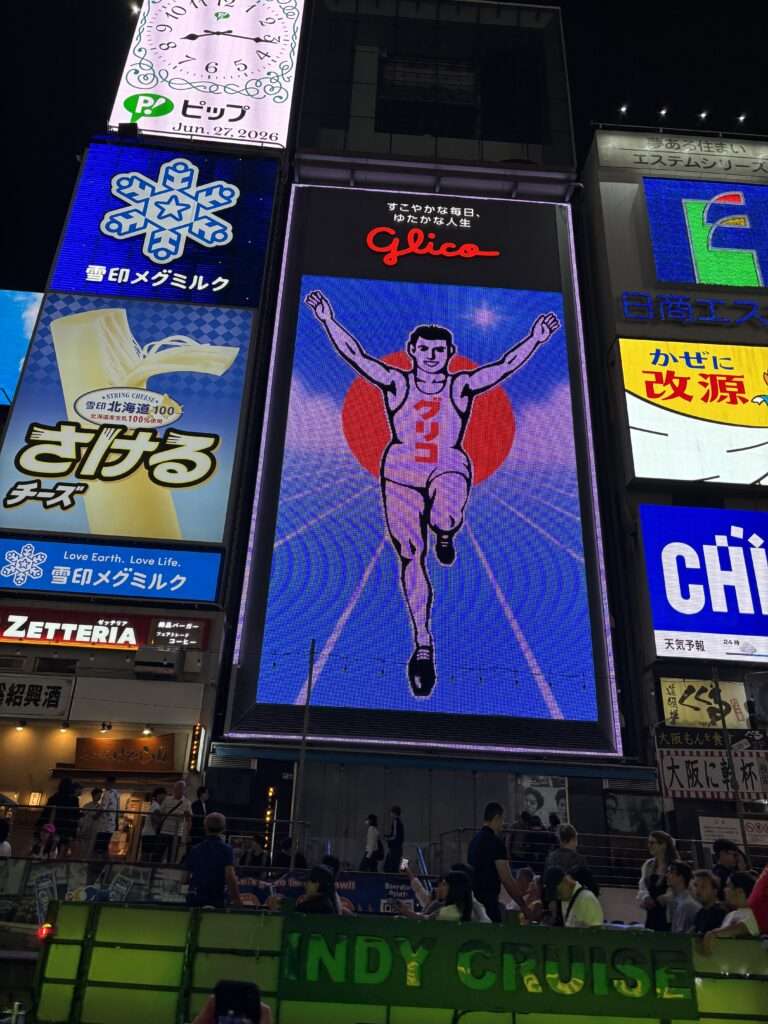
The buildings along the river form a sea of neon signs, with the bright lights reflecting in the water below. The most famous (for reasons I can’t fully comprehend) sign in Dotonbori is the Glico Running Man. Featuring a runner on a track with his arms raised in victory, the sign is an advertisement for Glico, a sweets company best known today for its Pocky product. (We do love Pocky!) A running man seems like an odd mascot for a candy company, but when the sign was made in 1935, the company was marketing their candy caramel as an energy product. We know more about caramel’s relative nutritional benefits today, but the sign has remained one of Japan’s most famous landmarks and has even inspired other parody signs along the river.
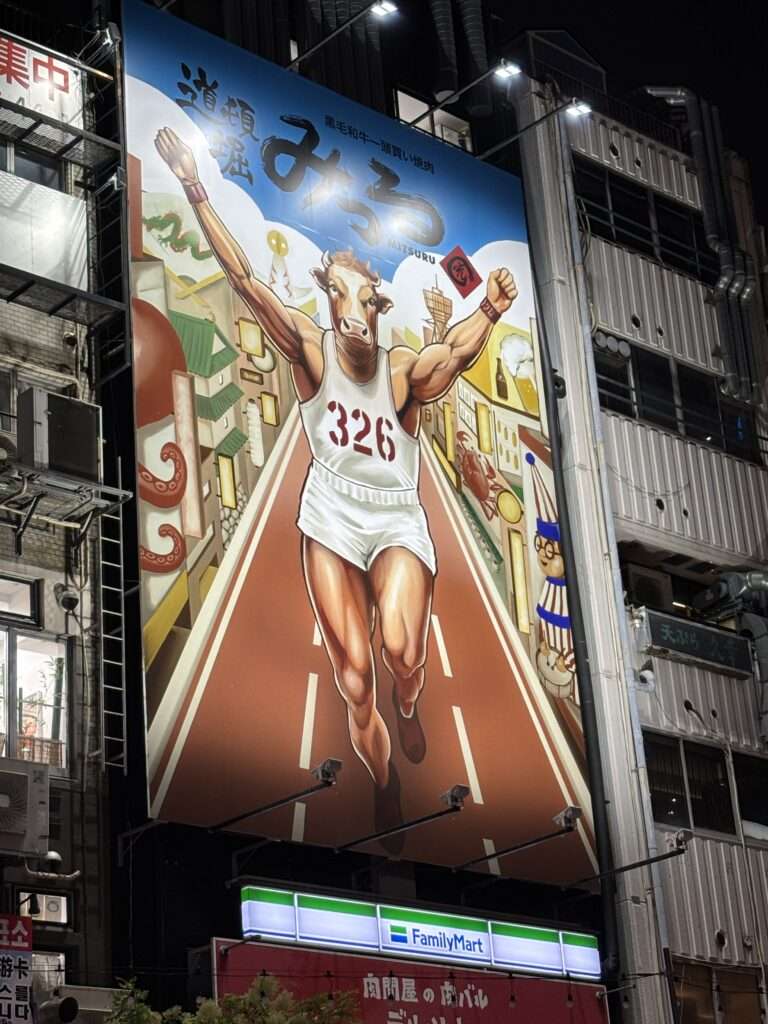
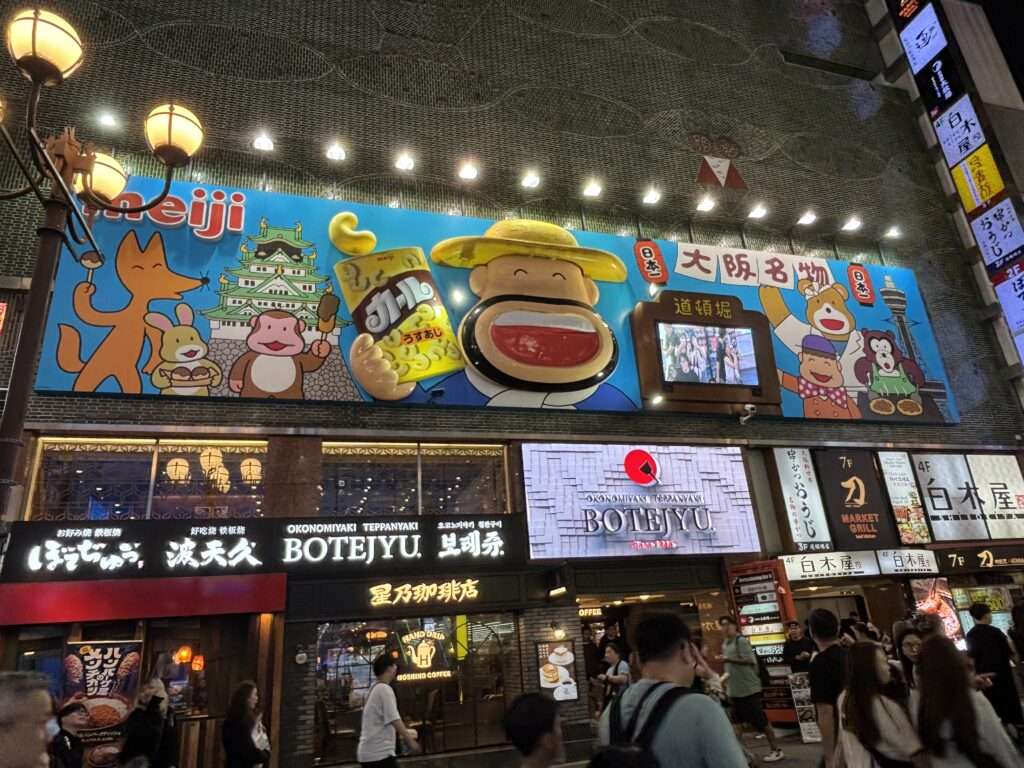
After the River Cruise, we headed over to Dotonbori-dori. The river cruise let us experience the waterfront area without the throngs of people. There was no escaping them on the pedestrian street. The crowd was immediate and oppressive. There was so much to see that my natural instinct was to go slowly to take it all in, but that was almost impossible to do as we got swept up in the crowd.
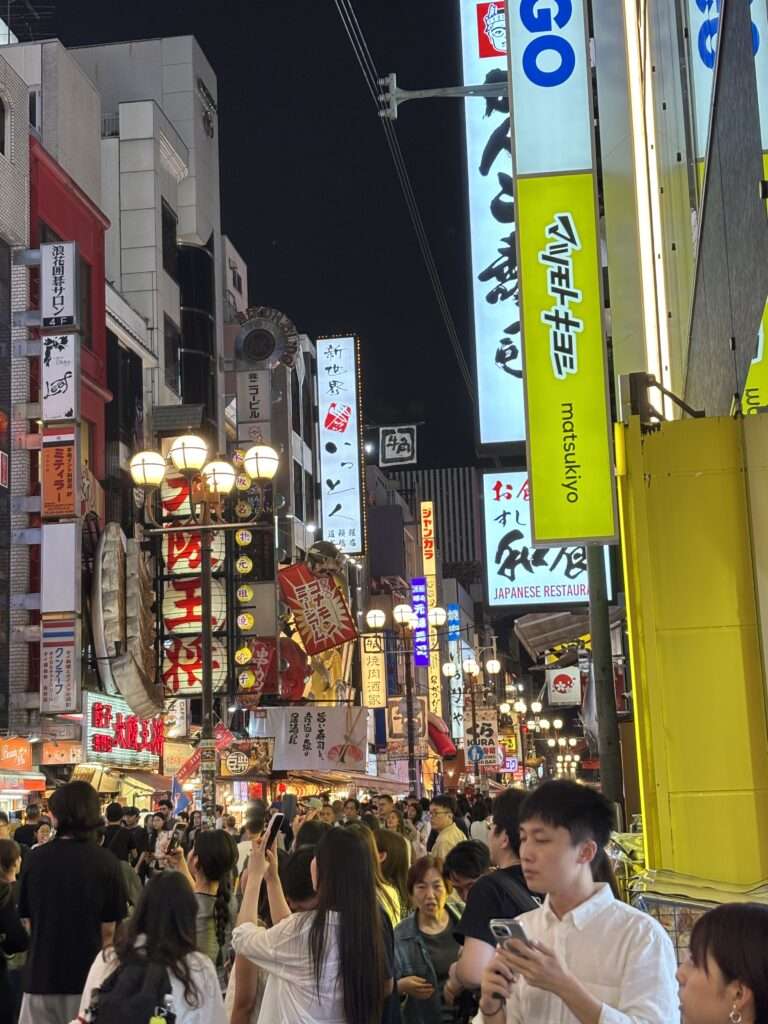
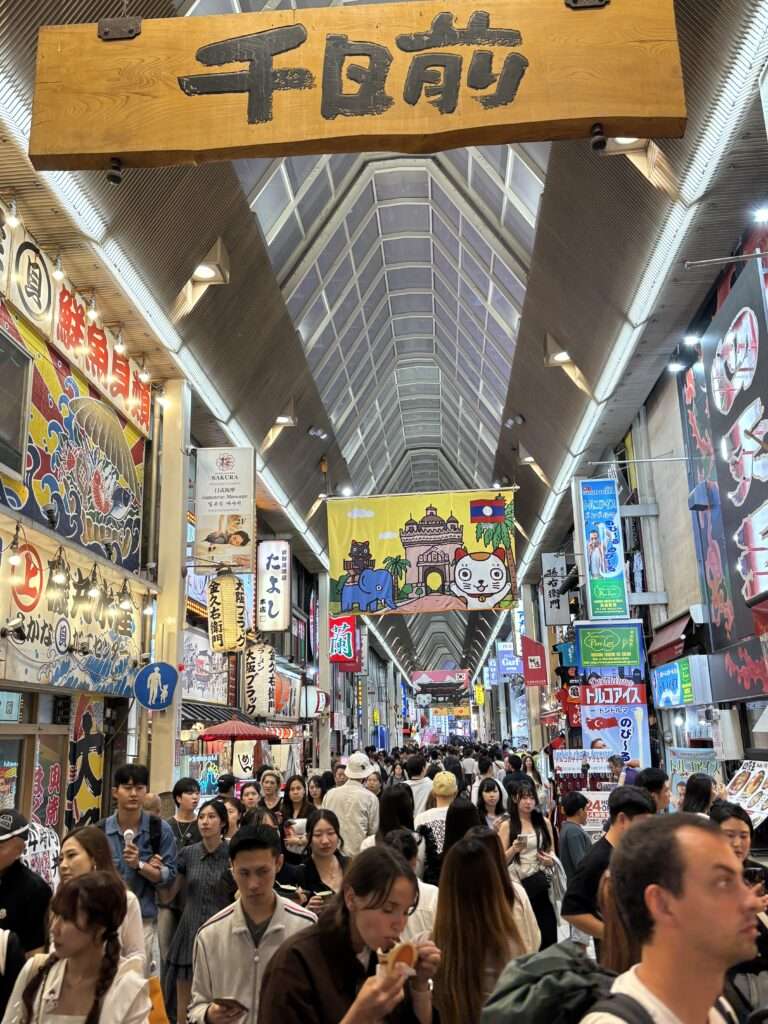
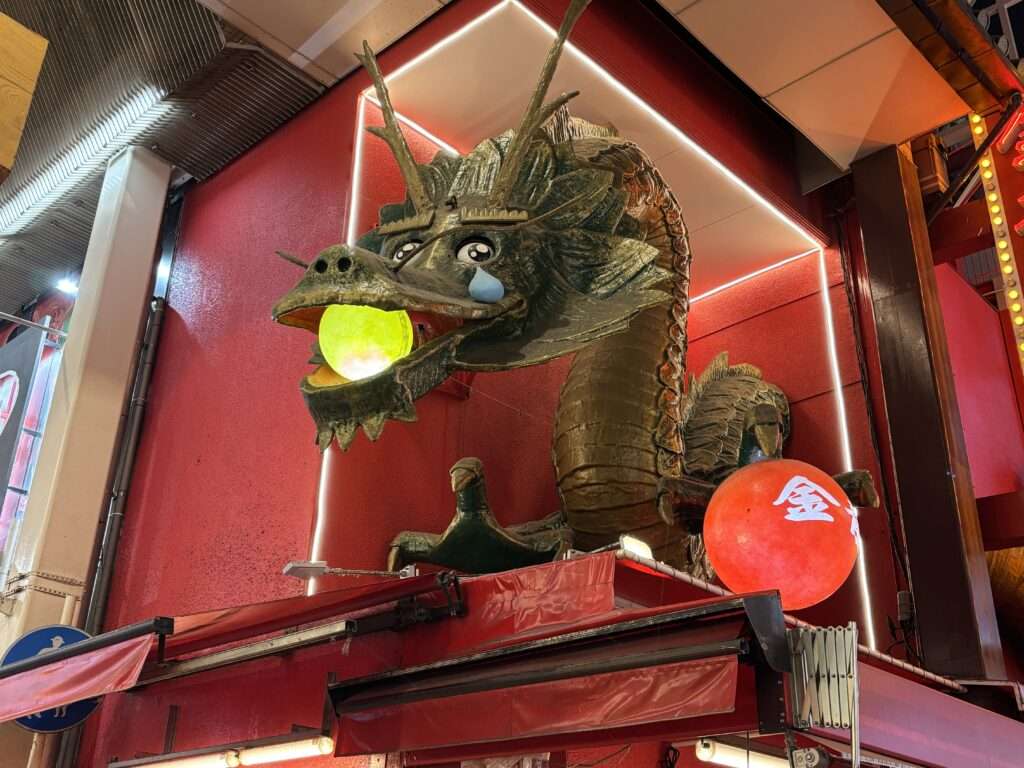
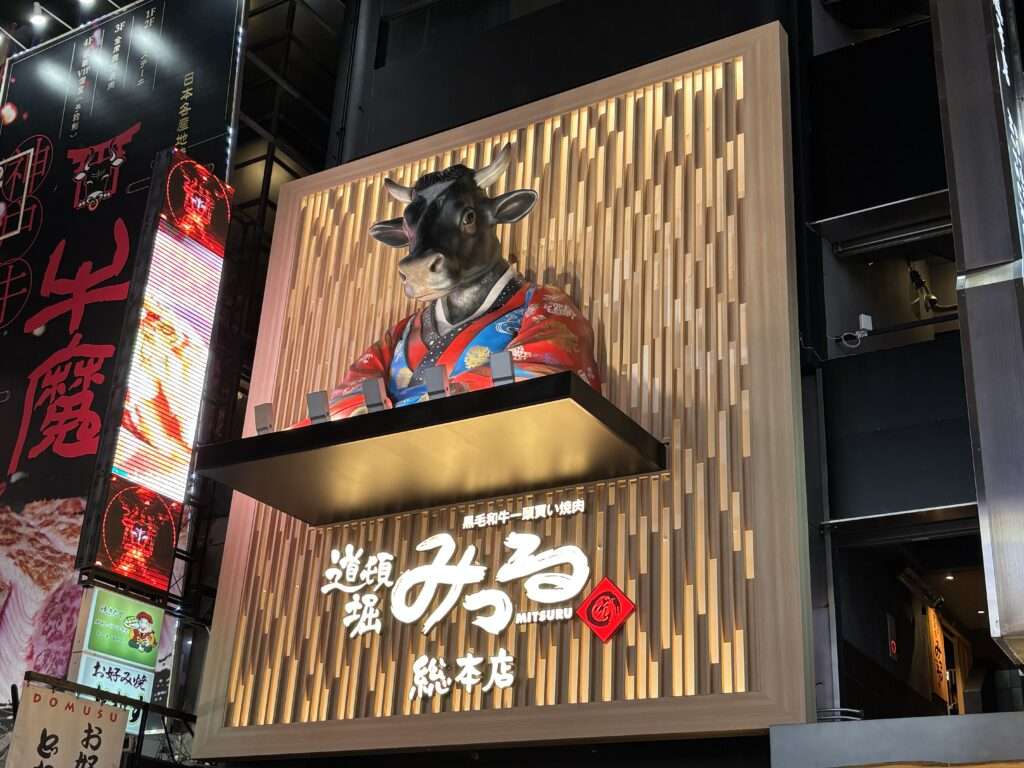
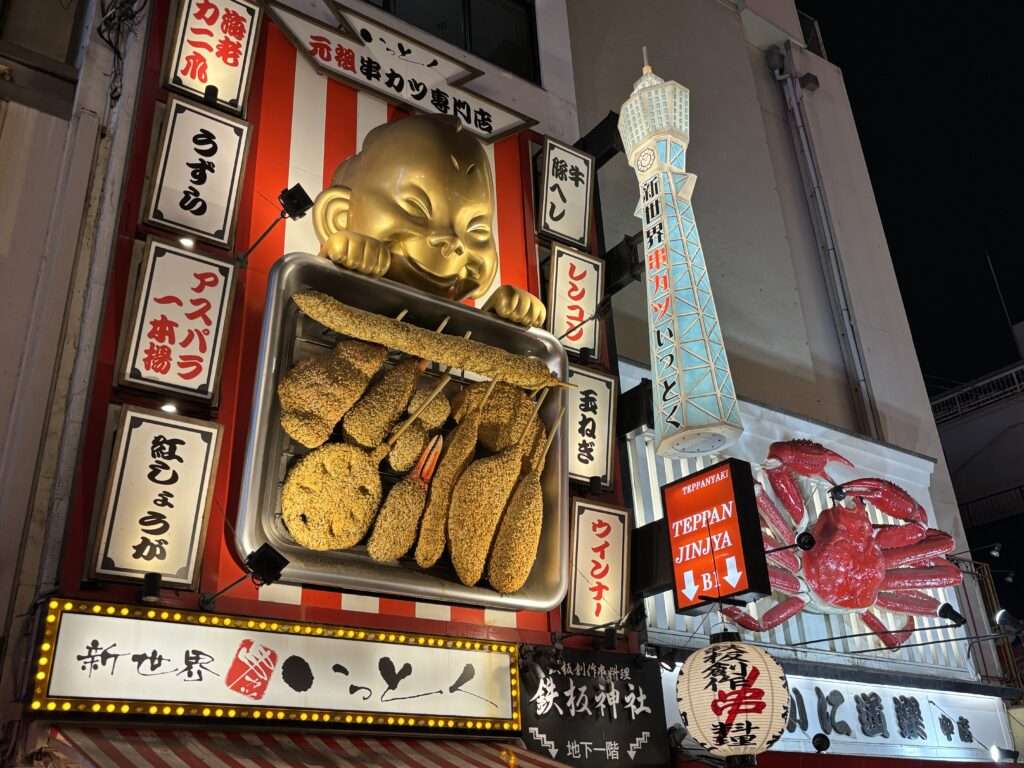
We walked the full length of the street, sampling various street foods and admiring the oversized 3D restaurant signs. From a giant robotic crab whose legs and eyes move to a 3D dragon with a tear in its eye because the restaurant was forced to cut off its tail, there are so many unique and creative signs in Dotonbori.
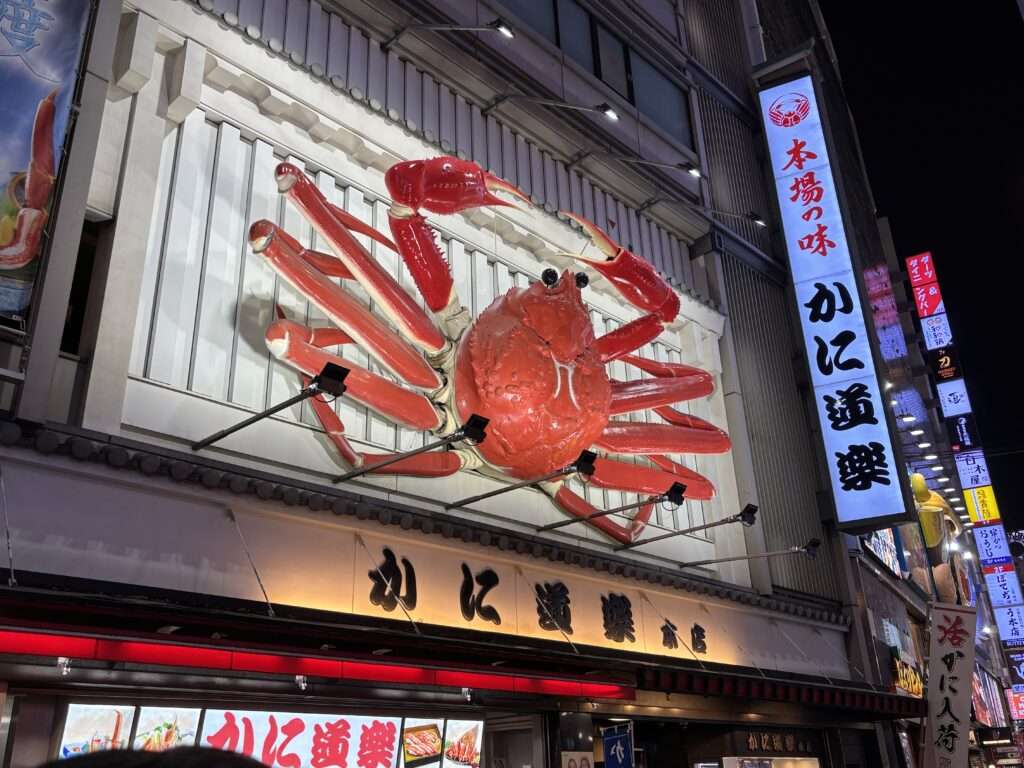
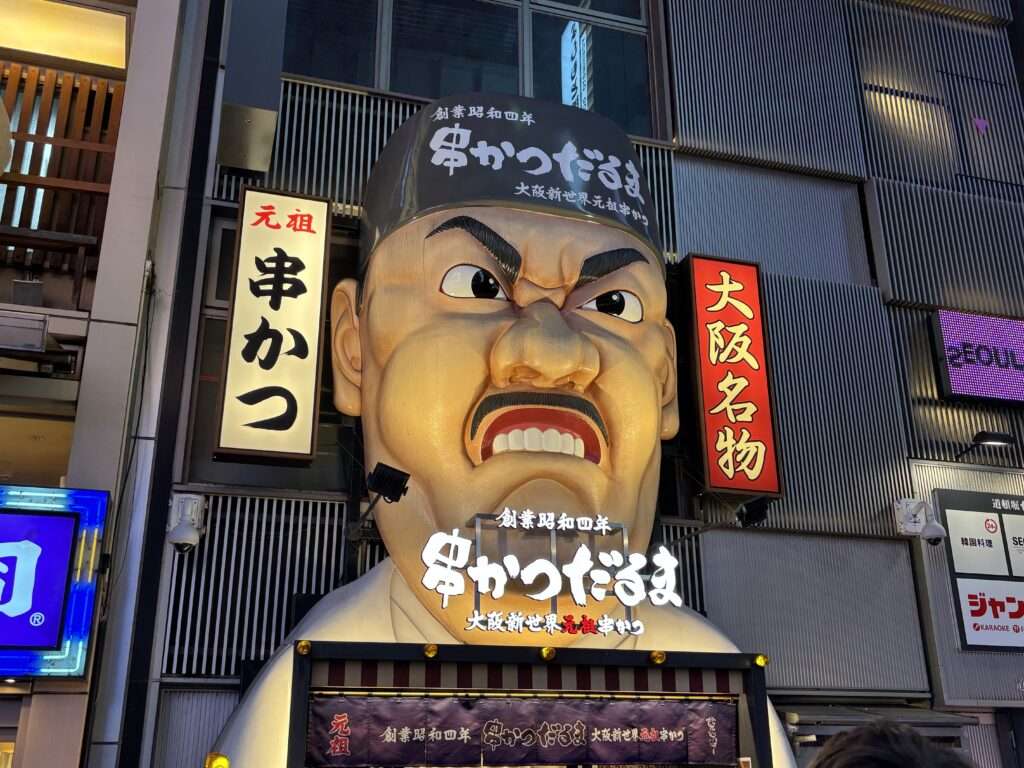
Dotonbori is a feast for the senses – from the smells and taste of the street food to the sights and sounds of the mechanical signs, it really is like no other place in the world. Even if you find it overwhelming, it is worth it to walk through at least once.
