It started raining a little more heavily while we were at Namba Yasaka Shrine so we decided to kill some time indoors before heading to our next stop. My oldest is an avid vinyl collector and had scoped out some record shops to check out. While he and my husband were browsing in a few shops, my youngest and I left to explore a little and eat some lunch. The rain lifted while we were eating, and we all met back up at Namba Station to go to the castle. We split up again though, with my oldest and I deciding to take the train and my husband and youngest deciding to walk. (The race was on!)
My oldest and I arrived at the castle first (although we only beat them by about 15 minutes) and we decided to go into the gardens. While the castle grounds are free, Nishinomaru Garden charges a ¥200 entrance fee. We walked in to the gardens and it was immediately obvious that this was not a garden in the traditional sense, with flowers and blooms everywhere, but a lawn garden. There was a large, wide-open green space in the center of the garden with a path encircling it. The grassy area wasn’t even particularly well-kept. It was patchy and full of dirt spots and weeds. I kept thinking that there must be another section of the garden that justified charging an entry fee but there was not.
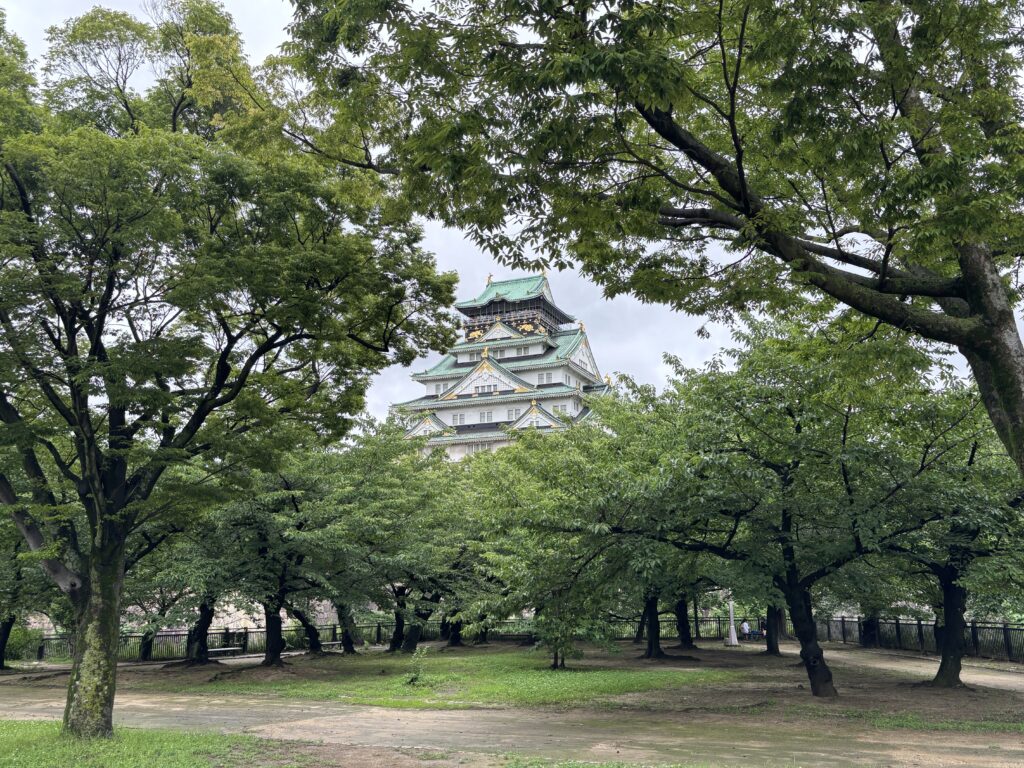
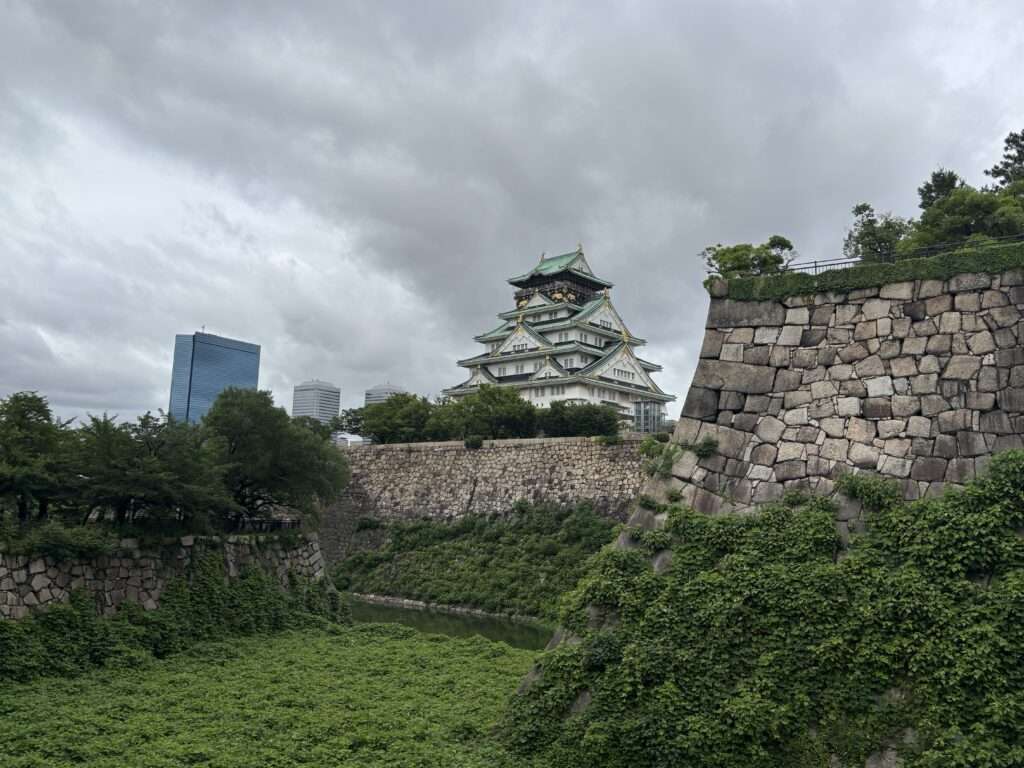
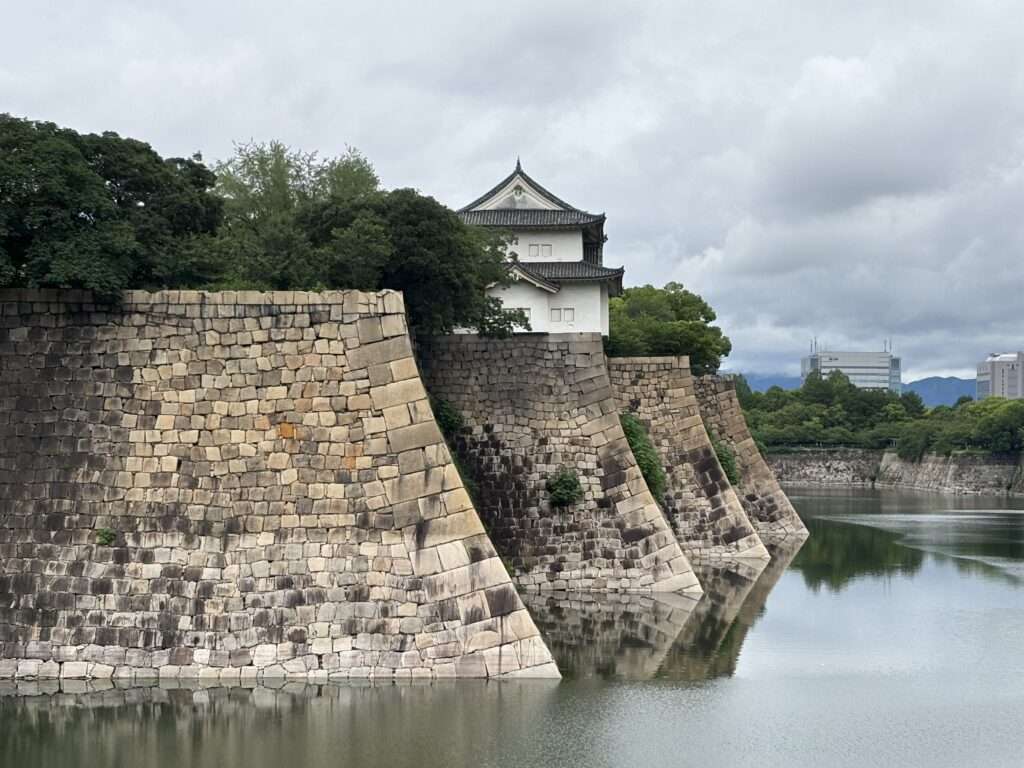
The lawn is surrounded by roughly 600 cherry trees so I imagine it is much more picturesque during cherry blossom season. Despite its disappointing appearance during our visit, the garden did provide a wonderful view of the castle. There is an excellent vantage point to take in the moat, the moss covered castle walls, and the side of the castle.
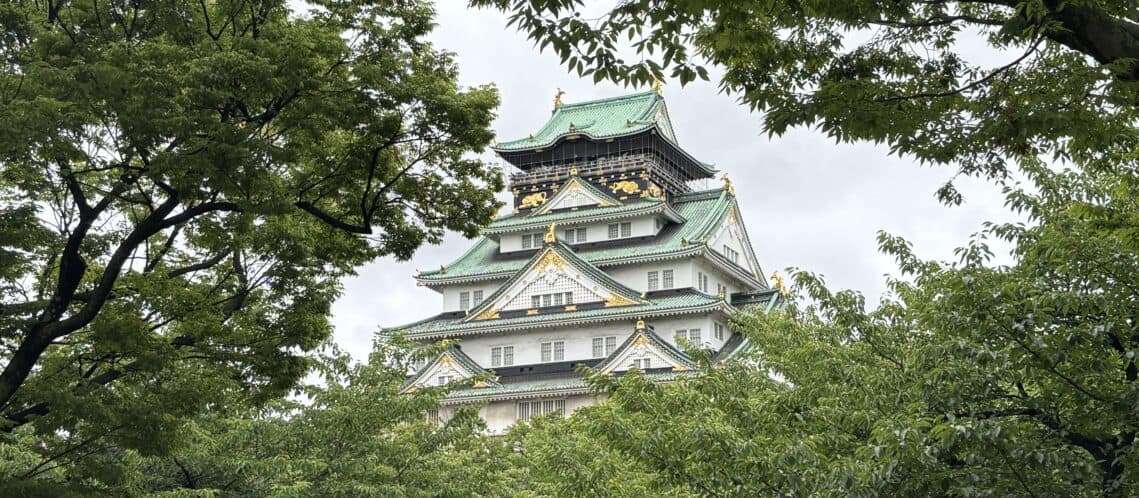
By this time, my husband and younger son had arrived and I texted them to tell them not to bother with the garden. We met up at the main gate and went inside to explore the grounds closer to the castle. Frustratingly, there was a small (free!) Japanese garden in the castle’s honmaru (inner bailey) that had a view of the castle that easily topped Nishinomaru Garden’s view. A grey heron posed for us on the small island on the garden’s Kakuyokukei Pond, as the castle reflected beautifully in the water, even on a cloudy day.
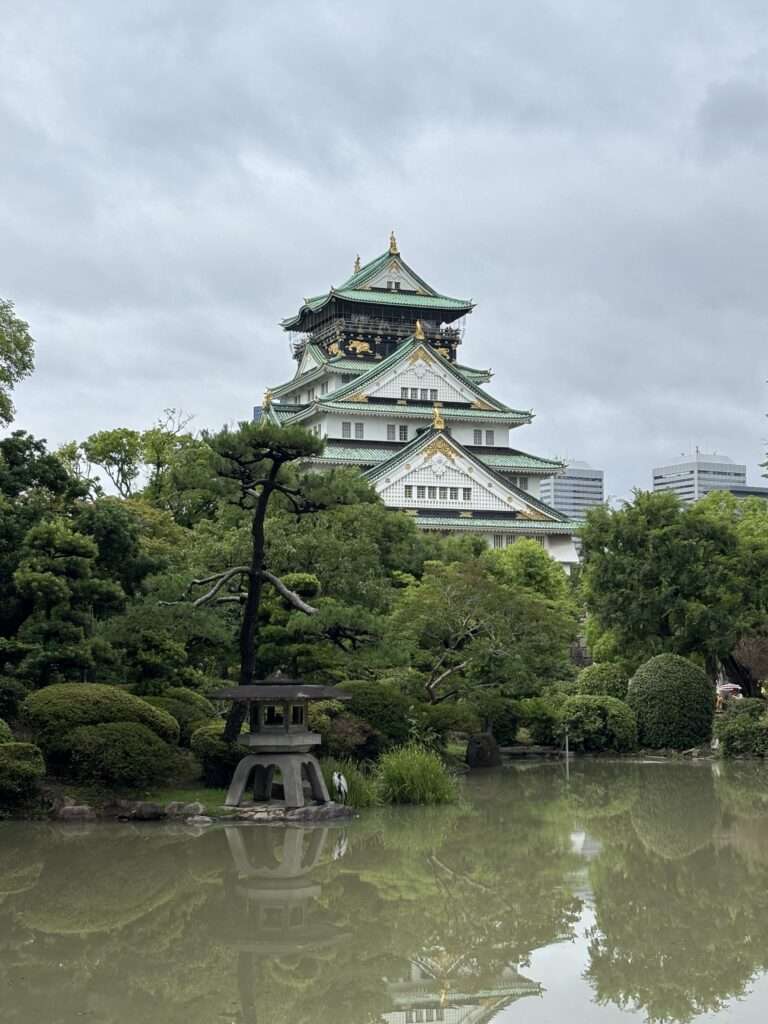
After enjoying the view for a while and completing the loop around the point, we got on line to purchase tickets to the inside of the castle. There was a little bit of a wait and I was kicking myself for not pre-purchasing tickets online so that we could breeze right in. After waiting about 15 minutes, we purchased our ¥1200 tickets from the electronic kiosk and went in.
Like many historic landmarks in Japan, the Osaka Castle that stands today is not the original structure but actually the 3rd iteration. The first stood from 1585-1615 and the second from 1626-1665. The current castle was completed in 1931 and withstood World War II bombings. Ninety-five years later, it has more than doubled the life span of either of the previous castles.
The castle is 8 stories, and you can either take the stairs the entire way to the top or take an elevator to the 5th floor and then walk the final 3 levels of stairs to the observation deck. But if you take the elevator, you miss out on the interesting museum that is housed on the castle’s lower floors.
Floors 1-2 primarily provides historical context, as well as replicas of key features of the castle. Floors 3-4 houses a collection of items from the Toyotomi Era, including samurai armor and battle flags. The 5th floor depicts the Summer Siege of Osaka, which was the 1615 battle in which the Tokugawa shogunate defeated the Toyotomi clan. The Toyotomi troops were outnumbered 150,000 to 60,000, resulting in the fall of the castle and suicide of leader Toyotomi Hideyori.
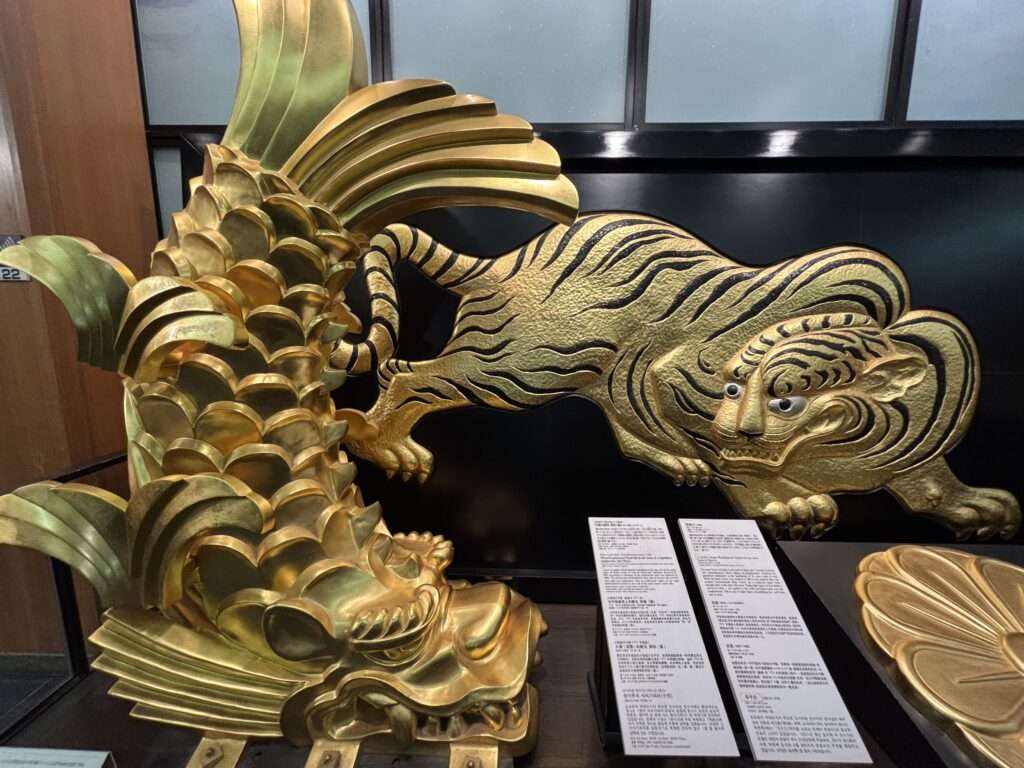
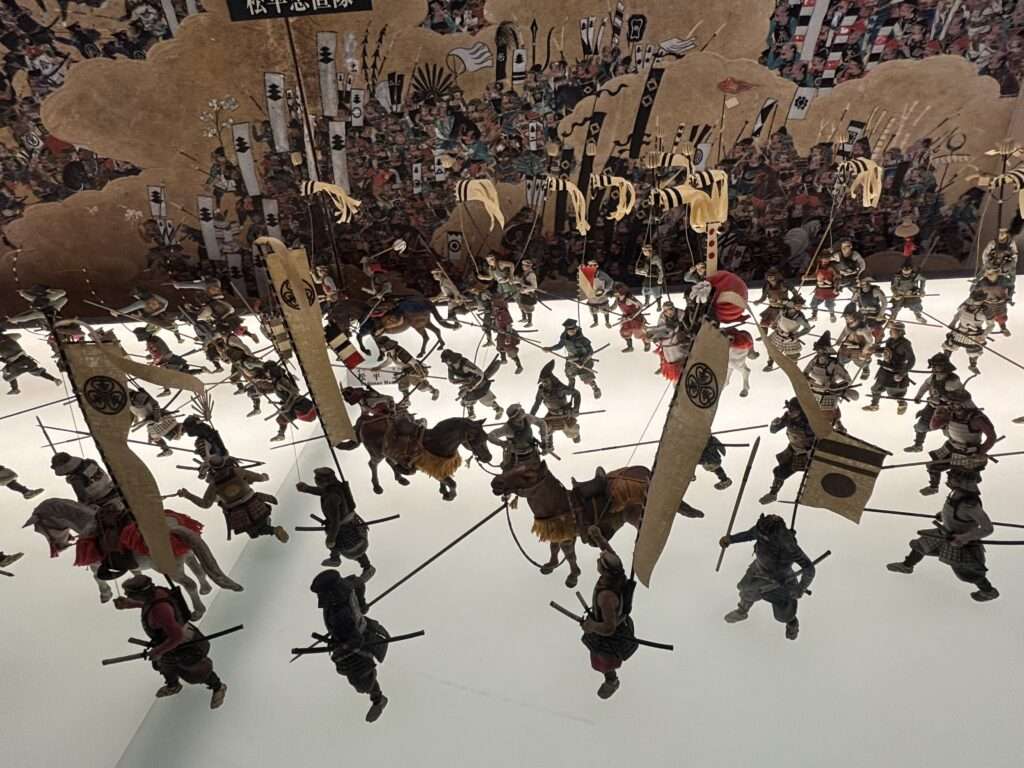
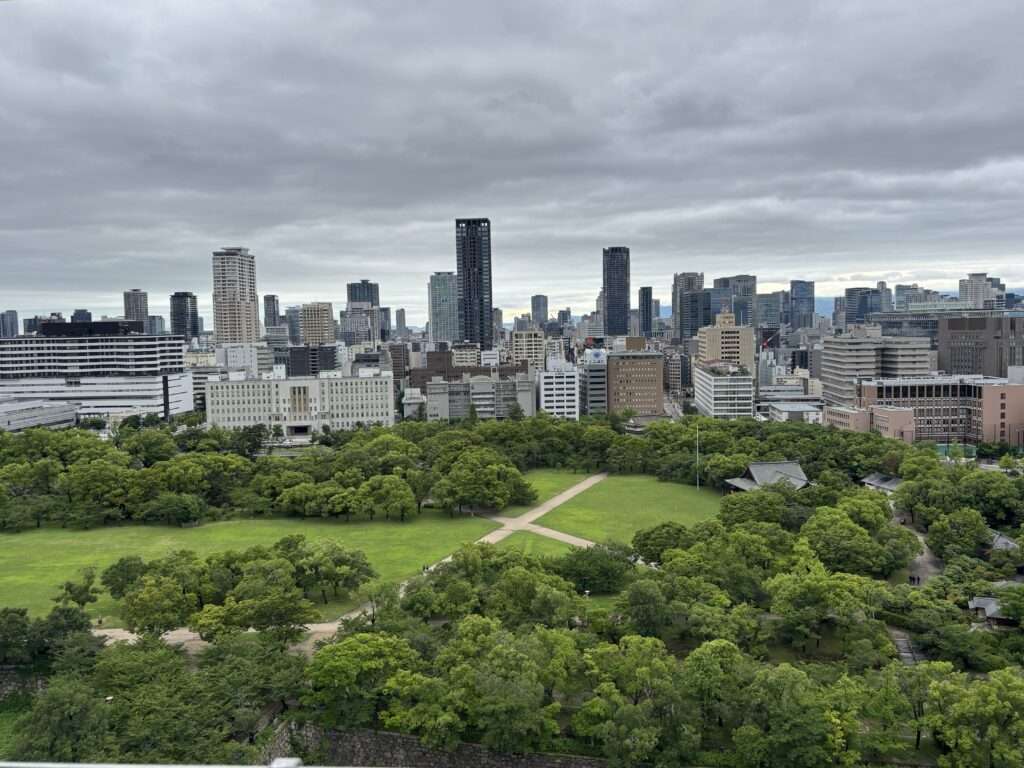
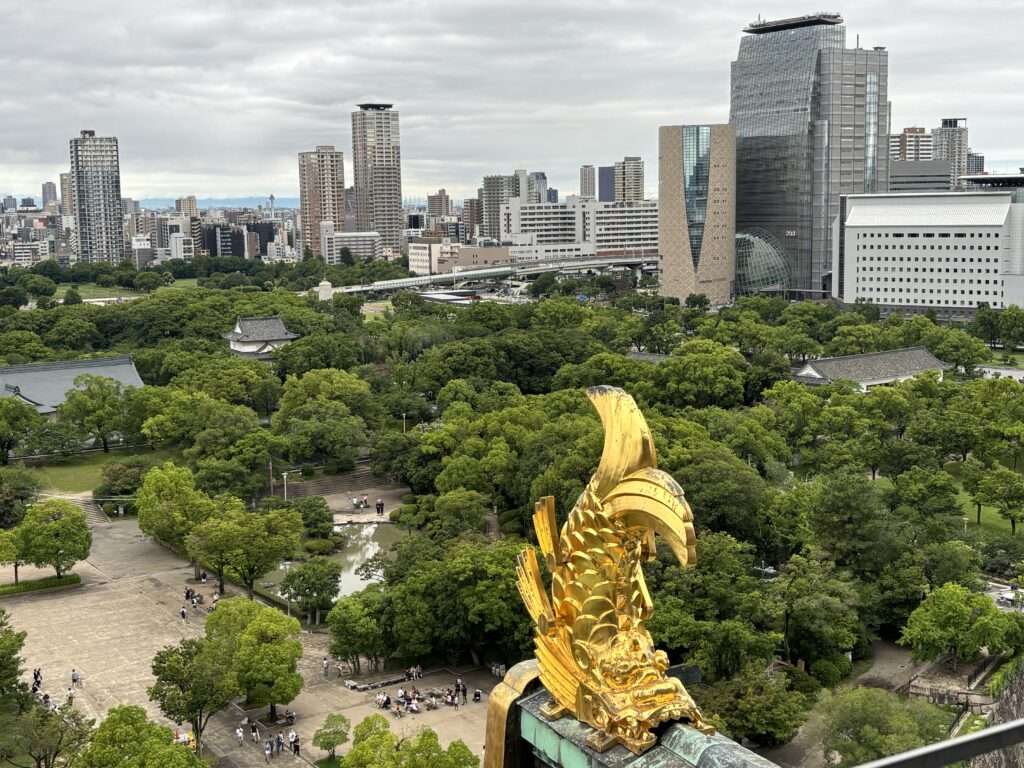
I thought the exhibits were interesting and worth the time. It also broke up the flights of stairs so it didn’t feel like a huge effort to get to the top. The 8th floor featured a small store inside and a wrap around observation deck outside for 360 degree views of the city. While nowhere near as sprawling as Tokyo, Osaka is the second largest city in Japan and has a striking skyline in its own right. Looking out, you can see the large green space of the park immediately surrounding the castle, the skyscrapers beyond the park, and then the mountains beyond the city. Even on a cloudy day it was an impressive site.
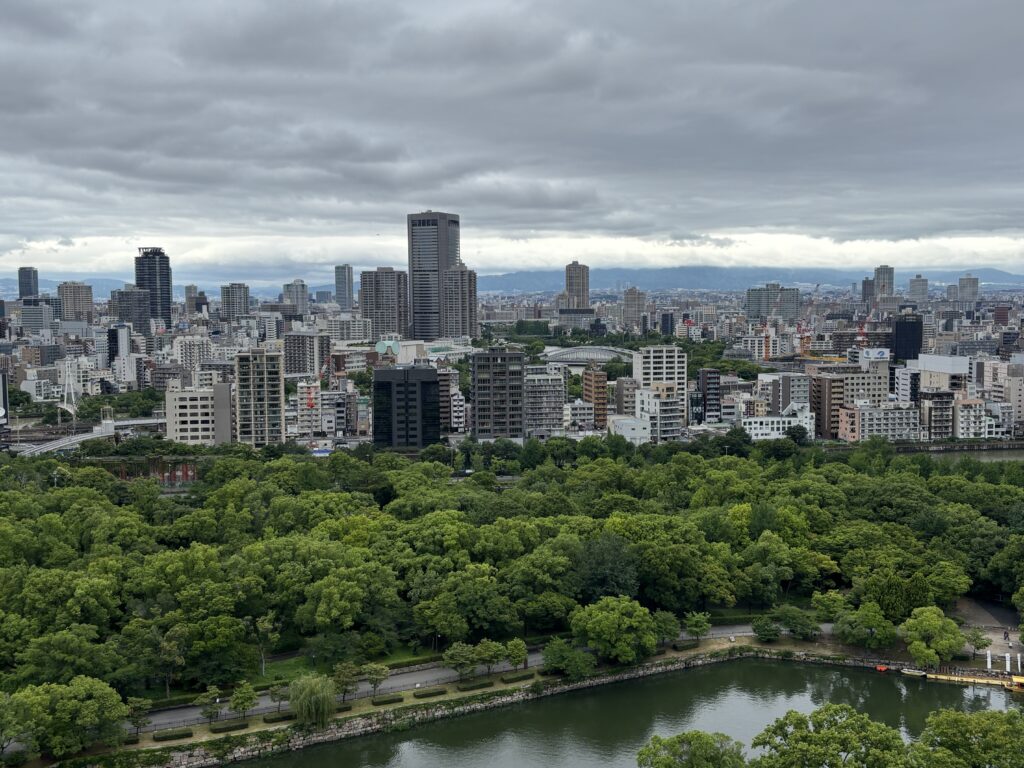
We really enjoyed our visit to Osaka Castle. While the Nishinomaru Garden was underwhelming, the rest of the grounds were lush and pretty, and we especially enjoyed the beautiful sloped stone castle walls and how they reflected in the surrounding moat.
The museum was worth a pass through on the way to the gorgeous views from the observation deck. While the castle is a concrete reproduction and not an authentic historic wooden castle, it is true to the original design and provides the appropriate historical context and features to make this a worthwhile stop.
