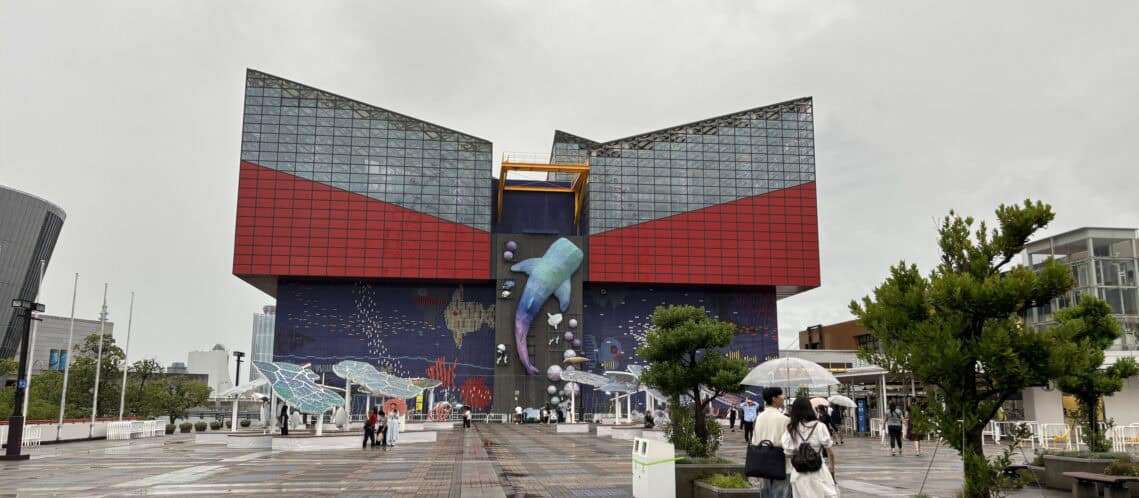
In my original itinerary, we were supposed to do the Hakone Loop on our arrival day in Hakone and then visit the Hakone Open Air Museum on the second day before containing on to Osaka. But the weather threw a wrench in our plans for both days. The Open Air Museum would clearly not have been an enjoyable experience in a double typhoon but I held out hope that we could still sneak a peak at the Hakone Shrine (the real Hakone Shrine, not Kuzuryu Shrine Hongu). But I put it to a vote – go see the shrine or bail on Hakone and head to Osaka early.
The vote was 3-1 in favor of going to Osaka early. (You can probably guess that I was the dissenting vote, still hoping to somehow see Hakone Shrine.) So we changed to an earlier shuttle to Odawara Station and hopped on the Shinkansen to Osaka.
In our original Osaka itinerary, we planned to go to the aquarium in the morning of our first full day there. But now we would be getting to Osaka with plenty of time to do an activity on our arrival day. Since weather was still an issue, moving the aquarium to that afternoon seemed like an obvious choice.
Except that because of the weather, the aquarium was everyone’s obvious choice for that day. I got on Klook to book tickets and the earliest arrival time available was 5:45pm. I grabbed the tickets and figured we would check in to the hotel and relax a little and then head to the aquarium and have dinner afterwards at Tempozan Market Place right next door.
We stupidly believed the weather forecast and headed out with only one umbrella between the four of us. It was only raining lightly when we got there and we headed inside.
Immediately after entering, we walked through Aqua Gate, a tunnel tank filled with tropical fish. I love these! It’s so cool to be able to watch the fish swim above and over you.
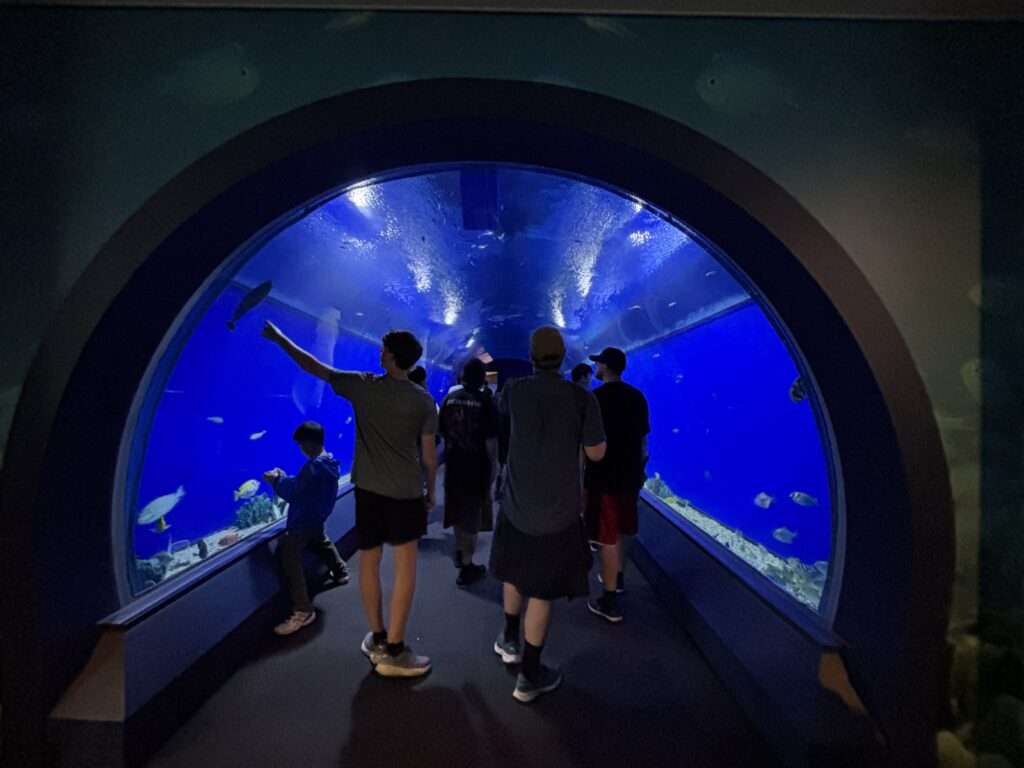
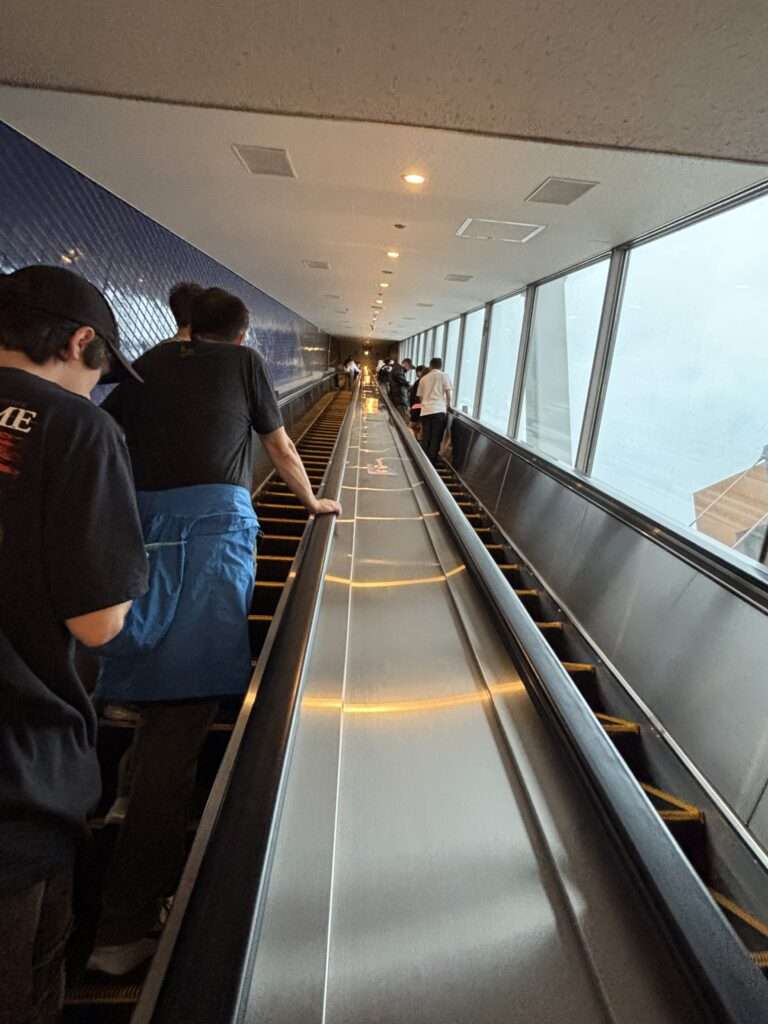
At the end of the tunnel was a long escalator that took us up 8 floors to the top of the aquarium so we could then wind our way back down. I really loved the unique layout of the aquarium. The floors represent different “lands”, focusing on land and sea animals from each region. Once you got down to the 6th floor, in addition to the regional displays, there was a huge tank in the center of the aquarium and you could follow a spiral pathway down multiple floors, seeing the tank at different depths all along the way.
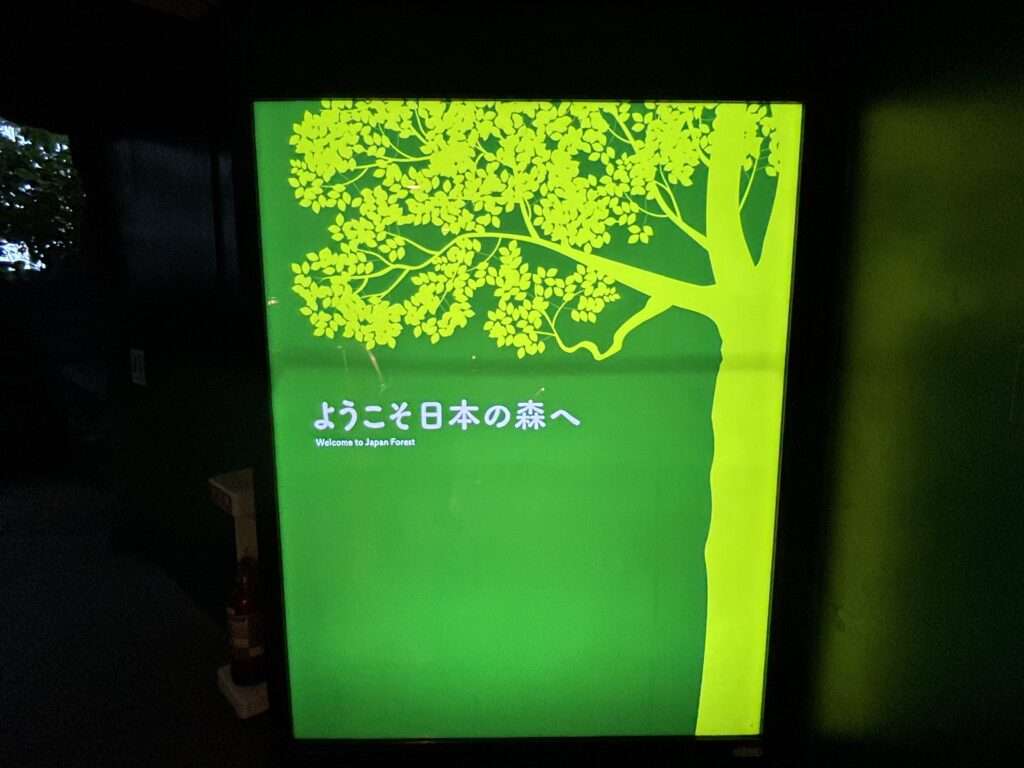
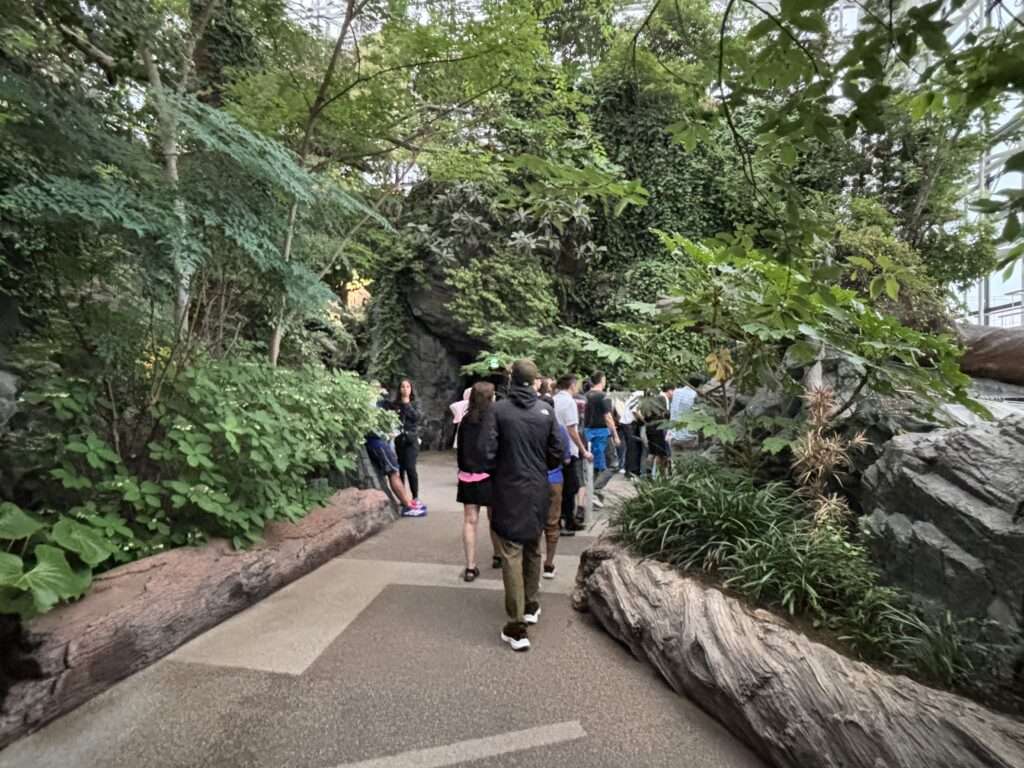
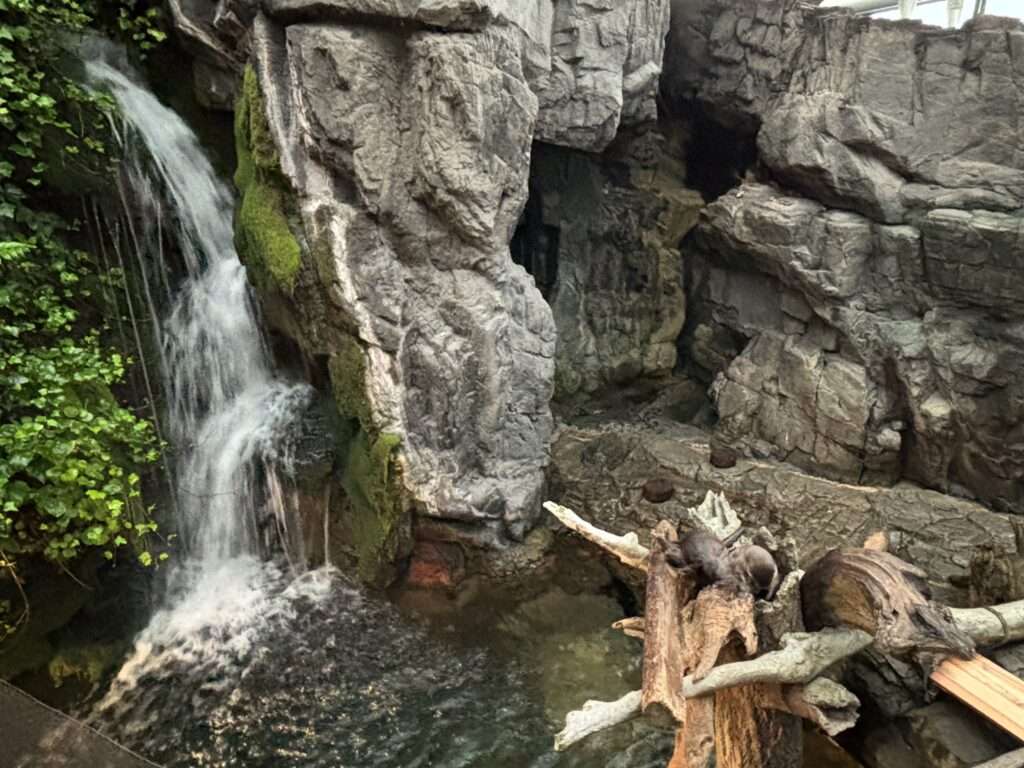
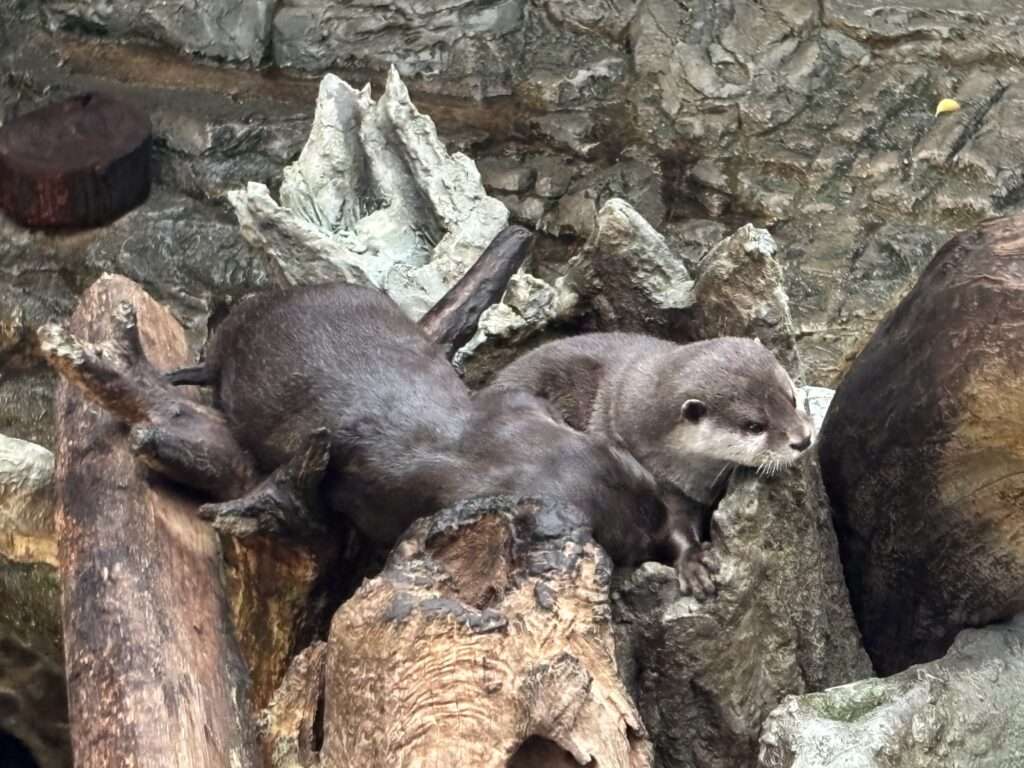
Getting off the escalator on the 8th floor, we were led into “Japan Forest”. This is more of a land-based display, with tons of trees and natural light coming in through the windows and glass roof. The design here is intentional – the top of the aquarium is the above sea area and then you gradually make your way down into the ocean as you visit the other floors. The star of the show here is Asian small clawed otters. Two of them lay nestled together on some logs, with a waterfall roaring beside them and ample swimming space at its base. Otters are a favorite in our household and we watched them for a long time. Despite their relative inactivity they were still captivating and adorable.
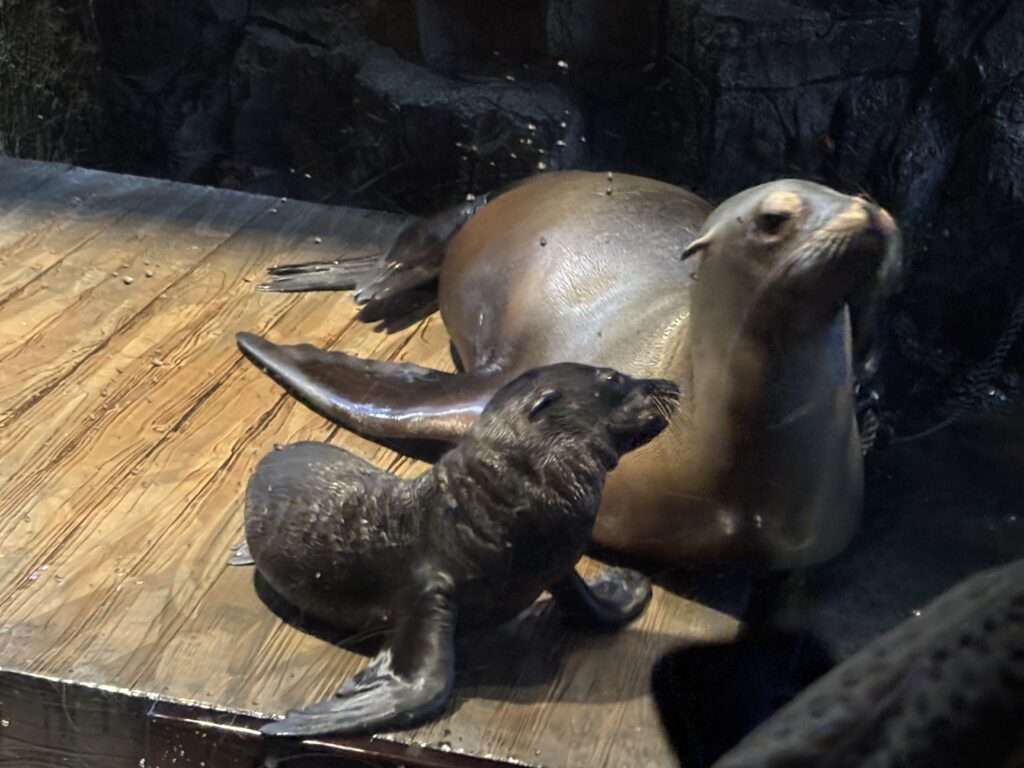
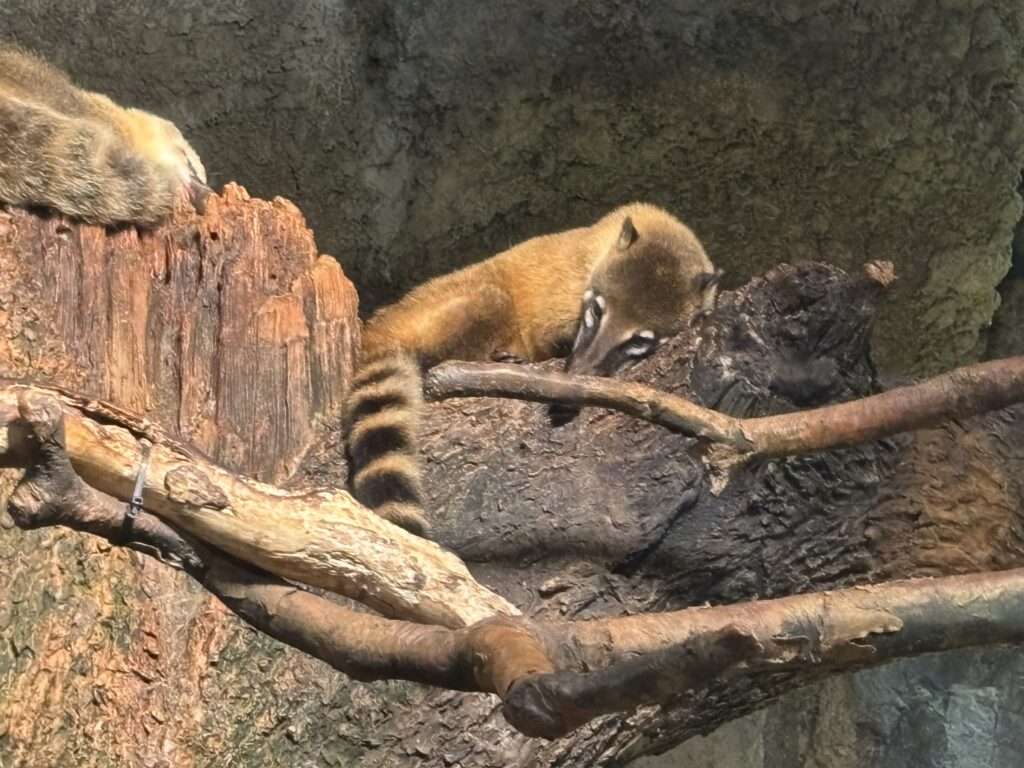
We headed down a floor and were treated to more land, sea, and land-sea hybrid animals. First was the Monterey Bay section, where we were saw a baby sea lion hanging out with its mother on the dock, as well as lots of adults swimming around in the water. Next up was the Gulf of Panama, where tropical fish swam in tanks and a South American coati lounged on some rocks. And then a quick walk through the tanks of the Ecuador rainforest before reaching Antarctica. This was one of my favorites. I had a strange obsession with penguins when I was a kid and I loved seeing the three species of penguins (Adelie, King, and Gentoo) hanging out on the ice and swimming in the water. And finally, Pacific white-sided dolphins were featured in the Tasman Sea exhibit.
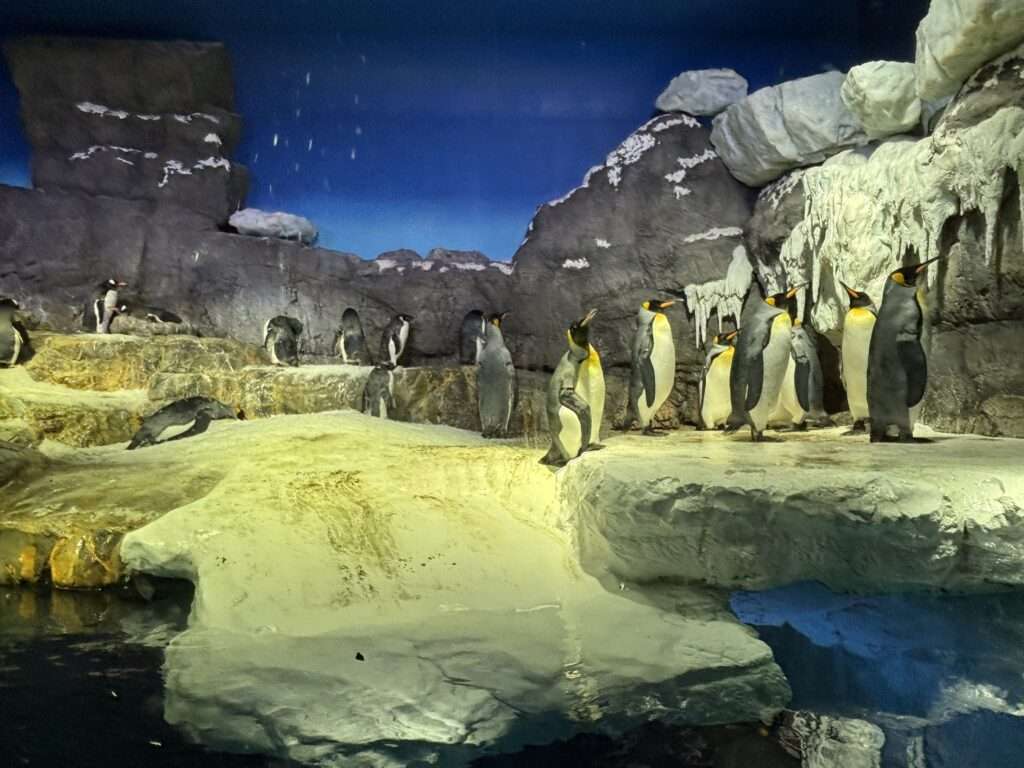
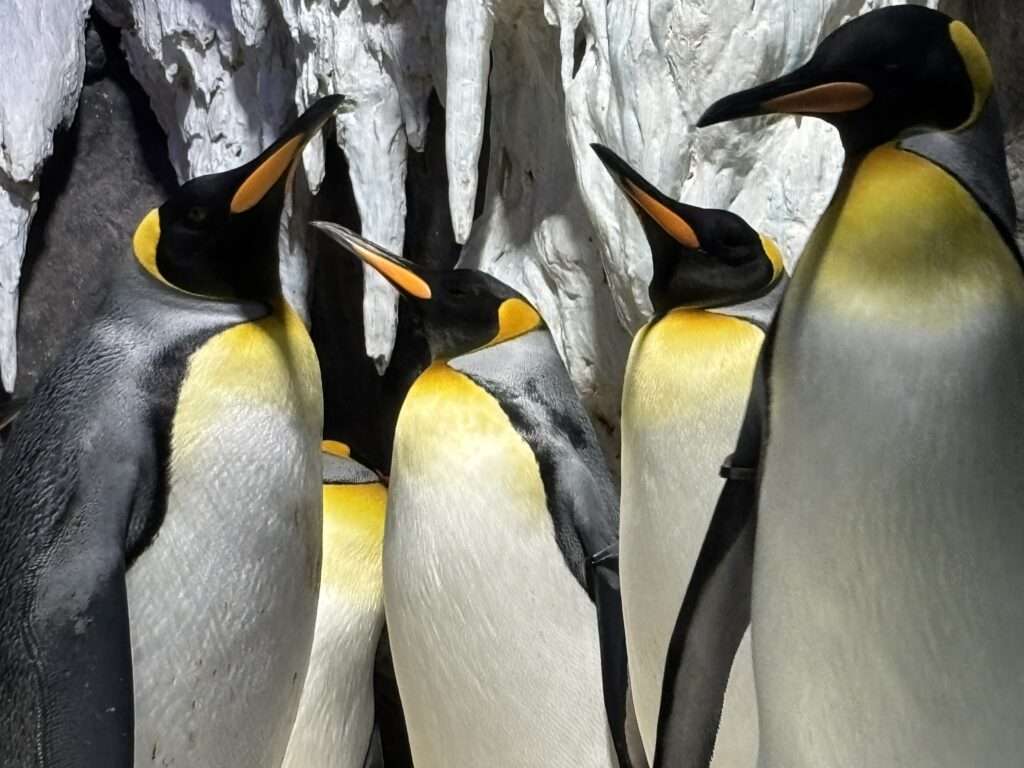
The cool thing about this aquarium is that most of the exhibits are multi-level. So the 7th floor described above was the top, land-based level of several exhibits. They featured animals that would go in and out of the water and you could see them in the land portion of their habitats there. When you walked down a level, you could see the underwater section of those exhibits. So penguins darted by and dolphins swooped next to the glass. It was amazing.
The 6th level is also the start of the center tank. The tank is 30 feet deep, 112 feet long, and holds 5,400 tons of water! It is the most impressive tank I have ever seen at an aquarium. Whale sharks are one of the highlights of the tank and there is a big sign above the first viewing window that says they are visible in the next window too so that not everybody stopped here and caused a traffic jam. (It still backed up here anyway.) Turns out that they were not only visible in the next window too but in every window for the next 3 floors if you just waited long enough for them to swim by.
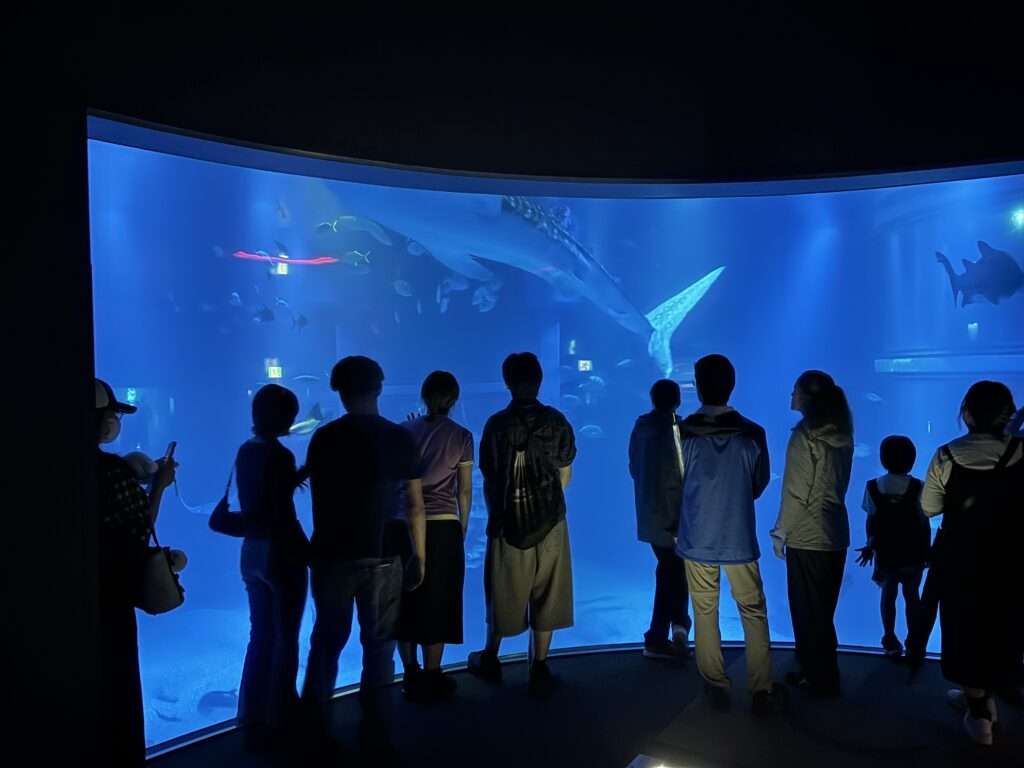
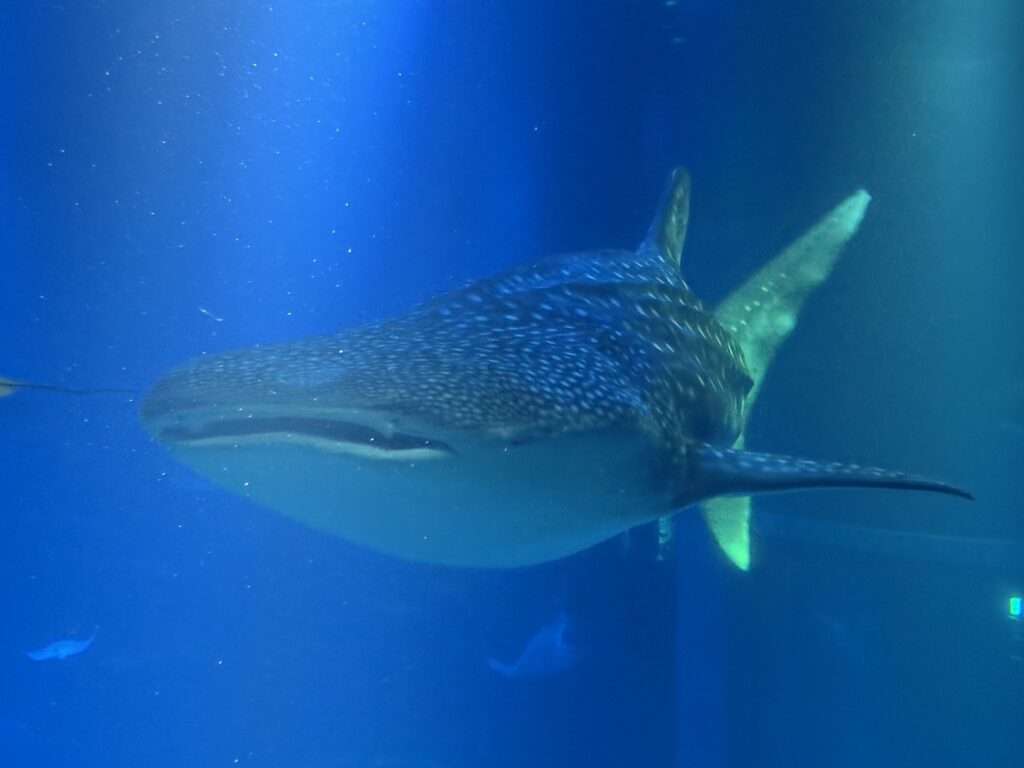
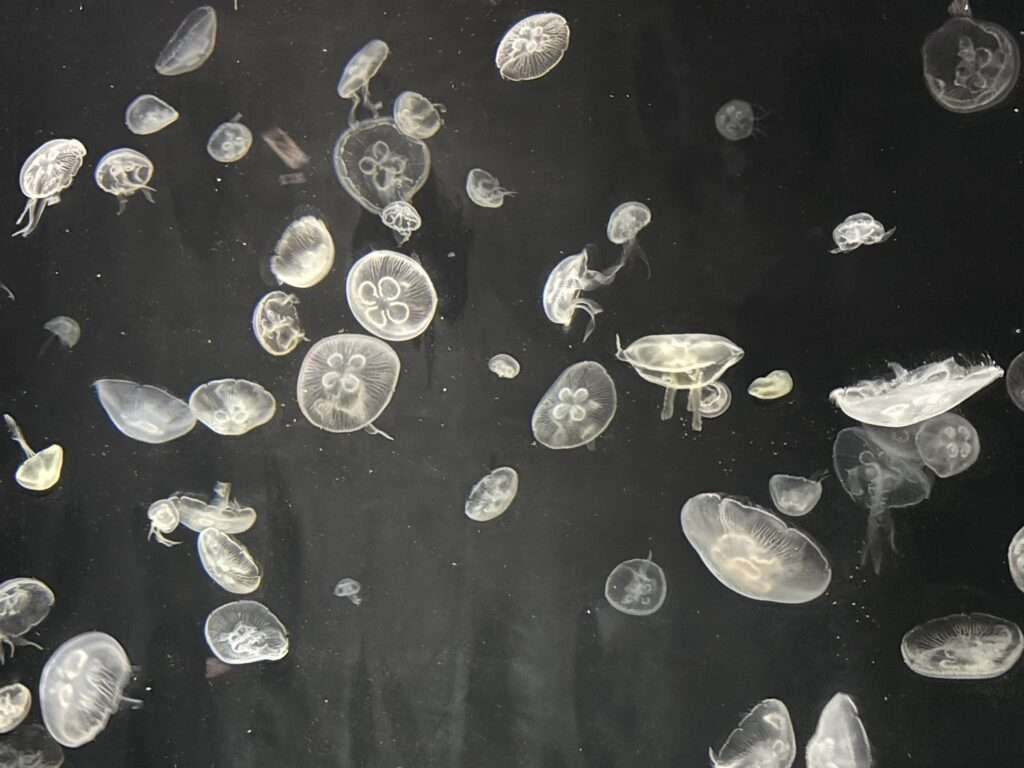
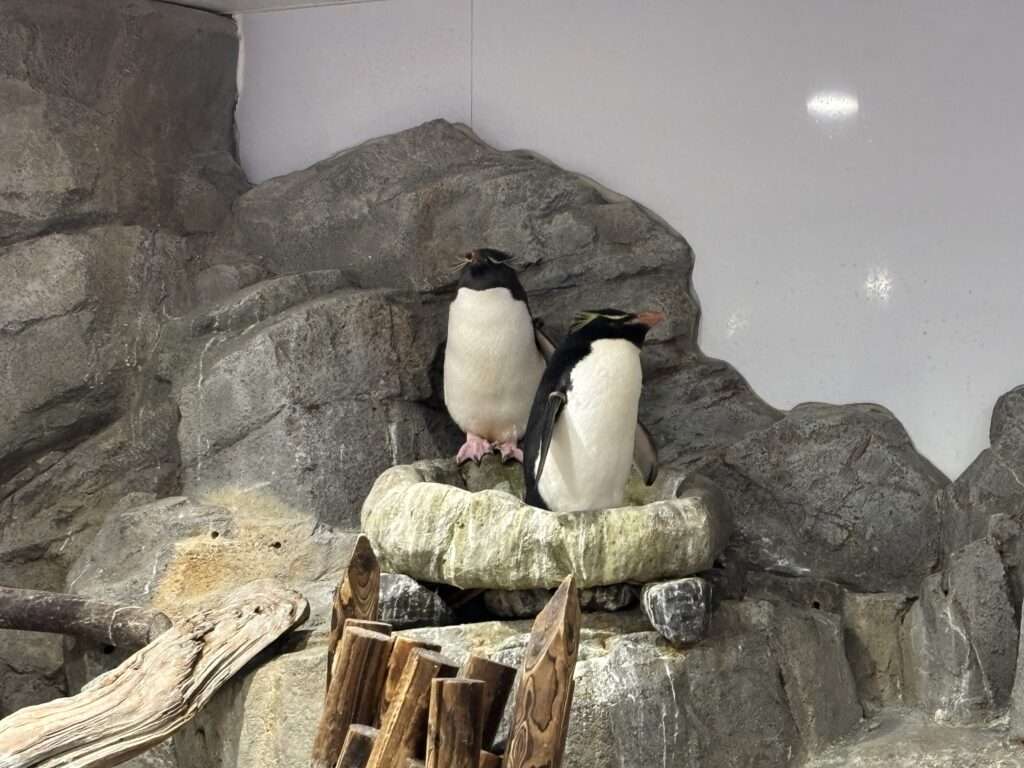
The bottom of the central tank is on the 4th floor and the floor below that features a large jellyfish exhibit. From there you walk across to the entrance building, where there are several more exhibits. I was excited for both the Ringed Seal in the Arctic Exhibit and for more penguins! Several Southern Rockhopper Penguins resided in the Falkland Islands exhibit.
We are big aquarium fans and have been to many across the US and the world. Osaka Aquarium Kaiyukan is probably our favorite one yet. The design is amazing, from the spiral path around the central tank to the habitats from all around the world. It is well designed and executed, and the variety of marine life and semi-aquatic animals is amazing. I am so glad we didn’t hesitate to take the later tickets. It was absolutely worth the trip.
And that opinion didn’t change even when we walked out and it was pouring rain. Or when we sprinted over to Tempozan Marketplace and found out that even though their restaurant hours say 9pm, everything was essentially closed by 7:45 when we got there. So we made the trek back to the train station in the pouring rain, took the train back towards our hotel and found a spot to eat near there, drenched but happy that we went.
