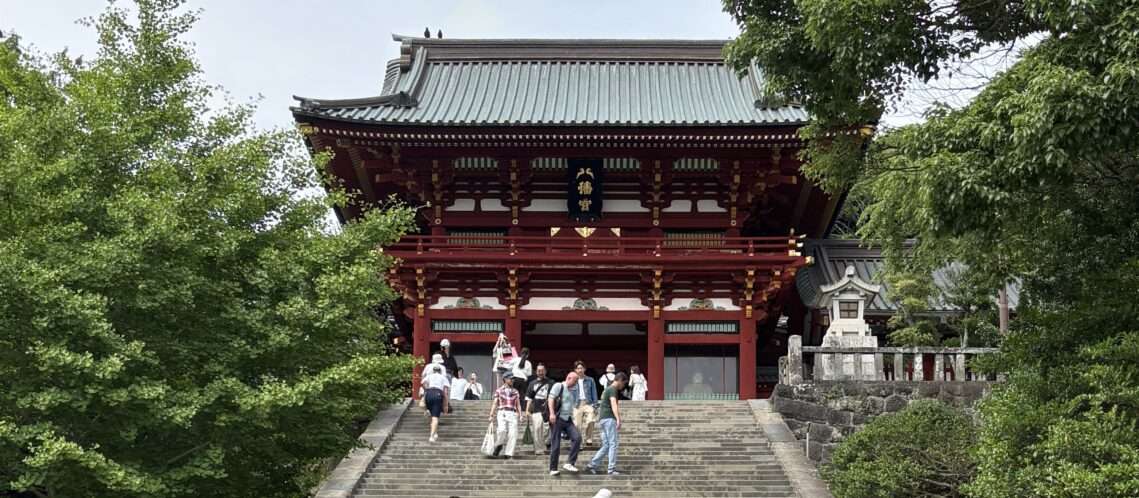
Tsurugaoka Hachimangu Shrine is Kamakura’s most important shrine. Originally established in 1063 as a small shrine in Yui Wakamiya in honor of the deity Hachiman (the god of war, guardian deity of samurai and patron of the Minamoto clan), Tsurugaoka Hachimangu was moved to its current location in 1180 by Minamoto Yoritomo, the first of the shogun of the Kamakura Shogunate.
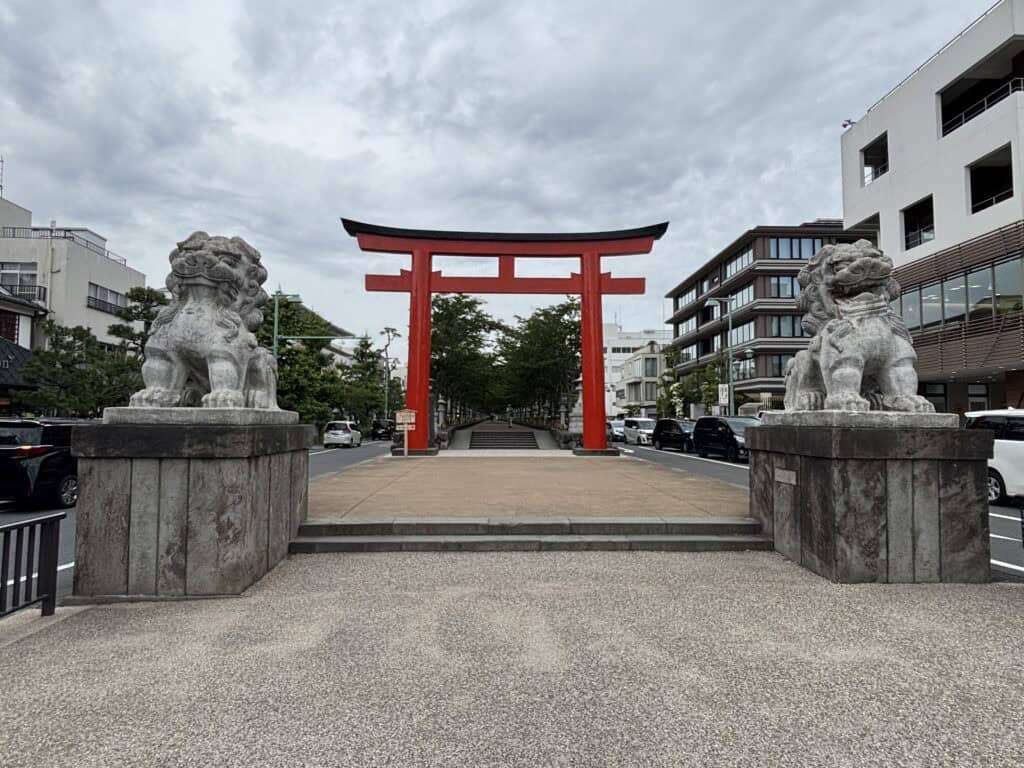
Although you can reach the shrine from the popular Komachi-dori Street, it is best approached from Dankazura, the raised pedestrian walkway that runs down the center Wakamiya Ōji street. This path leads you past komainu statues and through torii gates. While today it is a lovely place for a stroll, the path was designed with defense of the shrine in mind. The path gradually narrows, giving the illusion to its enemies that the shrine is further away than it actually is. And the elevation of the walkway allowed samurai to hide and attack invading military forces from the side.
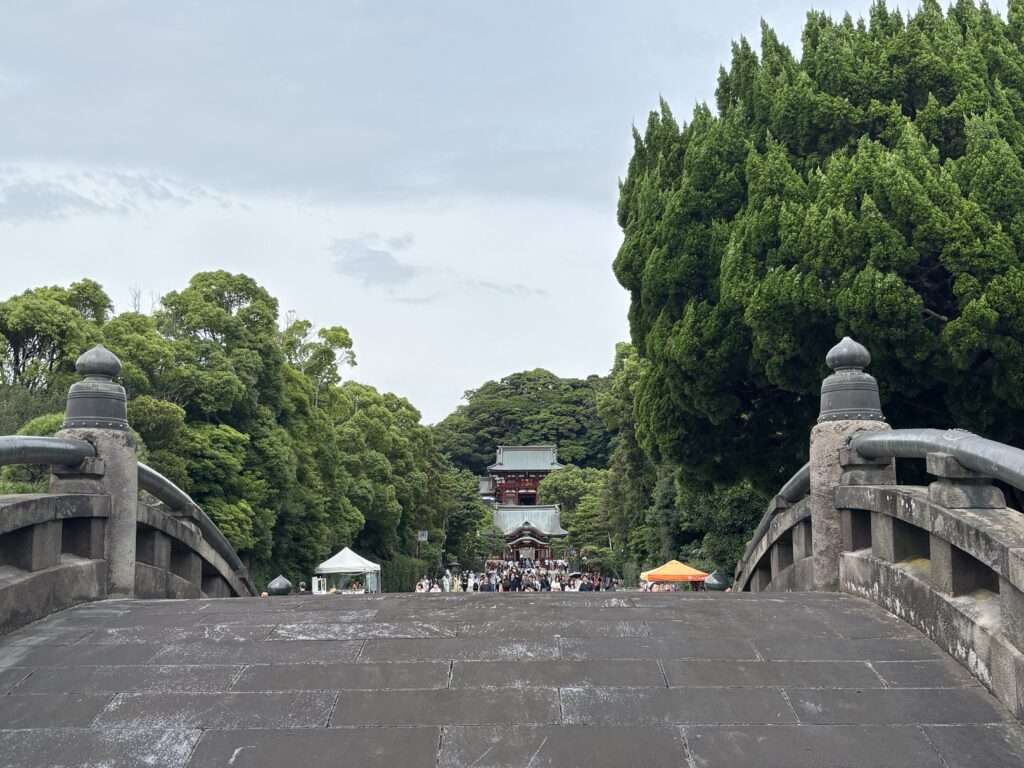
Walking under the final torii gate and entering the shrine’s grounds, there is an arched stone bridge (Taiko-bashi) that perfectly aligns with the shrine’s main buildings, Maiden (the performance stage) and Jogu (the main shrine). The bridge spans a canal that connects the site’s two ponds. Known collectively as the Genpei Ponds, the ponds are named after rival clans. The east pond (Genji Pond) features three man-made islands that signify the prosperity of the Genji clan. The west pond (Heike Pond) features four man-made islands signifying the downfall of the Heike clan. Traditionally, only the Shogun can cross the Taiko-bashi, and the bridge remains blocked today so that visitors must cross one of the two red bridges on either side of it.
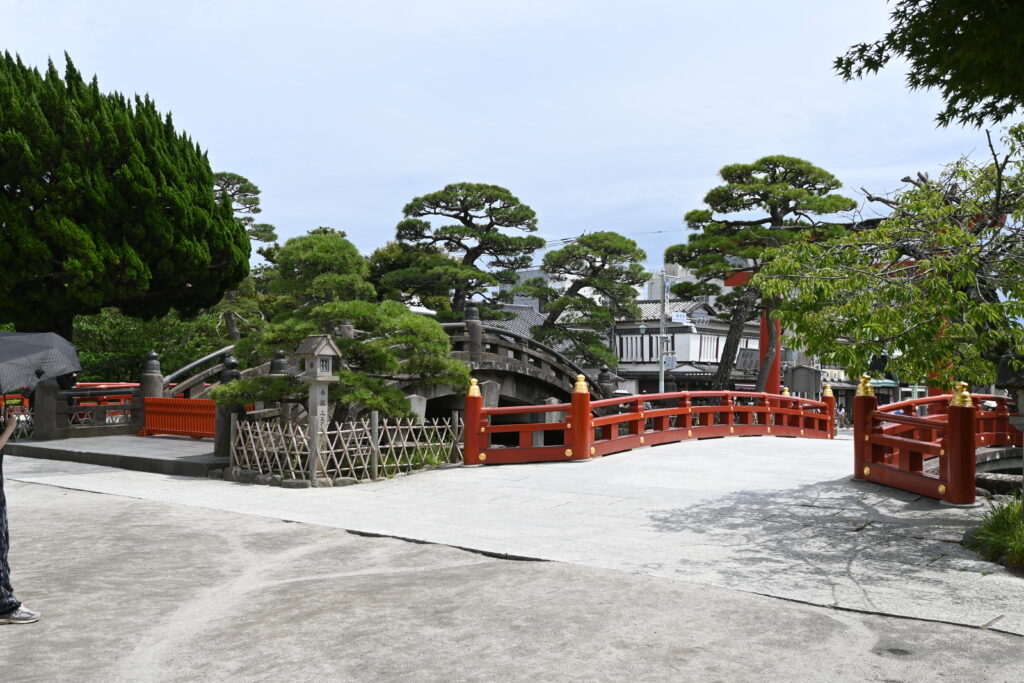
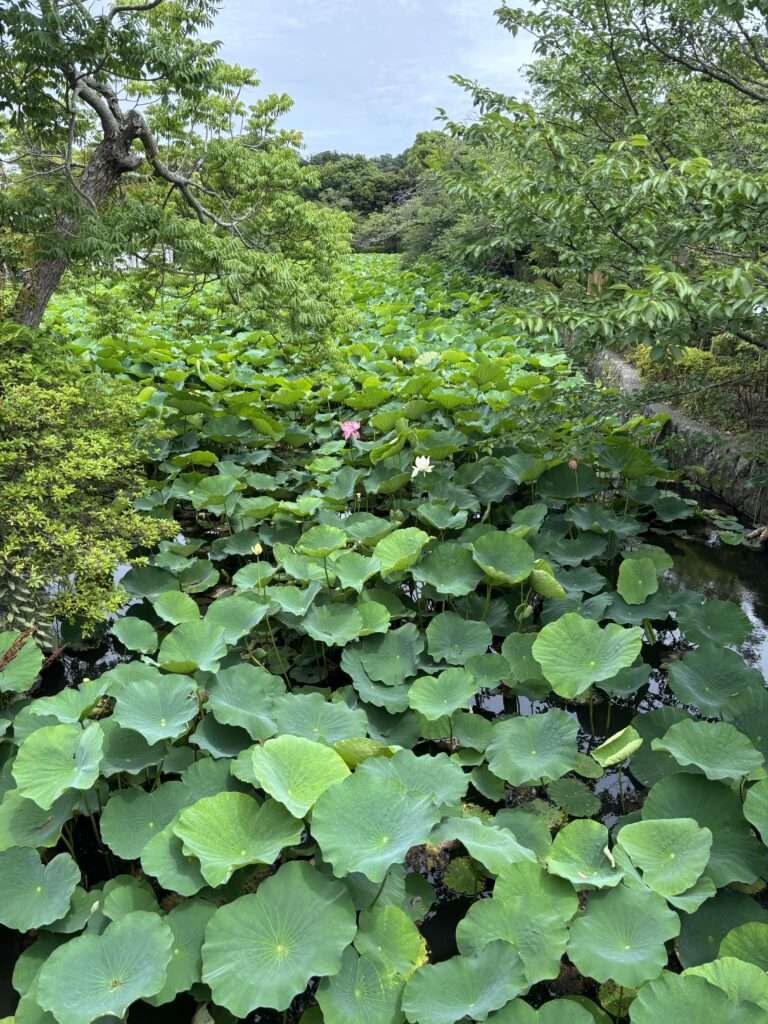
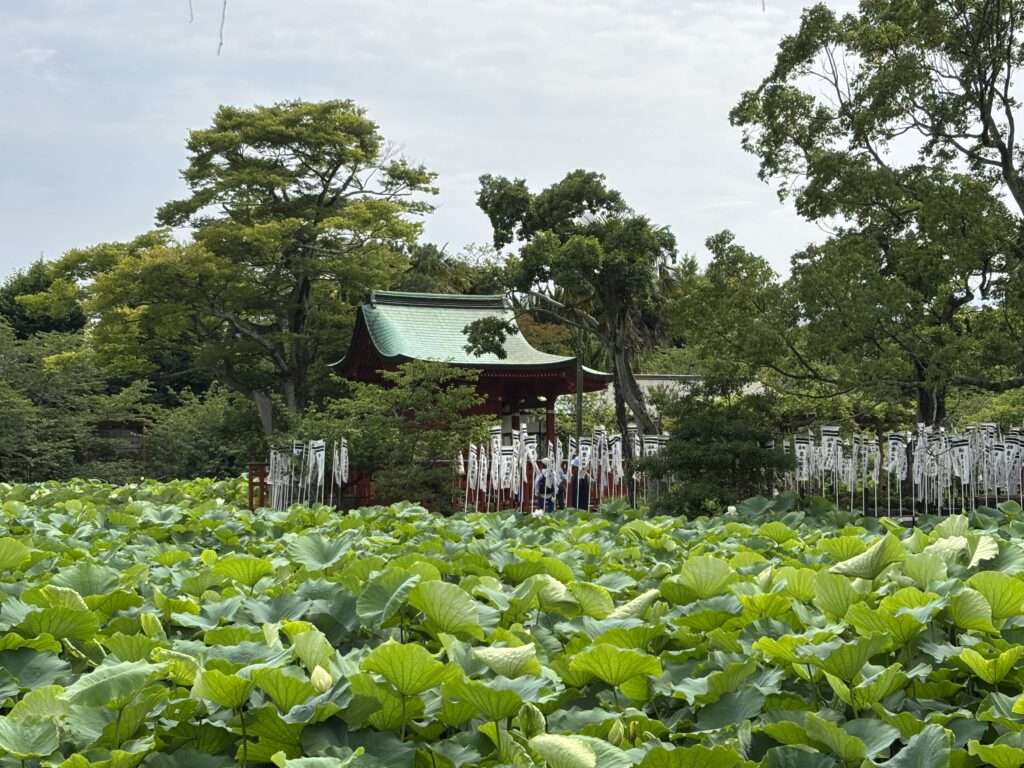
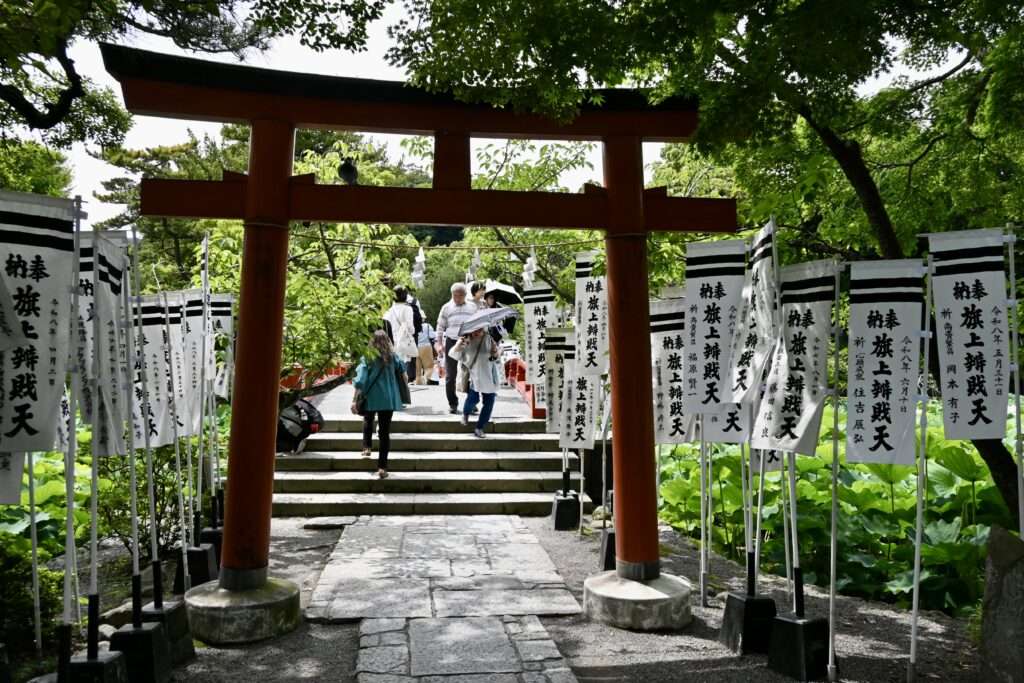
We entered along the right side and explored Genji Pond first. We were immediately struck by the huge green lotus leaves blanketing the surface of the pond and the beautiful white and pink flowers providing pops of color. There is a short red bridge that gives access to one of the pond’s four islands. This island is home to sub-shrine Hataage Benzaiten. Dedicated to Benzaiten, the goddess of music and art, the shrine is surrounded by white Genji clan flags. There is a small shop on the island where you can purchase a goshuin. (I only realized after the fact that the goshuin was for the subshrine and not Tsurugaoka Hachimangu. I must have missed the goshuin location for the main shrine.)
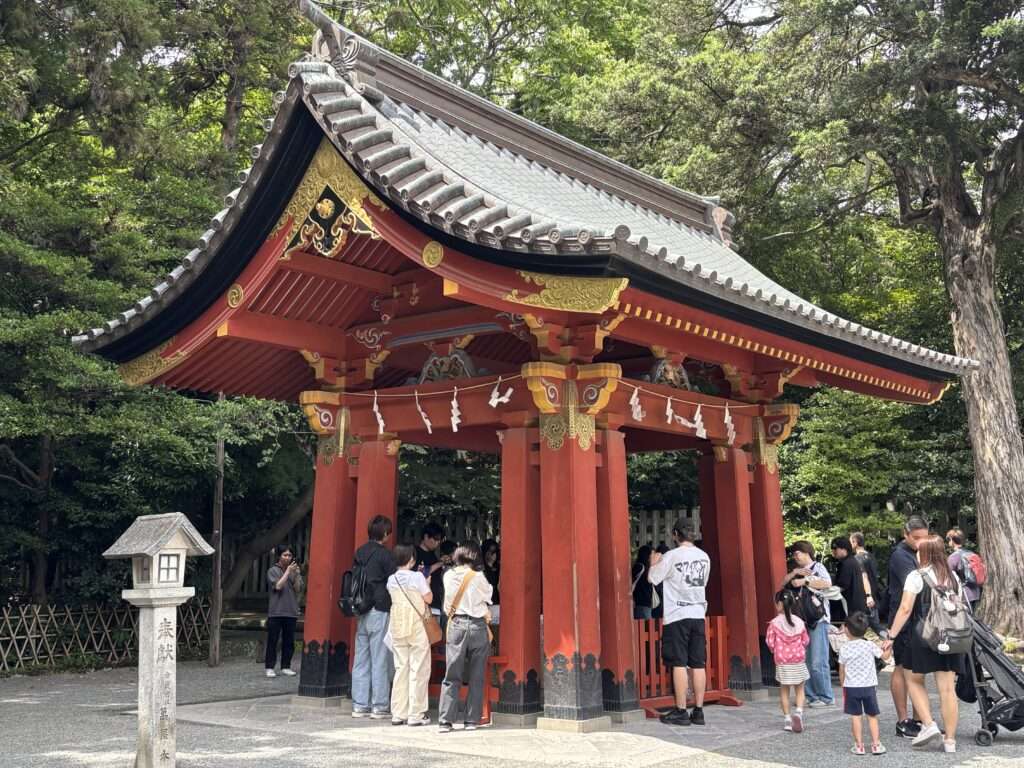
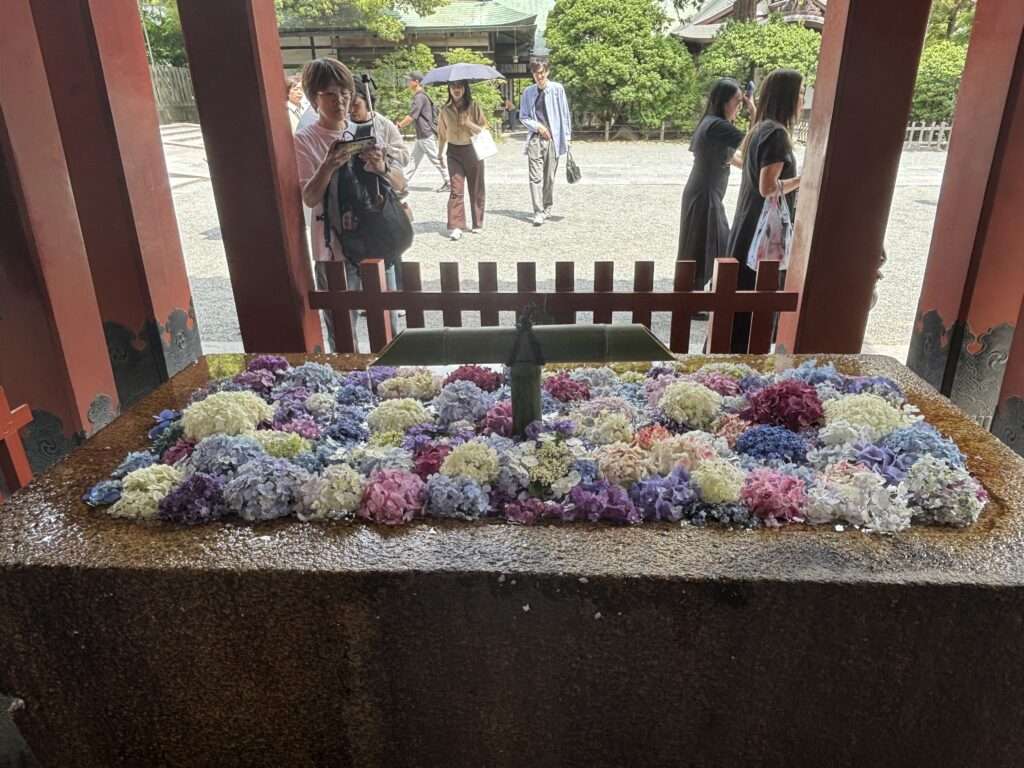
We crossed back over the water and returned to the main approach to the shrine. Just before and to the left of the music hall, we spotted a small but ornate red open air structure that housed a beautiful hydrangea fountain (hanachozu). Most of the year this fountain functions as a temizuya (purification/handwashing basin) but during the rainy season it is transformed into a hydrangea fountain. Dozens of pink, purple, blue and white hydrangea blossoms floated on the surface of the fountain.
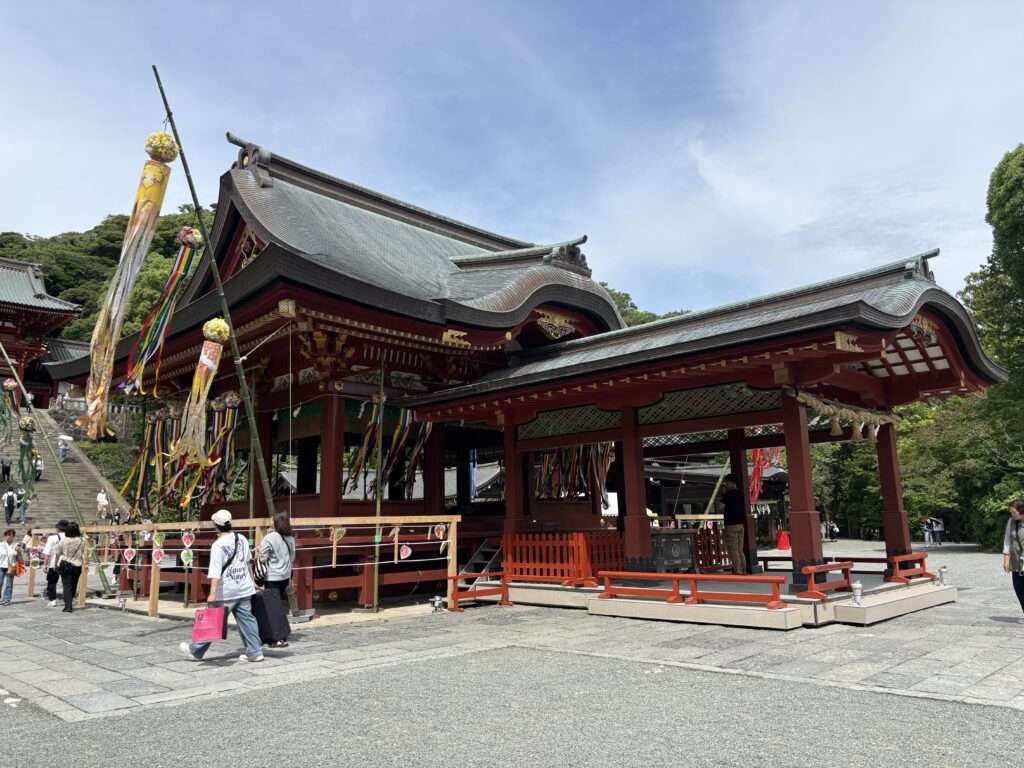
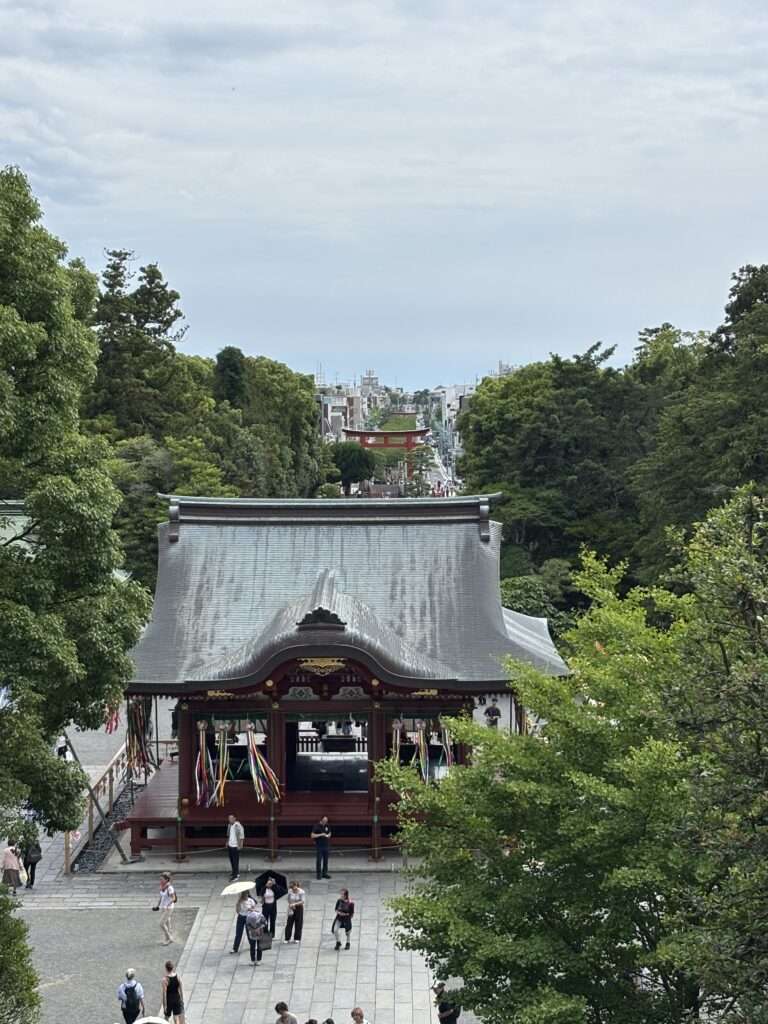
The Maiden is the large structure located at the base of the steps leading to the Main Shrine (Jogu). An open-air stage, it is used for performances of sacred dances (kagura) and music during rituals and ceremonies, as well as for festivals and weddings. Windsocks topped with balls of colorful flowers hung from bamboo sticks at each corner of the stage, blowing in the breeze.
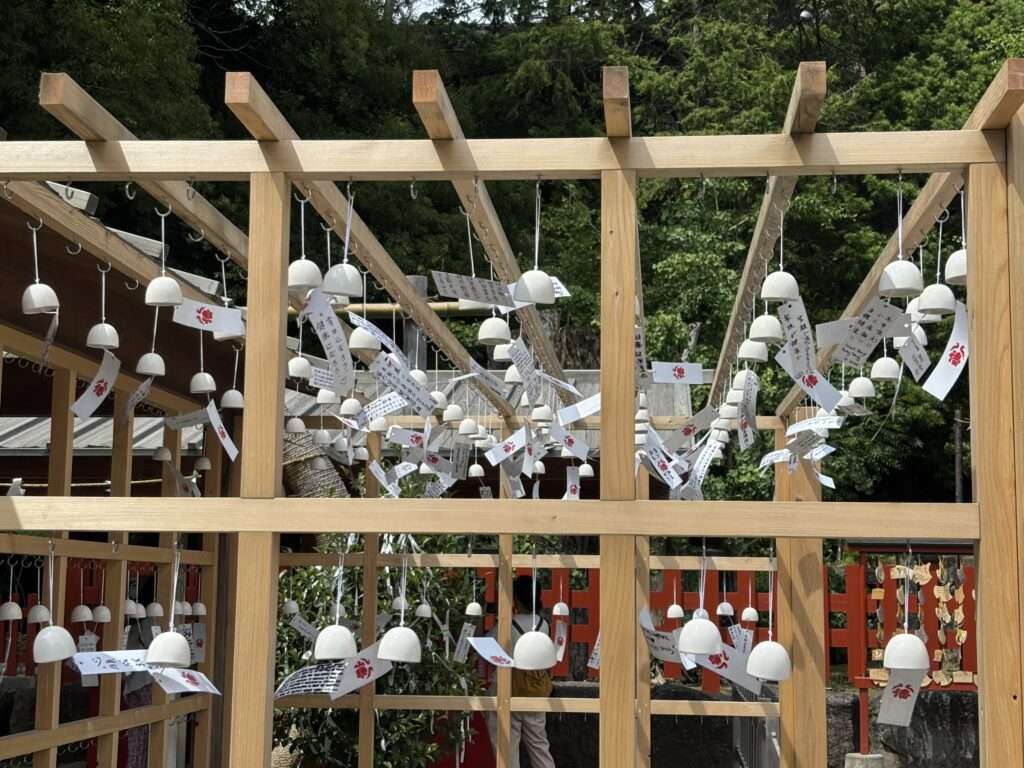
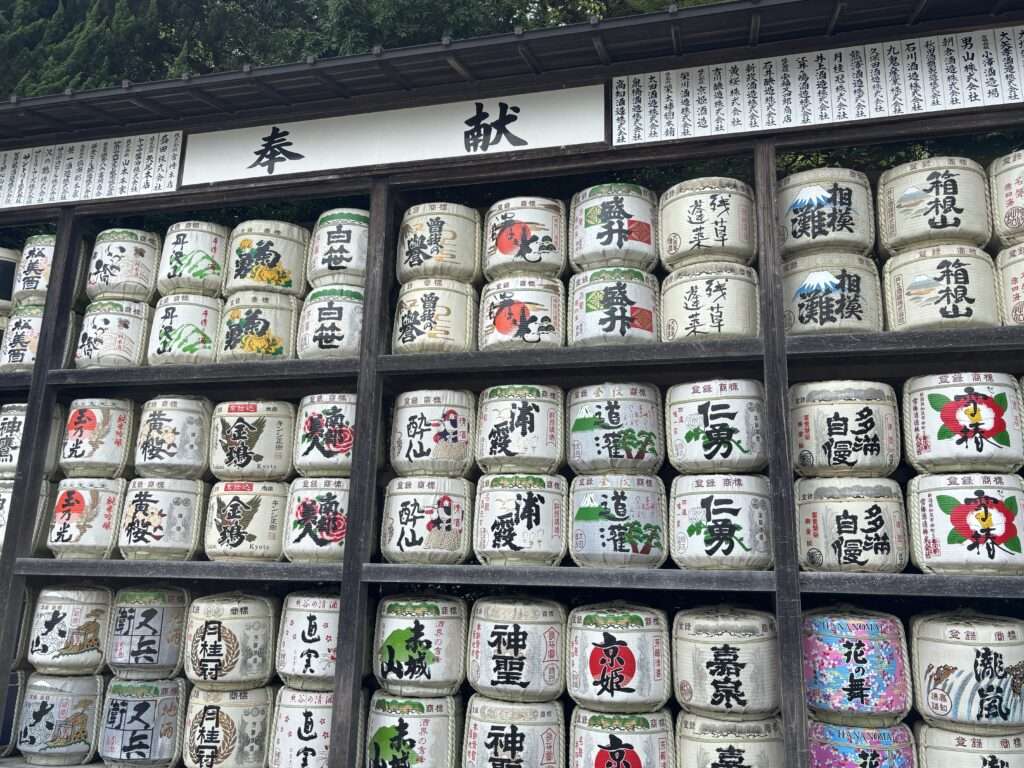
Instead of walking up the stairs to the main shrine, we decided to explore along the west side of the lower level first. During the summer, a temporary wooden structure houses hundreds of fūrin (wind chimes). For ¥1000 visitors can write a wish on tanzaku (small paper strips) and attach them to a wind chime. The visual and audible effect was stunning and I sat there for a few minutes just listening to the gentle chimes and fluttering paper. A display of sake barrels nearby added to the artistic atmosphere.
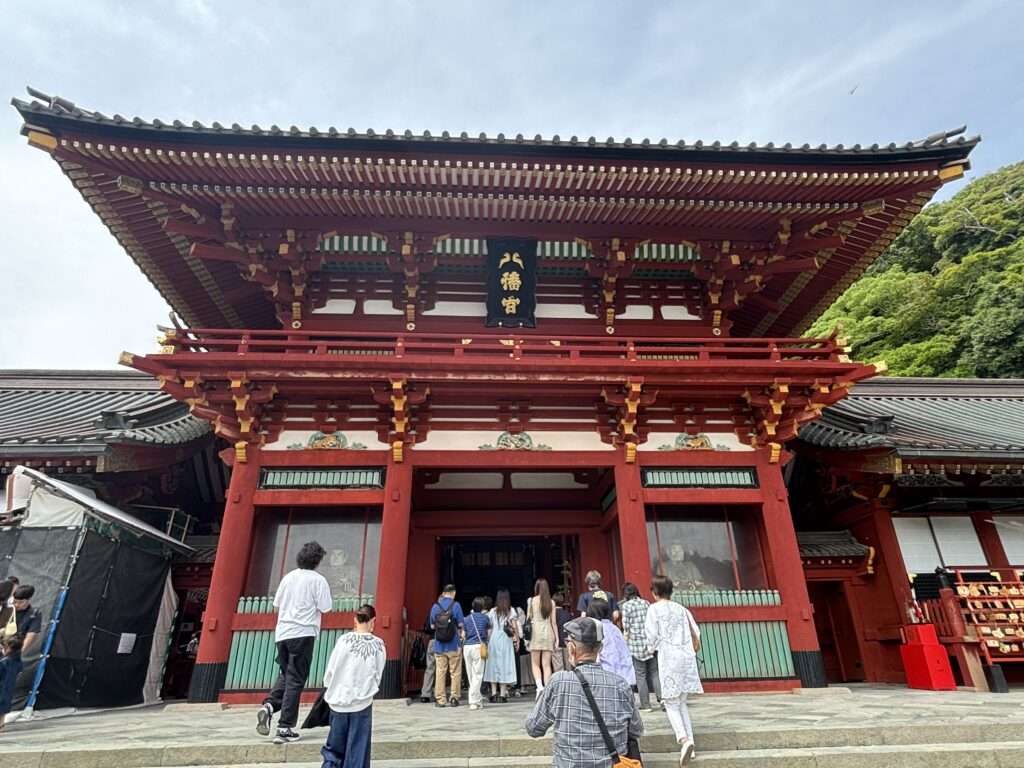
We found some wooded trails off to the side and followed them to a stairway that led up to the main shrine. The Zuishin-mon Gate leads to the Main Hall (Honden). Zuishin (warrior guards) statues are on either side of the gate. The black and gold sign hanging over the gate says Hachimangu. The Japanese character at the top of the sign (八) is written in a style to look like two doves, the divine messenger of Hachiman.
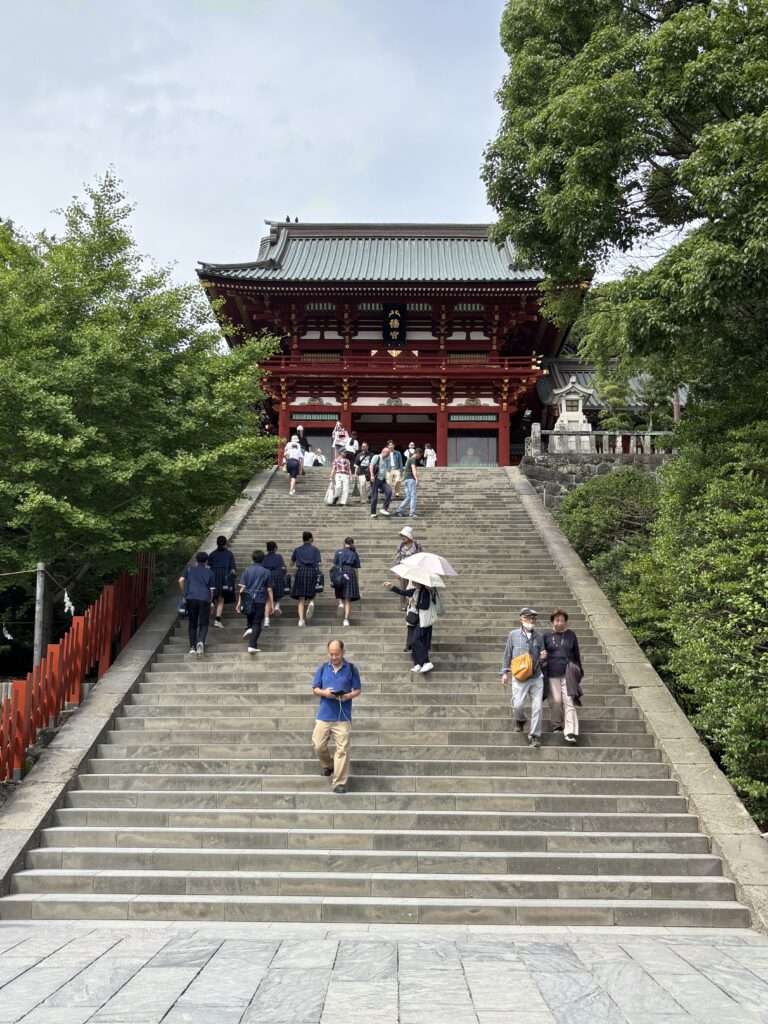
The view from the top of the 61 stone steps in impressive. Looking down over the roof of the Maiden, you see one vermillion Torii gate, followed by a stretch of green (the tops of the trees lining the Dankazura) and then another Torii gate. The design of the grand approach to the shrine is even more impressive from the end of the route than it is from the beginning. The top of the steps offered a really unique and beautiful vantage point.
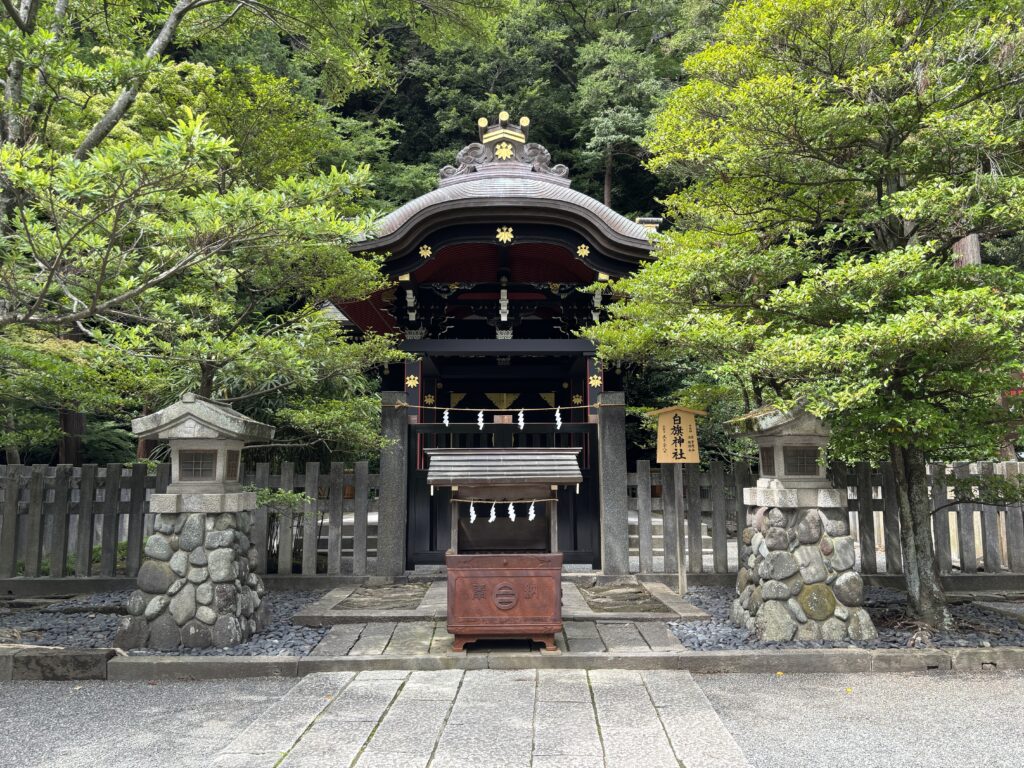
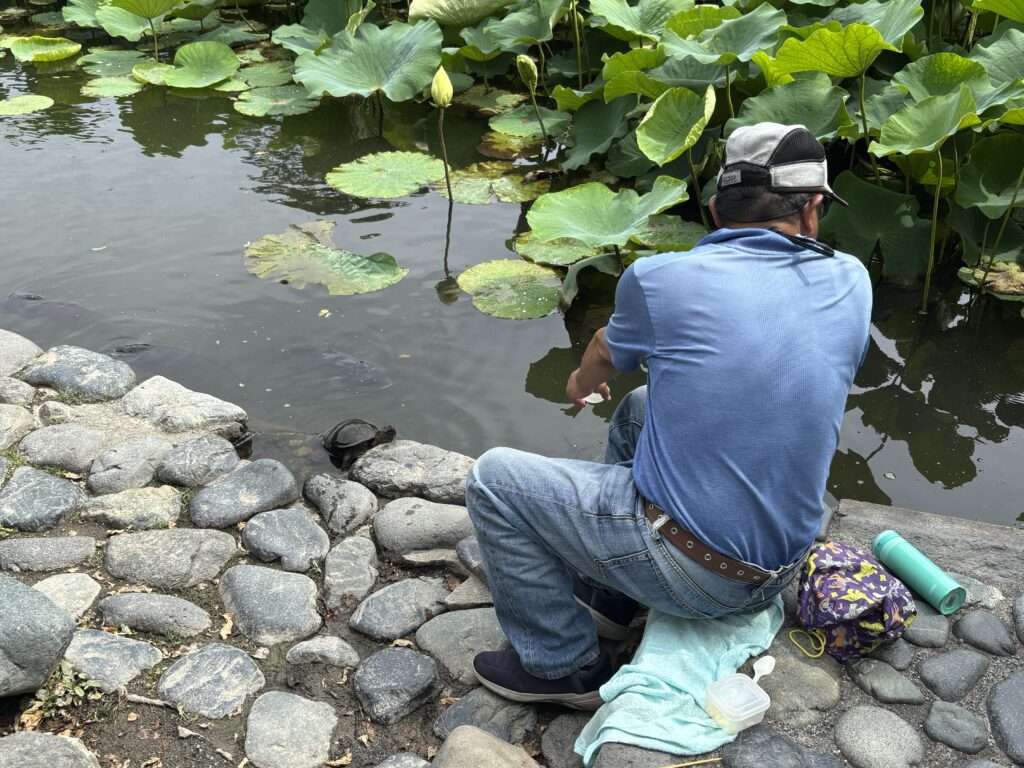
We went down the main staircase and turned off the main promenade to explore the east side of the grounds. We found another sub-shrine, Shirahata Shrine, which was unique in that it is painted all in black. We made our way back to the far side of the Genji Pond, where the boys were captivated by the turtles that climbed up the stone embankment to be spoon fed by a man sitting along the edge. We sat for a while and just enjoyed the peaceful surroundings before heading out.
We spent well over an hour at Tsurugaoka Hachimangu Shrine. We found the grounds fascinating to wander and really appreciated the natural beauty of the ponds and surrounding woods. There were hidden treasures all around. From sub-shrines to gorgeous flowers to whimsical windsocks and wind chimes, there was so much to discover at Tsurugaoka Hachimangu.
