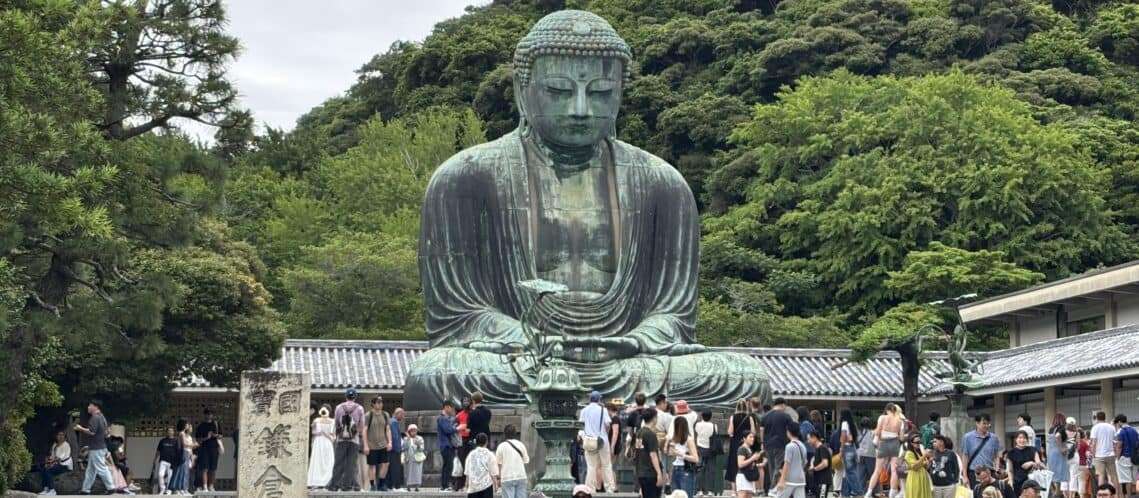
As far as Japanese temples and shrines go, Kotoku-in is definitely on the small side. There are no large halls, tall pagodas or expansive gardens to explore. You can walk from one end of the temple to the other in less than 5 minutes. But what the grounds lack in size is more than made of by its enormous feature attraction, The Great Buddha of Kamakura (Kamakura Daibutsu).
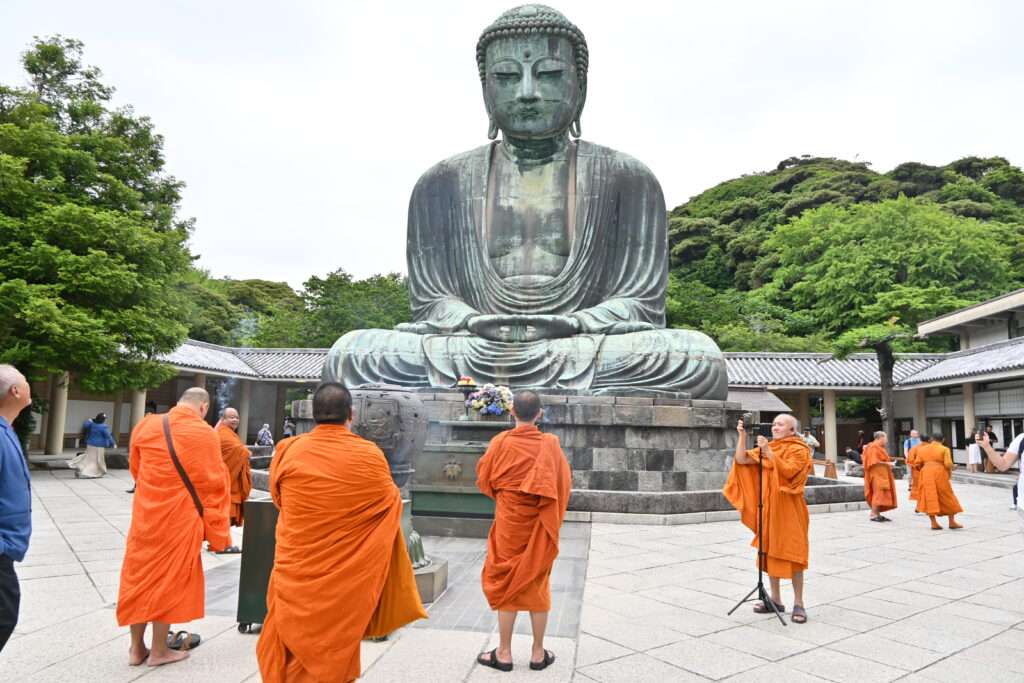
The Great Buddha is a 121 ton, 13.35 meter tall bronze statue that sits outdoors on the temple grounds of Kotoku-in. The backdrop of trees makes its size and exposure even more striking when it first comes in to sight. Built in 1252, The Great Buddha was originally housed inside a temple hall. After a series of natural disasters repeatedly destroyed the hall during the 14th and 15th centuries, the statue was left out in the open and it remains exposed to the elements today.
The bronze statue is a likeness of Amida Buddha (Amitabha), the buddha of Infinite Light and Life. Kotoku-in belongs to the Jodo Buddhist Sect, which advocates for the liberation of all beings. According to their beliefs, if one chants “Namu Amida Butsu” (I take refuge in Amida Buddha) they will be protected by Amida Buddha and reborn in the Pure Land.
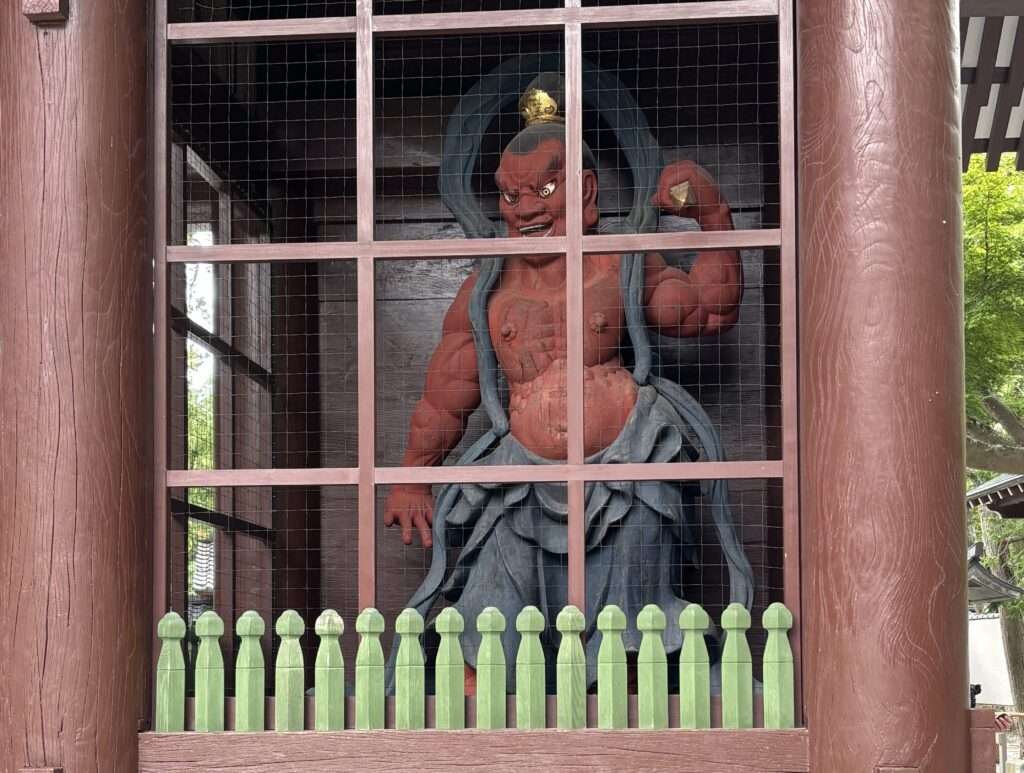
We opted to walk from Tsurugaoka Hachimangu Shrine to Kotoku-in and made it there in about 35 minutes. The gate to the temple grounds, Nio-mon Gate, is a relatively unassuming structure flanked by two Nio guardian statues. Like the Komainu lion-dog statues guarding Tsurugaoka Hachimangu Shrine, the Neo statues are an “A-un” pair. One featured an open mouth making the “a” sound (representing birth/the beginning) and the other featured a closed mouth making the “un” sound (representing death/the end).
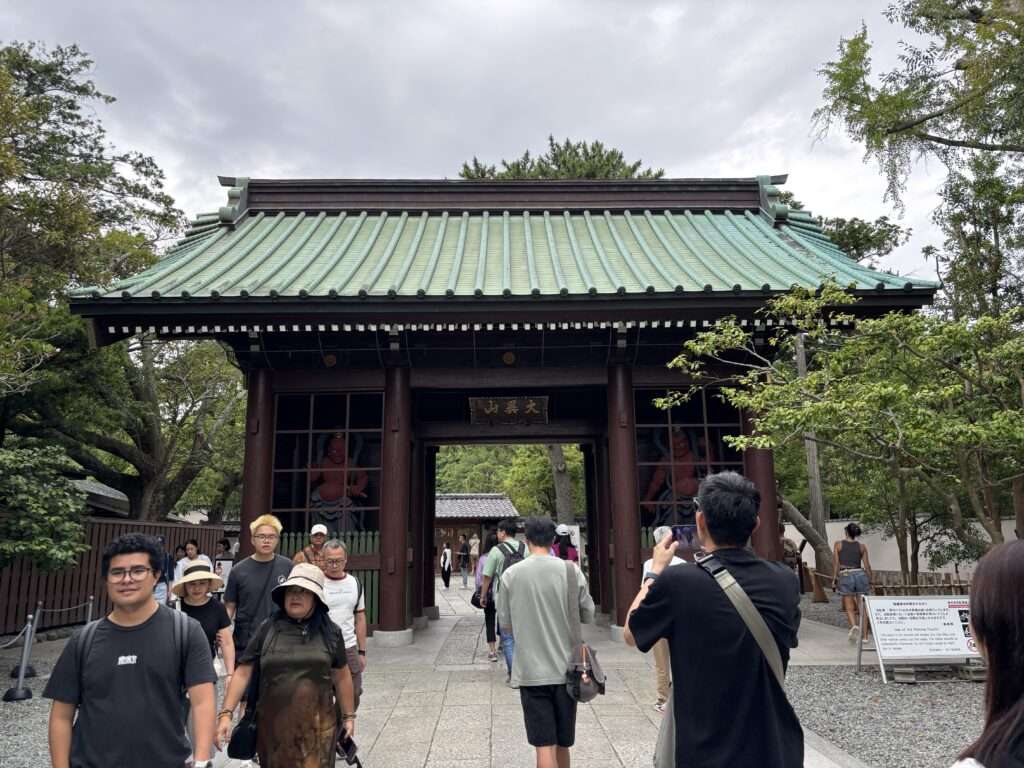
Beyond the gate was the ticket office. This was the first temple or shrine that we went to that charged an admissions fee. They charged ¥300 for adults and ¥150 for children aged 6-12. I had no problem paying the small fee but it did seem ironic that the temples and shrines that we spent an hour or more enjoying were free while the one that could be thoroughly explored in less than 15 minutes charged a fee.
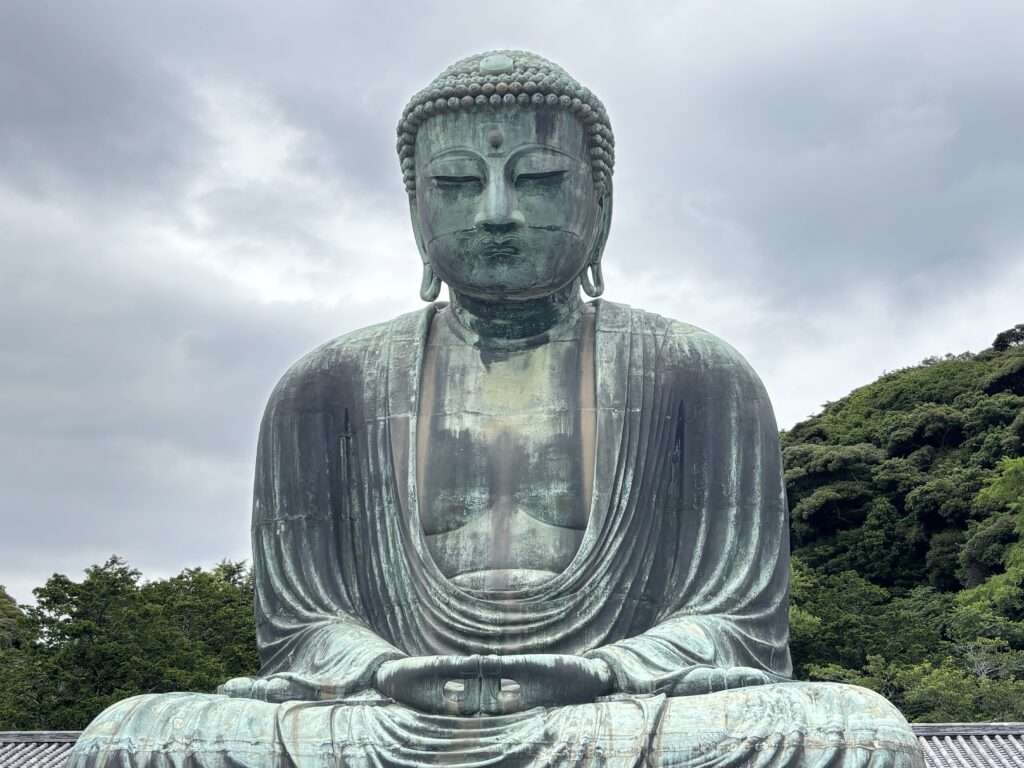
The Great Buddha was immediately visible past the ticket office gate. The buddha is seated with his legs crossed in the lotus position and his hands resting in his lap in Mida no join mudra, a meditative hand gesture. His eyes gaze downwards, half closed. His head is covered with 656 hair coils (rahotsu), symbolizing wisdom and enlightenment. A large circular bump (Nikkeishū) lies on the top of his head amongst the curls, signifying wisdom. His forehead features a byakugo, a symbolic third eye representing his all-seeing nature. Finally, his elongated ears symbolize that the Buddha is all-hearing.
Buddhist monks travel from all over the world to visit The Great Buddha and we were lucky enough to see a group of monks performing a ceremony in front of the statue (and posing for pictures!).
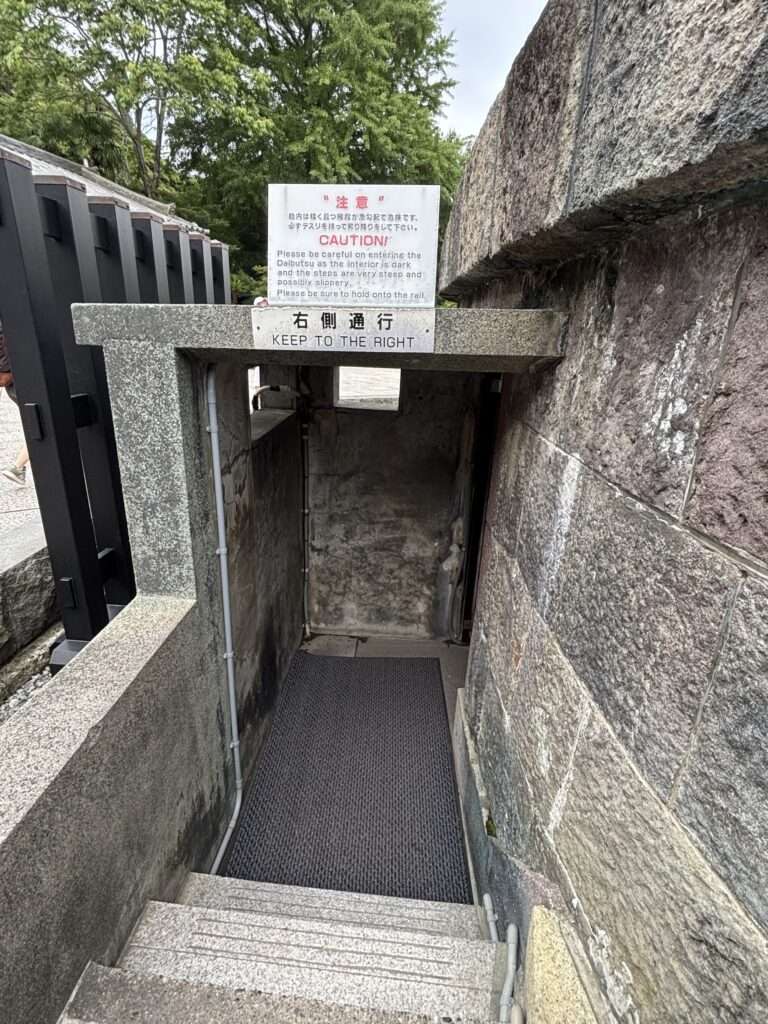
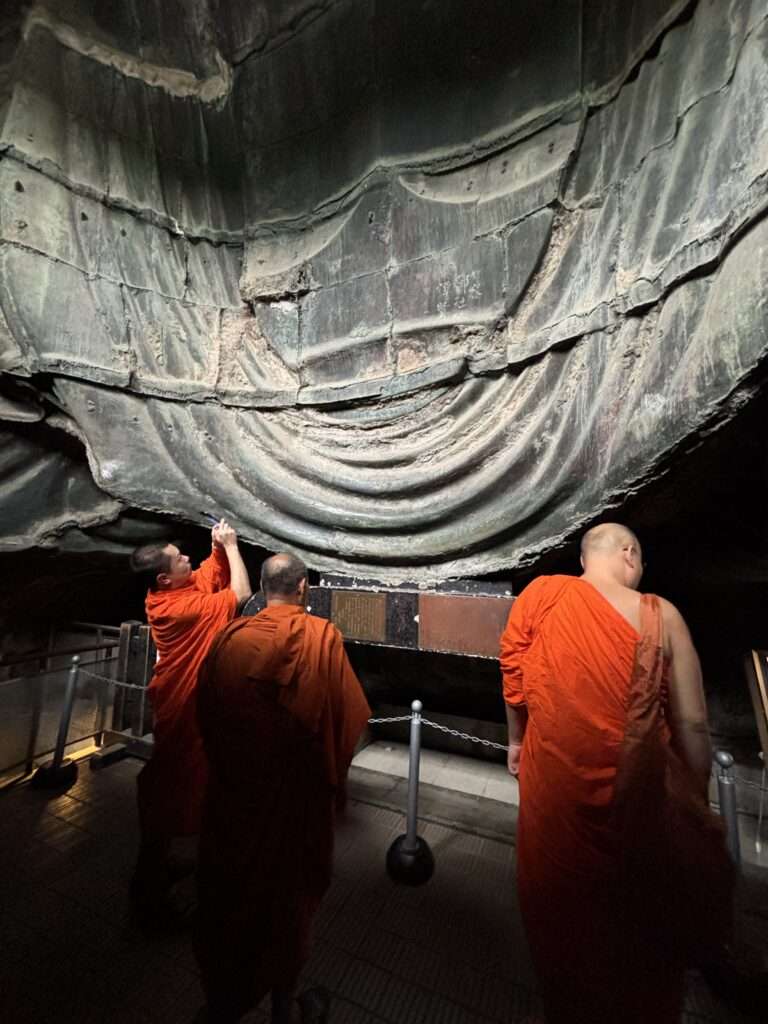
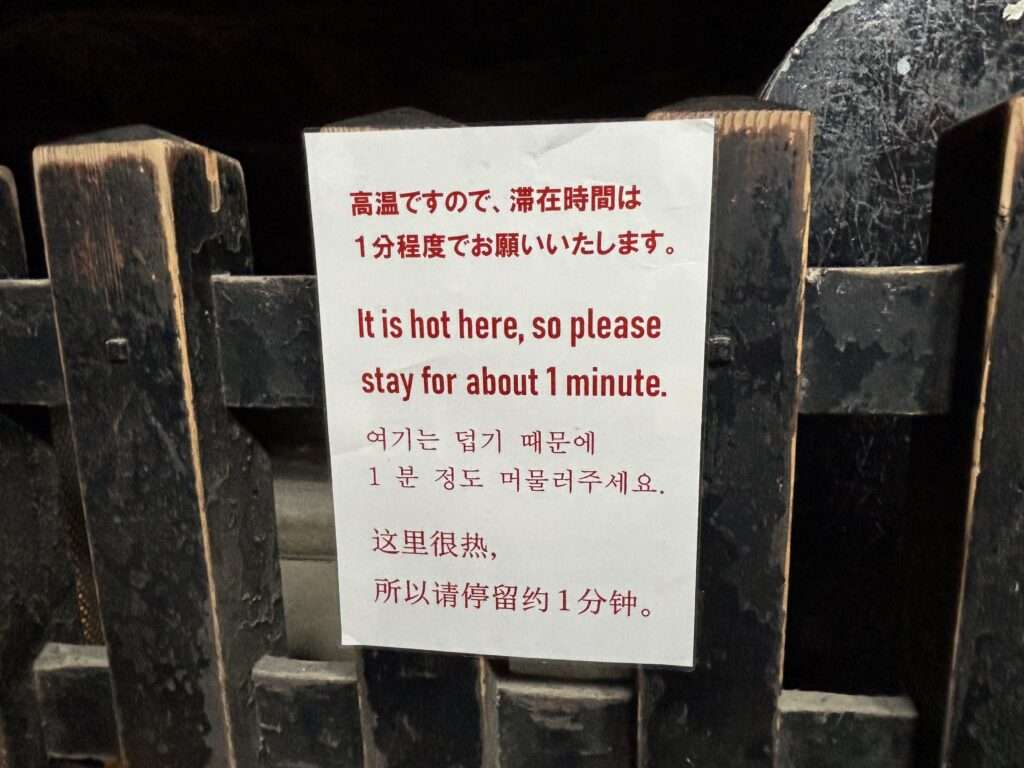
The statue is hollow and for an extra ¥50 you can go inside of it. The boys and I opted to do this. There wasn’t much to see in there, although there was an interesting plaque describing the different techniques used to build the statue. The area was small and hot so we didn’t stay more than a minute or two but it was neat to be able to say we had been inside The Great Buddha.
Aside from the statue and the Nio-mon Gate, there are very few other structures on the grounds. A low connected building surrounds the statue on three sides. It is primarily a commercial structure though, housing administrative offices, the temple shop, and the commemorative seal service. (I was only able to get a preprinted goshuin because they stop handwriting them at 3:00.)
We spent less than a half an hour here but it is definitely a worthwhile stop. Seeing the second largest Buddha statue in Japan is an opportunity not to be missed. You really can’t get a sense of its massive size until you stand beneath it. The features of the statue are really interesting. And I loved the backdrop of the trees and imagine it is stunning in both spring when the flowers bloom and fall when the leaves change color.
