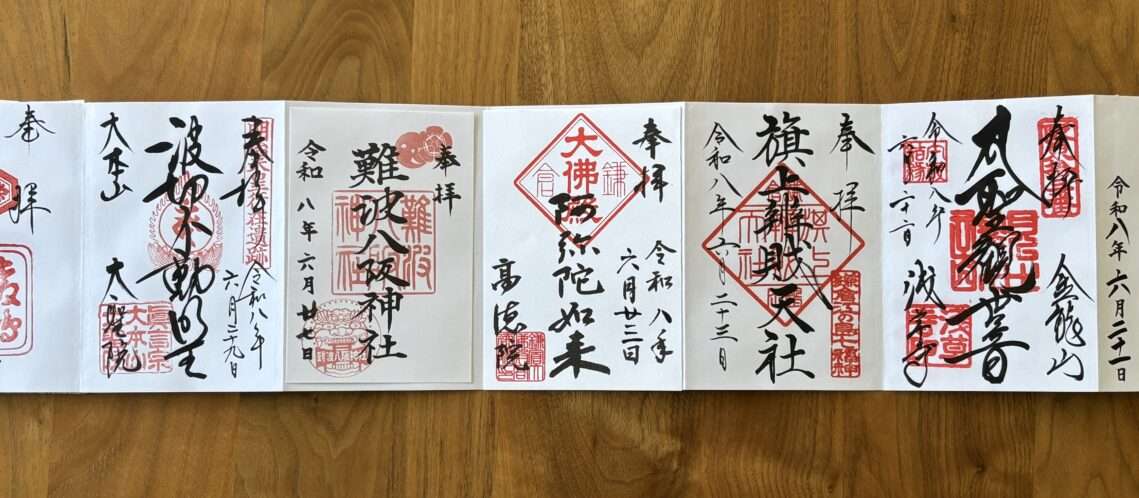
A popular activity in Japan is collecting Goshuin, unique stamps available at Shinto Shrines and Buddhist Temples. Translated as “honorable red seal”, Goshuin consist of a large red stamp containing the name of the temple or shrine, other smaller red stamps symbolizing the temple or shrine’s deity, and handwritten calligraphy including the name of the temple or shrine and the date of your visit.
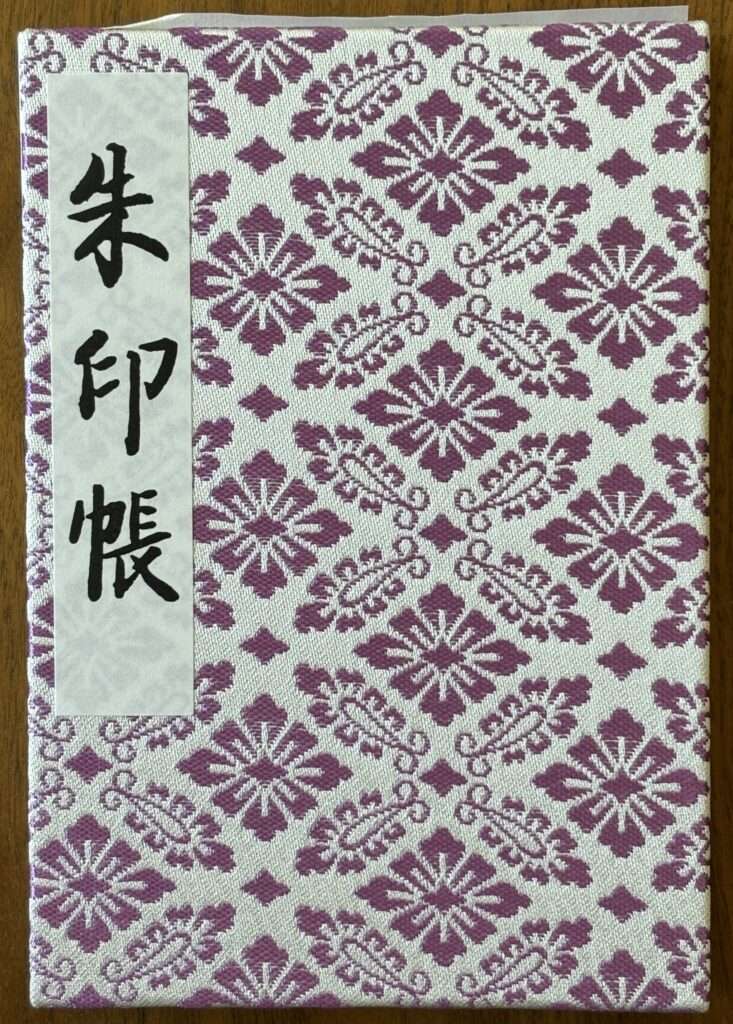
Goshuin must be collected in special books known as a Goshuincho. Some people use two different Goshuincho – one for temples and one for shrines. While it is true that some shrines or temples will refuse to stamp your book if it contains a mixture of Goshuin from shrines and temples, that is pretty rare. I had no issues collecting both in the same book but if you prefer not to risk it you can have two different books.
I purchased my Goshuincho at the first shrine we visited, Meiji Jingu. I simply went to the stamping station and purchased the book and stamp together. You can also purchase one ahead of time at a bookstore. The spine of the book is on the right and it has accordion style pages so that you can open it up and see all of your Goshuin at once.
The process of collecting Goshuin is simple. Just find the stamping location in the shrine or temple, wait on line (hopefully not too long!), and then hand your Goshuincho to the monk/priest/calligrapher open to a blank page. They will complete the stamp and calligraphy and then you pay the fee in cash (usually ¥300 to ¥500).
After reading about it before our trip, I was really interested in collecting Goshiun, but I was a little worried that it would be too time consuming. I didn’t want to make my family wait for me while I was in line. But this really turned out to be a nonissue. Most of the lines were short and moved quickly. Two of the temples we went to (Senso-ji in Tokyo and Daisho-in in Miyajima) used a number system where you gave them your book, got a number, and could come back to retrieve your book later. In both cases though, it took less than 10 minutes so I just ended up waiting.
I received 2 Goshuin that were pre-stamped on separate sheets of paper instead of handwritten into my book. At the Great Buddha (Kotoku-in) in Kamakura, they switched over to loose sheet stamps after a certain time, and at Namba Yasaka Shrine in Osaka they weren’t offering handwritten Goshuin because they were too busy. These sheets can be glued into your book later so be sure to leave blank pages for them.
I really enjoyed getting to watch the stamping process. Some were a little more commercialized than others but it was always a treat to watch the calligraphers at work. It truly felt like I was getting a unique piece of art at every shrine and temple. I highly recommend collecting Goshuin as a beautiful, customized souvenir of your time in Japan.
