Tokyo is an amazingly large city and there are several observation decks that allow you to see just how vast it is. Shibuya Sky and Tokyo Skytree are two of the most popular. Both charge a fee ($17 for Shibuya Sky and $13 for Tokyo Skytree), and many people recommend the Tokyo Metropolitan Government Building as a free alternative.
I left the Metropolitan Building loosely in our schedule on our Shinjuku day but wasn’t sure if the timing would work out. In order to be sure that we would didn’t miss the opportunity to see the city from above, we decided we wanted to do a ticketed viewing. I read a million reviews and debated endlessly between Shibuya Sky and Tokyo Skytree.
Shibuya Sky is in Shibuya (obviously) and Tokyo Skytree is in Sumida, and either location would have fit into our schedule nicely. Tokyo Skytree is a good bit higher, with observation decks at 250m and 350m compared to Shibuya Sky’s 229m. Both offer expansive views of the city. Shibuya Sky has the advantage of a direct view of the famous Shibuya Crossing, and Tokyo Skytree offers a better chance of seeing Mount Fuji on clear days. The biggest difference is that Shibuya Sky is open air and Tokyo Skytree is completely indoors.
After much back and forth, we decided to book Shibuya Sky and I am so glad that we did! This was an incredible experience for us. The views were stunning and the observation deck was such a unique place to relax and take in the city.
We booked our tickets ahead of time through Klook because the Shibuya Sky website does not accept foreign credit cards. Tickets are released 14 days in advance at midnight JST. Tickets are for a specific entry time but you can spend as much time up there as you’d like. Many people try to get tickets close to sunset so those tickets go quickly and cost more (¥2700 before 3:00 and ¥3400 after 3:00). Since we were visiting on our first full day in Tokyo and we had several other activities planned beforehand, I didn’t want to commit to staying until sunset. We got 2:40 tickets and the timing worked out well for us to visit after Meiji Shrine and Harajuku.
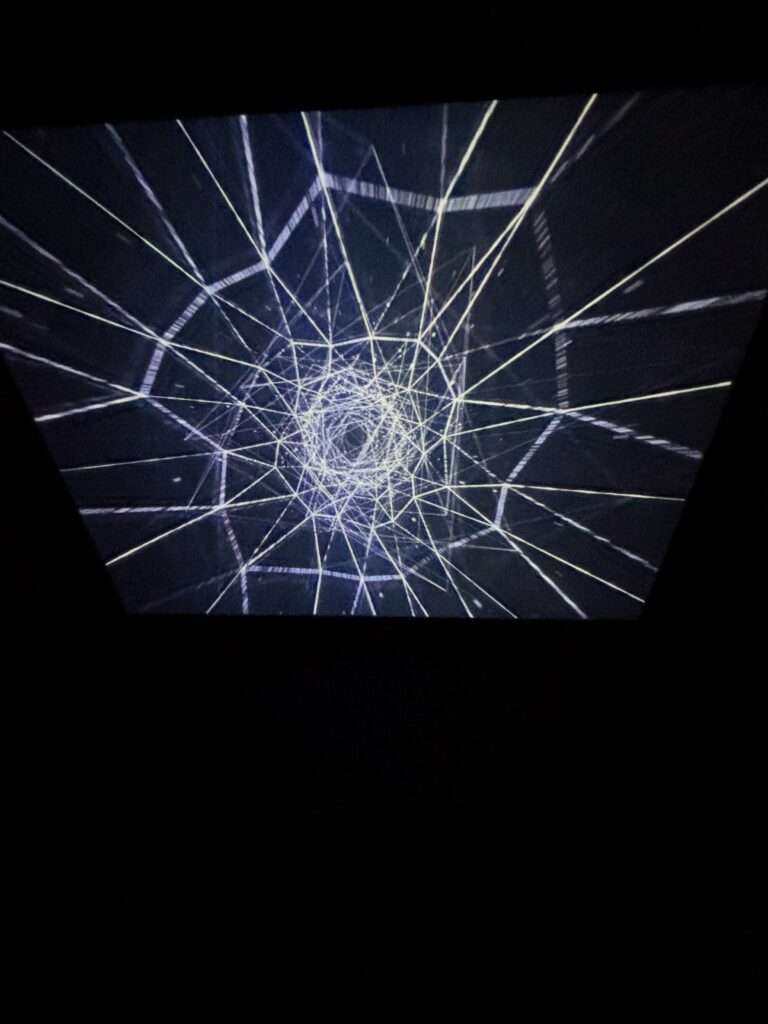
We showed our tickets to get onto the dedicated express elevators on the outside of the Shibuya Scramble Square building. This elevator took us to the Sky Gate on the 14th floor. Our tickets were scanned here before boarding the next elevator to the 45th floor. This elevator ride was definitely part of the experience. Referred to as “Transition Pods”, the elevators provided a high-speed ride to the 45th floor, complete with a light show was projected on the ceiling. The kaleidoscope lights and synchronized sounds created an immersive experience, giving you the sense that you were being teleported to another world.
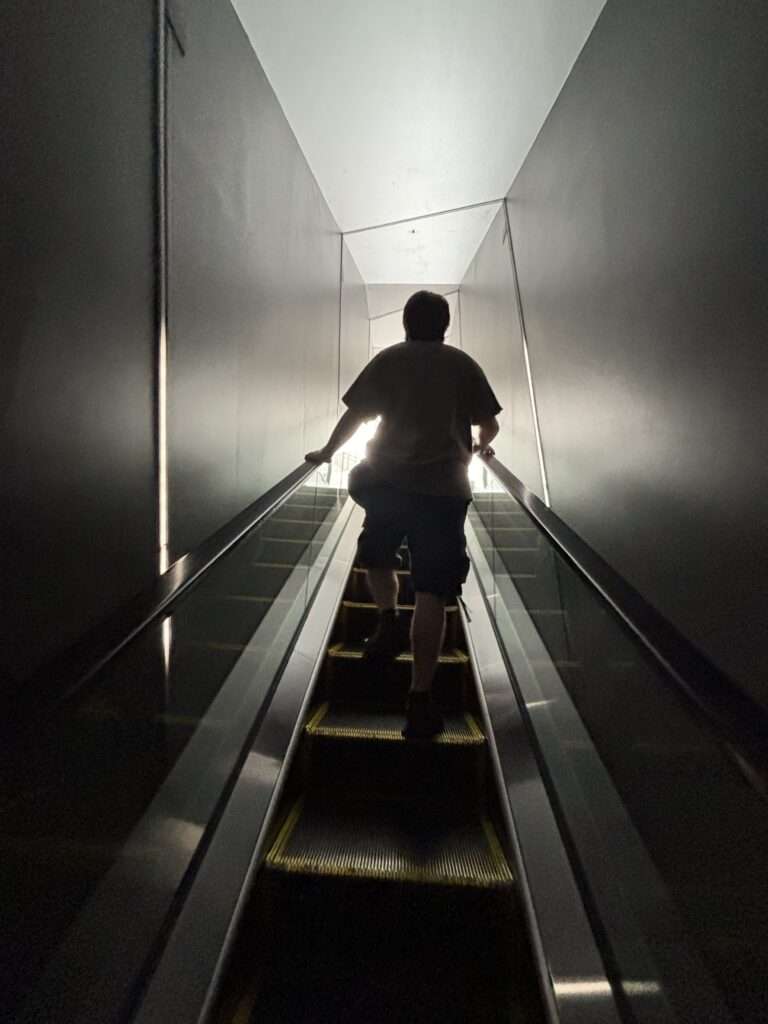
Exiting the elevator on the 45th floor, we then took a short escalator up to the next floor. Like the elevator, the escalator was completely encased in black, making for a dramatic exit onto the light-filled 46th floor.
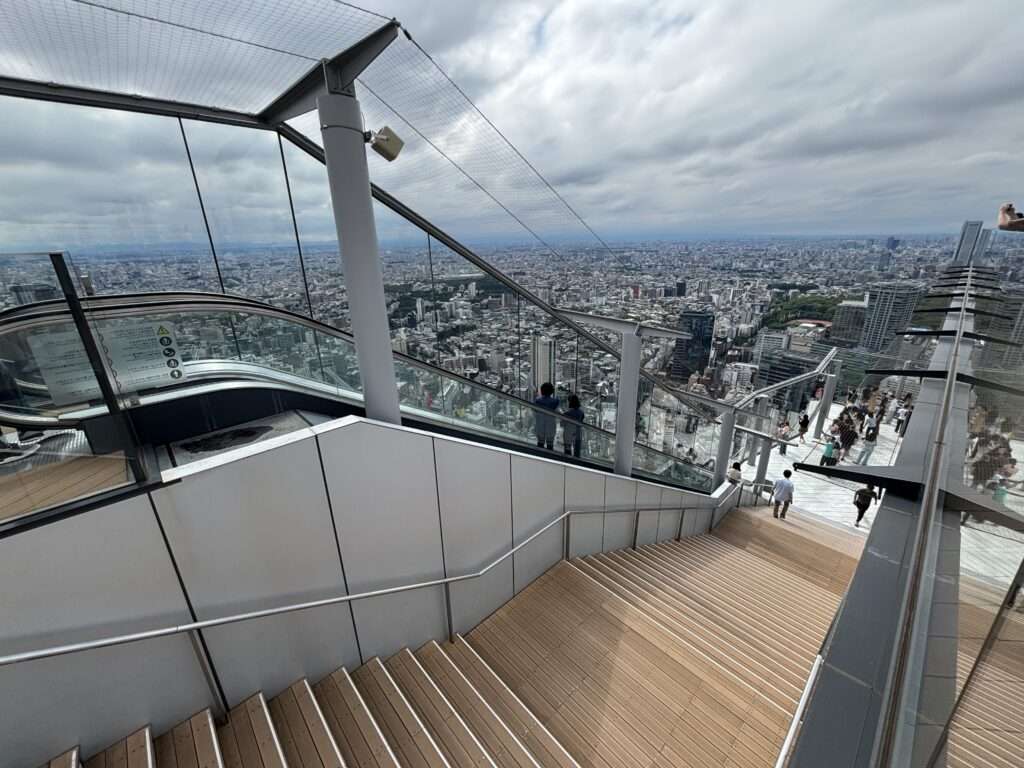
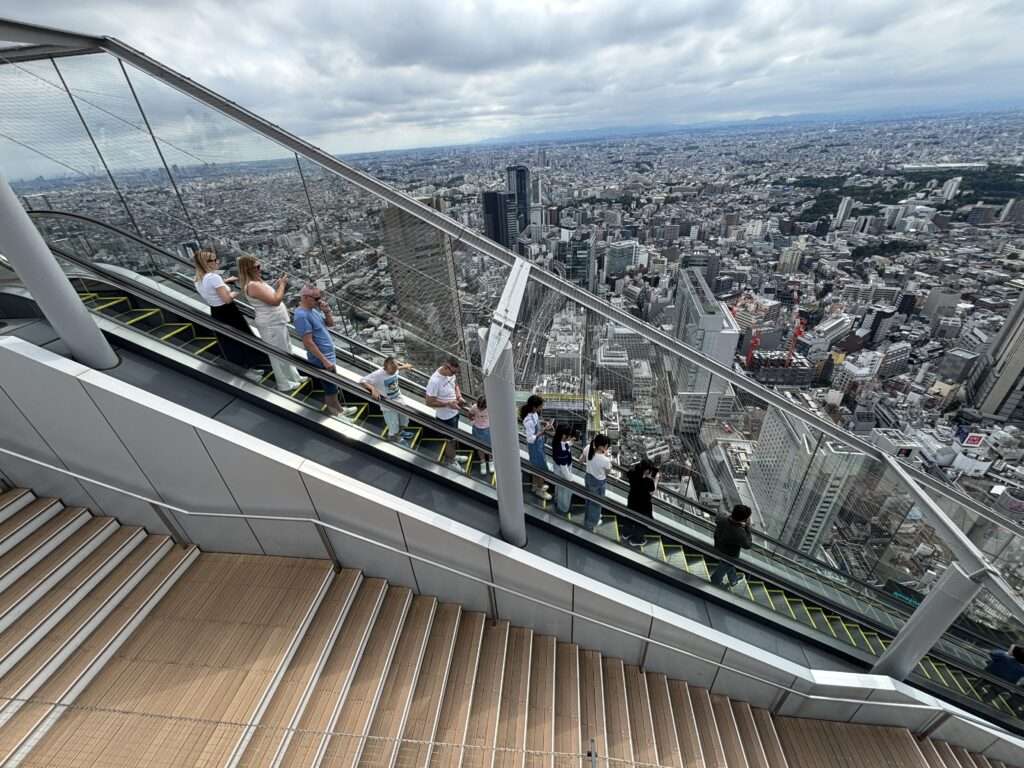
Before going outside we had to put our loose belongings (bags, hats, etc) in the free lockers. From there we walked outside to the 46th floor viewing area. The outdoor space on the 46th floor is one corner of the building and is essentially used as a transition area to the top level observation deck, known as the Sky Stage. To the right, a glass walled escalator takes you up to the 47th floor. (The escalator that brings you down is on the opposite side.)
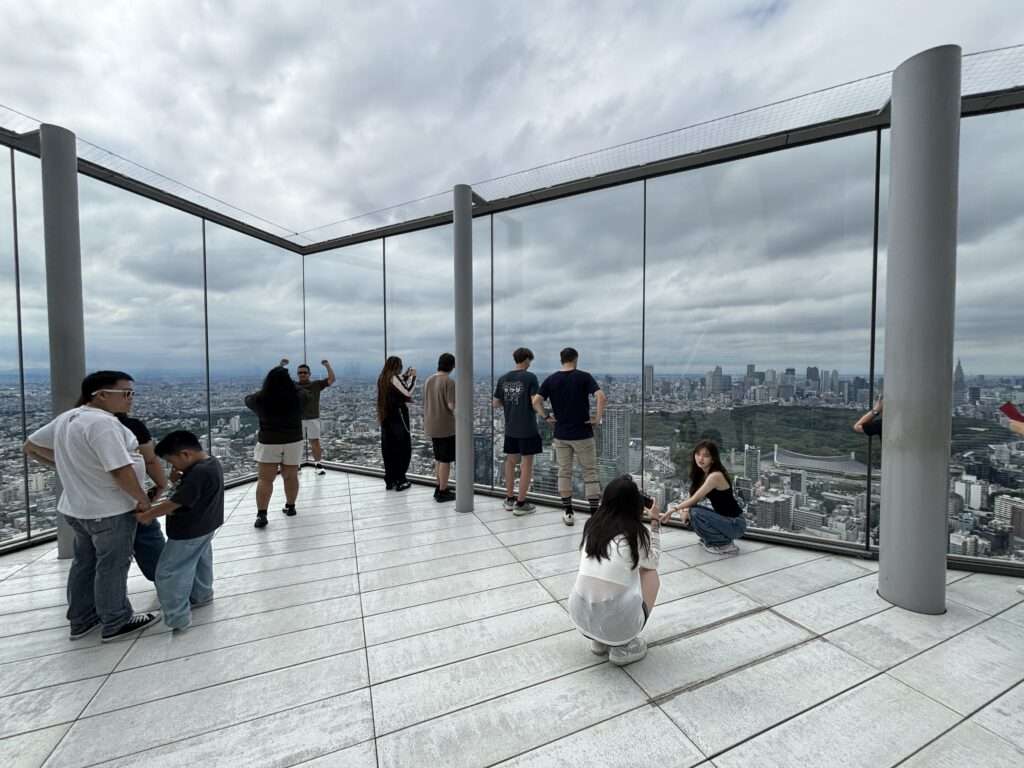
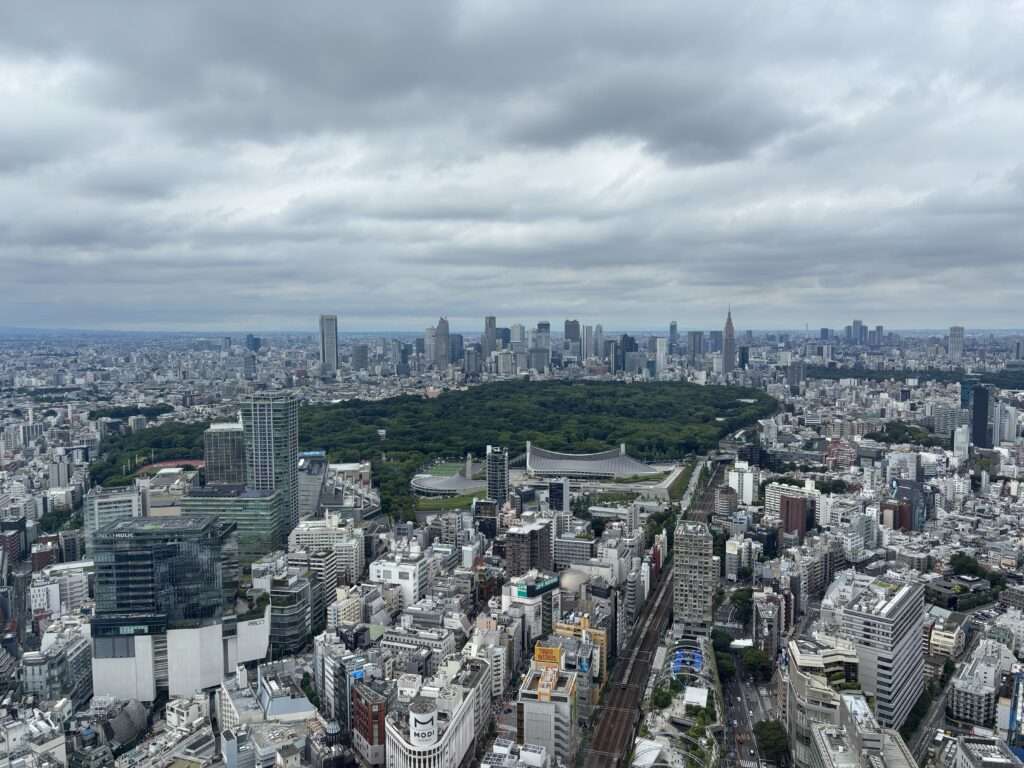
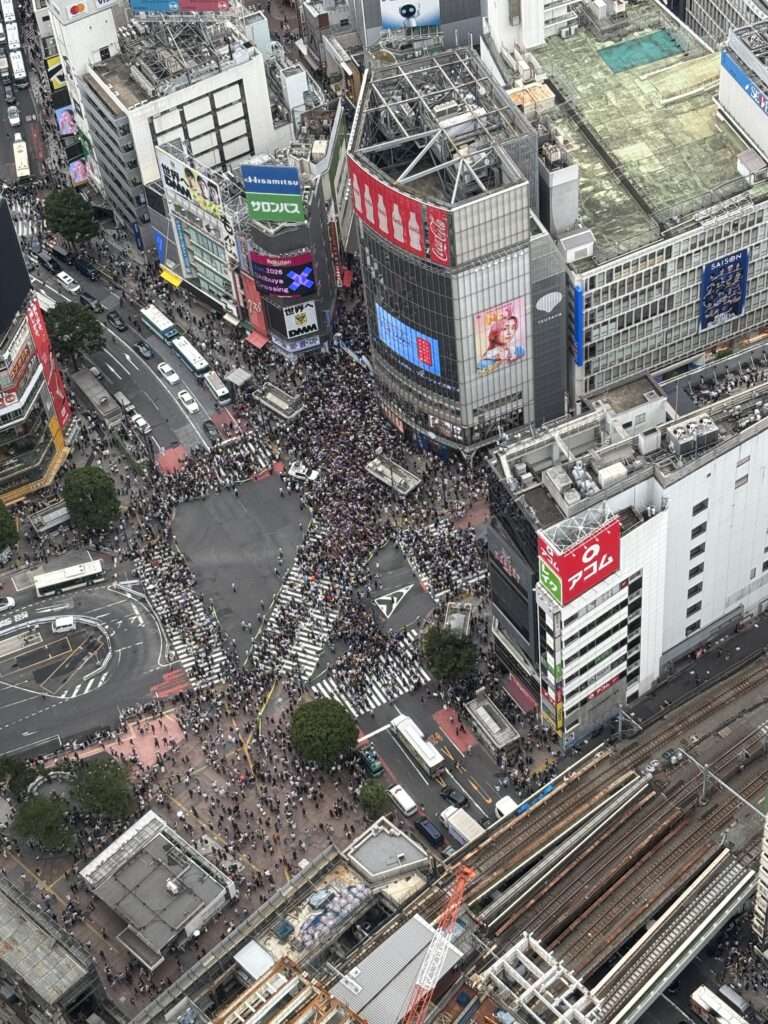
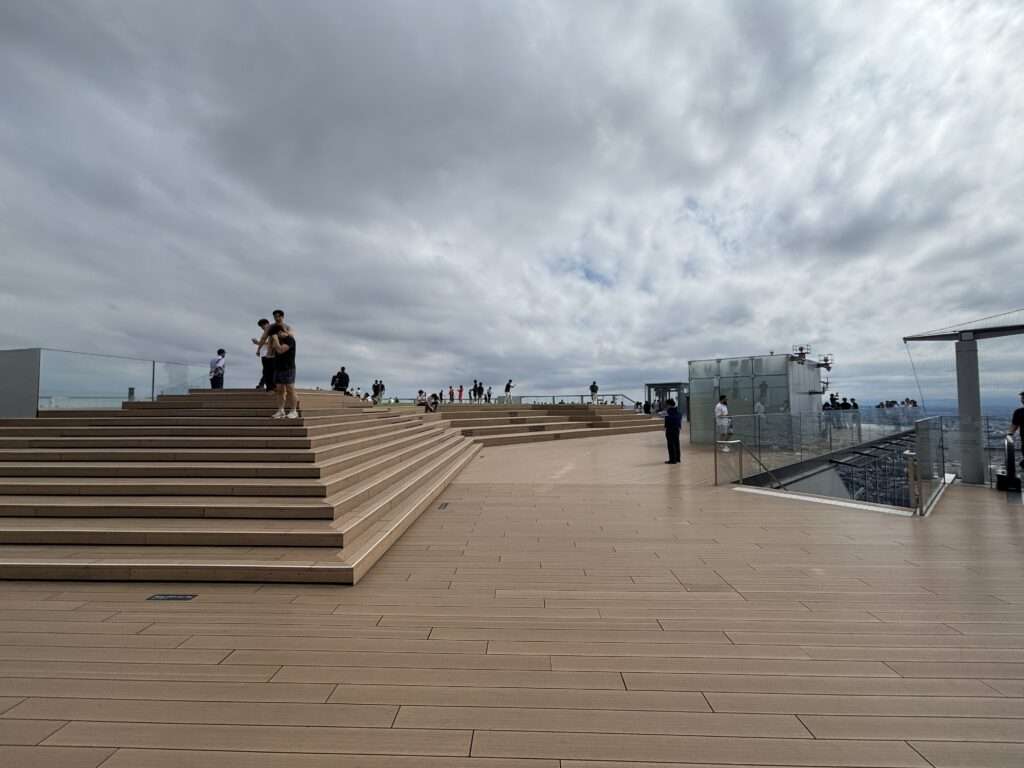
We spent a few minutes on the lower level before taking the escalator up to the top. The rooftop deck offers 360 degree views of Tokyo and it was breathtaking. The city extended as far as the eye could see in every direction. The buildings seemed to go on forever, and although the cloud cover kept us from seeing Mount Fuji, we could still make out the outline of mountains in the distance. And of course, you are directly above Shibuya Crossing and get an amazing view of the Shibuya Scramble.
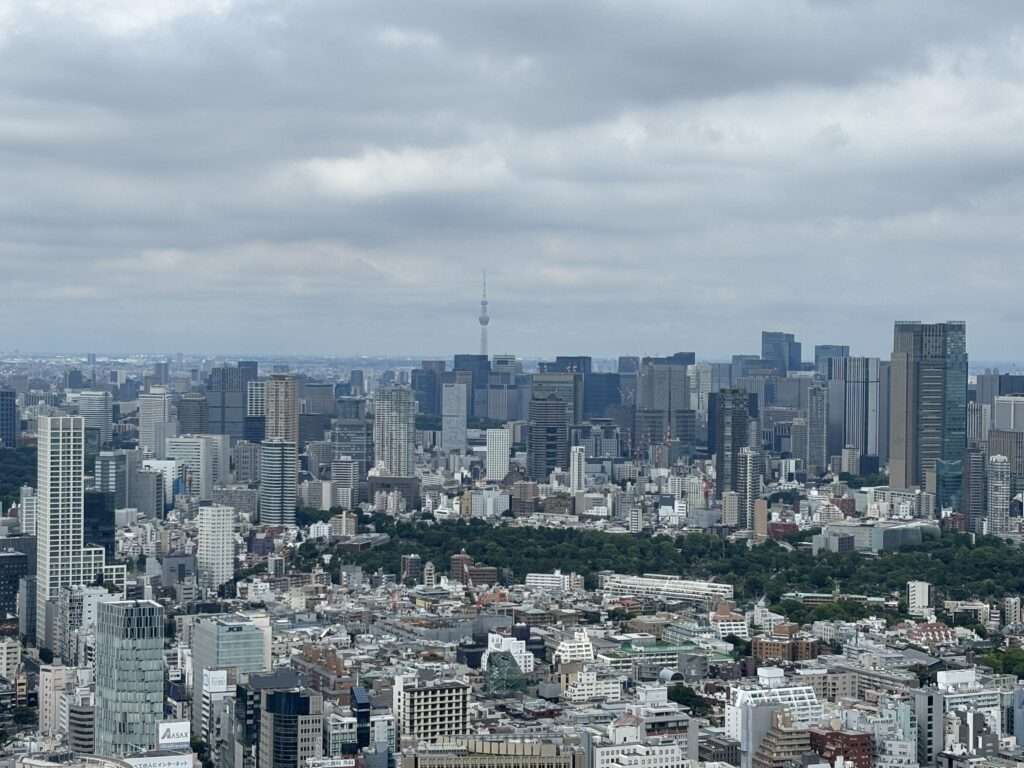
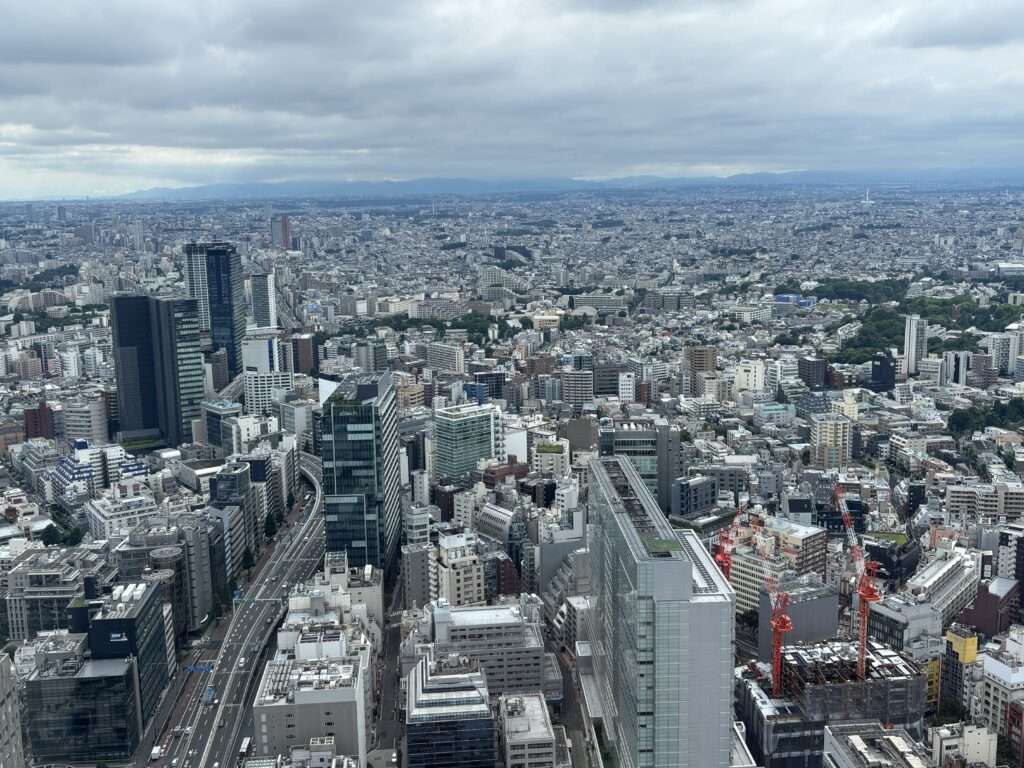
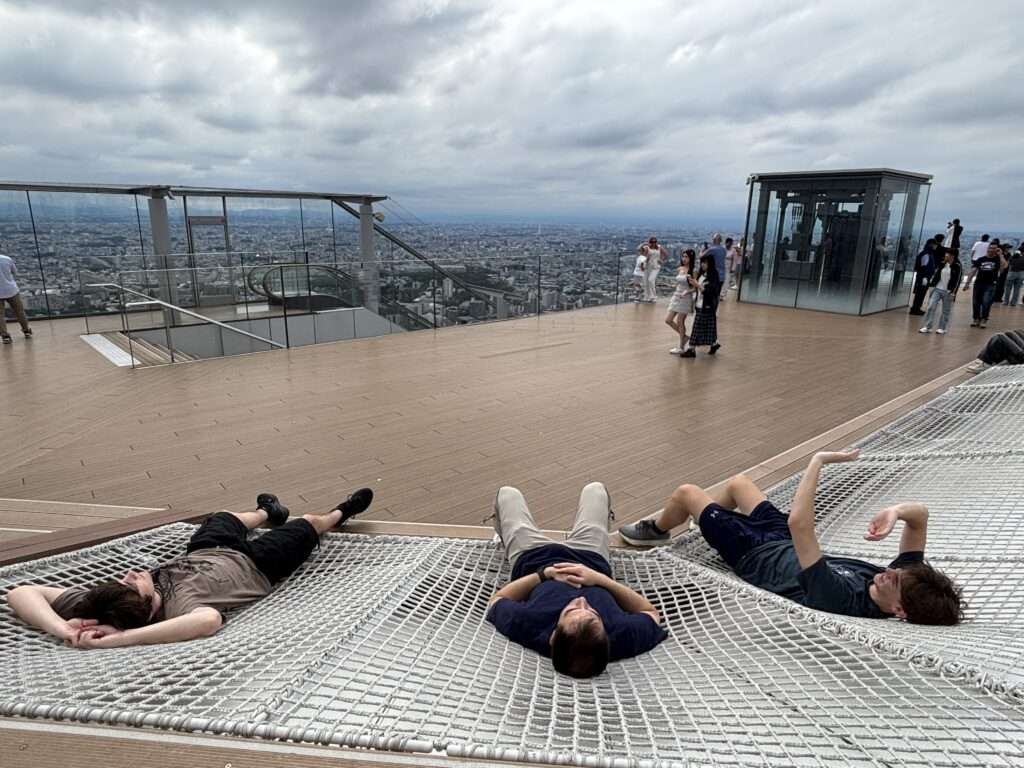
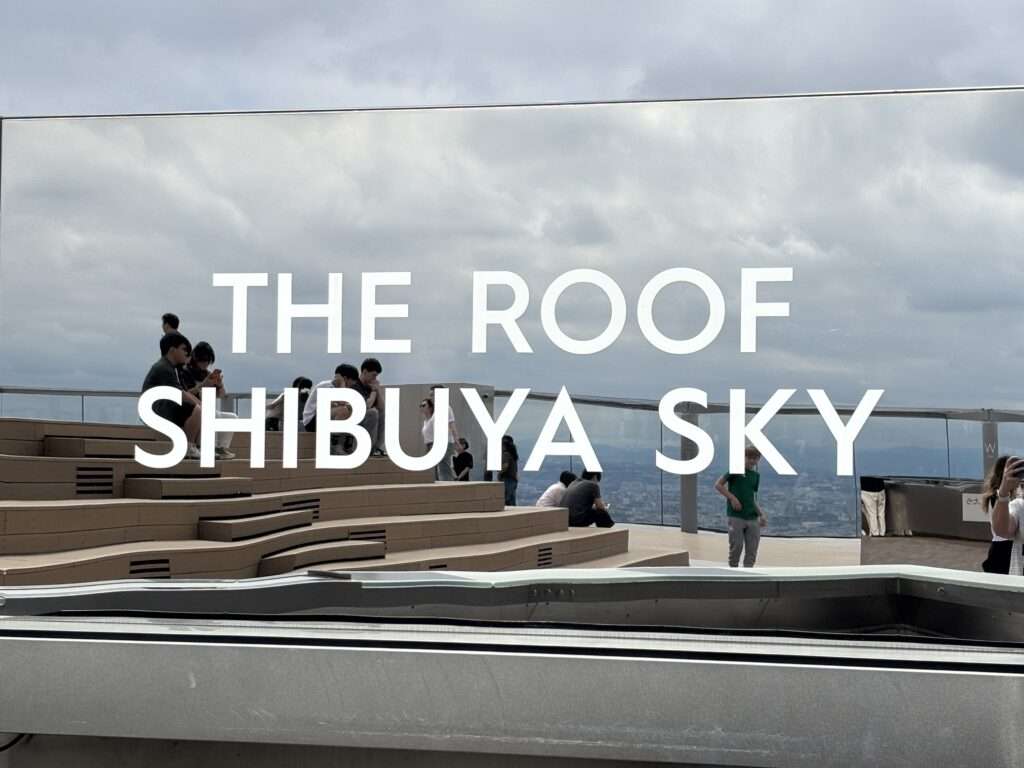
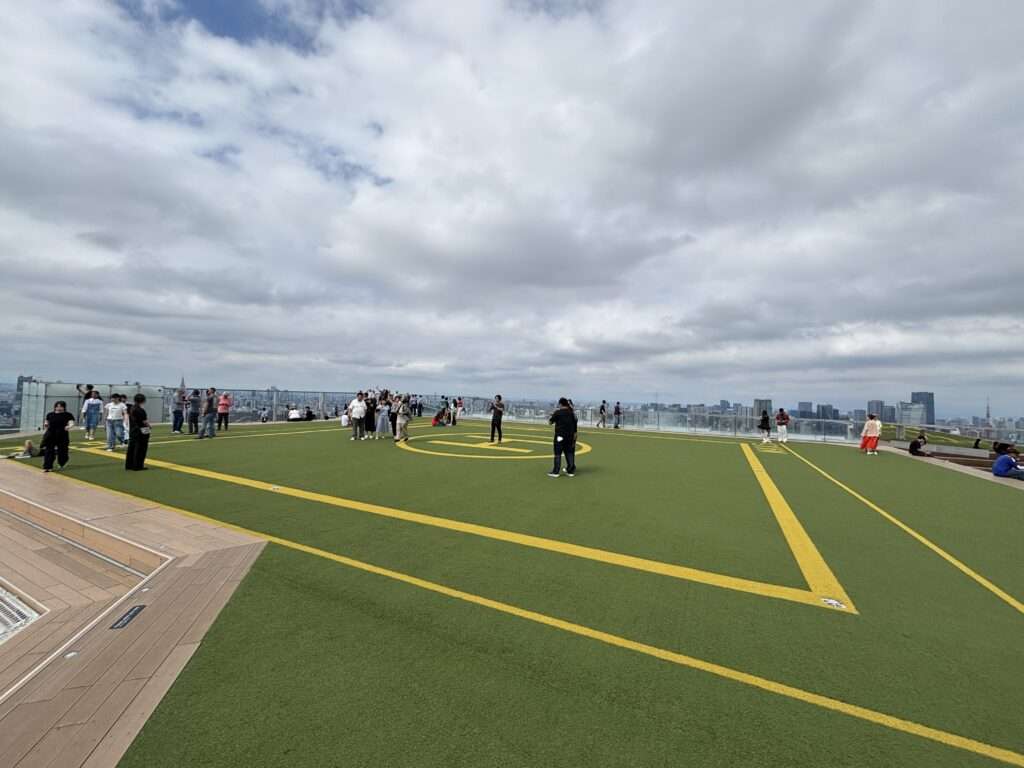
There were plenty of ways to enjoy the views and relax from the Sky Stage. The top level featured a raised deck, hammocks, a bar (The Roof), and even a helipad! And of course, there are ample opportunities for taking photos of the city or using it as a stunning backdrop for your family photos.
We chose not to wait on the line but there was a photography service that would take photos of your group at one of the corners of the rooftop (Sky Edge). The glass walls were lower in this corner and the photographer took pictures from a slightly elevated position, giving the illusion of standing unprotected on the edge of the building. You can buy the souvenir photos on your way out.
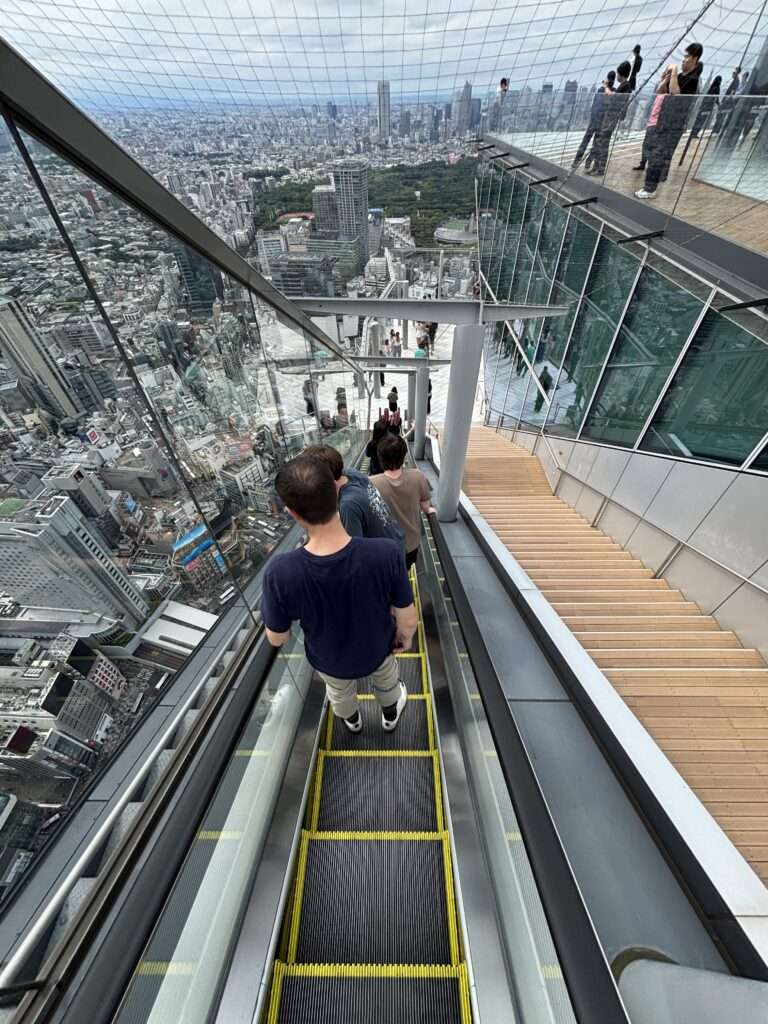
We spent about half an hour on the rooftop and then headed back down the glass-walled escalator to the 46th floor. The escalators were one of the most amazing features of Shibuya Sky. Coming down along the edge of the building with an unobstructed view of the city below and beside you was an experience like no other. (Not recommended if you are afraid of heights!).
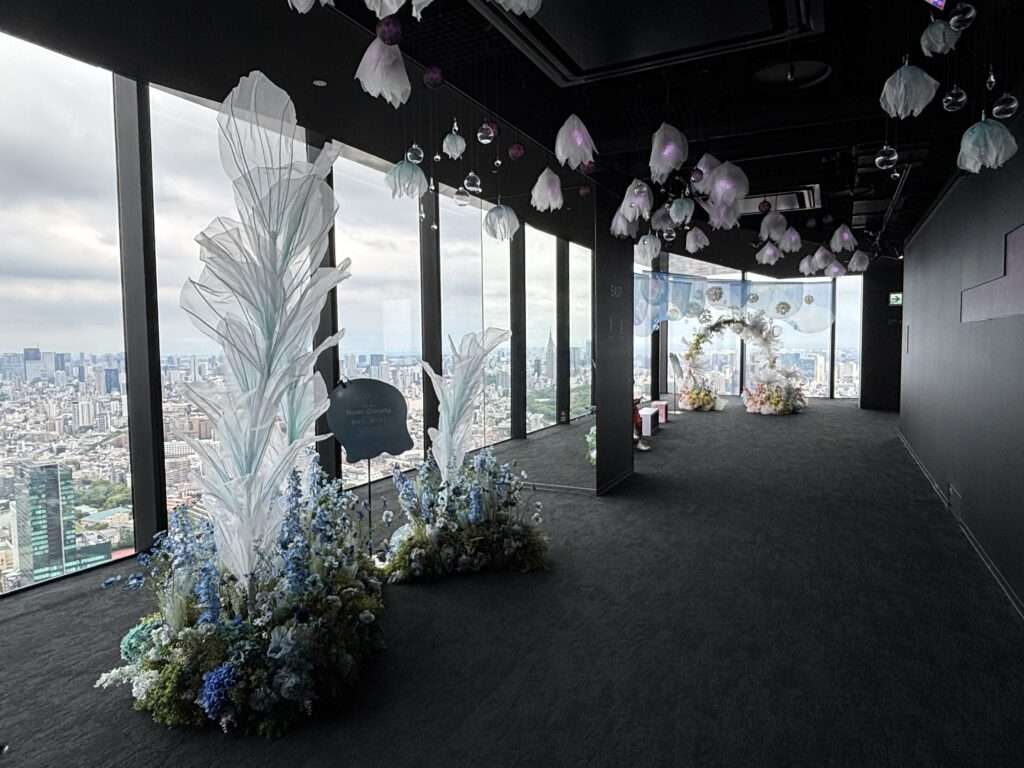
Back on the 46th floor, we walked through the Sky Gallery. This indoor observation area is a great alternative in inclement weather, but it also features both digital and 3D art displays and is worth walking through in any weather. And of course, there is a gift shop as well in case you (like my son) need a plush Hachiko in a kimono to hang from your backpack.
Overall Shibuya Sky was one of our favorite things that we did in Tokyo. The views were amazing and the overall experience was top notch. I thought it was great that we did it early in our trip because it gave us a sense of the size of Tokyo and an appreciation for all of the different and widespread parts of the city that we visited.
