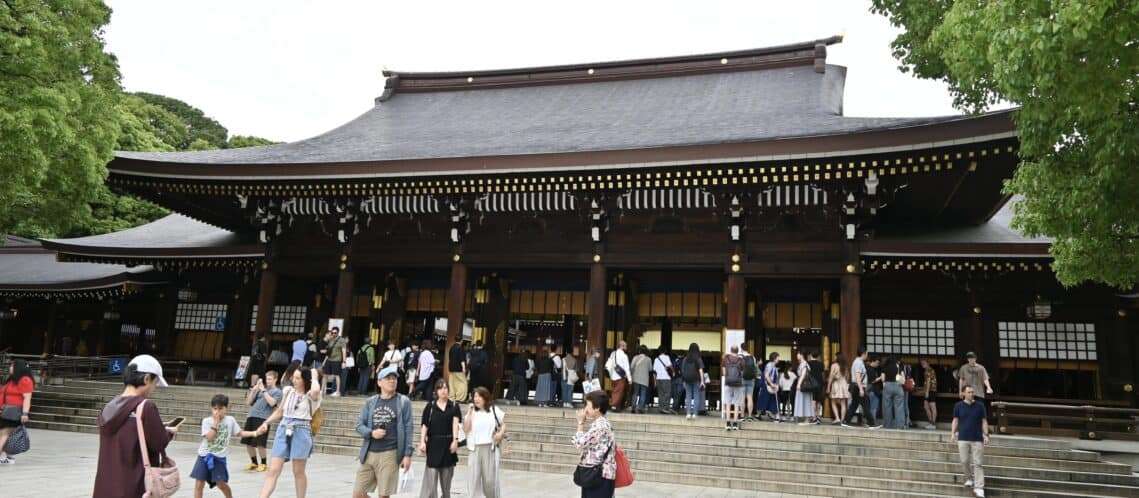
Our first stop in Tokyo was Meiji Jingu and it was a fitting start to our trip. This Shinto Shrine located in Shibuya is dedicated to Emperor Meiji and Empress Shoken. Emperor Meiji is credited with modernizing Japan and turning it into a global industrial power during his reign from 1867-1912. The shrine to honor him was completed in 1920 and rebuilt after it was destroyed in World War II. People often come to this shrine to pray for blessings in love and marital harmony.
There are three main entrances to Meiji Shrine – the South Entrance (Harajuku), the North Entrance (Yoyogi), and the West Entrance (Sangubashi). Google Maps directions from our hotel in Roppongi took us to Yoyogi Station so we used the North Entrance. The South Entrance tends to be the busiest so it was nice to approach the shrine from a quieter route.
Each entrance has a large wooden Torii gate. While most Torii gates are brightly painted in vermilion, the gates of Meiji Jingu are unpainted, their natural color allowing them to blend in with their surroundings. The man-made forest beyond the gates was a labor of love – between 1915 and 1920, 110,000 volunteer youths worked to plant over 122,000 donated trees. It was designed as a “150 year project” that would ultimately result in a self-sustaining forest.
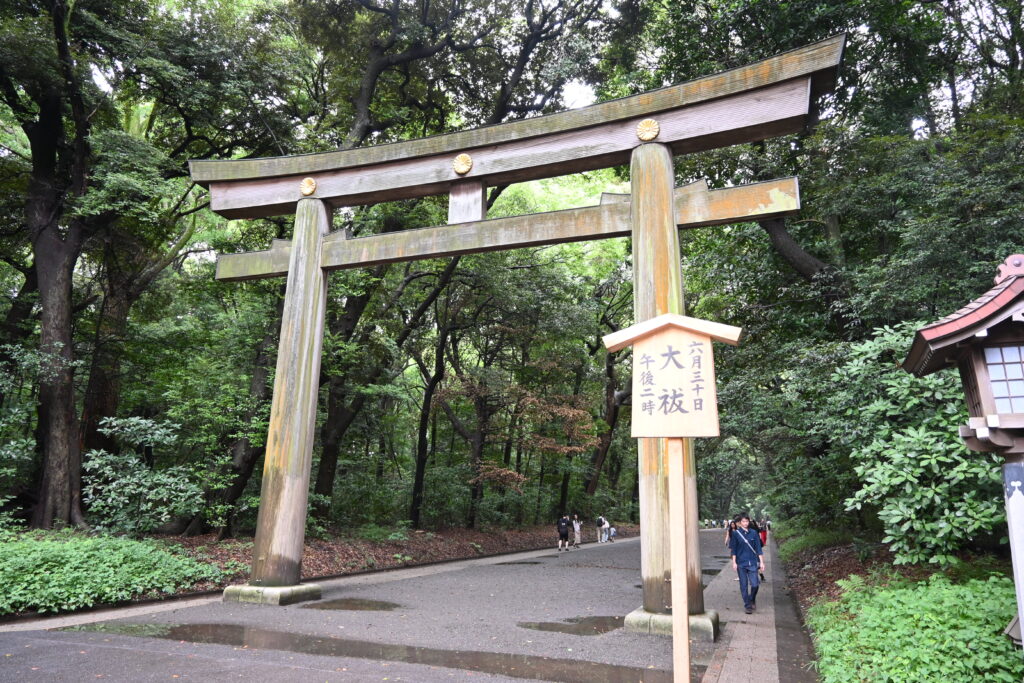
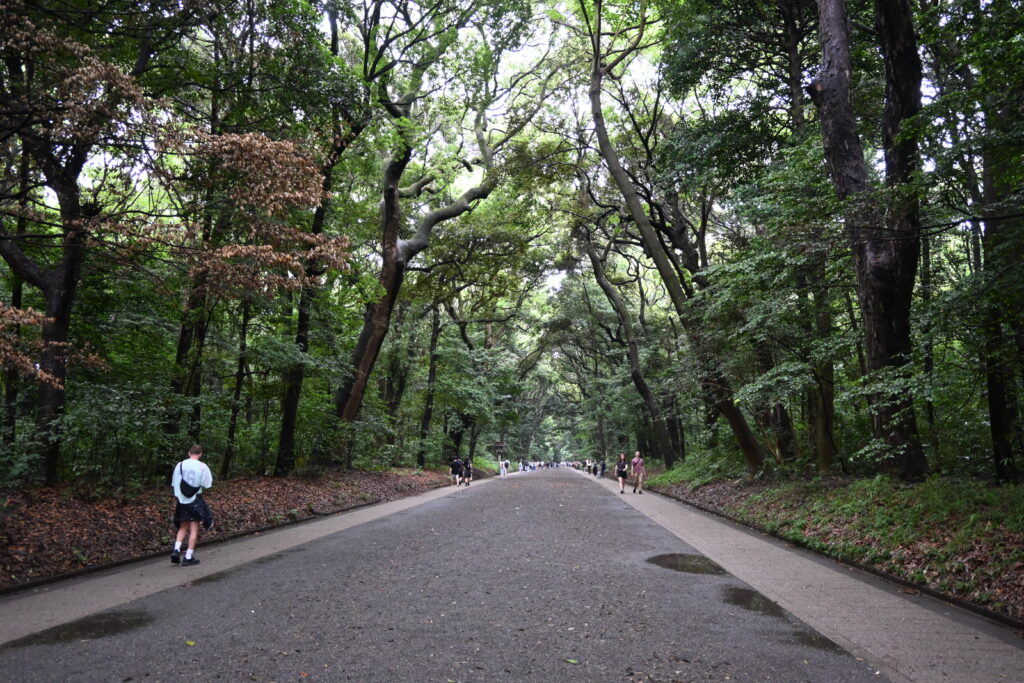
Walking through the gate transports you from the bustling city to a beautiful 170 acre forest. The tree canopy provides much-needed shade in the summer and the wide paths welcome you to explore what lies within. It was hard to believe that just 10 minutes earlier we had been walking out of a busy subway station.
The shrine itself is somewhat understated. Much like its Torii gates, the shrine’s buildings are simple and natural. Lacking the bold colors and ornate decorations that are typical of Shinto Shrines and Buddhist Temples, Meiji Jingu feels like a really unique religious site.
The main shrine complex is a series of courtyards, each created by a rectangular arrangement of wooden buildings. The main hall, or Honden, is the key structure in the inner shrine. Keeping with the natural theme of the shrine, the Honden is built of cypress trees with a copper roof, and is somehow both understated and impressive at the same time.
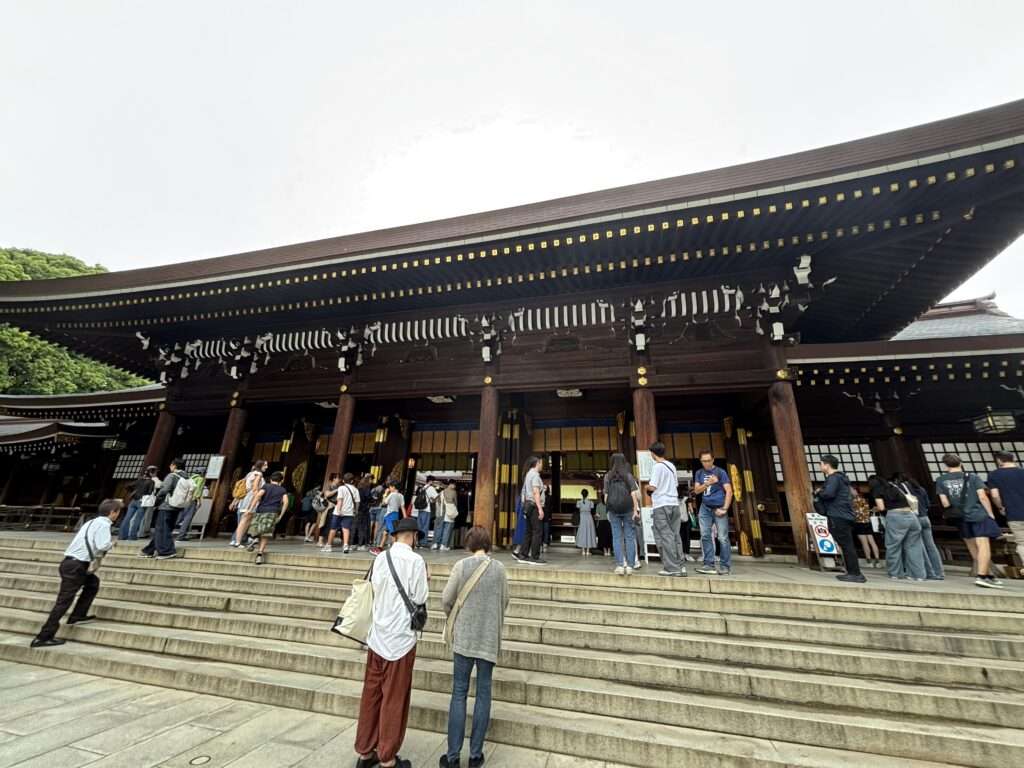
Like most shrines, there are several opportunities to participate in Shinto traditions at Meiji Jingu. I purchased a Goshuincho and my first Goshuin, or “honorable red seal”. Goshuin are red stamps with a hand-written calligraphy inscription that you can obtain as a record of your visit to a shrine or temple, and Goshuincho are the special books used to collect them. My kids each bought an omamori, which are amulets or charms meant to bring you luck in various areas. My oldest bought the amulet for success in one’s studies (he’s headed to college in the fall!) and my youngest bought the amulet for victory and perseverance.
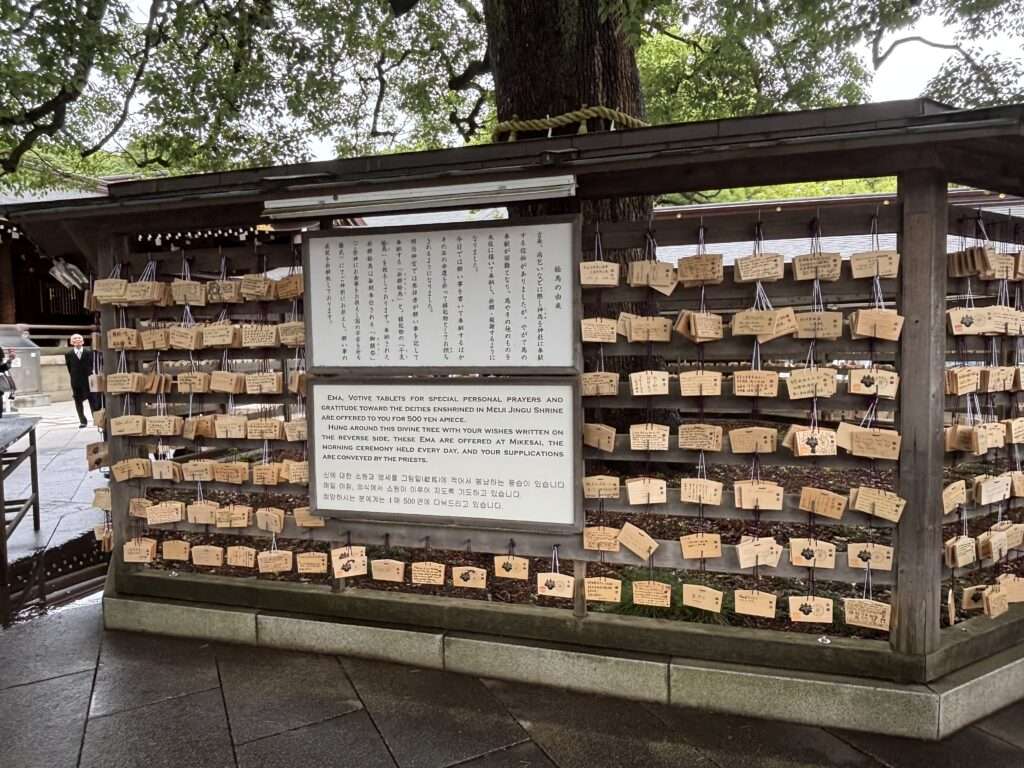
The main courtyard also featured a collection of Ema, which are wooden plaques featuring prayers handwritten by worshippers. For ¥500 visitors can purchase a tablet, write a prayer, wish or expression of gratitude, and hang it on the wooden structure surrounding the divine tree.
After exploring the main shrine for about half an hour, we headed out through the South Entrance. Since we had come in from the North Entrance (which is essentially the backside of the shrine), we still had quite a few things to explore on our way out. We decided to visit the Inner Garden and paid our ¥500 fee (“contribution for maintenance”) at the entry gate. (There is no fee to enter the shrine itself.)
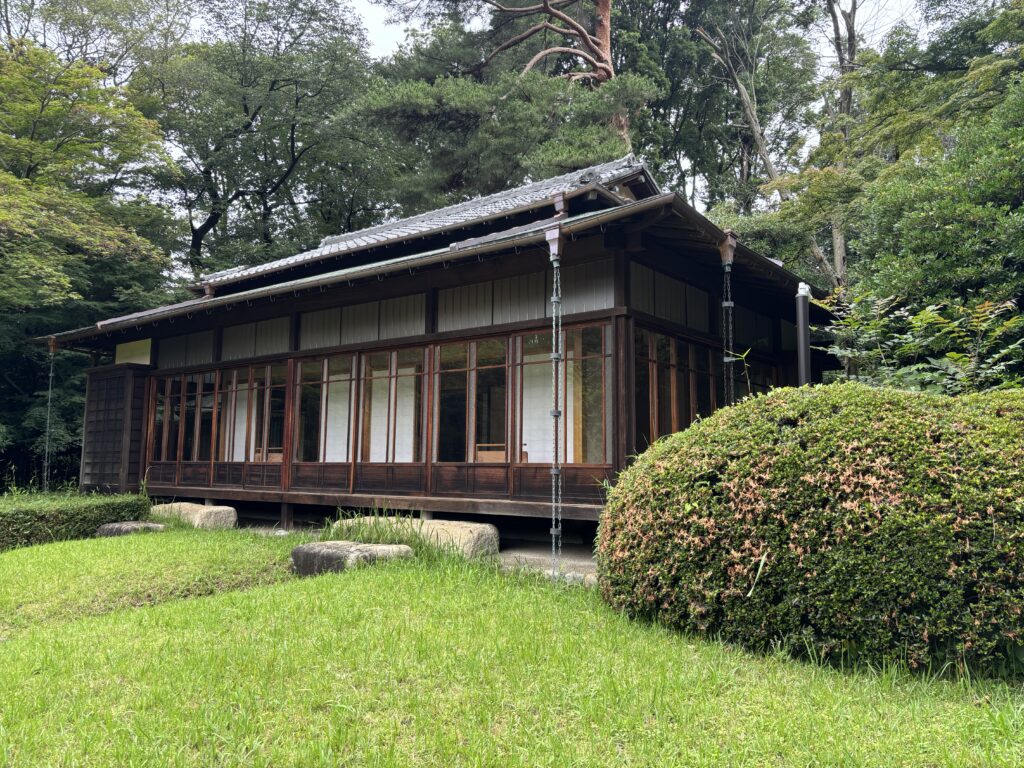
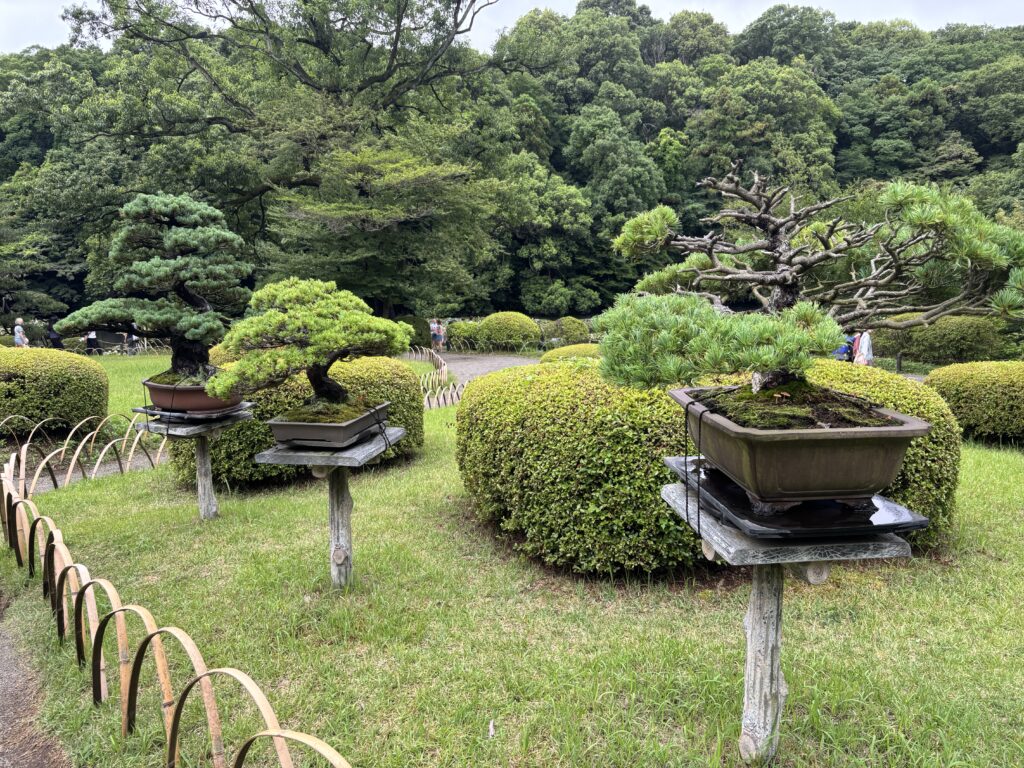
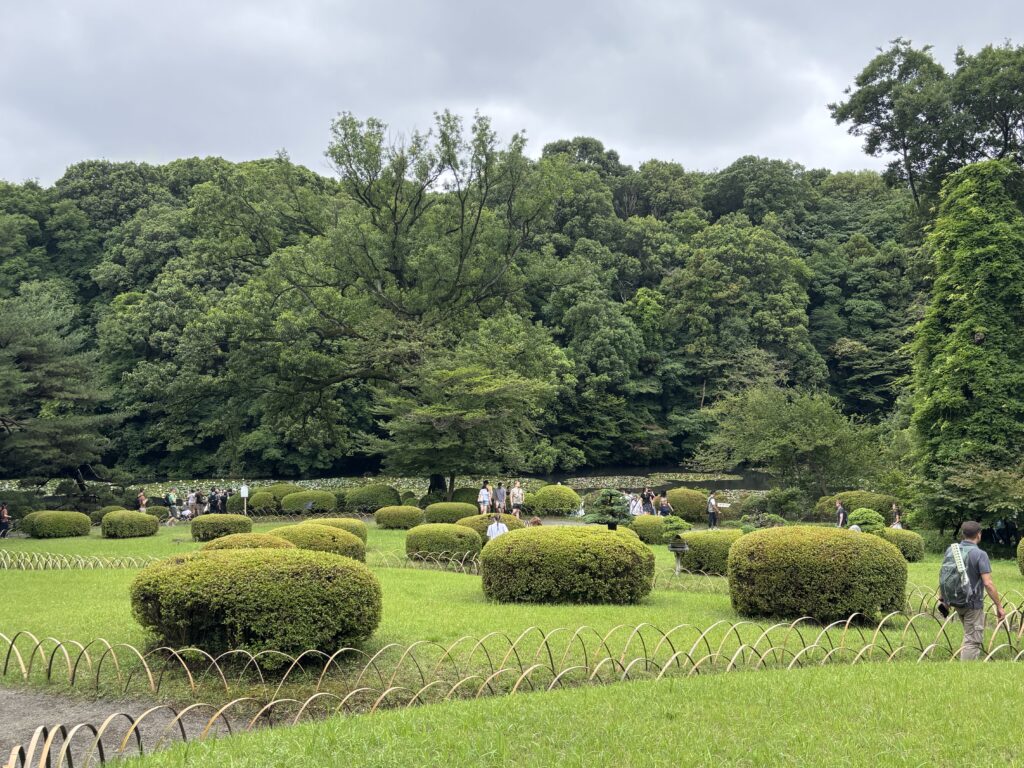
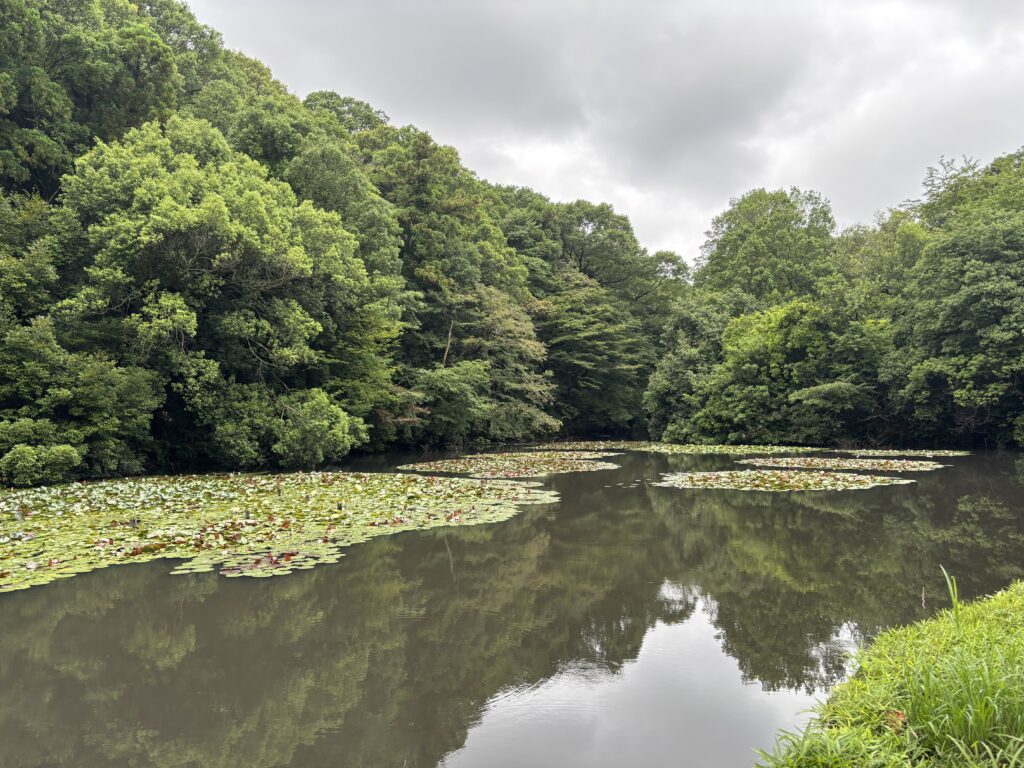
The gardens were a really pleasant surprise, although given how thoughtfully designed and beautifully executed the Meiji Jingu forest was, perhaps we shouldn’t have been surprised. Near the entrance of the gardens is the Kakuun-tei teahouse, which looked down on Nan-Chi, the South Pond. The path to the pond was lined with manicured bushes and a collection of Bonsai trees.
The pond itself was beautiful, with water lilies covering the surface, colorful koi swimming underneath, and turtles sunning themselves on logs. We were lucky enough to be there while the water lilies were blooming and to spot a grey heron perched on a wooden pillar amongst the flowers and lily pads.
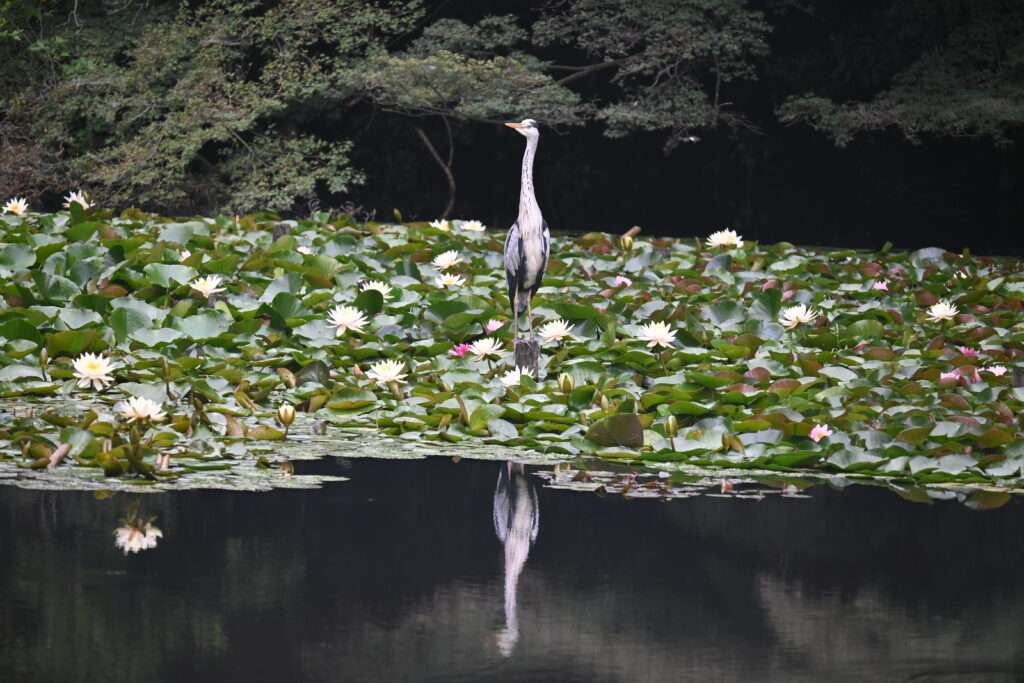
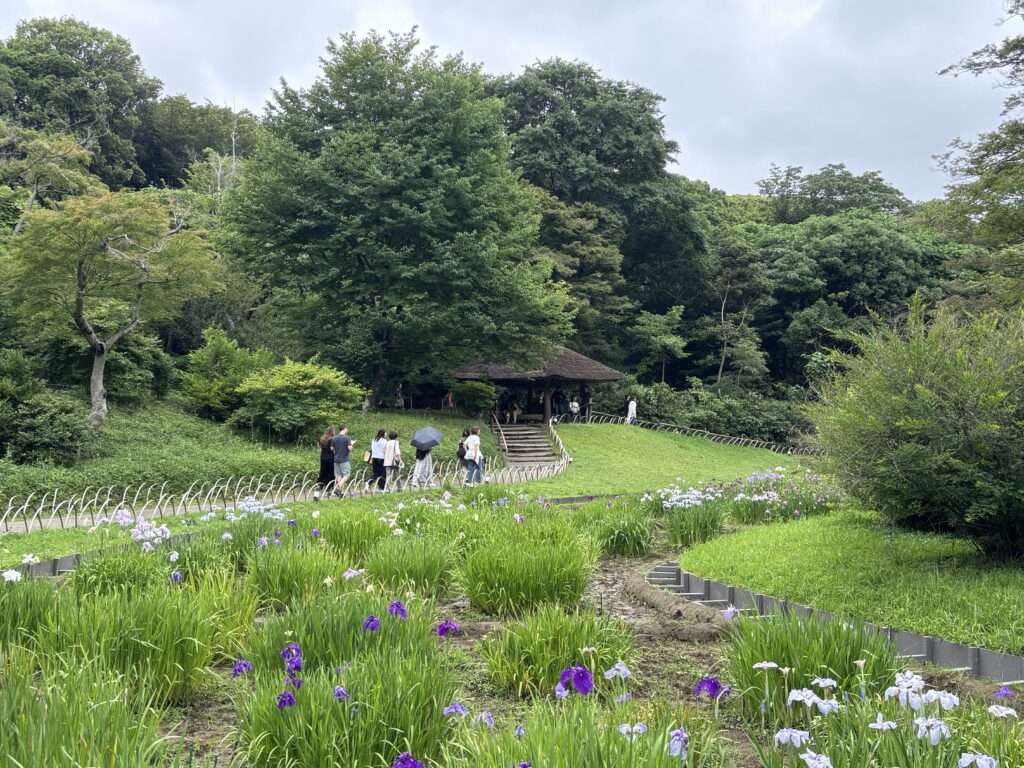
It was really peaceful to sit for a while, watching the heron and enjoying the tranquil surroundings. He eventually flew away and we moved on to the Iris Garden. Designed by Emperor Meiji for Empress Shoken, the Iris Garden features over 1500 iris plants that reach peak bloom in June. (Lucky for us!) The various shades of purple irises popped against the lush green surroundings.
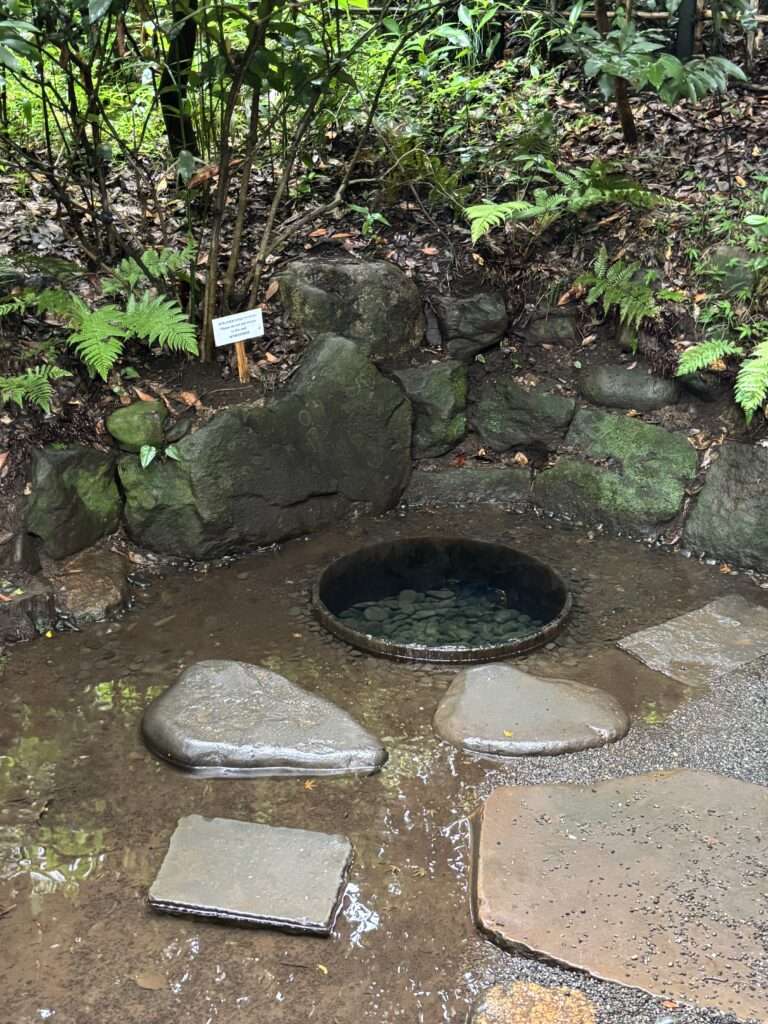
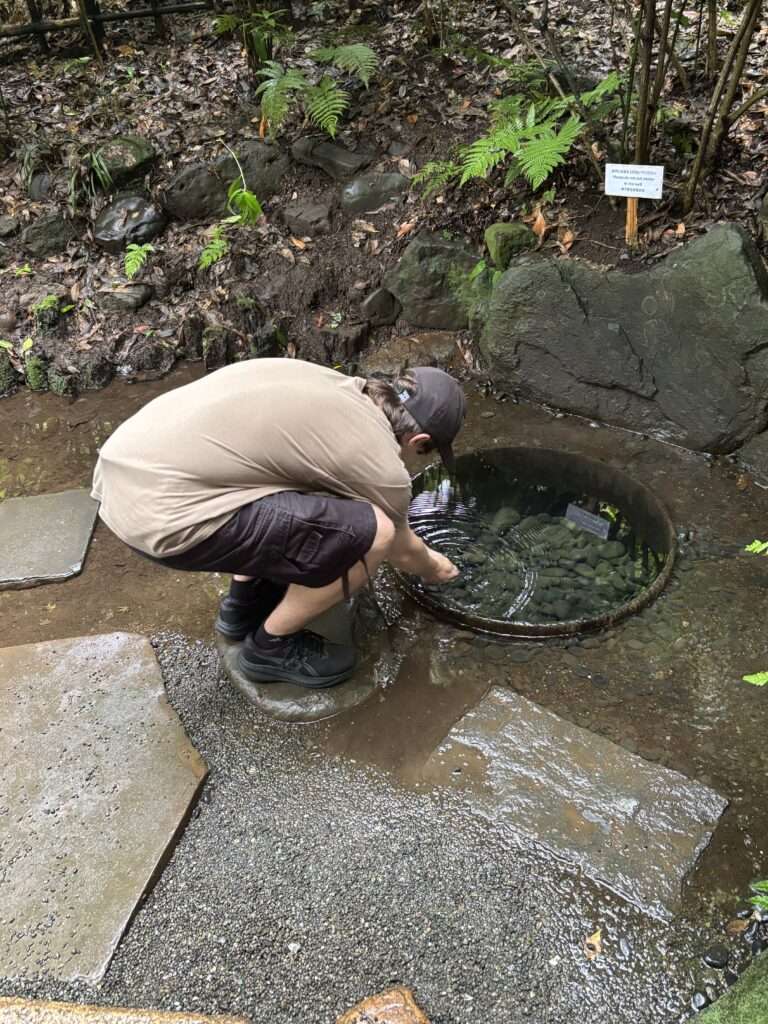
Our final stop in the Inner Gardens was the Kiyomasa’s well. This well was dug around 400 years ago and keeps a constant temperature of 15 degrees celsius. It also produces steady flow of 60 liters of water per minute and is used to irrigate the iris garden and as a water source for the South Pond. Recognized as a Japanese “Power Spot”, people come to visit it and dip their hands in it (you are not supposed to drink from it) to benefit from its purported healing powers and natural energy.
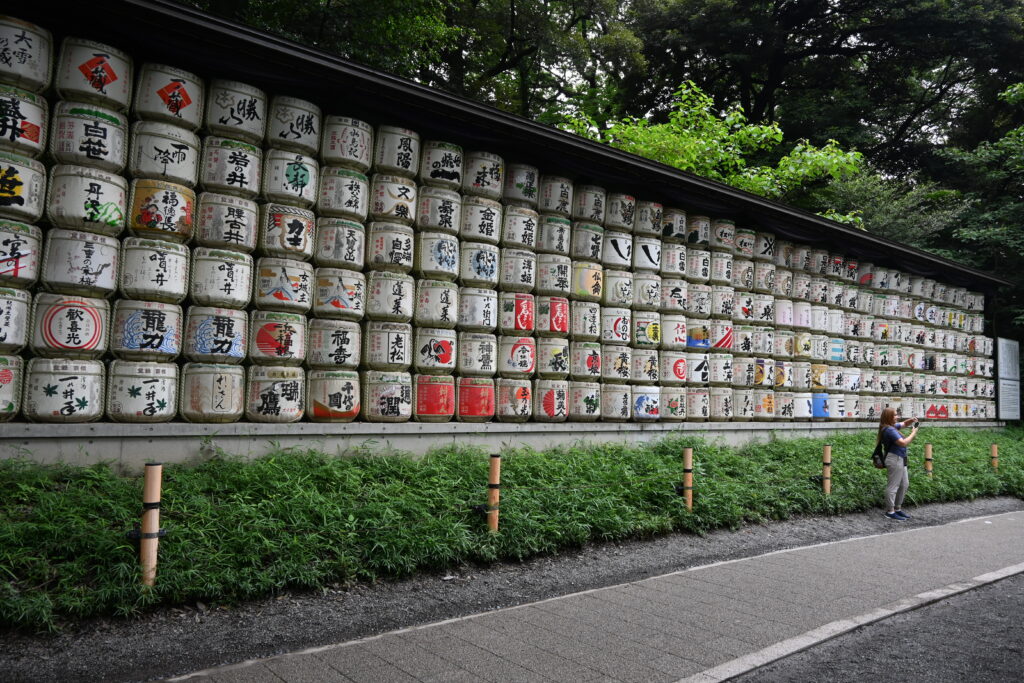
We finished up a lovely visit to the gardens and continued to make our way out of the forest. Our last stop (but your first if you come in the South Entrance) was the sake barrels, or kazaridaru. Lining the path is a tall stack of colorful barrels that are donated annually by sake companies as an offering to Emperor Meiji and Empress Shoken. The sake itself is used during festivals and religious ceremonies, and the decorative straw-wrapped barrels are displayed here.
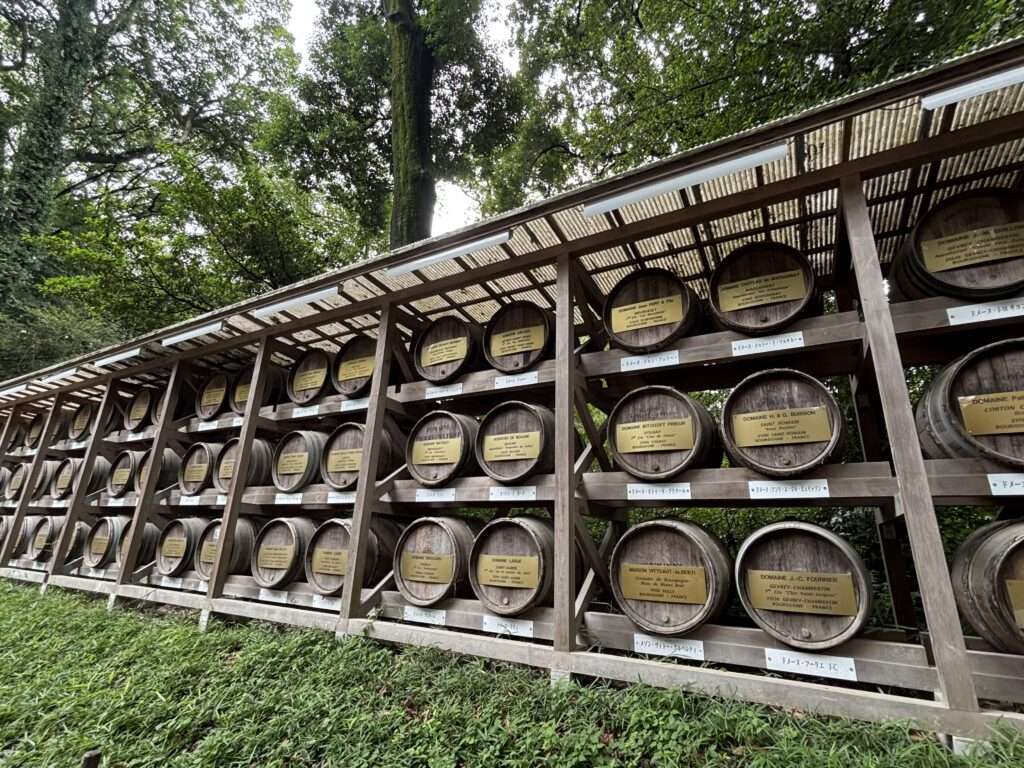
While many shrines have a similar wall of sake barrels, Meiji Shrine is the only one that also a display of wine barrels from Burgundy, France. Located across the path from the sake barrels are stacks of traditional wooden wine barrels. Emperor Meiji is celebrated for modernizing Japan through the introduction of Western culture while still maintaining strong Japanese traditions. French wineries donate the wine barrels annually to recognize the friendship between the two nations and in appreciation for Emperor Meiji’s embrace of Western culture.
Meiji Jingu was a wonderful introduction to Japanese Shinto Shrines. We loved the peaceful location and learning all about the different Shinto traditions. While no two Shinto Shrines are the same, we can definitively say in retrospect after seeing many shrines that Meiji Shrine is very unique. Its understated beauty and focus on nature allow its historical and cultural significance to shine through.
