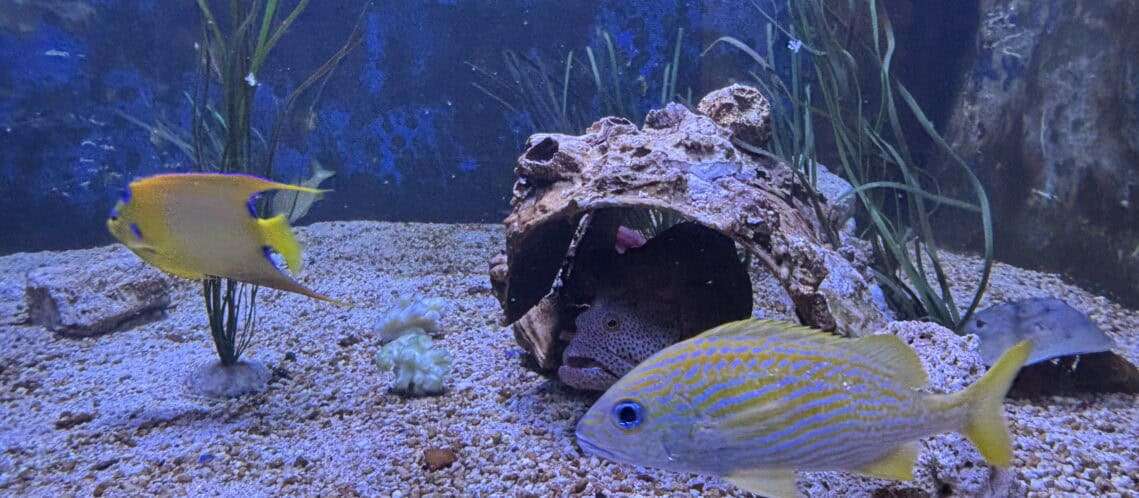
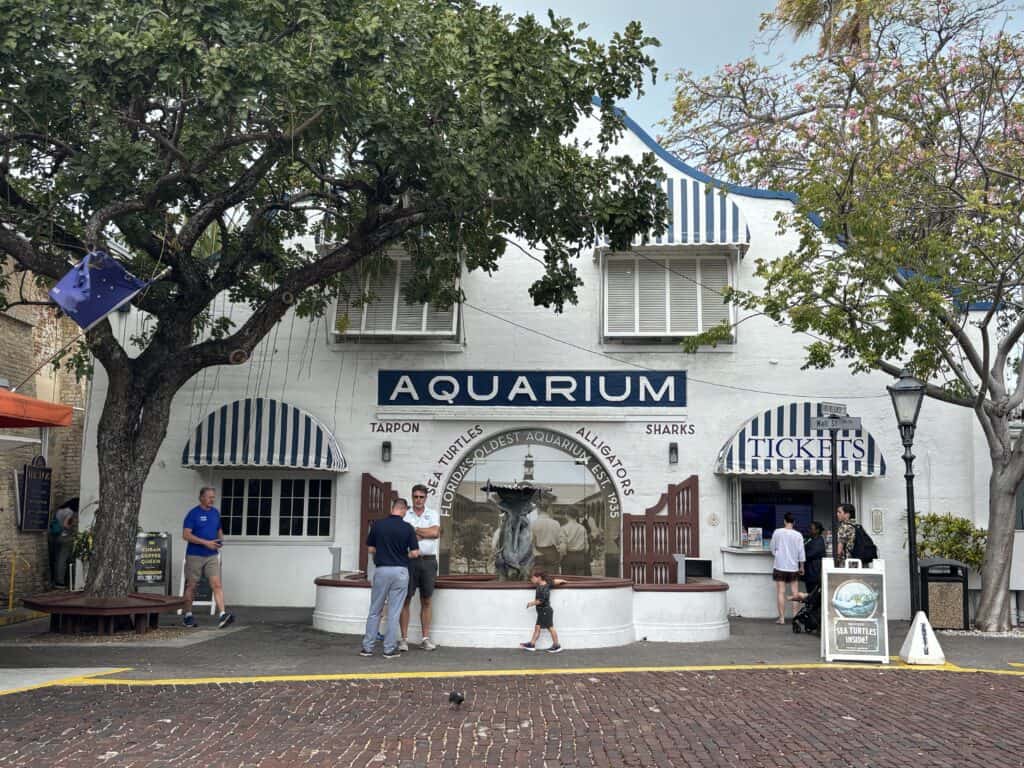
We had some time to kill on our last day between our rental check out and our flight home so we decided to go to the Key West Aquarium. Aquariums are always a family favorite and we’ve been to some great ones across many states and countries. The Key West Aquarium is small but worthwhile. They pack a lot of punch in their small space and do some important conservation work.
The Key West Aquarium was celebrating its 90 year anniversary when we were there. Opened in 1935, it was both the island’s first tourist attraction and the country’s first open-air aquarium in the US. The island’s tourism industry has boomed since then and the aquarium has remained its anchor. Located in Mallory Square, it is easy to get to and offers a nice respite from the heat.
The aquarium is only one room and one outdoor space, but there is a surprising variety of marine life. The indoor area is a long rectangular room with exhibits in the center and lining the walls. Looking down the middle of the room, there is a touch tank right at the entrance and two large open exhibit tanks in the middle. A series of smaller tanks are built into the surrounding walls.
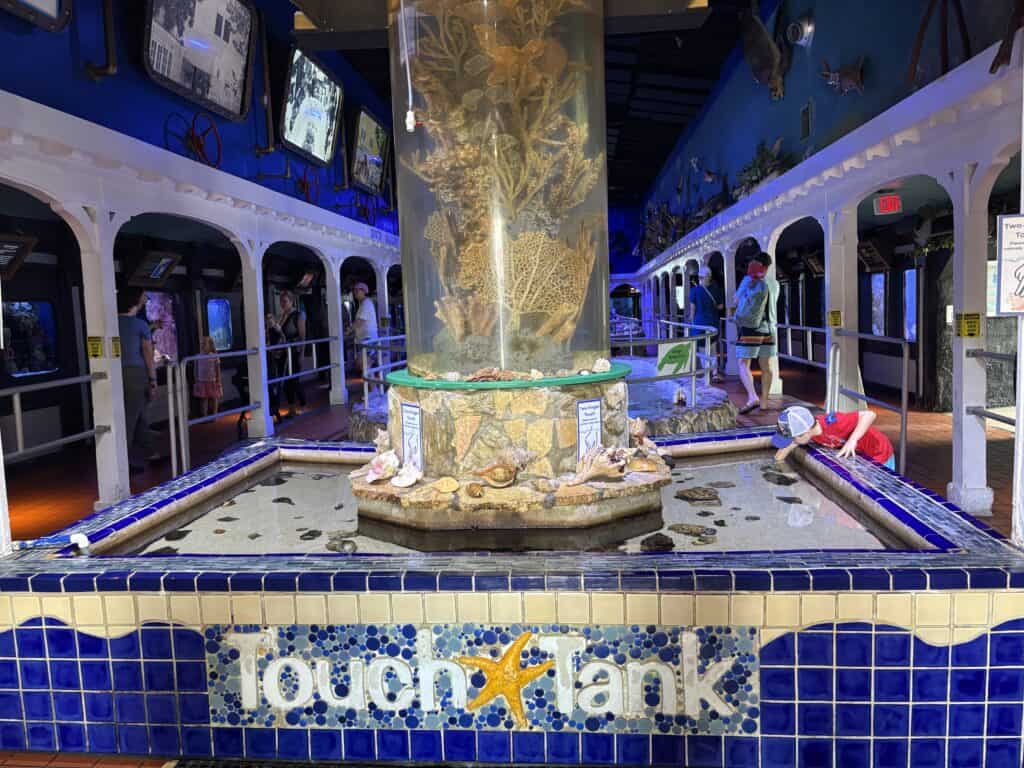
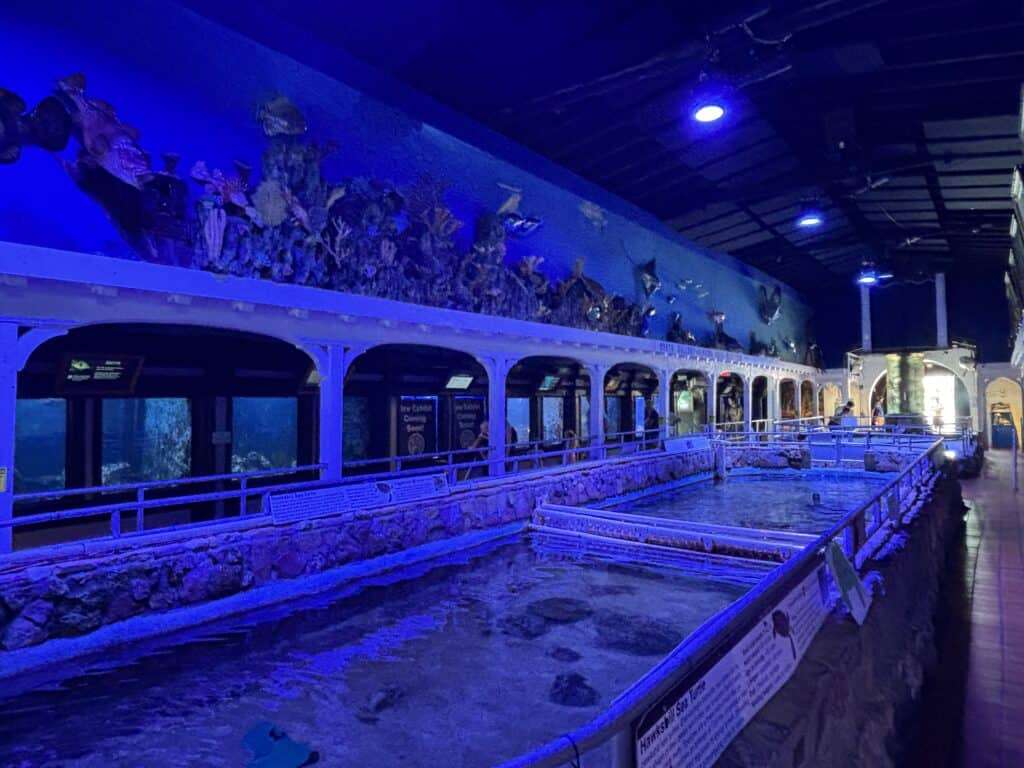
The touch tank includes mainstays such as sea urchins, sea stars, and horseshoe crabs, as well as local favorite the queen conch. The tank was accessible on all four sides so there was plenty of room for kids (or adults!) to interact with the native invertebrates.
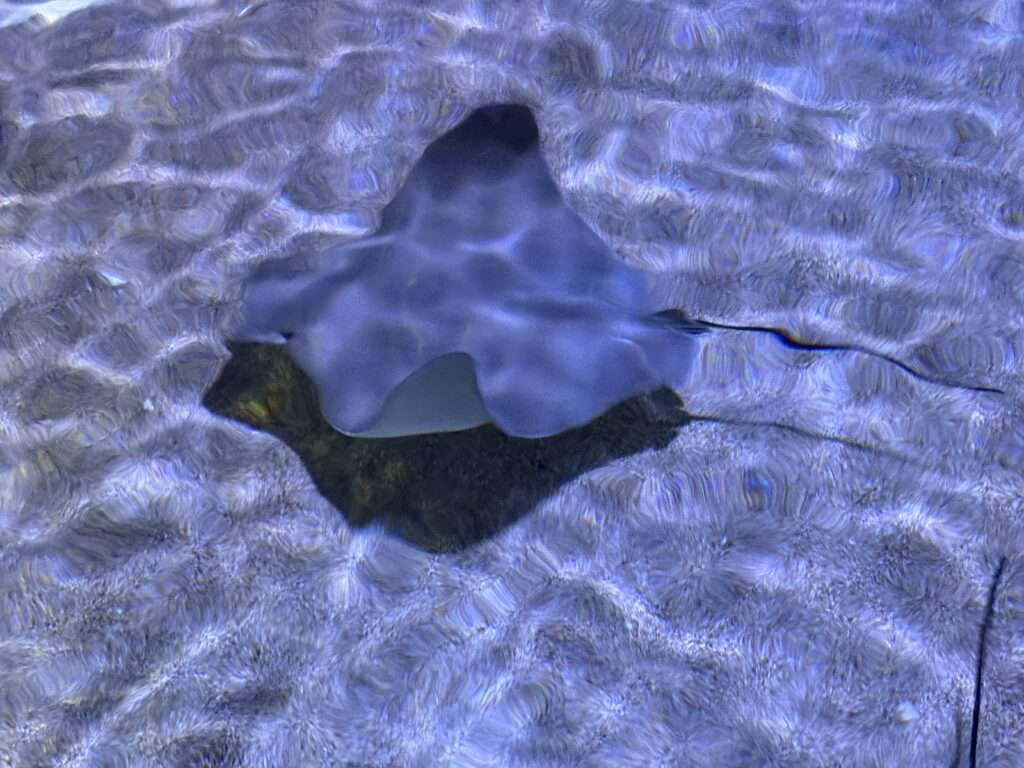
We spent the most time at the two large, low tanks in the middle of the room. These tanks housed sting rays, lobsters, and rescued sea turtles. We watched the sting rays in the first tank for a while as they glided effortlessly around the tank. One came right up to the surface along the side of the tank and slapped the water, which apparently is their way of begging for food.
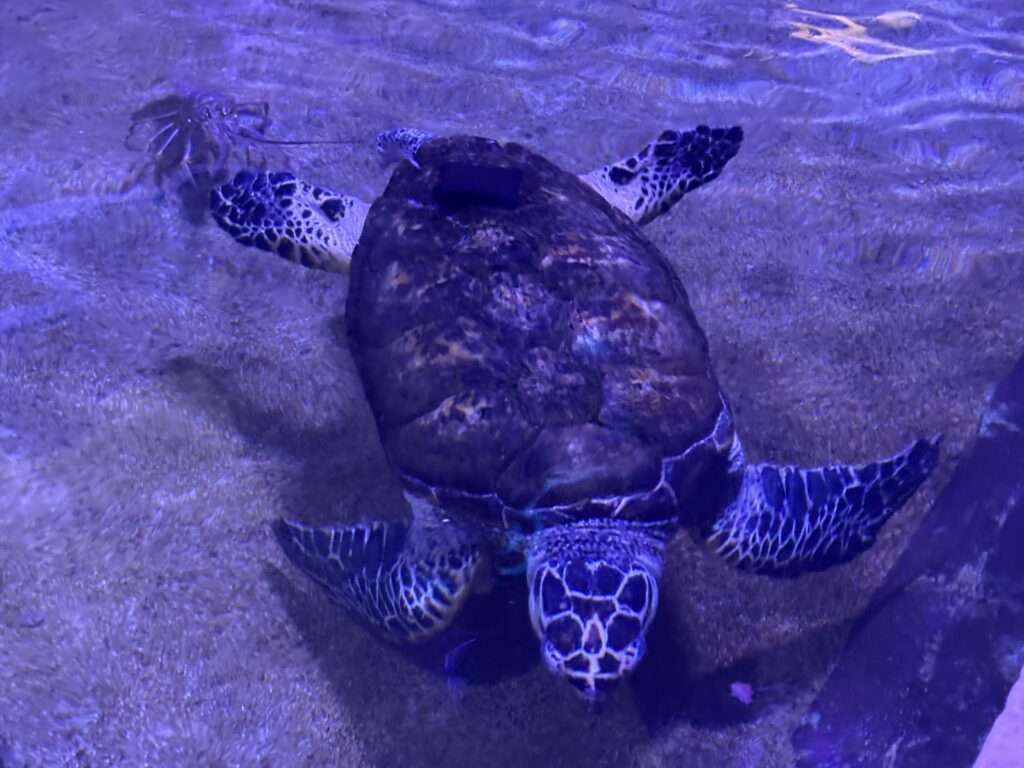
The main resident of the first tank is Lola, a Kemp’s Ridley Sea Turtle. Lola had a rough start in life, suffering bites on her right front flipper as a hatchling. After 11 months of rehabilitation, she was released into the wild only to get her same flipper caught in some fishing line the next day. She lost her flipper as a result and was eventually the recipient of a prosthetic flipper. Amazingly, the prosthetic was designed and produced by 3 biomedical engineering students at Worcester Polytechnic Institute. Thanks to the college students, Lola is able to swim smoothly around the tank.
Lola is not the only rescued sea turtle at the aquarium that has been the beneficiary of some ingenious medical interventions. Rocky, a Green Sea Turtle, lost a flipper and sustained shell damage from a run-in with a boat. The damage to his shell left air permanently trapped underneath, resulting in a condition called Floater Syndrome that makes it hard for him to both surface and to lie on the tank floor. He has been fitted with a float on top of his shell to help him get his head above water and a weight at the back of his shell to balance his buoyancy and help him lie flat.
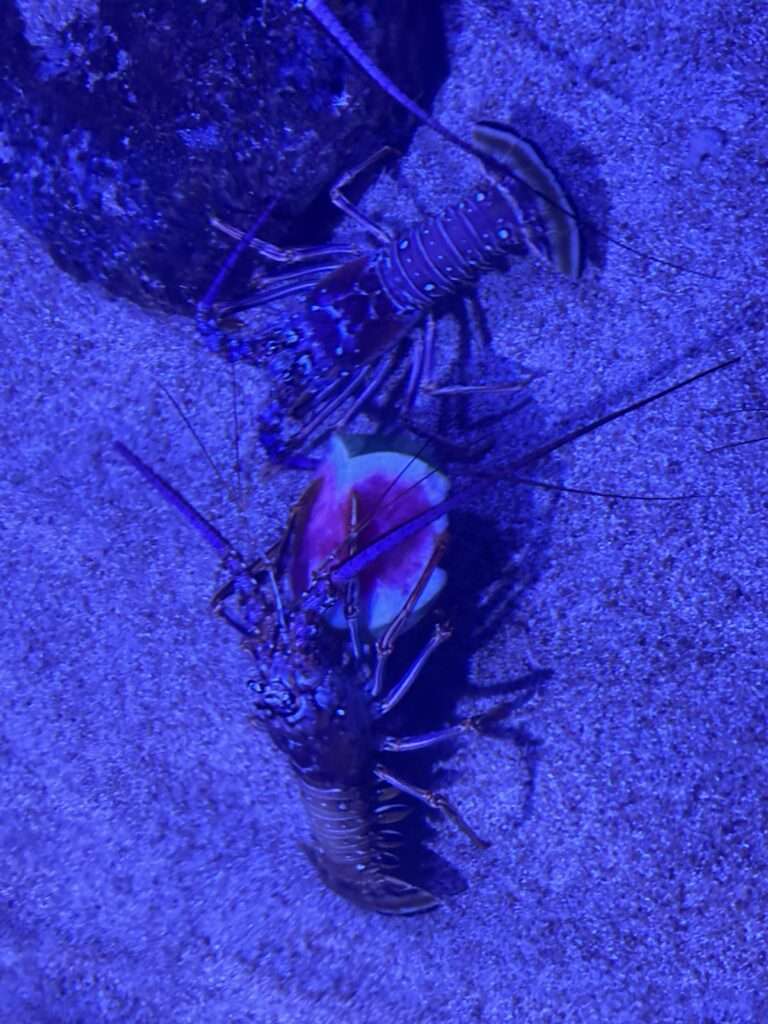
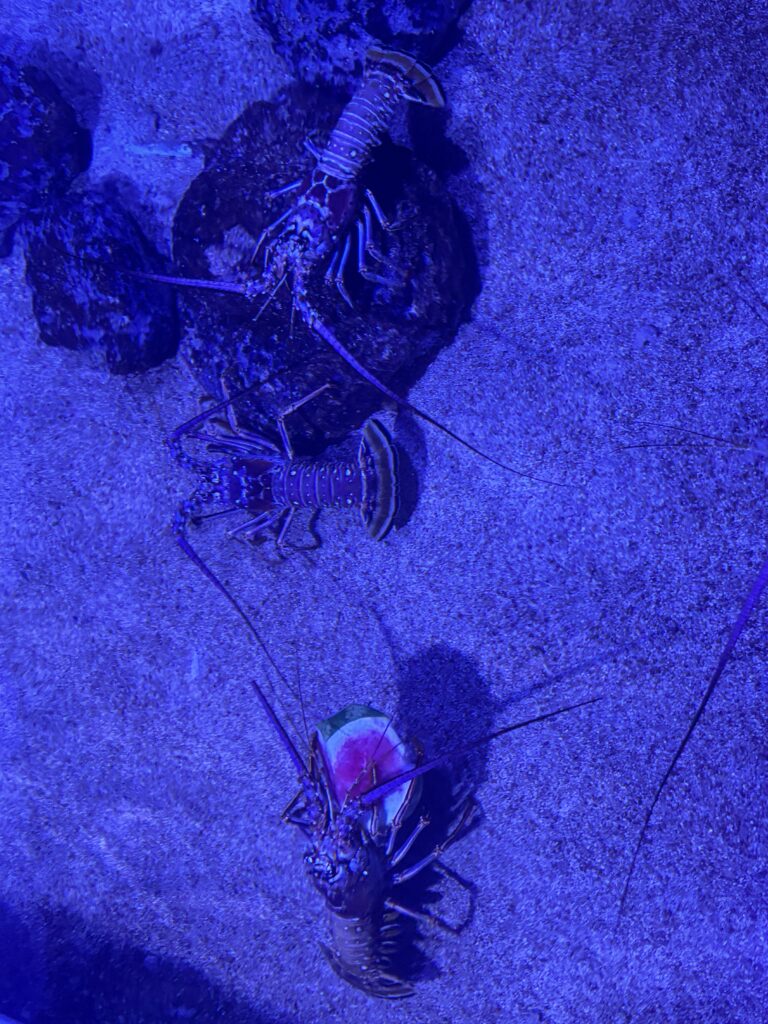
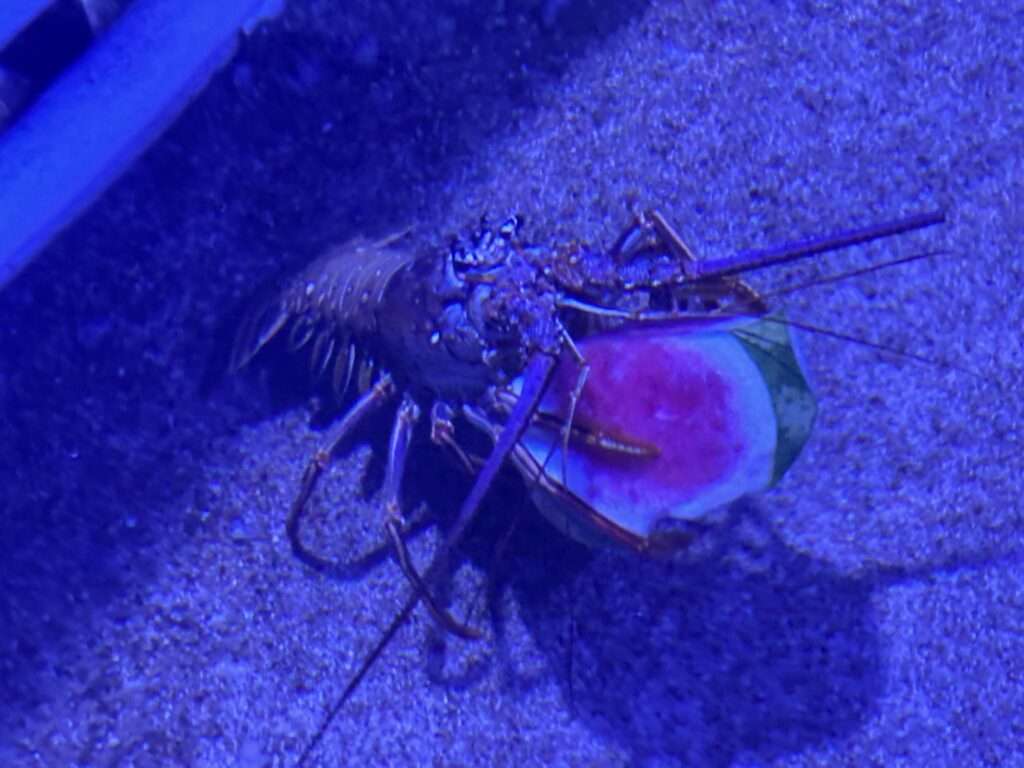
The two rehabilitated turtles are joined by two other rescued turtles, Spike (a Loggerhead Sea Turtle) and Hector (a Hawksbill Sea Turtle). But as much as we loved watching the turtles, the Spiny Lobsters stole the show in the tank. There was a piece of watermelon in the tank (presumably as a treat for the turtles) that the lobsters were fighting over. It was hilarious to watch one lobster grip the watermelon and try to guard it from the other advancing lobsters. He kept backing up, trying to escape the gang of lobster coming for the watermelon. At one point he somehow climbed the pipes separating the sections of the tank while still holding onto the watermelon while the other lobsters climbed menacingly towards him. It was quite a showdown!
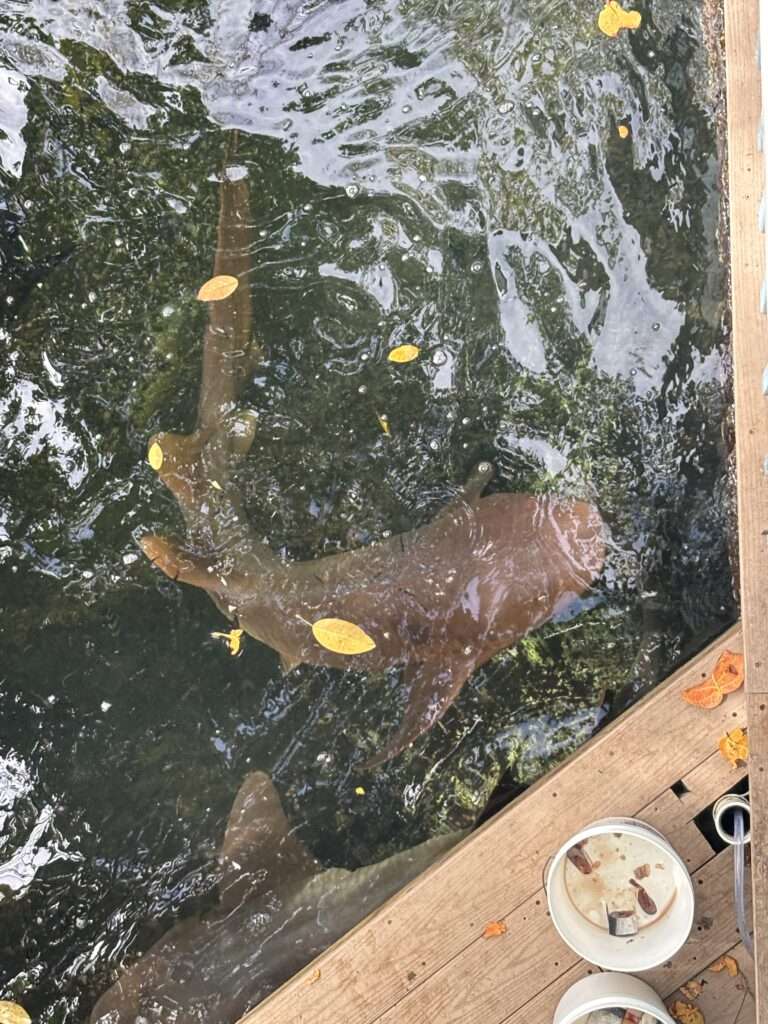
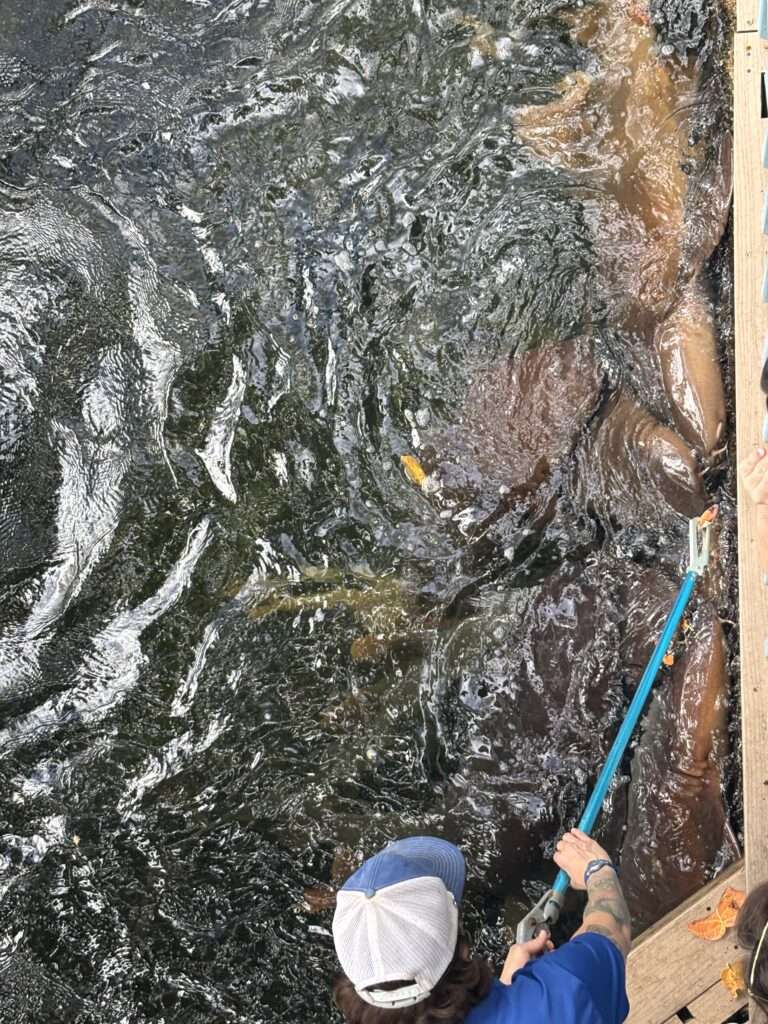
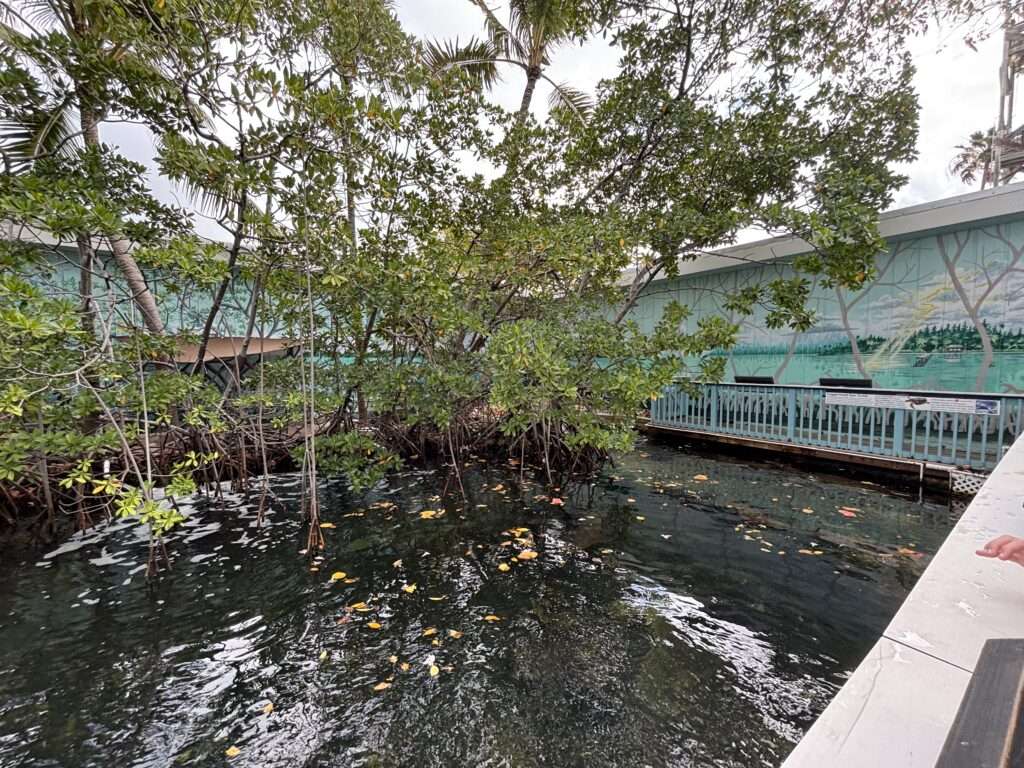
After watching the turtles and lobsters for a long time, we headed to the outdoor Atlantic Shores Exhibit. This 50,000 gallon tank is a functioning mangrove ecosystem and houses species native to the Florida Keys like nurse sharks, tarpon and grouper. We went up to the balcony to get a bird’s eye view of their feeding. It was a great perspective to get to see them all gather together and come to the surface to get their food. The trainer was very intentional with who he fed, ensuring that each animal got its share.
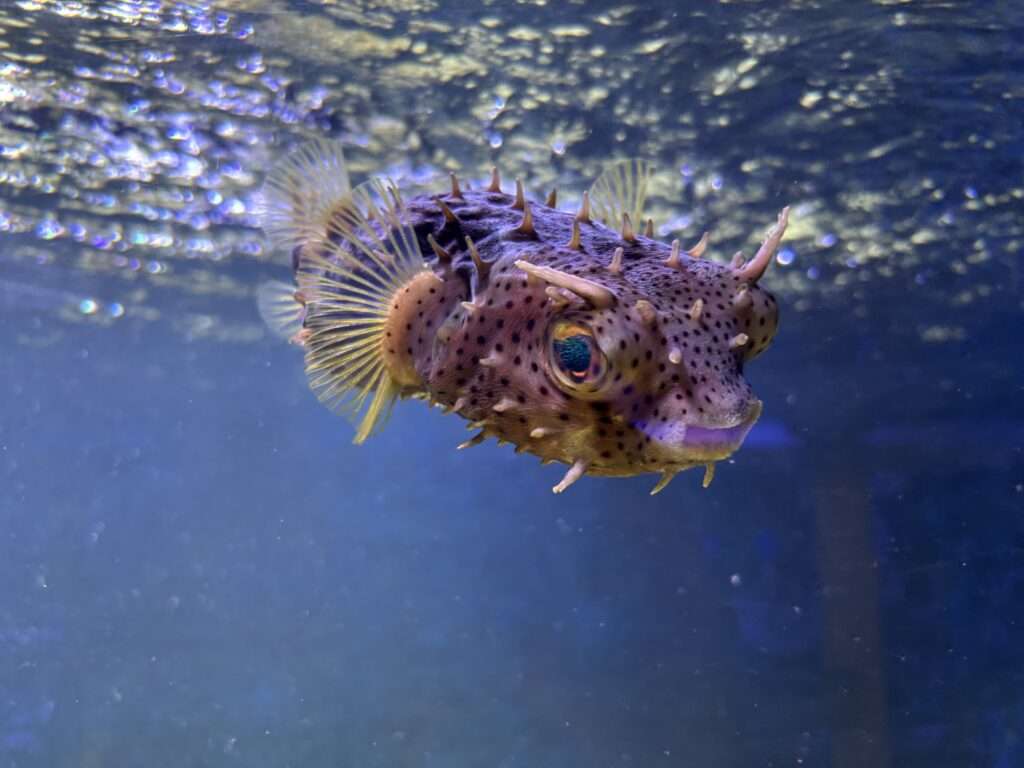
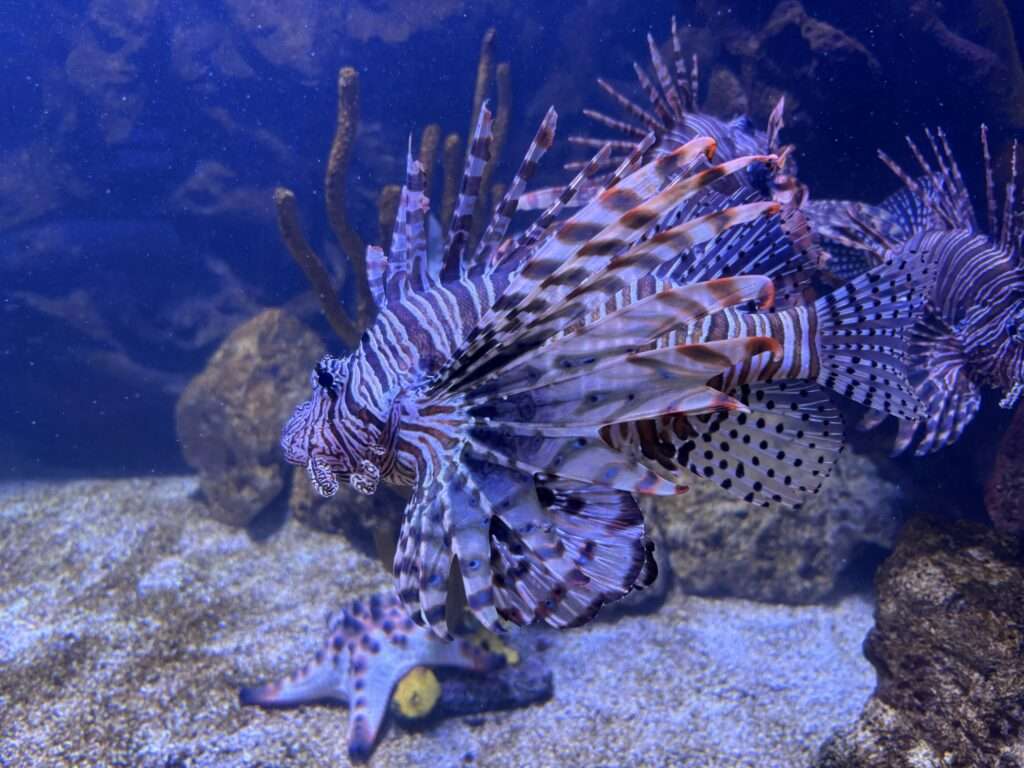
We went back inside to check out the wall tanks. The tanks were relatively small but there were a lot of them and they had a great variety of fish, including some really cool looking ones like puffer fish and lion fish.
We took our time and really enjoyed the exhibits. Even at a casual pace, we were only there for about an hour. At almost $20 a ticket it is a little expensive for the size and amount of time you will spend there. But they do great conservation and rehabilitation work so we felt like it was money well spent. The aquarium is a great change of pace from the other Key West activities and is a worth a visit.
